

Final Fantasy VII Rebirth Switch 2 Review – A Technical Marvel
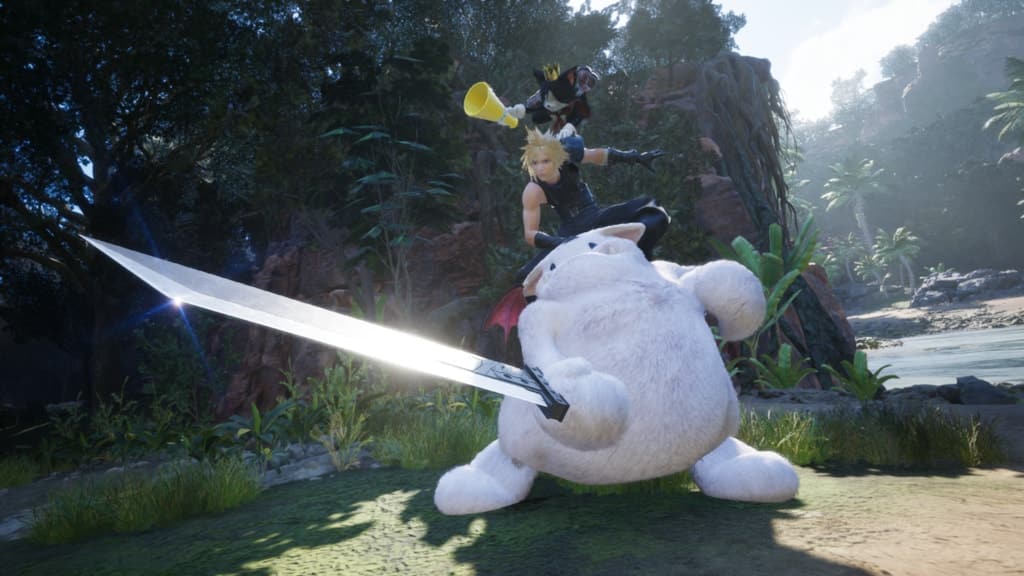
Fans are anxiously awaiting any sort of news about the third entry in the Final Fantasy VII Remake trilogy that is currently in the works. With hopes we may finally get news soon, players can bide their time with yet another set of platform to play Final Fantasy VII Rebirth on.
Following the exclusive release on PS5 a couple of years ago, it then came to PC last year. Now, Final Fantasy VII Rebirth has also arrived on Xbox Series platforms and Nintendo Switch 2, and we got to play the game on the Switch 2 for review.
Unexpected Magic
When Final Fantasy VII Remake released back in 2020, and even Final Fantasy VII Rebirth in 2024, it seemed impossible to imagine the games being properly ported to the Nintendo Switch due to its less powerful hardware. Thankfully, the Nintendo Switch 2 was released last year and has proved in the time since how much more powerful it is than the original Switch. Even so, the Nintendo Switch 2 is not quite on the level of the PlayStation 5 and Xbox Series X at its top end. However, the Switch 2 and developers working on it seem to have really tapped into some magic with how they have made games like Final Fantasy VII Remake look and run on the system, and now Final Fantasy VII Rebirth really tests the system with its incredible visuals and giant world to explore.
For anyone that is playing Final Fantasy VII Rebirth for the very first time with this version, you may be a bit surprised with how the game begins. It jumps right into the Zack storyline here that left us confused as ever at the end of Remake, where we were shocked to seemingly find him to be alive. This picks up right after the fall of the Sector 7 plate from Remake, though with some major differences here. In this universe where Zack is alive, most of the group was killed or left close to dead after the fall of the plate. Zack is lugging Cloud around from his story when he comes across and saves a comatose Aerith who’s obviously different from the one in the main timeline we are playing in Remake and Rebirth. Zack’s story is interspersed throughout Final Fantasy VII Rebirth, so depending on how long you spend in certain areas, you will see your sequences featuring him appear.
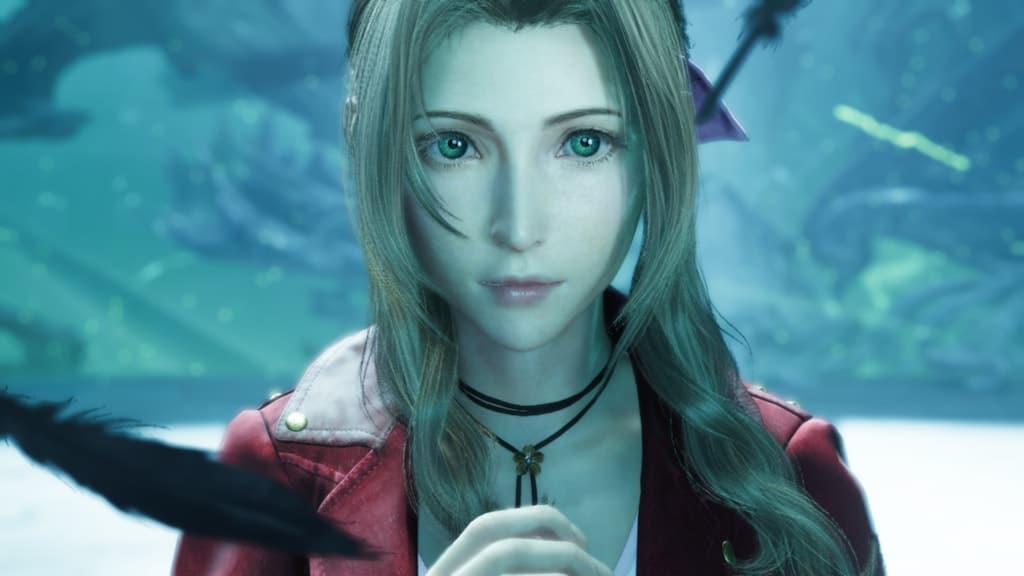
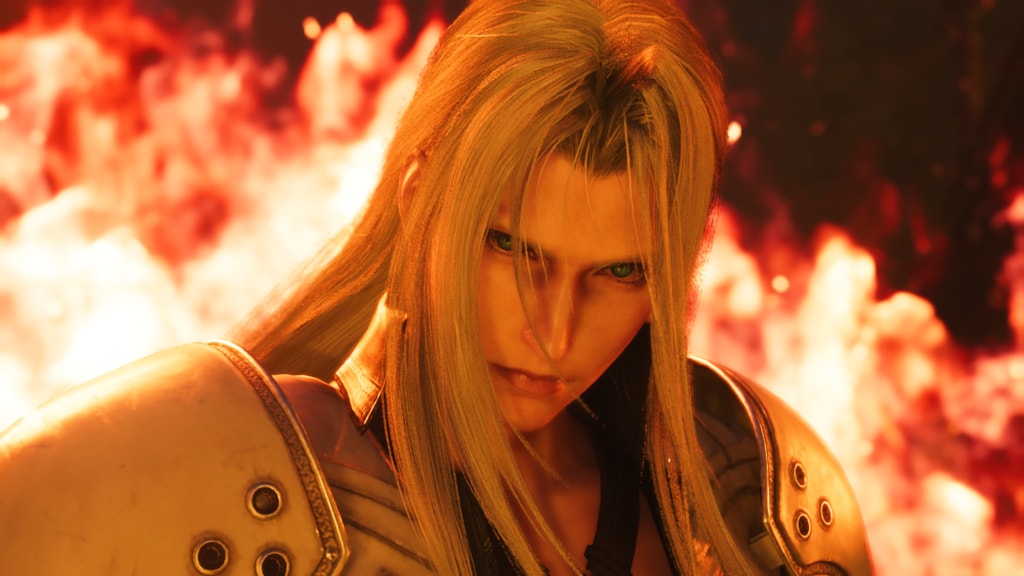
Rather than following up directly on Cloud and company leaving Midgar, as we saw at the end of the Intergrade DLC, the story jumps ahead to the point where the group is in Kalm, with Cloud explaining his “backstory” and how he knows Sephiroth to the rest of the group. This is done through fully playable flashbacks that occasionally cut back to the present, featuring Cloud, Tifa, Aerith, Barret, and Red XIII. I still love how this section of the game was handled, as it not only jumps you right into the exciting action found in the game, but also lets you play as Sephiroth for the first time here in a tutorial-like scenario. He’s just as you would expect, being super overpowered, and allows you to just let loose for a while when playing as him. This part also raises more questions than it answers, with false memories and more, which makes playing through it on subsequent runs even more effective. As always, if this is your first time playing and you haven’t played Crisis Core: Final Fantasy VII first, I highly recommend playing the re-release of that game to have more context for areas involving Zack and the opening flashbacks.
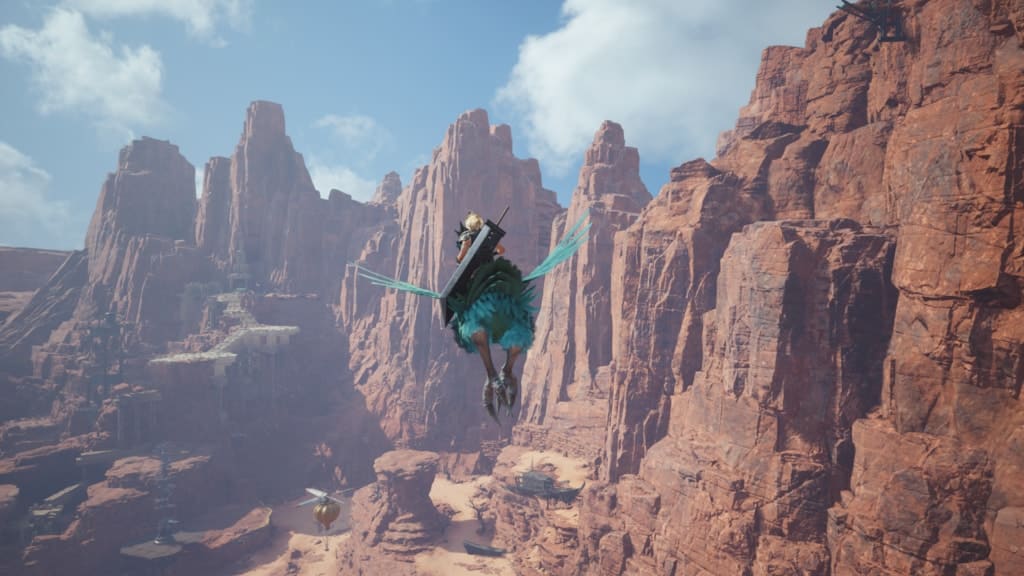
The world of Final Fantasy VII Rebirth is massive as you get to explore the different regions that make up the game. You do not get to start and go anywhere you’d like at the beginning in true open world fashion, but the regions you explore are huge and only open up more the further you get into the game. After the initial flashbacks, you start the game in Kalm as Shinra’s forces are arriving to try and find you, leading to the group needing to escape Kalm and make it to the first open area known as the Grasslands. Even now on my third playthrough of the game this time around, it’s pretty amazing to see this world open up the way it does, especially after how Final Fantasy VII Remake was more condensed while inside Midgar. After that, you venture to regions like Junon, Gongaga, Cosmo Canyon, and more, so I’ll leave any further story details out for those that may be playing through for the very first time. Regardless of whether this is your first time playing or on a second or even third playthrough, you are in for one of the best all-around adventures, character stories, and just fun experiences in all of gaming. Just know that you are in for a real treat with locales like the Golden Saucer and many of the story beats with characters as the game goes on. That is not even to mention the soundtrack, which is full of bangers after bangers.
Basics of Combat
Combat in Final Fantasy VII Rebirth takes the existing system found in Remake and builds upon it with additional mechanics that improve it even further. The Active battle style is still the default and is my favorite to use, but you can also swap to the Classic variant if you want a more turn-based style approach. Regardless of the party member you are controlling, pressing Y will attack an enemy and help to fill your ATB gauge, while you can also press R to block attacks. One of my favorite elements of Remake’s combat that has been carried over here is also the Stagger system. As in many other RPGs, the stagger system features a bar beneath the health bar that indicates how close the enemy is to being staggered. Once you fill the meter, they will stop attacking and be super vulnerable to attack. This is a key to taking down some enemies, especially if you want to survive some of the harder bosses in the game.
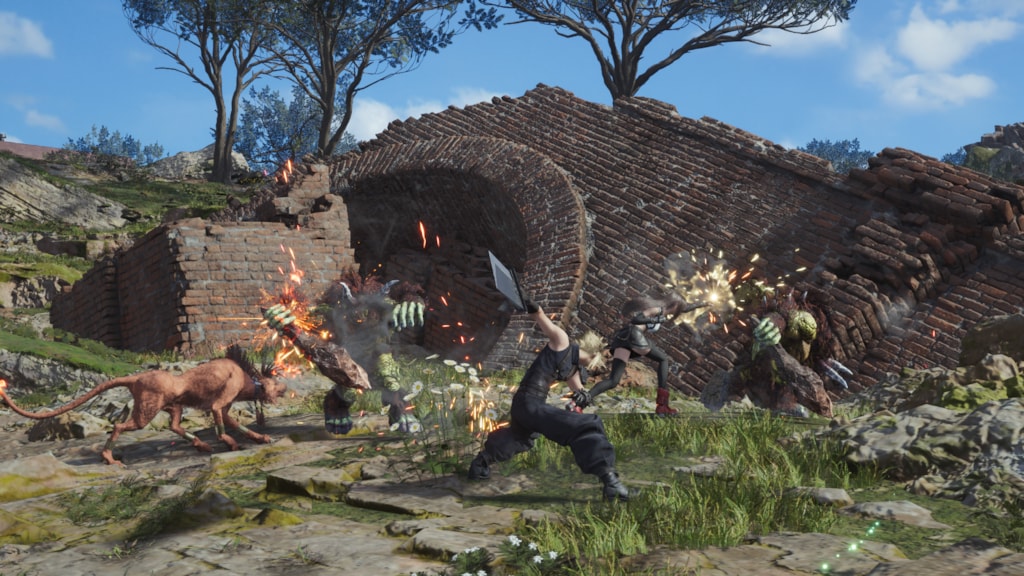
Filling up the ATB gauge is vital in combat, as each party member has abilities and spells that they can use in battle that will expend parts or all of their ATB gauge. This includes abilities like Cloud’s Triple Slash and Tifa’s Starshower, while spells are the more general ones you’d expect like Fire, Blizzard, Cure, and such. Each party member also has a specific Unique Ability that does not use the ATB gauge, but often has cooldown periods like Barret’s Overcharge ability and Aerith’s Ward Shift. Everyone also has a series of Limit Breaks you can unlock as well to use when the Limit Break meter is full, including ones like Red XIII’s Bloodfang.
As before, the aforementioned spells that the characters will have at their disposal in battle are reliant on which Materia they currently have equipped. If you’re somehow brand new to Final Fantasy VII in general, Materia are magical orbs that imbue people with special spells and passive abilities like increasing HP. Materia usage is where a lot of the strategy of the combat in Final Fantasy VII Rebirth comes from, as you are entirely reliant on the number of Materia slots that equipped weapons and accessories on your party members have. From there, you have to decide which Materia to put into those slots and also figure out which are the most important to work towards leveling up. By earning AP in battle, you can level up the individual Materia to make them even stronger and more effective, which is a goal you will have to work towards throughout the entire playthrough. Abilities, on the other hand, are dependent on the equipped weapon or abilities that you have previously unlocked for a weapon, so that it works even when not equipped directly.
The opening segment with Cloud and Sephiroth working together also introduces a brand-new feature in Rebirth, originally known as Synergy Skills and Synergy Abilities. By holding down R and guarding, you’ll notice options for Synergy Skills that you can activate depending on what other characters are in your party. These are either offensive or defensive moves that are essentially quick team up movies that do not use any of the ATB gauges or anything. In fact, the first time Cloud does a new Synergy Skill with each party member, their relationship can grow.
By expending a certain number of ATB gauges in battle, you’ll also gain access to Synergy Abilities. These are special tag-team abilities that you initiate with a partner in battle. These come in very handy, as some are exclusive to certain characters, while others are across multiple like United Refocus that can split the ATB gauge bar into three instead of two. You can unlock additional ones of these and other special abilities for your party members through the game’s new Folio system. This skill tree setup, which you should be used to if you’ve played some Final Fantasy games before, takes notes from things like the Sphere Grid, License Board, and the like from across the series.
One of the polarizing elements of Final Fantasy VII Rebirth has been the number of mini-games found in the game. I personally love that there are so many of them and most of them you can just avoid if you really don’t want to. They are really there for completionists and do add a lot to the game. That said, there are some that get incredibly frustrating like Cactuar Crush and even higher levels of the Musclehead Colosseum. However, this is easily made up for with so many good mini-games in the game, like Queen’s Blood, especially, which I’m still disappointed Square Enix has not turned into its own mobile app like Triple Triad.
While it will also be coming to other platforms through an update, a new feature found at launch in Final Fantasy VII Rebirth for Switch 2 is Streamlined Progression. Just like in the Switch port of Remake, Streamlined Progression features a series of essentially cheats to make the game much easier for you. This includes 13 total options you can enable, including Constant Max HP, ATB Gauge Always Full, 2x EXP and 3x AP Gain, Constant Max Gil, and Max Materia Levels. I would personally recommend not using these in your first playthrough just to fully experience the game as intended, but it is a good option to make things easier and more accessible for some gamers who may have never touched the game otherwise.
A Minor Visual Downgrade
Like its predecessor, Final Fantasy VII Rebirth comes with a locked 30fps on the Nintendo Switch 2 at a targeted 1080p resolution, which is more than acceptable on the platform. Compared to some of the other releases of Final Fantasy VII Rebirth, the Nintendo Switch 2 version does not have multiple performance modes to choose from. The PS5 version prior had three to choose from and then a fourth one came with the PS5 Pro release. Rebirth on Switch 2 looks fantastic in action and performs fantastically like Remake did, which is even more of a surprise here with how large of a game Rebirth is even in comparison to Remake. Of course, when you put the game directly side by side to say the PS5 or especially the PS5 Pro version, there are some visual downgrades from the PS5 version, as to be expected.
Most of the time, the open-world pop-in isn’t much of an issue, since you can see much of the world in the distance, but there are still times when it is a little noticeable. There are some occasional lower-resolution assets found in the game if you are looking really closely at times, but they certainly do not detract from the overall experience here at all. For someone like me, this really isn’t a major issue, given how large this game is and how well it looks overall on a system like the Nintendo Switch 2.
This extends to the game’s performance as well, with very few hiccups in combat. It may not have a 60fps frame rate, but the locked 30fps works well enough here that you don’t notice it anywhere near as much as you’d think. You also know there have to be concessions somewhere too, so that is just how it goes with major games like this and Cyberpunk 2077 on the platform. Even with some visual downgrades, I’m still very impressed how well they managed to make the game look, in part utilizing DLSS, on the platform while maintaining 30fps. While 60fps would obviously have been ideal, I’d much prefer a locked 30fps that works nearly perfectly compared to a 60fps attempt that is a mess due to platform constraints.
The Verdict
Once thought pretty impossible by many due to Nintendo’s penchant to go in with underpowered systems compared to the competition, Final Fantasy VII Rebirth wows just like its predecessor did when it released for Switch 2 earlier this year. There are obviously some concessions with the visuals in some places, but they are pretty minimal most of the time and the fact that the game runs as well as it does is pretty incredible. Final Fantasy VII Rebirth was already one of the best games of the last many years and now it is easily one of the best RPGs and games in general available on the Nintendo Switch 2 for newcomers and those who have already played it alike. Also, if you’d like a deeper dive into elements like the gameplay mechanics and story, make sure to read our original review for Final Fantasy VII Rebirth on PS5 as well.
Pros
- Still the same amazing game it was before
- Visuals look really good on Switch 2 most of the time
- Locked 30fps works well in action
- Added Streamlined Progression options makes game more accessible

Cons
- Side by side comparison with PS5 will show some occasional visual downgrades
Final Fantasy VII Rebirth was provided by the publisher. You can read MP1st’s review and scoring policy right here.
