SCUF Valor Pro Wireless Review: Premium Control Without the Frills

SCUF has built a long-standing reputation for elevating the traditional gamepad formula, and the company’s newest entry, the Valor Pro Wireless, aims to reinforce that legacy on Xbox and PC. The high-end controller market has become a crowded battleground where premium features are expected rather than exceptional. Faster inputs, deeper customization, stronger connectivity, and swappable components have become baseline features for competitive players. That is why real hands-on testing matters, and MP1st spent several weeks using the Valor Pro Wireless across multiple genres, including shooters, open-world adventures, and action RPGs, to see where it actually lands in this competitive space.
What became clear early on is that SCUF is not trying to reinvent the entire experience. The Valor Pro Wireless is built around familiar strengths: paddles that feel natural, ergonomics that cater to long sessions, and triggers that can shift between quick-fire tap and full analog depth with a flick of a switch. It is a refinement-focused controller that prioritizes competitive responsiveness while still offering comfort and versatility.
It is not without drawbacks, though. The weight may be too much for some players, the price positions it solidly in the premium tier, and a few design choices make specific competing controllers worth considering. Yet even with those caveats, it is clear that the Valor Pro Wireless delivers a level of performance and polish that places it well above standard controllers. Is the premium pricing for this controller worth it? We’ll let you be the judge of that.
Design, Build, and Customization Features

The first thing that stood out when I unboxed the Valor Pro Wireless was the weight. It’s not unreasonably heavy, yet its density immediately conveys durability. After enough hours of gameplay, that weight does start to settle into your hands. During long nights of testing, I often rested the controller on my lap to relieve fatigue. SCUF sells the EXO controller cushion as an optional accessory, and while I initially dismissed it as unnecessary, I understand why players will need it. Any support that lightens wrist fatigue becomes increasingly helpful as the hours stack up.
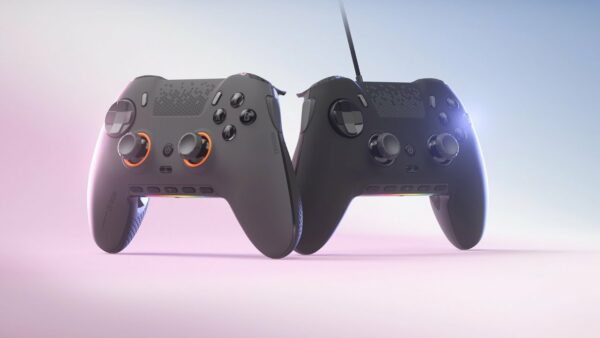
Ergonomics have always been a core part of SCUF’s design identity, and the Valor Pro Wireless reflects that focus. The performance grip features a textured, non-slip surface that prevents the controller from shifting during intense or sweaty moments. It never feels abrasive either, which is essential when your hands remain in contact with the grip for several hours straight. The general shape follows the familiar Xbox controller silhouette, so anyone transitioning from an Xbox Series controller will feel at home immediately.
However, SCUF adds subtle refinements to the shell shape and bumper contours that do make a difference. The bumpers activate consistently even when pressed along the edges, something that benefits claw-style or hybrid-style players who often shift finger placement mid-game. Even after long sessions, the grip and contours remained comfortable, providing a more stable feel than the stock Xbox controller.
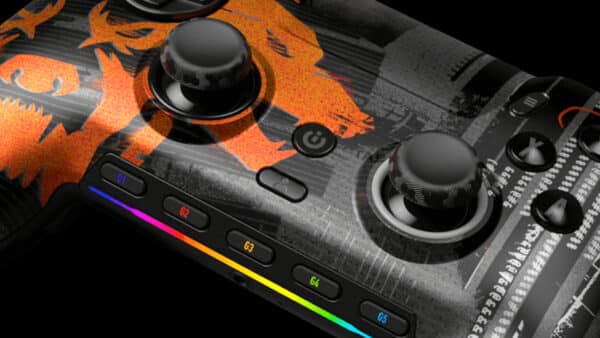
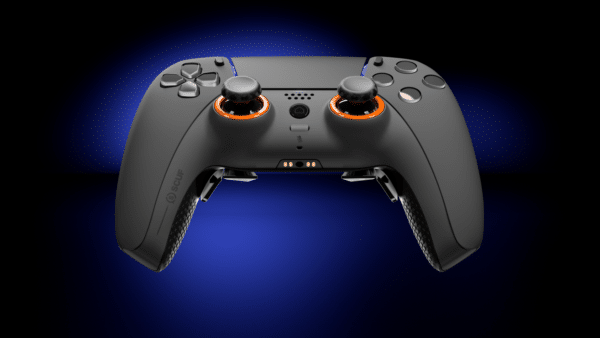
Where SCUF continues to lead the industry is the rear paddle system. The Valor Pro Wireless includes four customizable paddles that can be assigned to practically any input on the controller. Mapping actions like jump, reload, melee, or slide to the paddles keeps your thumbs anchored to the sticks. This is a significant advantage in shooters, where removing your thumb from the right stick for even half a second can disrupt your aim. Across Battlefield 6, Halo Infinite, and Warzone, the paddles felt responsive and positioned in a way that your fingers naturally gravitate toward without contorting your grip. They click cleanly, feel sturdy, and have never loosened over time.
Customization remains another major strength. The Valor Pro Wireless features a removable faceplate, interchangeable paddles, and swappable thumbsticks. SCUF includes two thumbsticks in the box, and the controller supports taller or concave designs depending on your preference. The process of swapping sticks is straightforward, and everything locks securely, which matters when fine directional control is involved.
Instant Triggers, TMR Thumbsticks, and High-Speed Performance

Speed and precision are at the heart of any performance controller. The adjustable instant triggers are the most noticeable upgrade. With a simple switch, the triggers can switch between a full-analog pull and a short, mouse-click-style actuation. Full analog mode is ideal for racing games or flight sims where slight throttle adjustments matter. Instant trigger mode works best in shooters where rapid firing is essential. While playing Battlefield 6, the short-throw mode delivered faster shots without the mushy feedback that comes with more extended trigger travel. It felt snappy, consistent, and more responsive than the standard controller.
SCUF’s Endurance TMR thumbsticks also play a significant role in how the controller handles. TMR stands for Total Magnetic Resistance, and unlike traditional sticks that rely on mechanical friction points for movement detection, TMR uses a magnetic system to reduce wear and maintain smoother resistance over time. This design helps prevent drifting, which tends to appear on cheaper controllers after months of use. During gameplay, the TMR sticks felt firm and consistent, helping me fine-tune aim in shooters like Halo Infinite and maintain smoother movement in exploration-heavy titles like Where Winds Meet.
Since I tested the stock Xbox controller, the GameSir controller, and the SCUF controller back-to-back, the differences became clearer. Hall Effect sticks on the GameSir offer a slightly smoother return-to-center feel due to their magnetic sensing system. TMR sticks feel a bit more deliberate with a firmer tension. In real gameplay, the performance gap is smaller than marketing suggests. Both Hall Effect and TMR are designed to improve longevity and reduce drift, and both feel like a meaningful upgrade over the default Xbox controller. The average player will not suddenly gain better aim or reflexes just because of the technology behind the sticks. The benefit comes from consistency over time, not from an immediate skill jump. For most players, either option provides a better long-term experience, with the day-to-day feel remaining fairly similar. You can’t go wrong with either, and it is leagues better than the original Xbox controller. Both can be used to fine-tune their controller, with SCUF offering a slightly better experience, giving players more precision and fine control over their playstyle.
High-speed performance continues with polling rate support. On PC, the Valor Pro Wireless can operate at a 1 kHz polling rate, which means it sends input data to the system 1,000 times per second. A higher polling rate reduces the delay between pressing a button and the game registering that input. This advantage is subtle but noticeable in fast-paced shooters or action games where timing is everything. Compared to standard controllers that operate at lower polling rates, the Valor Pro Wireless feels more responsive during quick maneuvers or rapid inputs.
Connectivity plays a large part in responsiveness as well. The Valor Pro Wireless supports tri-mode connectivity, including low-latency wireless, traditional Bluetooth, and wired USB-C. Low-latency wireless is the best way to play on Xbox or PC without a cable since it offers a stable, responsive connection. Bluetooth is convenient for casual use, although it introduces slightly more latency. Wired mode remains the most reliable choice for competitive players and also enables the full 1 kHz polling rate on PC. Throughout testing, the low-latency wireless mode never stuttered or disconnected, and wired play delivered rock-solid performance exactly as expected.
All of these improvements work together to give the Valor Pro Wireless a more precise, more reliable feel than the base Xbox controller. The instant triggers reduce reaction time, the TMR sticks maintain smoothness over prolonged use, the high polling rate enhances responsiveness, and the tri-mode connectivity ensures you always have the proper setup for your playstyle.
Software, Audio Controls, and Everyday Performance

The Valor Pro Wireless offers more than hardware upgrades. SCUF pairs its physical design with a robust set of software tools and practical features that enhance the everyday experience. One standout element is the Companion App, which is currently in beta. I expected something simple given its beta status, but the app turned out to be far more robust than anticipated. It lets you remap the rear paddles, adjust trigger sensitivity, modify thumbstick deadzones, and fine-tune response curves. These settings apply instantly and can be saved to on-board profiles so you can switch configurations without reopening the app. You will spend a reasonable amount of time on this, and I recommend you download the application when you can, as well as update your controller firmware.
The Profile Switch button becomes a key part of the experience. I created separate profiles for Ghost of Yotei, Where Winds Meet, and Battlefield 6, and being able to hop between them without adjusting settings every time was incredibly convenient. Whether you prefer tighter deadzones for shooters or smoother stick travel for open-world games, the Valor Pro Wireless stores and keeps your preferences ready.
Alongside software customization, SCUF includes an integrated Audio Control System that proved surprisingly helpful during testing. While I usually play through speakers, I tried the controller with a pair of IEMs to see how the feature performed. The Valor Pro Wireless uses two scroll wheels, one on each side of the controller, to handle all audio adjustments. Being able to change audio levels on the fly without pausing the game or digging into console menus felt natural and efficient. Anyone who uses a headset regularly will appreciate how accessible these controls are during gameplay.
Battery life rounds out the controller’s daily usability. The Valor Pro Wireless includes a built-in battery rated for up to 17 hours of use, and my testing consistently fell between 14 and 16 hours (depending on usage for each player) across wireless modes and vibration intensity. The included six-foot USB-C cable charges the controller quickly, and switching between wired and wireless play is seamless. While the battery life does not set new records for the category, it is reliable and more than sufficient for both casual players and lengthy gaming sessions.
Taken together, the software customization, audio controls, and dependable battery life make the Valor Pro Wireless a well-rounded device. It strikes a comfortable balance between competitive performance and everyday practicality, giving players the tools they need to tailor their experience without adding unnecessary complexity.
Verdict
After extensive hands-on use, the SCUF Valor Pro Wireless proves itself as one of the strongest premium options available for Xbox and PC. Its build quality, customization depth, and competitive features create a noticeable upgrade over the standard Xbox controller. The rear paddles feel natural, the adjustable triggers respond quickly, and the TMR thumbsticks maintain their consistency even after long sessions. The Companion App and profile system add meaningful flexibility, and the overall refinement is clear once you settle into a few different games.
The price, however, sits in a space where alternatives like GameSir offer strong competition, with features like hall-effect sticks, better pricing for average players, and an included charging stand. SCUF delivers better craftsmanship and software, but the value equation becomes tighter when accessories like the EXO support cushion are sold separately, especially since the controller’s weight makes longer sessions more taxing. Including that cushion in the box would make the package feel more generous. Even so, the Valor Pro Wireless remains a significant improvement over the stock Xbox controller and is an easy recommendation for players willing to invest in a high-performance gamepad that prioritizes precision and customization.
Pros
- Endurance TMR thumbsticks that limit wear and drift
- Adjustable instant triggers for both analog and digital needs
- Stable tri-mode connectivity with low-latency wireless
- Robust Companion App with deep customization
- On-board profile switching for quick genre transitions
- Effective performance grip and ergonomic refinements
- Official Xbox licensing for full compatibility
Cons
- Weight can lead to hand fatigue during extended use
- Premium pricing that exceeds some competitors
- Competing brands offer more bundled accessories at similar prices or better prices
- Companion App is in beta and needs more work to iron out the underlying issues
SCUF Valor Pro Wireless hardware was provided by the manufacturer. You can read MP1st’s review and scoring policy right here.
This website contains affiliate links. If you click a link and make a purchase, we may earn a commission at no additional cost to you. This helps support our work. Learn more on our affiliate page.