Shiny Shoe Talks Inkbound – The Future, Rogue-likes and More

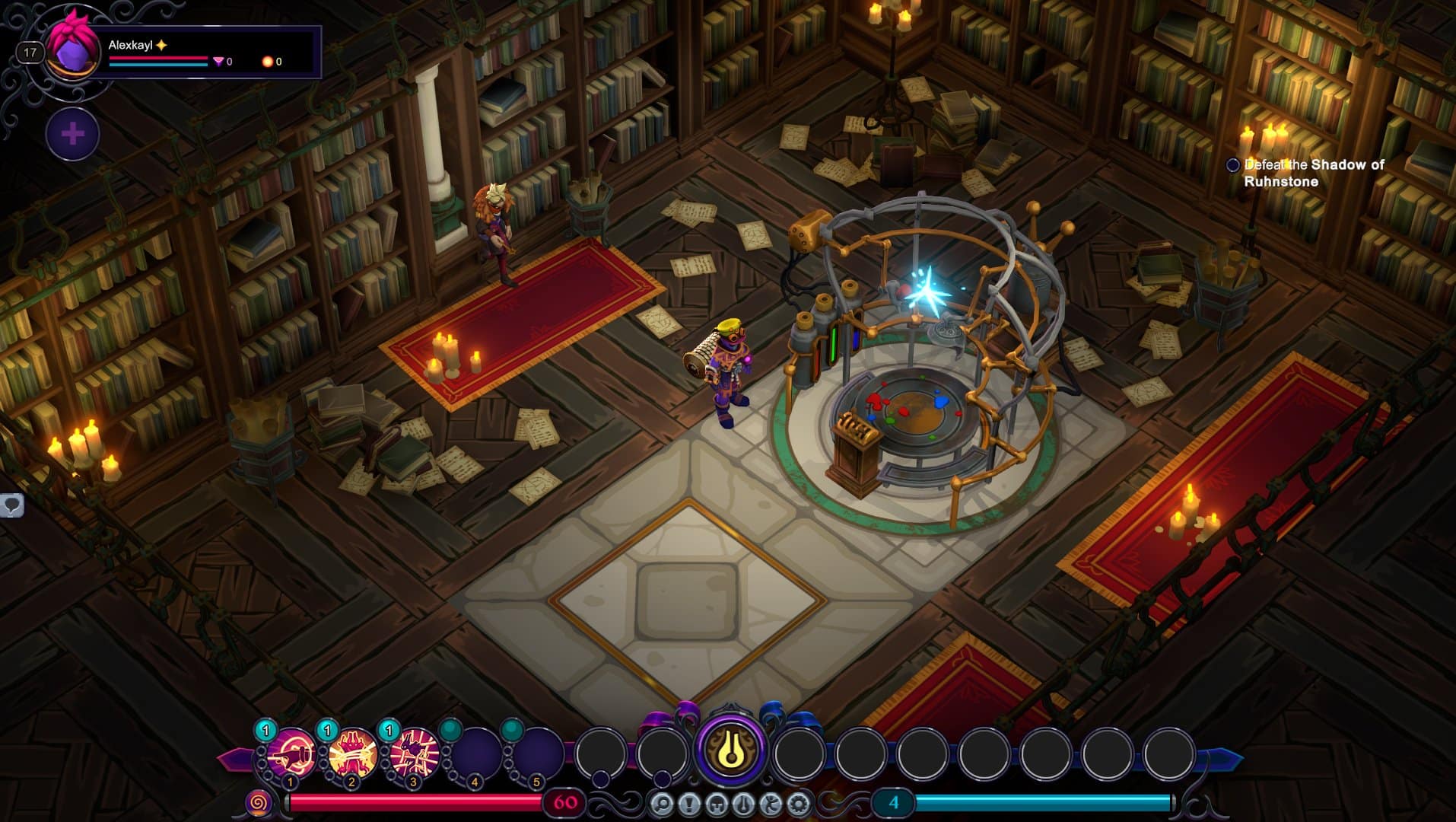
For those that dig rogue-likes, indie developer Shiny Shoe, the developer behind Monster Train, released Inkbound in May last year. Inkbound isn’t your typical rogue-like, as it’s a turn-based tactical game that can be played solo or co-op.
Coming out of nowhere, we were quite impressed at what we got to play (which was reflected in our review). So, when we were given the chance to talk to the studio, we asked quite a lot. In our chat with Creative Director Andrew Krausnick, we asked about the future of the game, whether we’ll be seeing a console version, a conversation about bosses and more.
MP1st: With the launch of Inkbound, how did it go? Was it within the team’s expectations? What player feedback did you appreciate reading the most?
Andrew Krausnick: It’s definitely within expectations. So we’re continuing to work on hot fix patches. We’re also working on our first balance patch and content patch post-launch.
It’s been exciting, you also want to take over the world, but, I wouldn’t say we totally took over the world, but it was still good. Like the top 10 sellers on Steam for a minute. We were up there, and people were having a great time, and that’s what matters.
In terms of feedback we appreciate, we get a really wide range from everyone. I think for us, this was the first time we localized it. We’ve been in early access for a while, but we’re in English only. We actually were on Twitter/X, more widely used in Japan, than I think that it is here. We had a lot of the Japanese gaming community on there tweeting and we were there, reading about, that they were enjoying it, stuff like that. Our game is a little bit inspired by Japanese tactical RPGs and things like that.
I think it resonated there, it was really cool to see them, out there and enjoying it. We also got some, I would say, feedback about our localization, which has always been good. We outsourced it, we did our best, but it’s a big game, so that was a chance to improve.

MP1st: Awesome, that’s great! And then, like, and that’s also a nice thing to know, too, because I haven’t delved much into how much Japan uses X, for example, like you were bringing up, but that’s awesome that you’ve managed to find another fanbase outside of the normal reach that you’d typically post on.
Andrew Krausnick: We had one Japanese player we saw on Twitter all the time called Dear Lord, before we localized it, they were just playing in English and we were like, All right. Maybe there’s one super fan there. Maybe there’s more, you know,
MP1st: Where’d you get the inspiration for the colorful looks and book themed lore of the game?
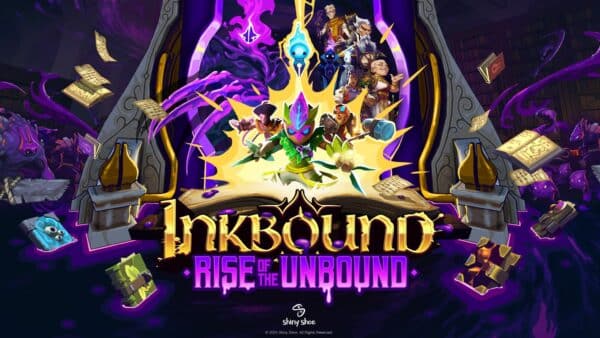
Andrew Krausnick: Cartoons of the 80s was a big one for us. Older than that, retro looks of 50s and 60s, Buck Rogers and all these space faring things, fantasy worlds that are very colorful, like, If you look at old art for even games like EverQuest, for example, Keith Parkinson’s style of art and stuff like that, Where it’s a little bit realistic, but it’s still very, fun and colorful and saturated.
You’re going into sort of fantastical worlds before fantasy was really defined as just Elves and Orcs. There was a lot more explosive imagination to things. We really dipped back into that.
MP1st: You could definitely tell, from what you just said, that’s exactly where you got it from.
Which is great though, because it gives it a more of a unique art style that, Everyone can enjoy and it isn’t graphically intense ’cause it doesn’t have to be over the top photorealistic kind of deal.
Andrew Krausnick:As an indie studio, we’re on the big indie side, we’re about 20 people, but we’re still pretty indie compared to the really big ones.We’re never gonna be to anyone on fidelity, it’s all about style.
MP1st: Is there a roadmap plan being proposed for the future and what is the frequency for any future updates? Once a month, once a week, give or take?
Andrew Krausnick: It is something we are working on. We don’t really have anything to announce yet because we are still internally working on it, I would say our goal broadly It’s definitely not going to be once a week, for quick hot fixes it will be for sure we’ve been doing that but for content,in a matter of months We want to keep rolling stuff out.
We’re circling the wagons. We’re figuring out what we think we can do with that. Then how flexible we want to be versus how much we want to talk about stuff. We knew with 1.0, here’s the checklist of things we absolutely have to do and all that stuff.
And now that we’re past that, it’s much more wide open. We’re kind of figuring it out, right now our hunch is that we’d rather do more frequent, content drops rather than bigger, like that are slightly smaller than bigger ones that are more infrequent. At least for now that’s probably how we’re approaching it. It’s hard to talk about yet in terms of specifics.

MP1st: Speaking of updates, any chances of new classes dropping in the near future?
Andrew Krausnick: We would love to do it. We know people love it. They take a while for us. We’re weighing in against other things. Chances are, yes, and we’re figuring all that stuff out.
MP1st: More of a personal question here. What is your favorite class in Inkbound?
Andrew Krausnick:I get asked that pretty often actually. I will couch the answer because there’s always a risk as a developer when you answer that question that, people are like, “Oh, this got buffed” and “this got nerfed”. It’s because they played favorites, you know? It’s a little bit risky. I will, and I’ve answered this probably before and the one I go to the most is the Magma Miner because it is what I feel the most straightforward. And as a developer, I’m often trying to get something where I can play it kind of quite quickly to evaluate the game as it constantly is changing.
I like something where I can go on autopilot just a little bit, something straightforward to play. I have other favorites, personal favorites, and I have other ones, but those are the ones I’ll have to keep to myself because, otherwise I run a lot of risks.
MP1st: Because you never know, especially with people nowadays, l they’ll see, oh, this guy’s favorite is this one, and then they all start playing this, and then any tinkering that gets done to it, then he’s just like, oh, it’s not his favorite anymore, or he’s, giving you special attention, right?
Andrew Krausnick: I worked on MMOs for a long time and it’s the same thing.
MP1st: Exactly. Bosses at Inkbound are amazing to see and fight. Can we expect any more new bosses in the near future?
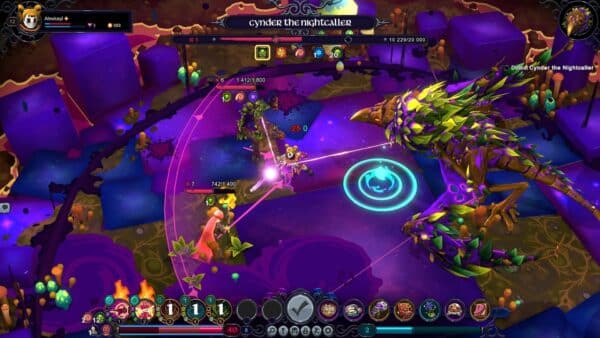
Andrew Krausnick:We love our boss variety. We added definitely at least modifiers in 1.0 and obviously the Unbound, this big final boss. I would say it’s definitely a possibility as well as additional ways that the bosses get modified because we love variety there. We also very well might do more on the revamp side of things, certain ones we have generally felt have been in better shape than others and we felt with 1.0 we revamped a few there to kind of bring them up to speed. Just as we learned more about the game since we had this totally new combat system. I would say more likely to see revamps and expansions to the variety of modifiers to them than whole new bosses, but. I will also never say never.

MP1st: There are some players that have mentioned that after 1.0, the difficulty ramps up and balance can feel somewhat flimsy from what they were used to before 1.0 came out. Has this been noticed internally or is there anything that is going to be done about it?
Andrew Krausnick: Speaking specifically to the difficulty of the game. We definitely did that on purpose. We find that with roguelikes, a lot of the engagement, a lot of the fun comes from overcoming challenges for a lot of people. We felt that it was, it was basically just too easy in early access.
When you increase difficulty in these games, it does mean that some strategies that people were using that were succeeding are not going to work quite as well anymore because they were kind of on the lower end of the possibility for success and that can definitely feel disappointing and I think that’s a risk with an early access roguelike especially because normally in development we might have been like, oh we feel like the game’s too easy We’re gonna bump it up and no one would have known that like certain strategies would or wouldn’t work.
That said we recognize that people maybe want to mess around and have a lot of strategies work and not have to really min max those their draft picks quite as much or their strategies quite as much Which is a different kind of fun for sure we are looking at approaching a way to maybe do, we’ve been tinkering with even names for this.
This is how far along this idea is like a story mode or something where you can still progress your quests and you can do certain things maybe certain types of, objectives or progression are locked out, but you can play a version that’s closer to the one we had before that’s frankly easier and more things will work and you don’t have to min max quite as much, but for the min maxers, there will still be our current, let’s say intended difficulty.
If this is normal mode, we maybe don’t have an easy mode right now. And we’re looking at a way we can approach to add that for people who are looking for that slow experience.
MP1st: Which is awesome in my opinion, because like, not everyone is really good rogue-lite experience games, or maybe it’s someone who’s brand new to the genre.
You made a good point too, some strategies might have worked before 1.0, but then now it’s not impossible to do, but it’s definitely more difficult because as you said, with rogue-lites, you have to overcome the challenges.
You know, finding a good balance, I’m going to bring up, for example, any souls-like games, they’re still beatable, but they are extremely hard, but you want to make it so that you can still beat it though. right? Not that it’s impossible, you internally can’t beat it. And you’re just like, “Okay. We need to dial this back.”
Andrew Krausnick: We have our testers and we have people who are chain running, every difficulty level, like winning back to back. We’re like, Oh yeah, this is definitely possible.
It might mean that people kind of need to do the uncomfortable thing of leveling up or not. If people find it too uncomfortable, we don’t want to necessarily force it. But we also find that that act of mastery is something that a lot of people who come to the genre are looking for as well.

MP1st: Why isn’t the game available on consoles? Are there any plans in the future of bringing it to the Xbox Series S/X, PlayStation 5 and Nintendo Switch?
Andrew Krausnick: Nothing I can talk about right now as always, that’s a lot of other partnerships. The great thing about steam is that we’re on there. We do it ourselves and all that stuff.
We would definitely love to and hopefully at some point in the future, we can talk about things.
MP1st: There’s a lot of roguelites that are available now and coming out in the future. What is it about the genre that seems to have exploded in popularity in your opinion?
Andrew Krausnick: I would say there’s an explosion of, smaller and indie teams and so on, like ourselves, who are a lot of bigger games are now adding roguelike DLC. It’s kind of the, the meme joke. The thing that’s really compelling about it for us and a lot of other people is that, a long time ago, one of the creators of Magic the Gathering explained it as a game that was like bigger than the box, the permutation of all the little individual pieces make this really big play space and thing you can think about because they all combine so well together, and I think, it’s very similar with Roguelikes, like you can build a lot of relatively small pieces of content that all combine together to make this game that feels very big, this possibility of space that’s very big all these cool combinations, it is within scope of smaller teams to make games that feel much much bigger.
They get played this much bigger way. They get played for a very long period of time. It obviously has a lot of challenges and, a lot of us are mathy design nerds and those challenges suit us well. How do we balance all these pieces together? How do we make interesting content? How do we make it understandable? Those are things that a small team can handle.
They’re challenges we can take on, unlike making, the next high fidelity, Assassin’s Creed or something. We could never do it. It’s just impossible. But this kind of challenge is something we can do at our scale. People are loving it. People are really enjoying it. They probably weren’t popular for a long time.
It’s like, who wants to restart every single time? And then games started figuring the answer to that out and, fans were there.
MP1st: Honestly, my first experience with rogue-like games was just a couple years back, and I was on the fence of it once you die, you lose where you were and everything.
When that first happened, I went into it completely blind, I didn’t look into any of it, and I’m like, “oh, okay,” so I just stopped playing for a bit but it’s the fact that it just gives you going back to the challenge aspect. It gives you a challenge that is okay, so you have to be more calculated on your moves because if you mess up, so you can’t be as careless because you know it will set you back so far and then you have to do everything again.
It just creates a scenario where you’re basically more focused and calm going into big fights when you can’t. You have to make sure everything is on point, right?
Andrew Krausnick: Stakes feel high, which can be exciting. I think we’ve also figured out how to get session length down. Like a lot of the original roguelikes were like hours and hours and hours, in which case you definitely feel like very tense, but we got a lot of like under an hour is kind of what seems like the sweet spot and potentially even lower Especially for the extra casual ones. It’s like in those regards if you’re playing a MOBA or first person shooter arena game, those also reset every game, but you’re still having fun within the moment and you can feel like it’s a session-able thing.
MP1st: While Inkbound isn’t a live service title by any means, most gamers still want a roadmap or confirmation the game will get post launch support.
Do you think it’s fair for gamers to expect a game to be supported for one, two years down the road, or should it be just like, well, six months out of the road, we’re going to stop and make a sequel, for example.
Andrew Krausnick: Especially for studios like ours, which is more flexible than maybe other bigger studios or things that have these, strict big roadmaps.
We always love to support our games, and it also depends on, how long the audience is around for it and things like that, which is, you know, obviously we want to build games that are played forever, but that’s not necessarily always what happens when they come out for a variety of reasons, maybe we didn’t hit the mark on that, maybe other games come out, other audience, audience shifts, for us, it’s a very fluid thing, we would love to support it as, as long as it kind of makes sense. That said, also sometimes to take the next step, to take your learnings and really synthesize them, that can mean a sequel or, you know, a genre pivot or spin off or something. As a studio, we are both kind of eyeing the future in those ways. As well as looking forward on Inkbound itself as what we can do with it to keep expanding it, and making it exciting for the people who bought it.
MP1st: For sure. If it comes to a business standpoint, say if no one’s playing the game, then really, there’s no monetization point, right? I’m not saying people go into game development just to make money, but money is needed.
You need to pay for things like an office, the computers and stuff and licenses and everything.
Andrew Krausnick: In my experience, every single game I’ve ever worked on, even the ones that don’t get long term support, there’s always just a sort of solid group of people who kind of almost play it forever.
Especially if you’re unique like us, there’s nothing nowhere else you can find it. I know those folks are going to play forever and we want to give them as much as we can because we love them. They love us.
MP1st: Do you think Steam’s early access helped improve the overall game?
If you decided not to do Steam early access and you launched the game then and there, do you think it would be less of a success versus what it is right now because of Steam early access?
Andrew Krausnick: I would say, yeah, definitely in our case. I’m sure you’ll appreciate the very, very blunt answer to this.
Definitely improved it, in one very specific way for us. We do a lot of testing internally and we think the game was actually very good at early access itself. We maybe even could have launched it and something close to that. There’s other things we should have done like localization earlier, but something specifically was our monetization strategy where we thought it was a good idea, basically.
And the feedback was that wasn’t what people were looking for. Definitely, public sentiment had changed on a lot of those things as well over time since we had started development. Getting that feedback at early access, and we removed it, and we changed entirely how our monetization worked, which made our launch successful, frankly.
We would have had that same pushback and the same feedback. At that point later, and that’s not something you can do. It was not some feedback we got in testing at all because people just don’t know until you’re looking at it as you know, someone’s really buying it and playing it online in that way. You don’t feel it that same way.
>That was great, I think for a game that doesn’t do very much with monetization in any way. I could go either way on it. I think testing is super, super important, getting a lot of people in early, doing a lot of betas and alphas and things like that. Early access can replicate that, but it’s not as necessary basically.

MP1st: What are some interesting notes about the Unbound boss battle?
Andrew Krausnick: Broadly, the level of polish that we put on that battle we were super excited about. It was a chance to, after spending years working on this, getting a lot of feedback, build something really big and epic and have multiple phases and new kinds of unique attacks.
And definitely the challenge we ran into is and we found this on Monster Train as well and other roguelikes, is the further in a run you let people get, the more refined their builds get, and the more you need bosses to be able to accommodate a lot of build variety and yet still be challenging.
We found that was the biggest challenge, and even there, something that we’re still tweaking on that fight itself to be like, This build is maybe too good against it or not good enough against it. And so you want to make something that’s a really unique fight that still has kind of everything that can fight it.
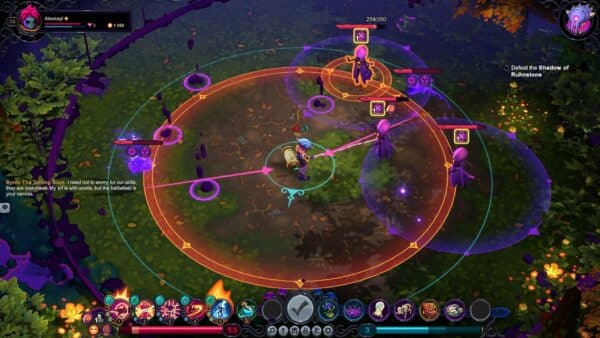
We also generally found with our combat system that having unique ads, basically and I think this is also a very MMO thing. You can’t necessarily just have one big stompy thing because. There’s so much positioning and movement and stuff in terms of the arena that you kind of also want a bunch of little guys Showing up and putting out other attack areas, you know, don’t stand fire style mechanics stuff like that. That fight was the culmination of all those learnings that went into that as well.
Andrew Krausnick: We have a number of developers on the team who have actually worked on MMO bosses and raid battles, so we definitely dipped into that toolbox. Overall our goal is to keep it interesting and challenging while easy to understand. It can be a design challenge to also make sure there’s enough variety, and we definitely did a lot of work to iterate on our ideas and figure out what worked best.
MP1st: How do you pick the boss style according to each level? Do you try to make it match the area as much as possible?
Andrew Krausnick: A lot of our designs were definitely ‘top down’, meaning that the theme came first. So once we knew how we wanted a fight to look or feel we’d start generating ideas and come up with how it could possibly work.
MP1st: How hard was it to balance the boss battle difficulty according to the number of players?
Andrew Krausnick: Multiplayer balance was definitely one of the hardest parts of the game. We have separate tuning values for how much different types of attacks can scale and how much health can scale. Also in the end sometimes you just need to tune specifically around a certain player count. In our case we’d often make sure solo and three player were focused on. Four player gets inherently a bit chaotic, and two player is close to those other two. In the end we also generally tried to make sure multiplayer runs were just a little easier, to account for a variety of skill levels participating.
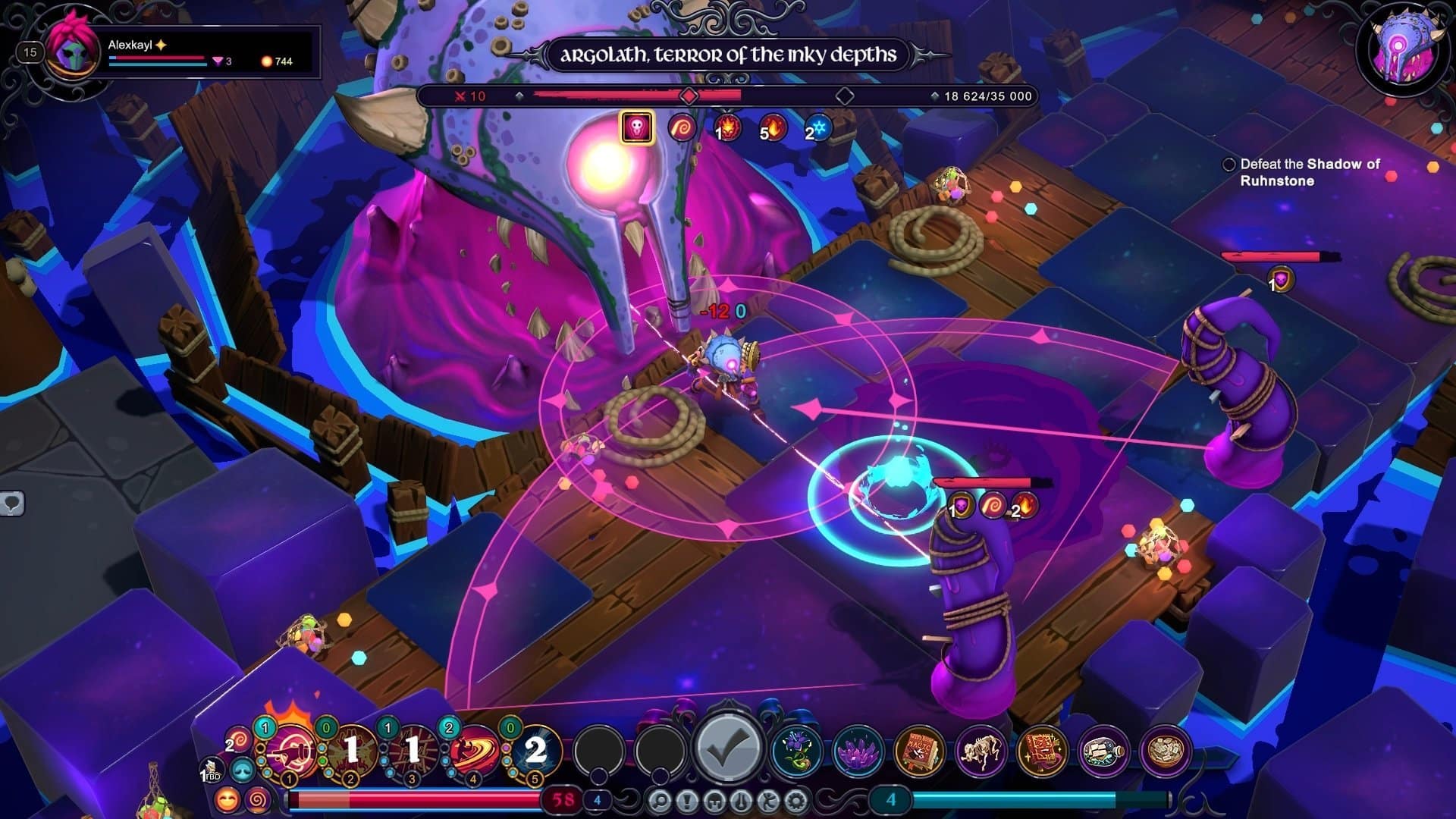
MP1st: The names of the bosses in Inkbound are very unique; what inspiration created the names?
Andrew Krausnick: Our lore team definitely got creative! They’re very much writers and thinking about how words sound and related to the environment of the story was always a part of it.
MP1st: Can you tell me how you designed the final boss? Was it a different design challenge from building the other bosses?
Andrew Krausnick: The final boss was as you might expect the most challenging to design of all! Obviously it has to be bigger, better, and harder. Plus being at the end of the run it means that the build variety and range of power is the most it can possibly be. As a result we need to design something broad enough that any build could theoretically beat it without getting shut down, and also still find it challenging.
Inkbound is out now on PC via Steam
This website contains affiliate links. If you click a link and make a purchase, we may earn a commission at no additional cost to you. This helps support our work. Learn more on our affiliate page.