Daemon X Machina: Titanic Scion Review – Mecha Fans Rejoice
Six years after the release of Daemon X Machina, developers Marvelous Inc. are back with a sequel, Daemon X Machina: Titanic Scion. While the original found a dedicated following, it was without its flaws, though now back for another round, the studio has a lot to prove with the game’s sequel, and in many ways, it succeeds.
While the narrative is largely forgettable and the open world feels like a missed opportunity, the developers made a significant step forward by delivering a much more refined and exhilarating gameplay experience.
For Humanity!
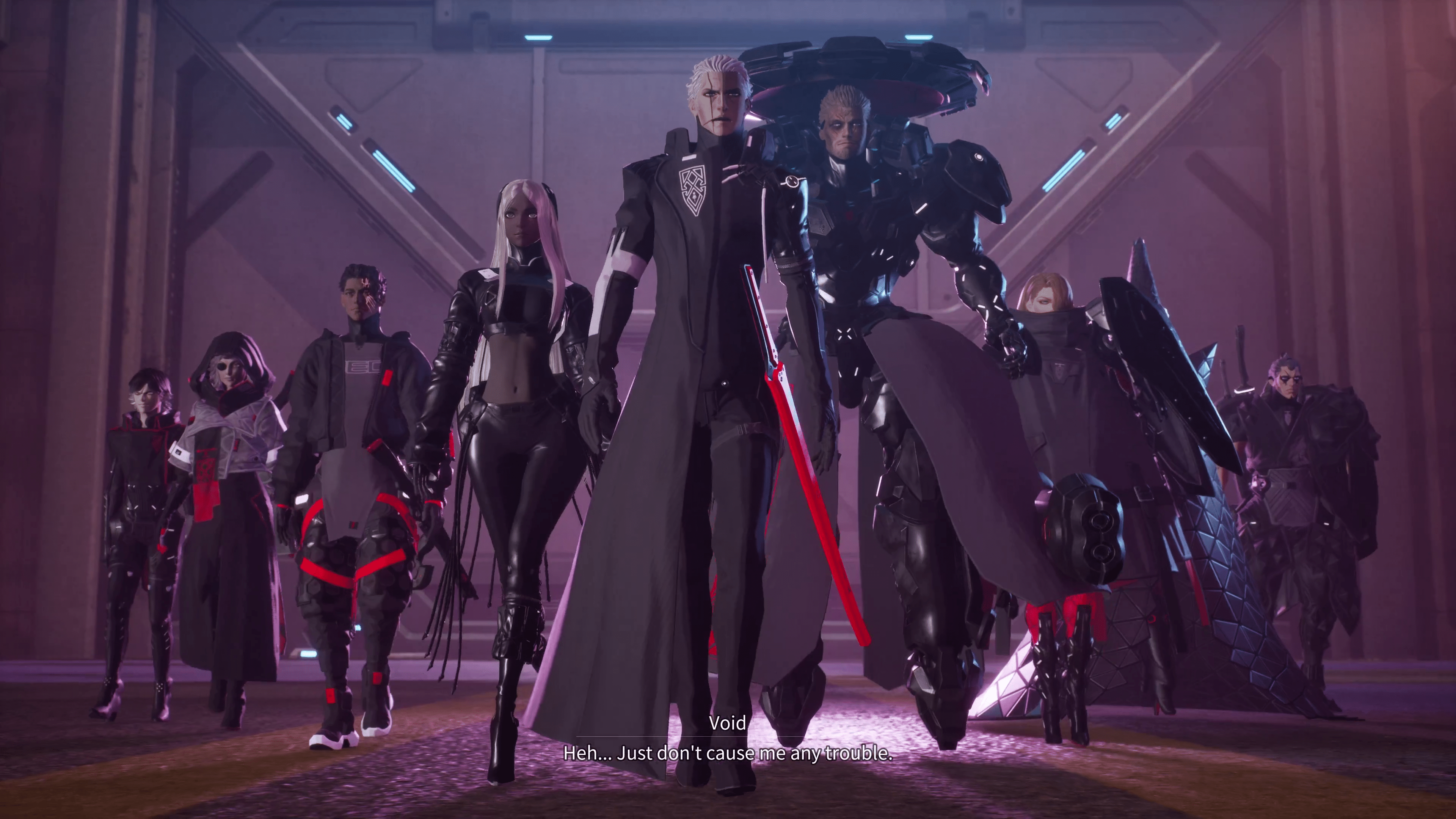
Set 300 years after the events of the first game, on a whole different planet, the story of Daemon X Machina: Titanic Scion is centered around you, a customizable player who is fully voiced and in the company of a group of beings known as Outers. Unbeknownst to you, the Outers have a goal to eliminate the last remnants of the human race, who have taken up rebellion against them, forming the Reclaimers. As expected, you eventually find your way to the Reclaimer side, where you must make the choice: side with your own kind or fight for what is right and save humanity from total annihilation.
As far as the story goes for Daemon X Machina: Titanic Scion, I wouldn’t go in expecting much. If you enjoyed the campaign of the first game, then you’ll like what the sequel has to offer, but if you didn’t, well, this is definitely better once it picks up towards the second half. The characters are certainly memorable, and some fantastic set pieces play out during the campaign, but these moments aren’t a strong enough reason to play the game on their own. For me, that’s fine; I went into this not expecting the most coherent story. We mechafans have gotten used to that when it comes to video games. It’s not saying that the campaign of Daemon X Machina: Titanic Scion is bad or anything, but if you came here for the story, then you came here for the wrong reasons.
What you should be entirely focused on is the gameplay.
This Hand of Mine Glows With an Awesome Power

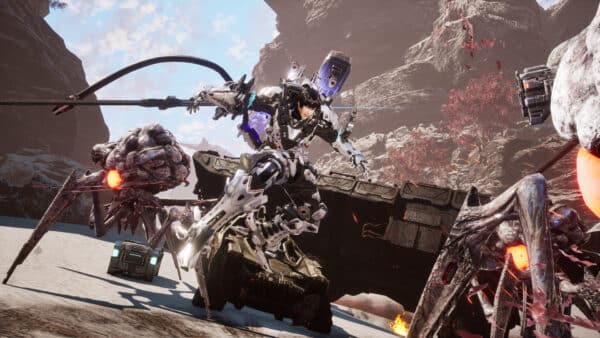
When Daemon X Machina: Titanic Scion was announced, I was shocked to hear that the game was moving away from its giant mechs in favor of Arsenals, which are essentially power armor (debatably, still mechs). I know a lot of fans weren’t too excited by that news either, but I’ll be honest, with the amount of customization that is offered and how crazy your mech can still get, the change-up isn’t as drastic or as bad as I thought it would be. I actually really dig it, and that’s mostly due to how much better the combat is compared to the first game.
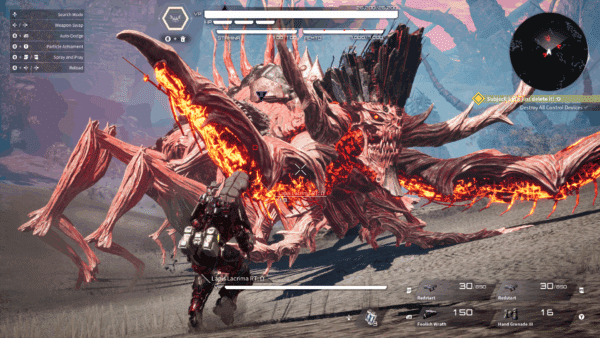
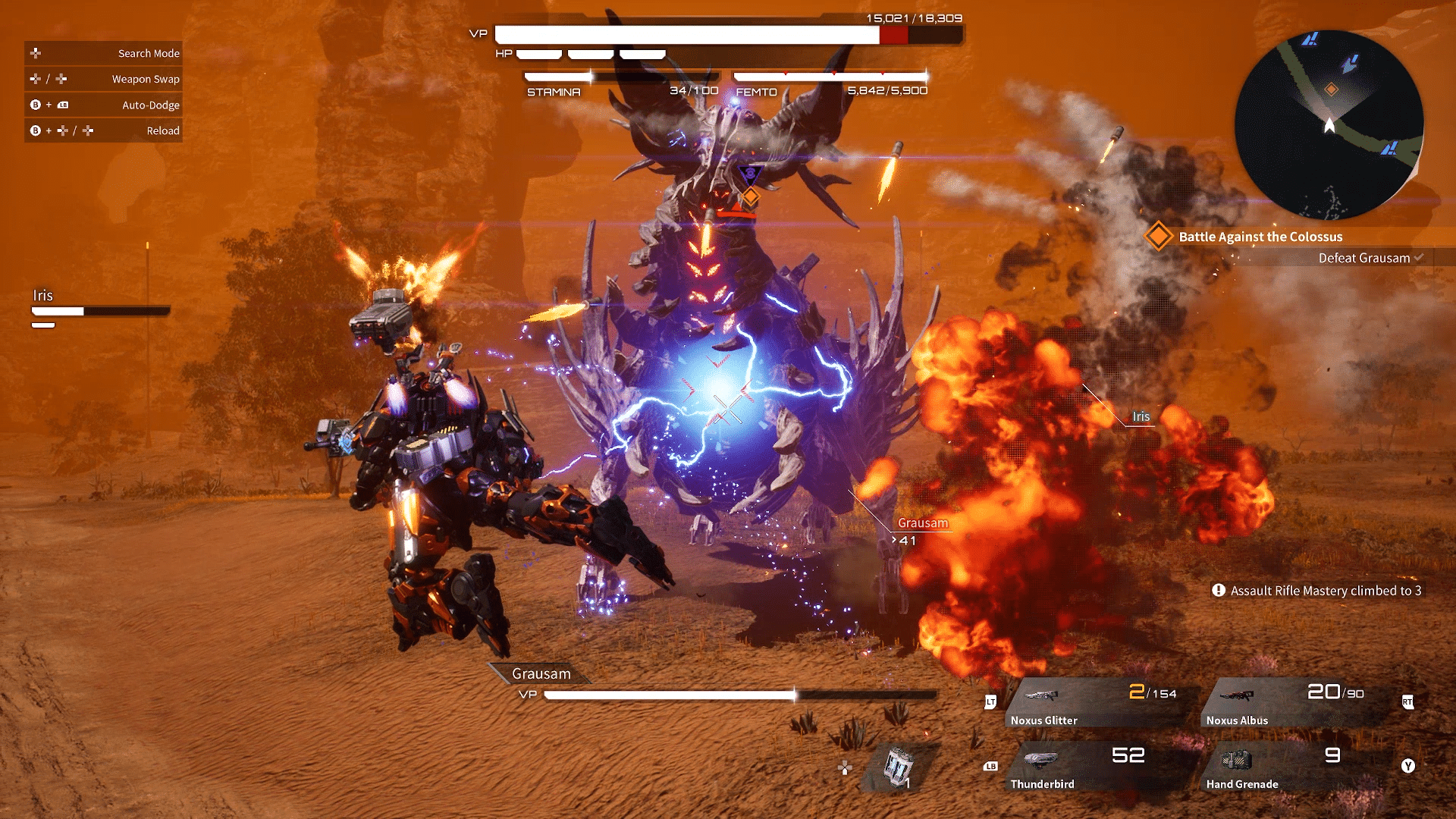
That, in a lot of ways, is thanks to the new and improved targeting system, which still features manual locking but also adds orbit lock-on during combat now. This greatly enhances mobility, making the experience feel closer to an action game, similar to Armored Core, over its predecessor. It’s more refined in many areas, which makes it feel incredibly satisfying to control. The big boss battles are still a bit of a cluster to deal with when it comes to the camera, but fighting other Arsenal-based enemies, and it being this high-speed chase with particles and explosions flying everywhere, it’s precisely the kind of game mech fans want.
As I mentioned, there are a ton of customization options for you to play around with, with Arsenals coming in with three different build types, those being light, medium, and heavy. There’s a memory limit, as well as weight and other stats affecting things for you to take into consideration, but the builds that players can make are pretty limitless. With the glamour system, you can look however you want without being forced to look from your armor. Weapons and armors have skills that can be unlocked for added stat bonuses, too.
On top of this, there’s a new mutation mechanic (sort of like the surgical system in the first game) that sees you taking on the genes from defeated enemies and fusing them into a unique skill. These range from improved movement, defensive, and offensive skills, but it does come at a significant cost: your humanity. That cost actually isn’t all that big, and there are zero benefits to not taking advantage of the mutation system, other than your character potentially looking ugly because their body starts to deform. There are systems in place to reverse those cosmetics, so don’t get too hung up on them if you aren’t a fan of the changes.
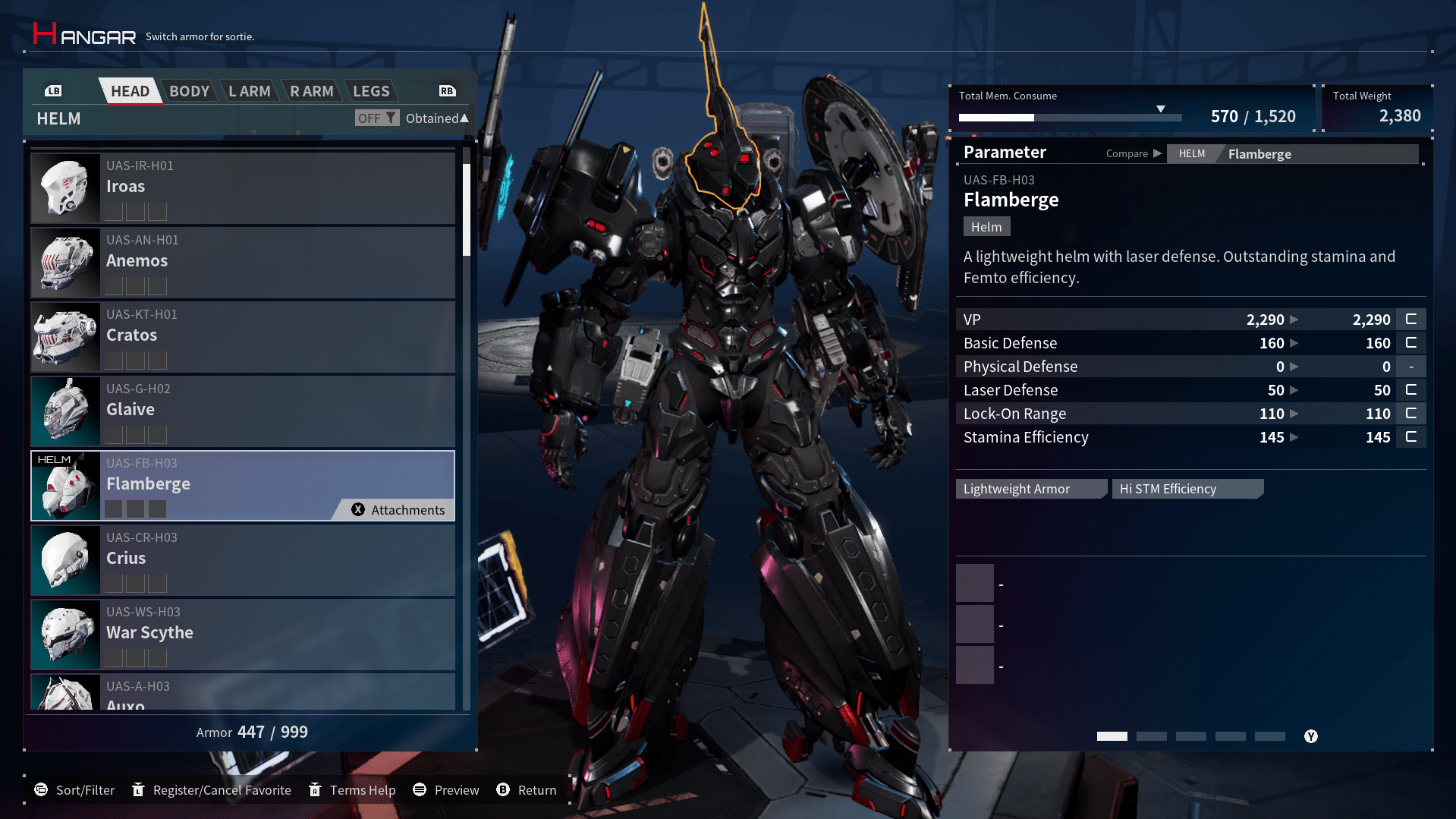
I’m pretty happy about the new features and gameplay improvements made in the sequel, because it all does come together for a much more enjoyable experience. The fast-paced combat, deep customization, and overall improved flow make it an extremely fun game when it comes to combat. It feels like the developers took a lot of the criticism from the first game to heart and really delivered on what players wanted. While the story might not be its strong suit, the gameplay is undeniably the star of the show and provides a fantastic reason for mech fans to dive in.
If the whole power armor thing isn’t up your alley, there are Heavy Armor, which are summonable giant mechs that you can hop in and control. These are absolute monsters and feel fantastic to pilot, though the only disappointing thing about them is that they are on a time limit. I don’t mind the limit, but it feels short for its base value, and I’d like to see it improved beyond the in-game options.
One big selling point about this game is the cooperative play, which allows you to play with two additional players for three-player coop. You can play through the whole story, grind through the endgame for better gear, and even roam the open world with one another. This is an excellent feature, and with crossplay, you can team up with anyone on any platform. They don’t even need to be your friends; you can join in on rooms through the lobby system and play with randoms. But regardless, solo or with others, you’re going to have a ton of fun when it comes to creating new builds and engaging in combat against enemies and bosses.
With that said, there are some areas where the game falls short.
Open World Fatigue?
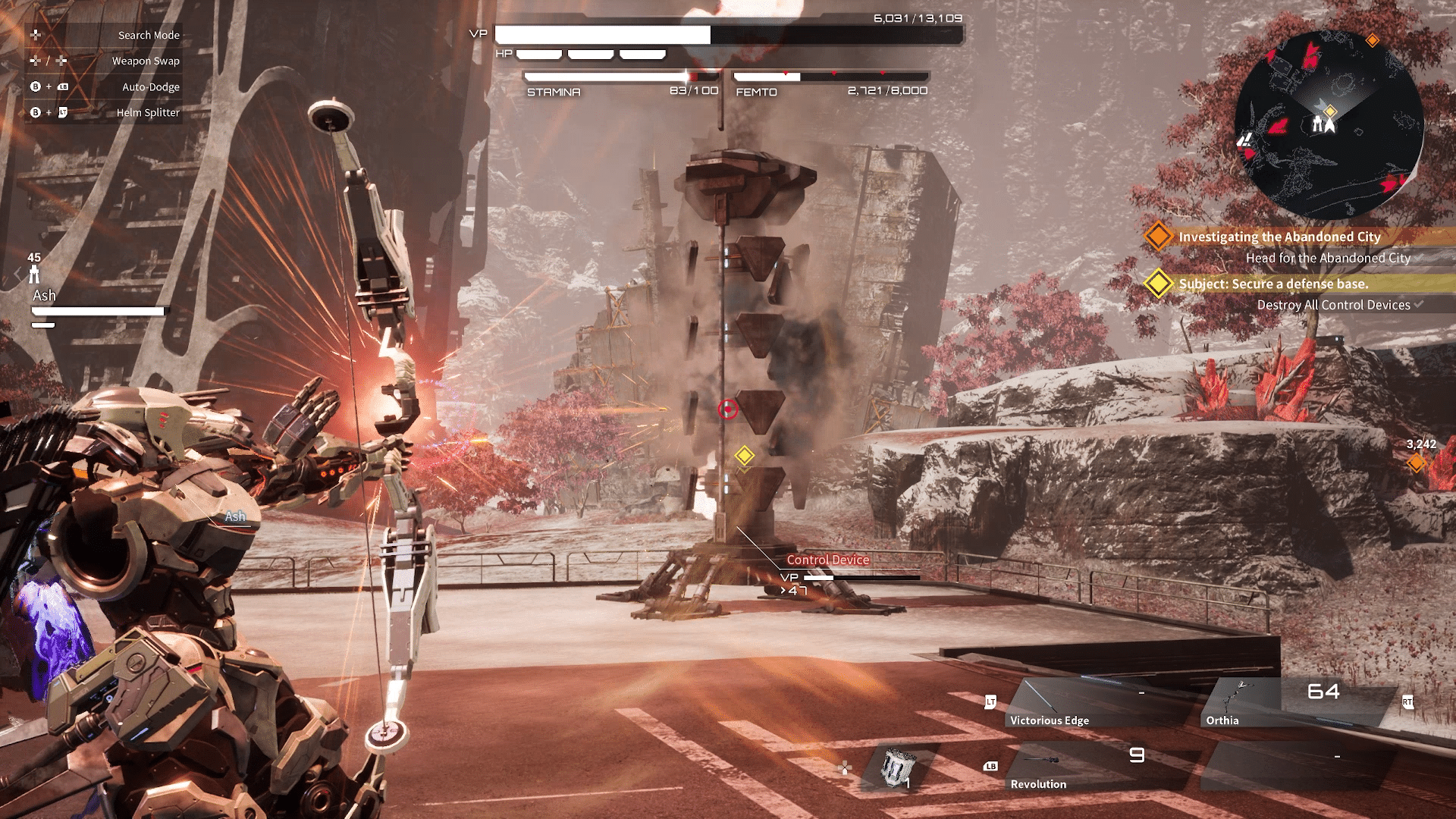
I think this game’s biggest fault would have to be the open world and the activities that populate it. If they had to be described in a single word, filler would be the term I’d use, and not the good kind. The world is pretty massive, yet feels rather empty at the same time. It doesn’t help that none of the locations really have anything that stands out, as I felt like I was traversing through the same environments, just with a different name.
Sure, some areas are greener than others, while others are more gray, but it doesn’t change the fact that you won’t be doing much in them outside of some poorly thought-out side missions. There’s one, for example, that requires you to equip a heavy armor suit, and once you do, you have to carry 3-4 boxes to a designation, while also being required to play Tetris when you place the box so they don’t crush one another. Picking up and putting those boxes down only works half the time, and this is a quest line that goes on for a few more times, which starts to become tedious.
There are also races that players can participate in, whether that be flying in your mech, riding on a horse, or driving a motorcycle. Sounds a little silly to have this big mech that can fly, ride on a horse, or motorcycle, but that’s all in good fun. But what isn’t fun is, well, driving the bike itself. All vehicles can be driven outside of the races, but there’s not really much of a point outside of aura farming (and yeah, it looks badass), but you’d find a hard reason to even bother with the bike the moment you try it out. What is arguably the fastest means of transportation somehow becomes one of the slowest, as the only way to drive it is by constantly hitting the brakes every few seconds. The terrain just isn’t built for the bike, as you’ll find it will ragdoll you off the moment it touches anything that isn’t a flat surface. It’s one of the worst things I’ve ever experienced when it comes to controls, and I cannot fathom how something designed like this made it past Q&A.
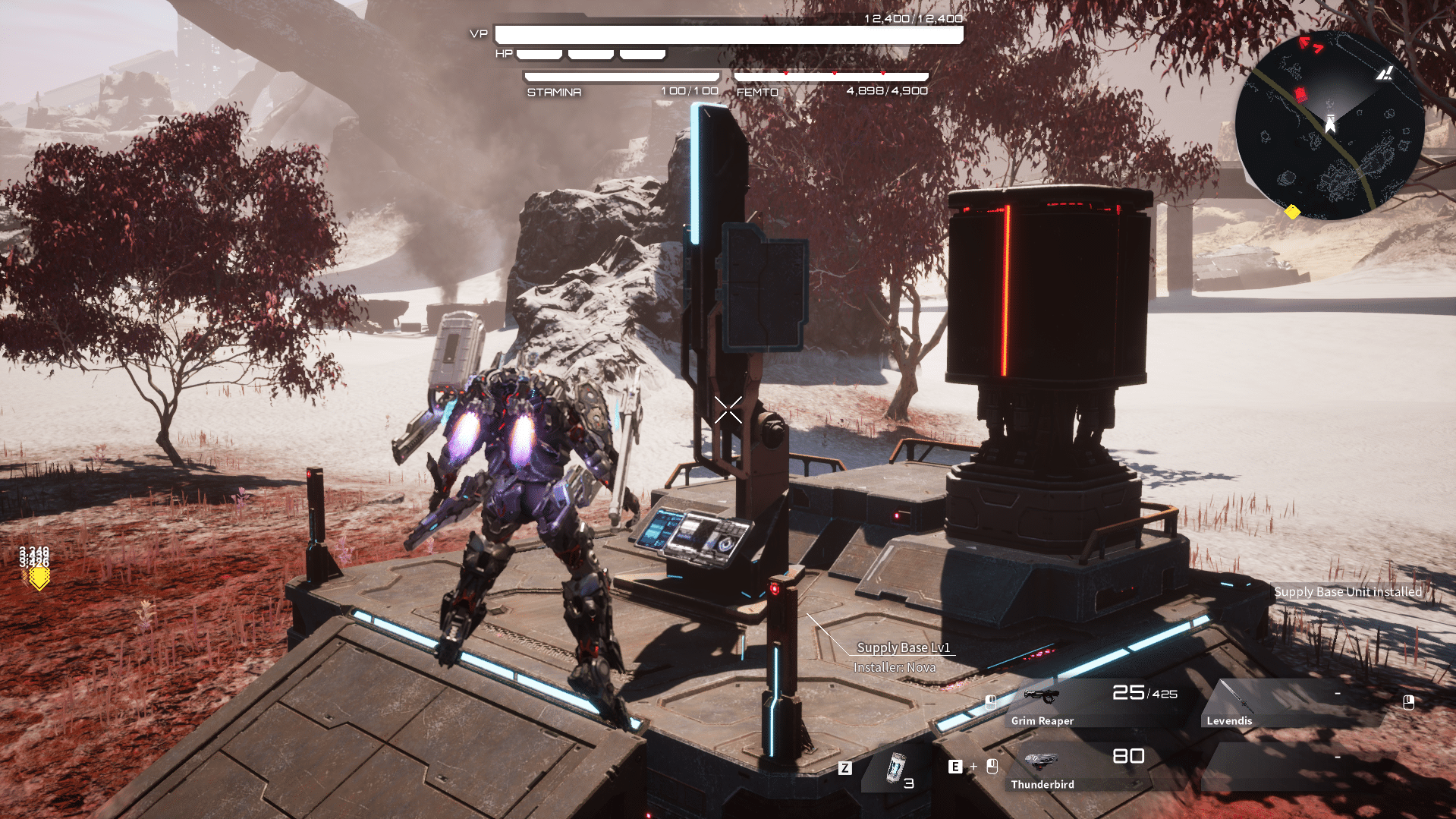
Not that it really matters because you’re not going to spend much time with it, but in some ways, it speaks volumes about the overall side missions as they’re mostly repetitive and flat-out boring. I’m not a fan of also going to a mission and finding out I don’t have the right equipment, then needing to backtrack to a hangar to swap out parts to take on that mission, only for that mission to actually not need you to use said equipment. What’s the point of having a mission that requires the knuckles, only for it to let me shoot enemies with my machine gun and never use said knuckles?
I personally would have been okay with keeping the mission structure from the first game for the sequel, a fine example of not everything needs to be open-world. Still, if a third game does happen, I do hope that if they stick with being an open world, they improve on it. Just going into this, if you’re expecting some captivating open world with memorable activities, this ain’t it.
On the performance side of things, I was pretty happy with how well the game ran on my PCs. Mind you, I have heard and seen the performance issues on other platforms, so your experience will vary, but if you’ve got a solid rig, Daemon X Machina: Titanic Scion should run pretty well if you target 60 FPS. I did notice some hitches after a cutscene and fast traveling, but nothing major during combat, where it actually matters the most. I tested the game on an RTX 4090 GPU with an AMD 9800X3D, as well as an RTX 3060 and an AMD 5600X, one on the high-end, and the other on the budget-end. Obviously, different presets and resolutions when running on each build, but overall, performance seemed like a non-issue. But again, that will vary from user to user.
Forging a New Path
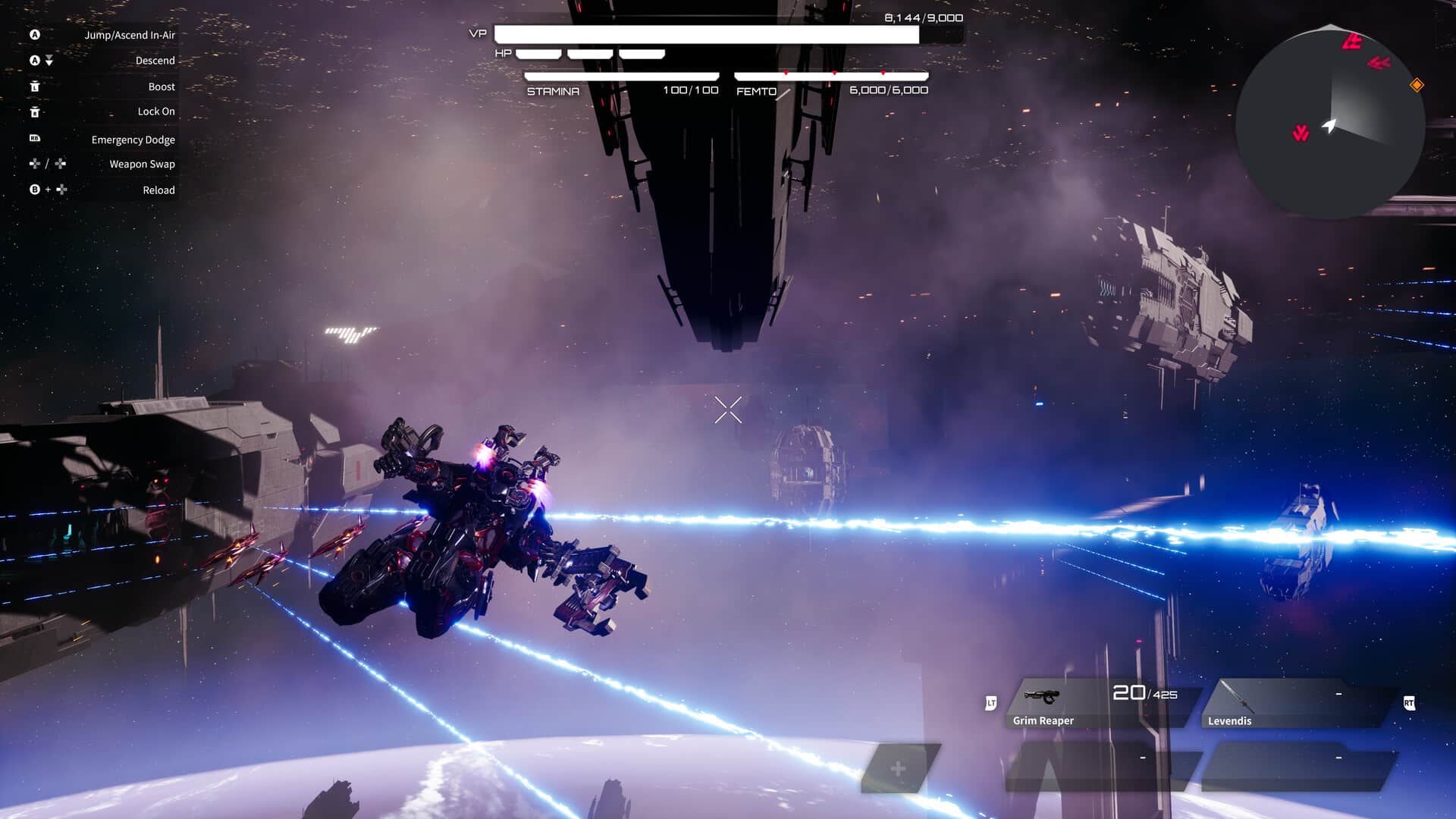
Despite some of the mentioned issues, Daemon X Machina: Titanic Scion is a significant improvement over its predecessor, where it matters most: the core gameplay. While the narrative is forgettable and the open world feels like a missed opportunity filled with tedious side content, the exhilarating Arsenal combat, robust customization, and excellent cooperative play more than make up for its flaws. The developers clearly focused on refining the moment-to-moment action, and that dedication pays off in a big way. This is a game built for mech enthusiasts, and if you came for the satisfying loop of building and piloting your perfect machine, you will not be disappointed. For all its faults, Daemon X Machina: Titanic Scion is a must-play for anyone who loves high-speed, explosive mech action.
Score: 8/10
Pros
- The core gameplay is a significant improvement over its predecessor, with fast-paced, satisfying combat and deep customization.
- Cooperative play is an excellent feature, allowing you to play the entire game with others and supporting crossplay.
- The game’s performance is generally solid, especially on a capable PC, with smooth action during critical combat moments.
Cons
- The story is largely forgettable and not a strong reason to play the game on its own.
- The open world is vast but feels empty and is populated with repetitive, boring side missions.
- The controls for certain activities, like driving a motorcycle, are poorly designed and frustrating.
Daemon X Machina: Titanic Scion review code was provided by the publisher. You can read MP1st’s review and scoring policy right here.
This website contains affiliate links. If you click a link and make a purchase, we may earn a commission at no additional cost to you. This helps support our work. Learn more on our affiliate page.