Gradius Origins Review – Take Flight Again
Games like Space Invaders and Asteroids helped to pioneer the shoot-’em-up genre, aka shmups, but the Gradius series took it multiple steps further with full side-scrolling bullet hell action. Originating in arcades, games like this were quarter-eaters due to their difficulty, which led to multiple sequels and spin-offs.
Now, Konami has once against enlisted developer M2 to revive one of their classic franchises with the Gradius Origins collection, but this time they also created a brand retro-style game for the collection as well with Salamander III.
Bullet Hell
Gradius Origins boasts 18 different versions of seven total games in this collection, with the majority of them being different regional variants of one another. Overall, the games included are Gradius, Salamander, Life Force, Gradius II, Gradius III, Salamander 2, and the all-new Salamander III that is exclusive to this collection.
The Gradius series is rather confusing when it comes to these titles, so I’ll try to explain as best I can. Gradius is the first entry in the mainline Gradius series. Then came Salamander in Japan as a game set in the same universe as Gradius, but with some changes, which received a US release under the name Life Force. Then Japan received an updated version of the game and it was called Life Force, hence the two being listed as separate games. Then came Gradius II and Gradius III, which were pretty straightforward, followed by Salamander 2 and III, which were follow-ups to the original Salamander set in the same universe again.
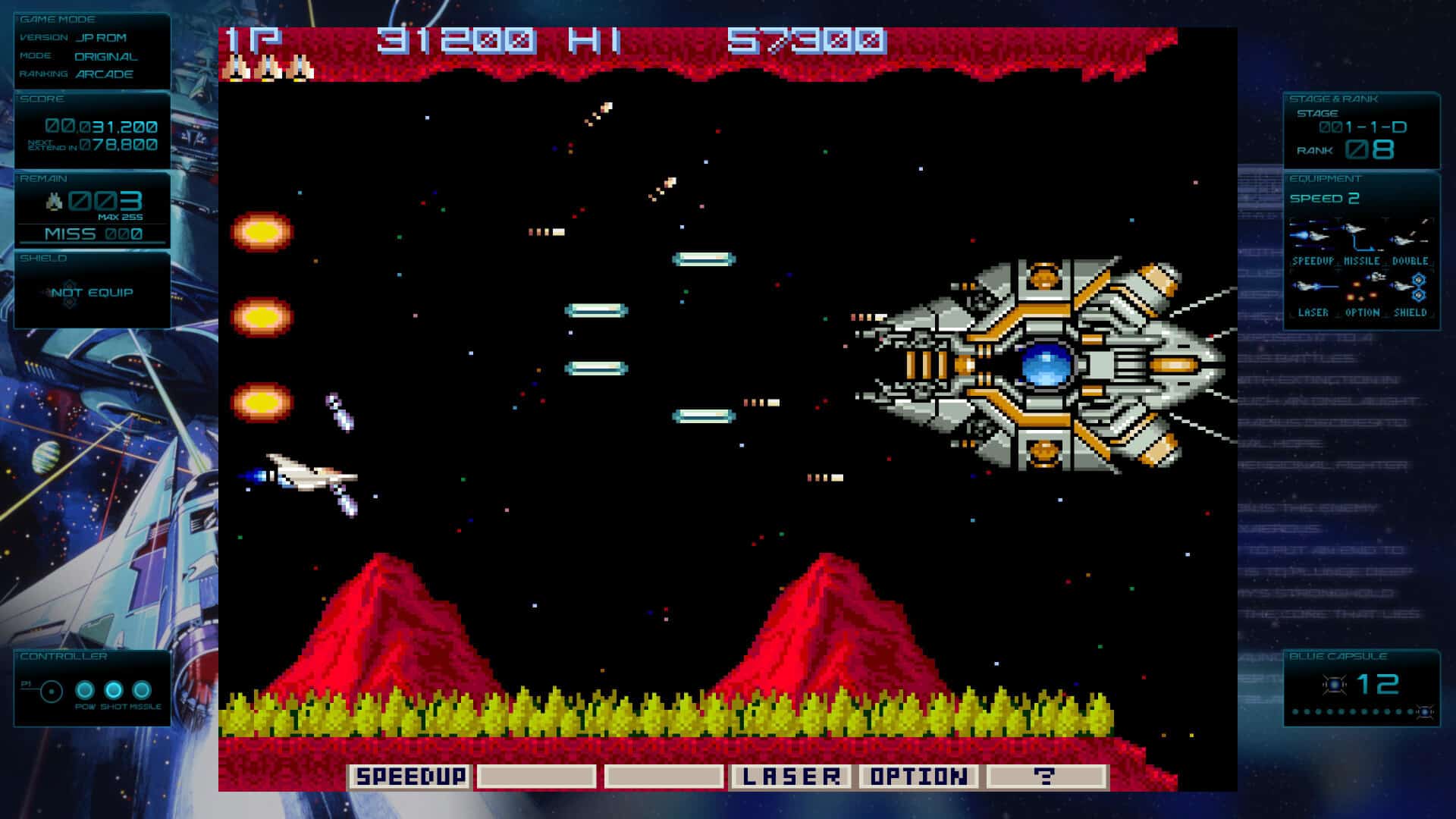
Starting with the original Gradius, there are five variations available in the game to choose from, including the JP Rom version, the JP Bubble version, the NA version, the EU version, and the NA Prototype version. It’s pretty awesome that they managed to include so many different variations, especially with even a prototype. The JP Bubble version was actually the first to be released in Japanese arcades, but then the JP Rom version replaced it as the bubble memory took a while to warm up and was unreliable. The NA version is even more difficult, but adds in continues and more power-up spawns, while the EU version just has some fine-tuning. Lastly, the NA Prototype is a work-in-progress version of the NA, which is the most challenging of all.
Gradius is your standard shmup that helped to set the tone for generations of similar games like this. You start with getting to add as many credits as you’d like and then jump right in with your ship and must fight hordes of enemies as they’re flying towards you. The end of each stage will result in a difficult boss battle before letting you move onto the next. Even being from 1985, this game still holds up quite well, though maybe a little slower than some other shmups out there and can feel a bit dated as a result.
Salamander offers both the Japanese version and the NA version, though as mentioned earlier the NA version is titled Life Force. This NA version added voices and adjusted the background graphics, but is otherwise identical to Salamander. Jumping into Salamander or NA Life Force for the first time after Gradius, you can notice a drastic improvement in a number of areas even though it only released a year later. Playing the NA version, I greatly enjoyed the added voice clips and the design of the power-ups looks so much better this time around. I also liked how quickly the stages felt more alive here than in the first too.
The biggest change from Gradius to Salamander is that it alternated back and forth between being horizontal or vertical scrolling stages. The vertical stages were also carried over to Salamander II and Salamander III and added even more depth to the combat. In fact, this is why I actually found myself enjoying the Salamander games in the collection better than the Gradius games with how it took a Contra-like approach with the stage type variety.
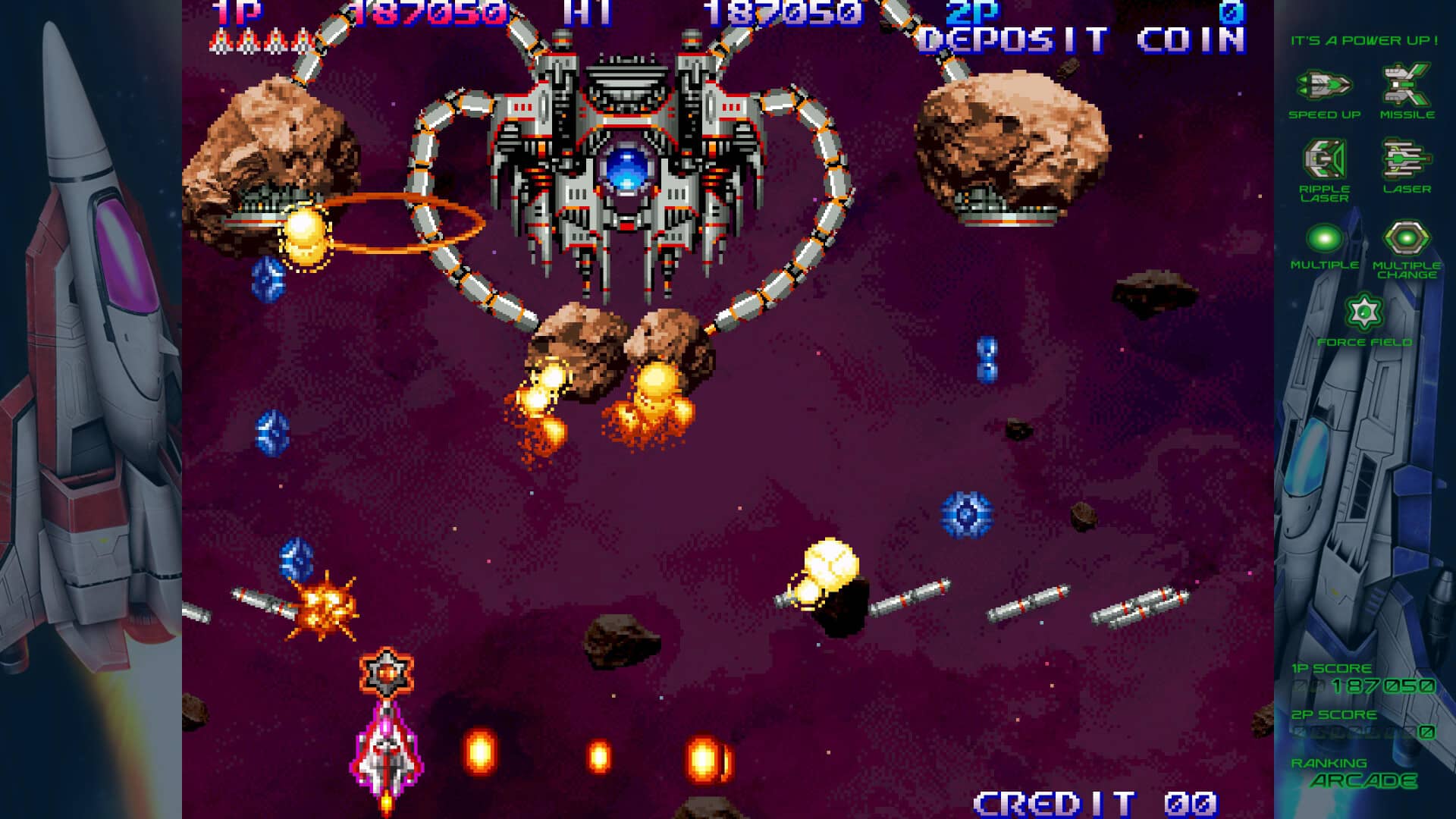
Life Force itself was re-released in Japan is also available as aforementioned, with only one version available. However, this one version does include Original Mode, Easy Mode, and Invincible Mode to choose from. Playing this one back to back with the other Life Force, I definitely preferred the other as there seemed to be some graphical differences and the performance overall wasn’t as smooth.
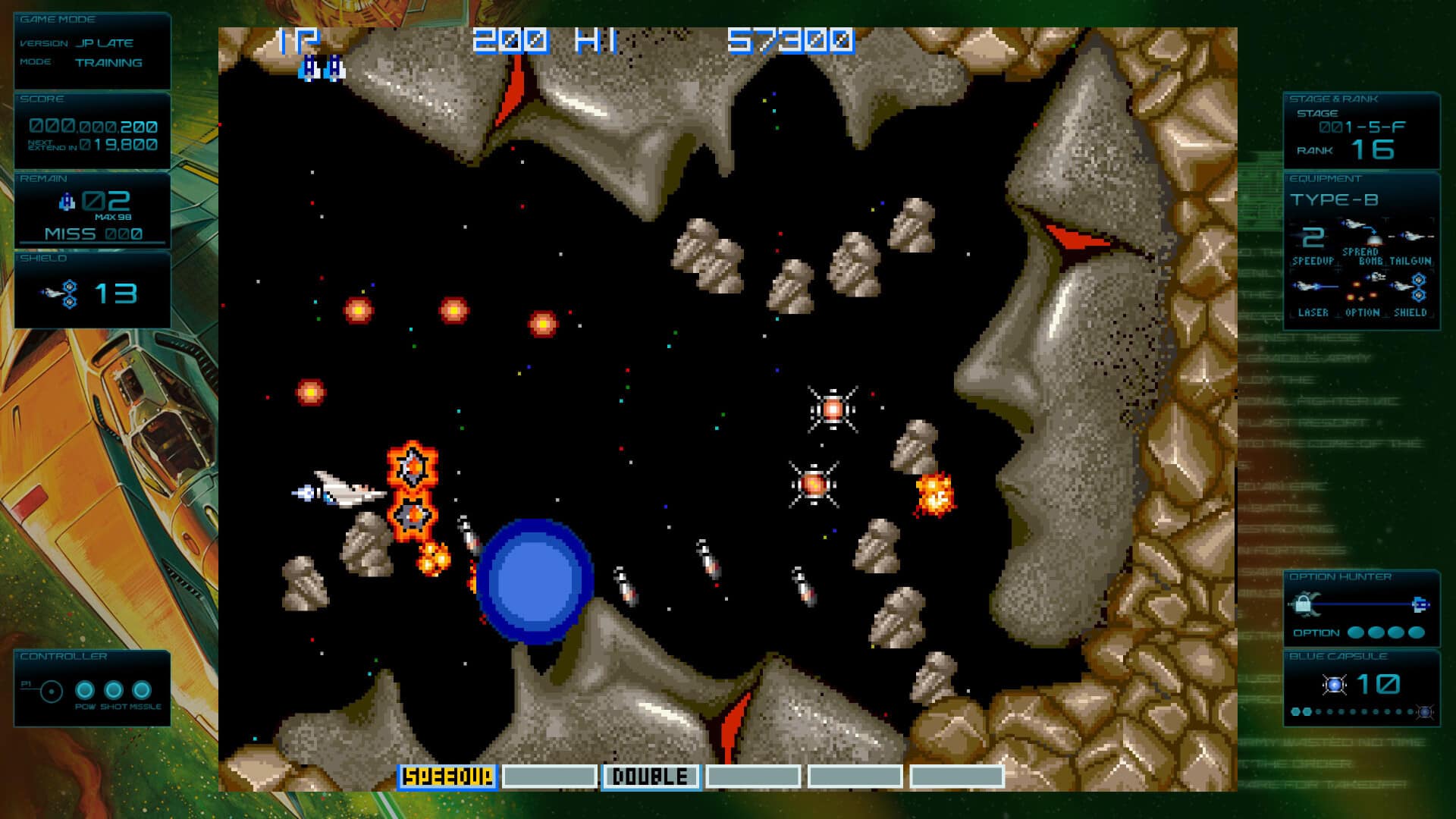
Gradius II is like the first game in that it offers multiple types of the game, this time four. These include JP Early version, JP Mid version, JP Late version, and NA version. The JP versions just have some tweaks between them, with the NA version being based off the JP Mid version, though with a new continue feature added. A major change at the beginning is that you have to select a Power Meter path that includes Speedup, missiles and such. This game plays very much like the first Gradius, down to the slower pace compared to Salamander.
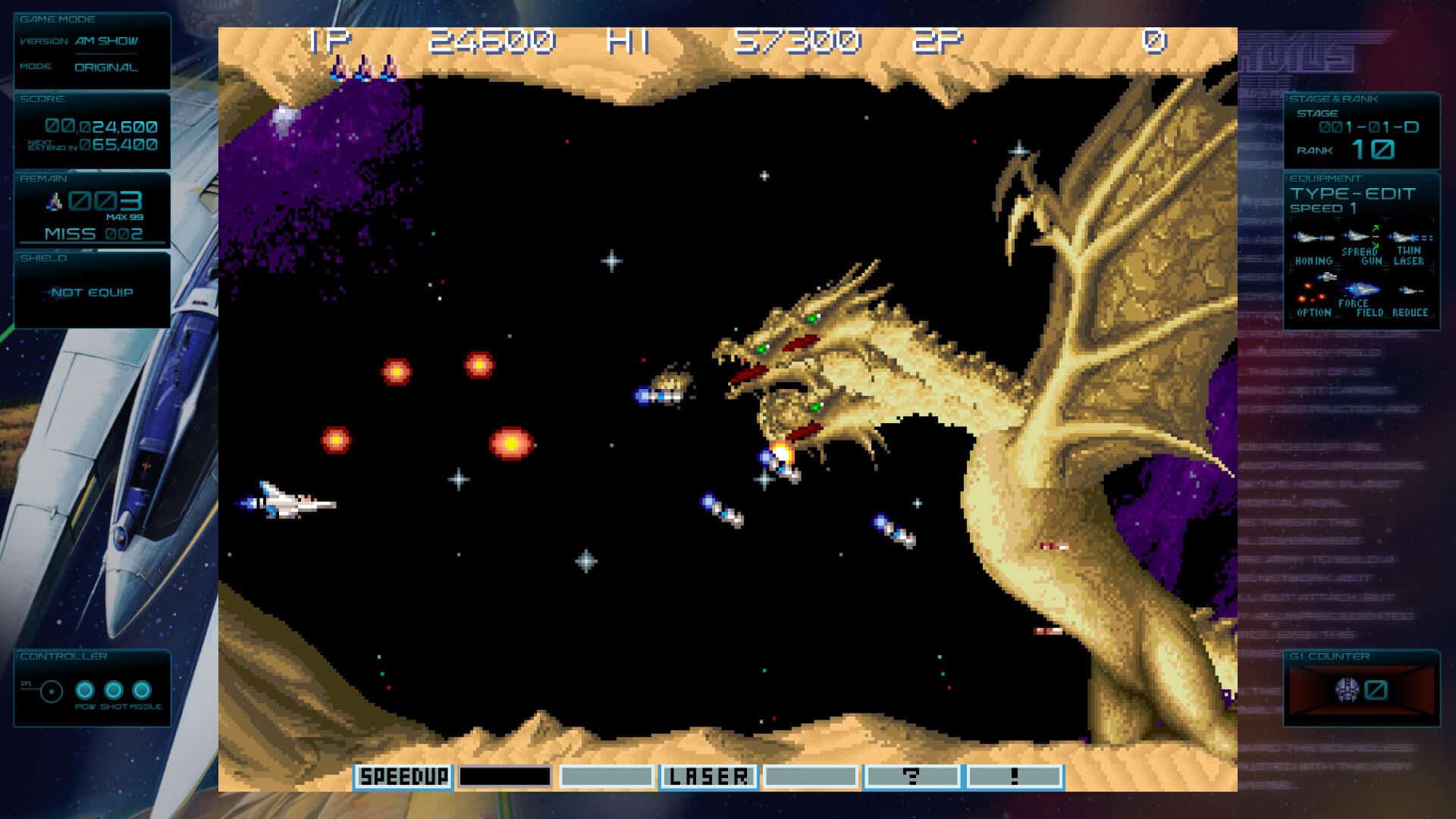
Similar to Gradius II, Gradius III also offers three variations of the game in this collection with JP Old version, JP New version, Asia version, and JP AM Show version. This game never released in arcades outside of Asia, so that’s why there is no NA version here. Each of these versions are a little different from one another, with JP AM Show version being one that was shown as trade shows before the release of the game and the Asia version takes away the course selection feature, though adds more power-ups. JP AM Show version has also never been released on a home collection, so this is the very first appearance for it. Just like II, III also plays very much like the first game and is one of the more difficult entries here.
Salamander 2 is by far the most advanced of the original six games in the collection, as the first five released between 1985 and 1989, while Salamander 2 didn’t release until 1996. This is seen immediately with the visual upgrade and even more dynamic backgrounds and moving enemies than ever before. I really had a good time with this one, though it definitely seemed easier with the continues system than many of the others.
A New Challenger Approaches
The final game in the collection is entirely new and is exclusive to this collection, Salamander III. What is really cool here is that they didn’t try to modernize the game too much, but rather took the approach of “what if a sequel to Salamander 2 was released back in 1998?” This decision paid off handsomely, as we received yet another intense shooter to enjoy as if we were back in the ’90s again. You can immediately tell the graphical upgrade with the level of detail on each background. Salamander 2 was a leap forward, but still was in that era where people weren’t quite sure how to take full advantage of the technology like they were at the time of making the third game.
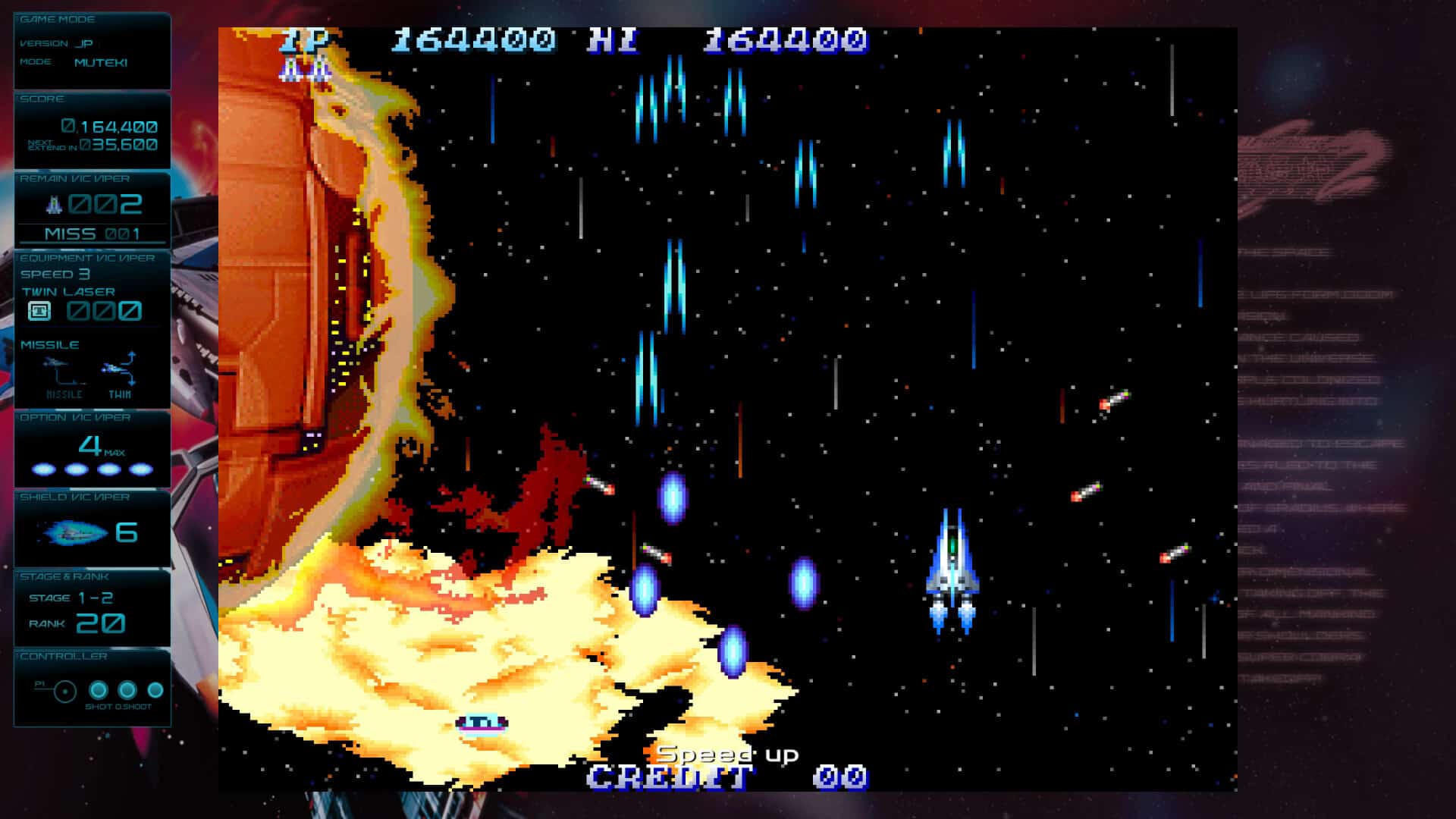
Just like its predecessors, Salamander III features six different stages for you to fly through and take out enemies. Also like the prior Salamander games, these stages alternate between being horizontal and vertical, with this one having some of the most innovative designs and difficult sections. Thankfully, the continue system here is really user friendly for those that are struggling compared to some of the older titles in the collection.
Even as a modern collection, the games within it don’t always perform as well as you’d like. Due to how the games were built back in the day, you will be subject to slowdown and framerate drops at times where there is a lot on the screen, which is especially a problem with bullet hell type games. However, thankfully this collection also includes the staple rewind feature and save states that can help you when you end up dying as a result of one of these slowdowns. Unfortunately though, using the rewind feature will make you ineligible for the leaderboards found in the game.
Beyond putting all of these games into one collection, they did extra work to extend the screen beyond the 4:3 ratio with some very helpful information. The left side of the screen states which version of the game you are playing, your score, some game stats like deaths, and even if you have an active shield or not. Oddly it also shows the button inputs in the button left when you move the joystick or press buttons, which I didn’t see much use in having. The right side of the screen then has the stage, your rank and lists any equipment and your speed, as well as the number of blue capsules remaining to be collected. Depending on the game you are playing, there are many more things listed on the screen, so make sure to pay close attention.
Visiting the Galleries
Developer M2 has been most known in recent years for their work on remasters of older games, such as the Sega Ages line of games and also other collections for Konami like Castlevania Anniversary Collection and Contra Anniversary Collection, which were both stellar collections. M2 knows just how to bring back older games to modern controls with a level of love and care, while also giving us extra content to enjoy as well.
Gradius Origins includes a Sound Gallery where you can go listen to the full soundtrack of all the games included except for Salamander III unfortunately. I loved digging through these soundtracks, finding nice little gems like the Game Over arrangement for Gradius that is literally a MIDI version of the theme from 2001 A Space Odyssey. A really neat feature in the games themselves is that they actually pop up with a box saying what song is playing at any given time for a few seconds, which correspond to the soundtracks here.
My favorite part of these collections are often the art galleries and M2 made sure this game was full of art to check out in the Visual Gallery. Across the six classic games included, there are instruction cards, flyers, general artwork, developmental resources, and more. Considering these are arcade releases, there aren’t like full manuals included like we see in some collections sadly, but what is included looks great.
They also included what is known as the Gradius Guide, which lets you select from each of the six classic games and open to see a list of the enemies in the game and how many points you can earn by defeating them. This is a pretty useful guide to have, though they don’t have guides for all versions of each game, so you will have to go off of the JP Rom for the first game for instance.
As with M2’s other collections, there are also in-game achievements to work towards unlocking. There are 30 total here, including one that is for inputting the Konami code for the first time, while others are much more difficult to complete. These are always appreciated when playing on the Switch as we were, since there are no system-level achievements to work towards and it gives you something to come back to try to complete over time.
Verdict
It has been a long time since the last Gradius game and much longer since the last Salamander game, so getting such a well done collection in Gradius Origins is very welcome. Every game in the collection is at least worth trying since they aren’t overly long, as you likely will find some favorites along the way like I did with the Salamander games. Salamander III was easily the standout, as it’s a new game exclusive to this collection and M2 did a stellar job at maintaining the style and design of the originals here within Gradius Origins.
Score: 8.5/10
Pros:
- 18 different variations of seven total games included
- An entirely new game with Salamander III
- Included rewind and save states
- Sound and Visual Galleries
Cons:
- Slowdown is still present in older games
- Earlier games may seem a bit slower to start
Gradius Origins was provided by the publisher. You can read MP1st’s review and scoring policy right here.
This website contains affiliate links. If you click a link and make a purchase, we may earn a commission at no additional cost to you. This helps support our work. Learn more on our affiliate page.