

Like a Dragon: Pirate Yakuza in Hawaii Review – Shiver Me Timbers!
[summaraize]
Ahoy mateys! Like a Dragon: Pirate Yakuza in Hawaii is finally here, and it’s time to swap your Yakuza suit for a pirate’s coat as you set sail for the wildest adventure yet. Say goodbye to the neon lights of Kamurochō and hello to the tropical chaos of Hawaii, where treasure, danger, and a whole new breed of crime await. But who better to lead the charge on this high-seas journey than none other than the Mad Dog himself, Goro Majima? With his unpredictable nature and love for chaos, Majima perfectly fits a pirate’s life.
So hold tight, Kiryu-chan, because I have a feeling we’re not in Kamurochō anymore. From battling rival gangs to uncovering hidden treasures, this game brings the heart-pounding action and quirky humor Yakuza fans love, all set in a vibrant, sun-soaked world. Whether you’re plundering, brawling, or sailing the Pacific, Pirate Yakuza in Hawaii is an unexpected adventure that promises to leave you hooked from start to finish.
The Mad Dog of the Sea
Six months after the events of Like a Dragon Infinite Wealth, Goro Majima, the Mad Dog of Shimano, finds himself washed up on the shores of a remote island somewhere outside of Hawaii. How’d he get here? Well, that’s a mystery even to himself, as the now-retired Yakuza has seemingly been struck with a case of amnesia, unable to remember anything of his past life. He doesn’t remember being a Yakuza, managing a construction site and hostess club, or any of the people and friends he met before this moment. Not even his neverending lust for battle with Kazuma Kiryu, the series’ previous protagonist, remains as he’s practically a blank slate outside of his basic instincts and understanding of his situation.
He soon encounters a boy named Noah, and after a brief conversation, the duo is attacked by a ravenous group of pirates. Though pieces of Majima’s past slowly come back to him, he accepts that this is his life now, where he lives in a world of pirates, and to survive, he must become the top dog. To do so, though, he’ll need a pirate ship of his own, along with a crew of loyal and sleazy scumbags, to venture the seven seas in search of the ultimate treasure.
At its heart, Like a Dragon: Pirate Yakuza in Hawaii is as much of a spinoff as you can probably get while still being connected to the main continuity. It’s not Dead Souls, the spinoff Zombie game, or Ishin that saw our main characters taking on the role of historical characters during the Bakumatsu era (set during the 1860s), both spinoffs but non-canon. But it’s also not Like a Dragon: Gaiden, which, while a spinoff, served more as a bridging between Like a Dragon and Like a Dragon: Infinite Wealth as it explored what Kazuma Kiryu was doing leading up to Infinite Wealth.
Instead, Like a Dragon: Pirate Yakuza in Hawaii is more of a standalone adventure that briefly touches upon the main continuity. You don’t need prior knowledge of previous games because Majima doesn’t remember anything himself. However, avid fans will come to appreciate the nods and even additional story lore that ties back into Infinite Wealth and past entries. Ultimately, the story of Pirate Yakuza in Hawaii remains mostly a closed-off adventure as it features an entirely new cast of characters outside of Majima.
In many ways, it’s a fresh start for the character, though if you think he’s lost any of the personality he’s garnered throughout the series, you’d be mistaken—those who loved him in both Yakuza 0 and Yakuza Kiwami 2, will undoubtedly love what he brings to the table in this new spinoff.

While Kazuma Kiryu will always remain one of my favorite gaming characters, I’ve always gravitated toward Goro Majima as more relatable. There’s a reason why he’s called the Mad Dog, as his bite is brutally vicious, enacting some of the bloodiest violence we’ve seen from a character in the series. But anyone who’s played the before-mentioned titles knows that deep down, Majima isn’t the bad guy he tries to paint himself as. Underneath his cold stares and bloodlust, there’s a caring man, one who’s been emotionally wounded from past events. He knows what he’s doing is wrong, but he also knows there are lines even he won’t cross. He isn’t afraid to let his emotion show either, and when the time calls, he can be just as noble and heroic as Kiryu. The series has always had him be this chaotic force to Kiryu’s stoic heroism, but when Yakuza 0 was released in 2015, that all changed, and it gave us one of the most tragic characters in the franchise. It gave us a side of Majima that we had never seen before and an understanding of his chaotic nature.
Like a Dragon: Pirate Yakuza in Hawaii gives us more of that, a character who is conflicted between right and wrong, who knows that sometimes you must do something dirty to achieve something good. He’s a character who protects those who need protection but isn’t afraid to sacrifice his good nature to do so. He’s a force not to be reckoned with.
Though I wish this game served more as a bridge to the next mainline in the Like a Dragon franchise, the amnesia aspect of the story really works in favor of it as it allows Majima to return to a character we’ve not seen in over a decade. He’s emotionally charged, the opposite side of the coin of Kiryu, and if anyone was going to take up the mantle of being the main character, I always thought it would be him. Of course, that mantle belongs to Ichiban from Like a Dragon, but as far as continuing the brawler line of the games, Majima is the perfect successor to take over for the Dragon.
His solo adventure proves that as Like a Dragon: Pirate Yakuza in Hawaii is every bit of what I hoped to see from the character regarding the story. It’s a tale filled with tragedy that, at times, will melt your heart while also offering some of the most fun the series has ever had with a main character. Majima’s electrifying personality steals the show, and the pirate-themed aspect is one that Ryu Ga Gotoku Studio has loads of fun with.
But I do gotta give my pirate hat to the rest of the cast, who all serve as excellent supporting members. Though that’s to be expected of a Yakuza/Like a Dragon game, where they’ll filled with over-the-top soap opera drama that you can’t help but immerse yourself in. And despite this being a spinoff, there are some big names, the most notable being American professional wrestler Samoa Joe. He’s fantastic as the Pirate King Raymond Law, bringing a cold, violent, and calculated villain to life that even has Majima being pushed to the edge of how crazy he has to get.
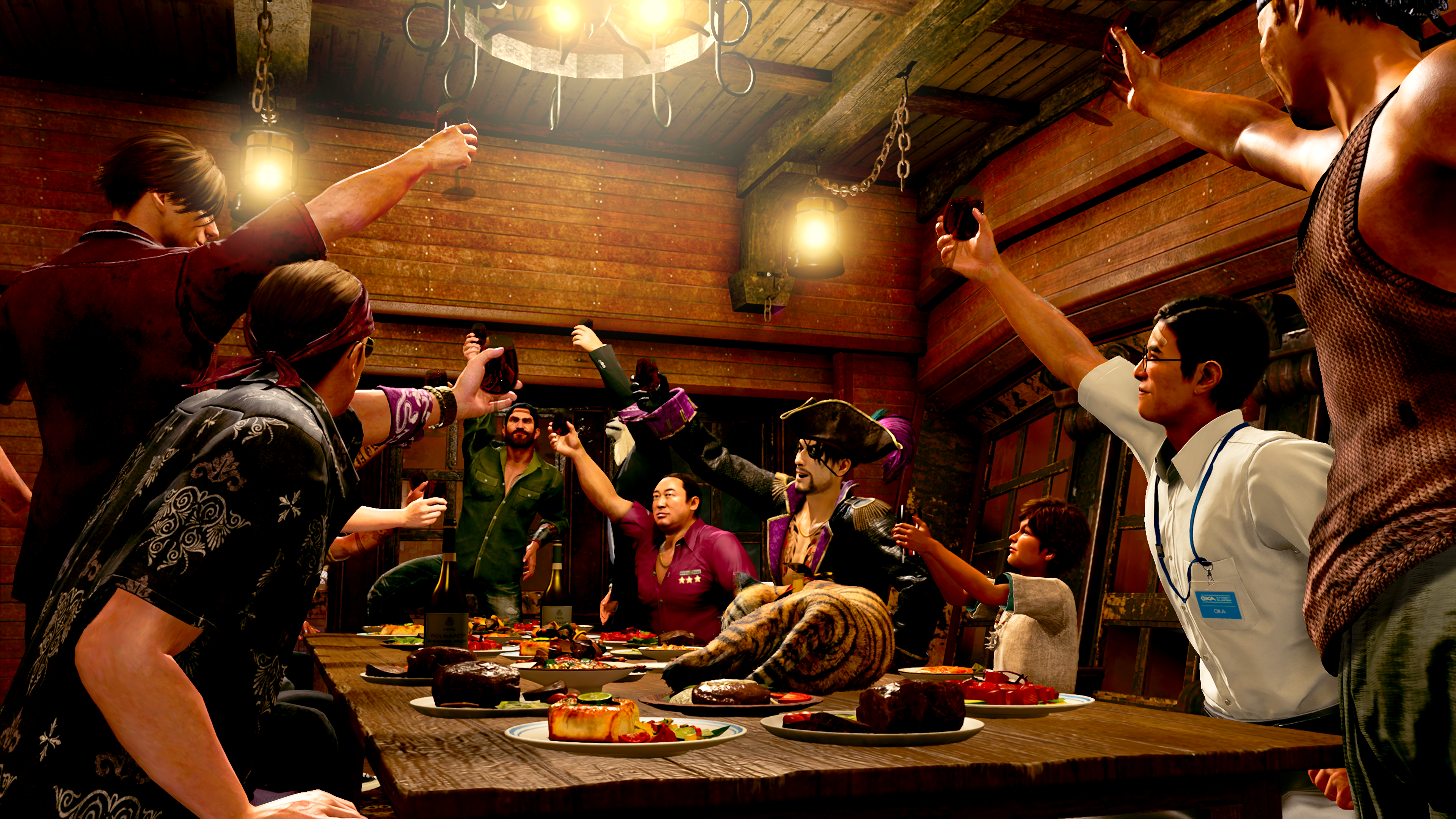
Usually, I’d play these games with Japanese audio, but I decided to play through the entire game in English this time. There are some rough performances, such as in Infinite Wealth, but Matthew Mercer does knock it out as Majima. There’s a ton of range in his voice that can express many different emotions, and it shows really well here. Mind you, Hidenari Ugaki, who voices Majima in Japanese, brings a level to the character that no one will ever top, but for the English dubbing, Mercer does a great job at capturing that manic range of emotions that Majima can switch from on the fly. Certainly, he gives a better impression than Kiryu’s English dub, especially in karaoke, as Mercer lets it all out, clearly having fun with the character at any chance he can get.
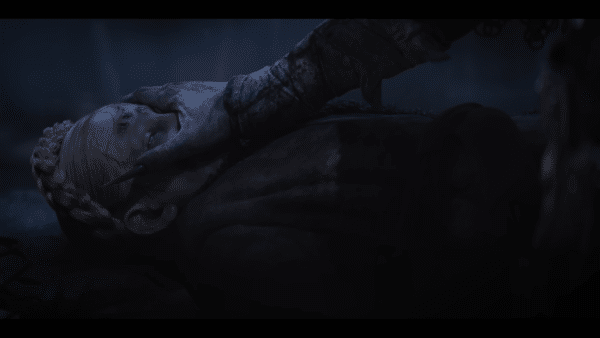
Overall, the story is pretty solid as long as you go in expecting a spinoff tale. Mind you, there are moments where the pacing is off due to some of the forced tutorials. The campaign took me about 16 hours to beat, longer than Gaiden took me but way shorter than Infinite Wealth. I know tutorials and them taking a good chunk of the game have always been a thing in the Yakuza series, but I wish they were shorter and less frequent in a considerably shorter spinoff experience.
Full Sail Ahead
The gameplay is probably the biggest thing that fans are likely looking forward to in this spinoff. I know I was, as we’d finally get to play as Majima again after so many years. The first time we got to play as him was Yakuza 0, followed by Kiwami 2, and the impression he left on the fan base has been one that has had them dreaming of the featured game with him ever since — and we finally got it here, so how does the Mad Dog play? Well, great, but not as perfect as I’d hoped.
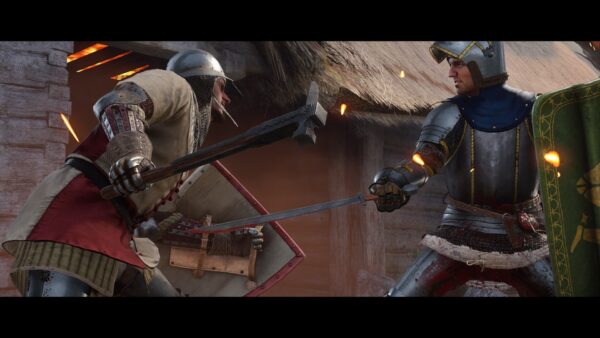
For the most part, the combat feels good, with two fighting styles available: Mad Dog and Sea Dog. Mad Dog is your traditional brawler stance that we’ve seen from Majima, where he’s fast and cunning, capable of dodging at a rapid pace while slicing enemies up with razor-sharp knives. Even though Majima is pushing 60 here, his fighting abilities are unwavering, being able to take out a ton of baddies in one fell swoop with his knives. In addition to the series’ staple heat actions, Mad Dog also has what is essentially an ultimate called Doppelgangers, which lets him summon shadow-like clones of himself. In addition to the combos that Majima can perform alone, you can tag team with the Doppelgangers and perform various combos and tag-team attacks.
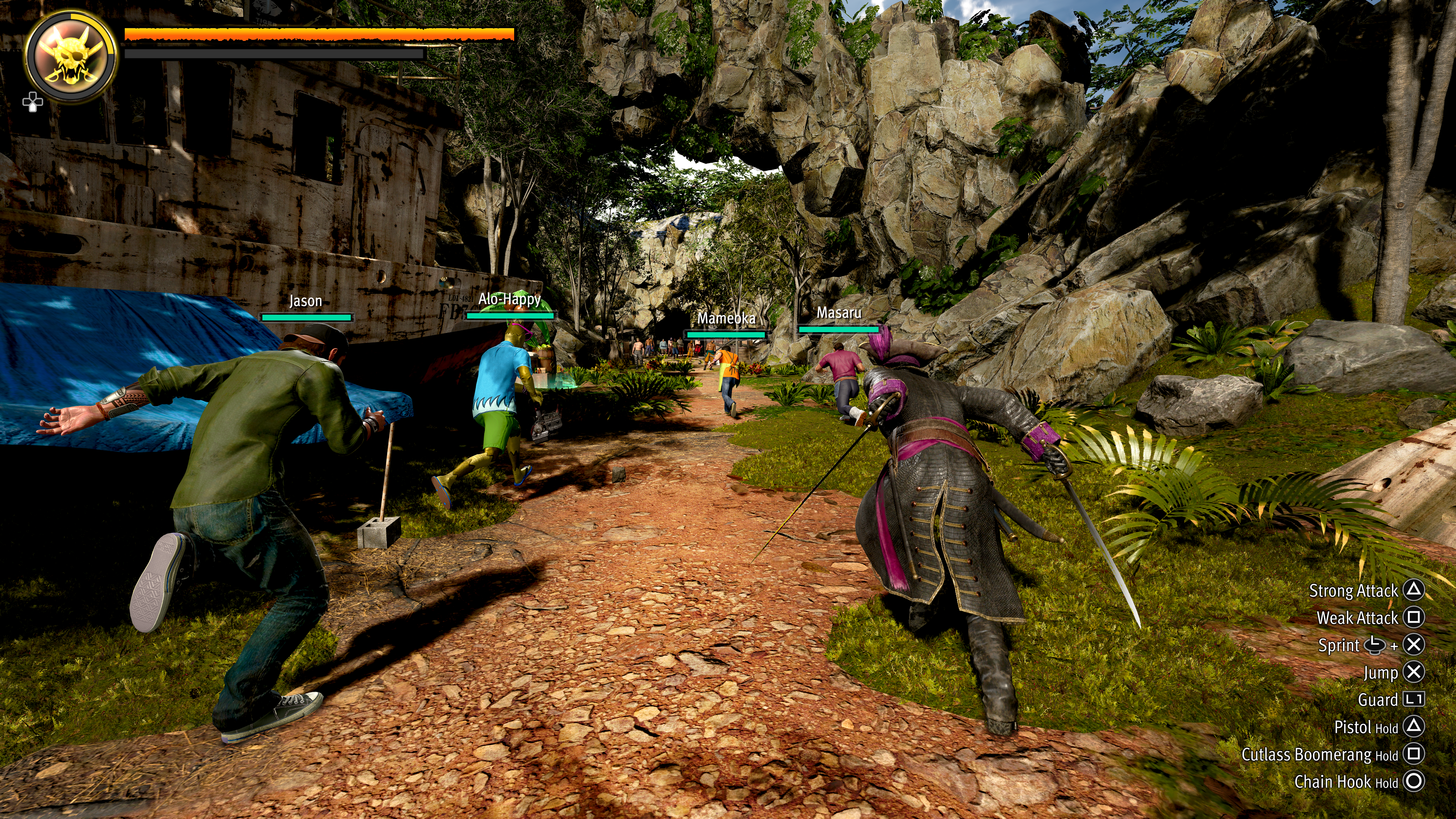
Sea Dog, as the name suggests, is pirate-based, seeing Majima sporting two swords in combat. Despite Mad Dog being faster-paced, Sea Dog also offers quick action attacks, but they’re more geared towards clearing multiple enemies. His swords have a far wider range of attacks, capable of hitting multiple enemies simultaneously. He can throw them, too, and while they’re spinning around and returning to him like a boomerang would, he can attack enemies with his bare fists to leave you with a way to defend yourself. Sea Dog also has access to a grappling hook and gun, allowing combat to be played at a range while also allowing you to close the gap between enemies. Like Mad Dog, Sea Dog also can summon, though in this case, they’re actually monsters like a hoard of blood thirsty sharks.
Don’t worry; all the wacky and unbelievable stuff is explained, much like how it’s explained that Ichiban is imagining the turned-base combat from Like a Dragon and Like a Dragon Infinite Wealth.
In general, both fighting stances are very welcomed additions to Majima’s crazy persona. They’re exactly how you’d expect them to play, and the sheer hows of combat you’ll play through are pleasantly fun. It gets better once you start tinkering with the skill unlocks, which is similar to how it’s been in past games. Chaining combos and juggling enemies around are reminiscent of Devil May Cry, though not as varied as it is. It’s close, but I felt two mechanics needed more time in the oven: the dodge/quickstep and the jump.

Traditionally, the dodging/quickstep was mapped to X (PlayStation controller, but with Like a Dragon: Pirate Yakuza in Hawaii, the series introduces jumping for the very first time, taking up the X binding. Dodging is now performed by holding the stance button (R1) and then pressing X. It’s not the most complicated thing, but when you’ve been so used to the way it was before, and how many other brawler/hack and slash games have it mapped to one button, it just feels out of place. I found myself jumping around in combat more times than I wanted to. Sadly, there’s no way to remap this function, as I would have gladly mapped, say grappling, to L2, which occupies the camera reset, which could have been mapped to R3, which has no function and has the dodge just be the circle button instead.
It’s a minor complaint, but it could have made all the difference. One big change in this iteration is that it introduces musou (large battles) style battles, where the enemy count can be anywhere from your traditional few enemies to the twenties and even one hundred at times. It can be chaotic, but the fights themselves are really fun. But the dodge mapping always felt like a constant annoyance.
These battles also highlighted my issue with jumping. While it is a welcomed addition, I dislike how it is a mechanic associated with dodging firearms. It works fine when you’re up against three to five enemies at a time because you can keep an eye on the off-screen enemies, but when there are tens of them all bunched up together, it can become hard to keep track of those longer-range enemies. There is an audio cue that gets played when they’re about to fire, but when you’re dealing with a bunch of enemies up close, shifting from dodging to a jump because they’re mapped on the same button can more times than not cause you to mess up.
In the end, the combat is still very fun, which is about what you’d expect, though I do feel a little more tweaking to the dodging and jumping could have solidified it as the best classic combat in the series. What I will say, though, is that it is undoubtedly the biggest surprise, and personally, my favorite aspect of the game is the naval battles.
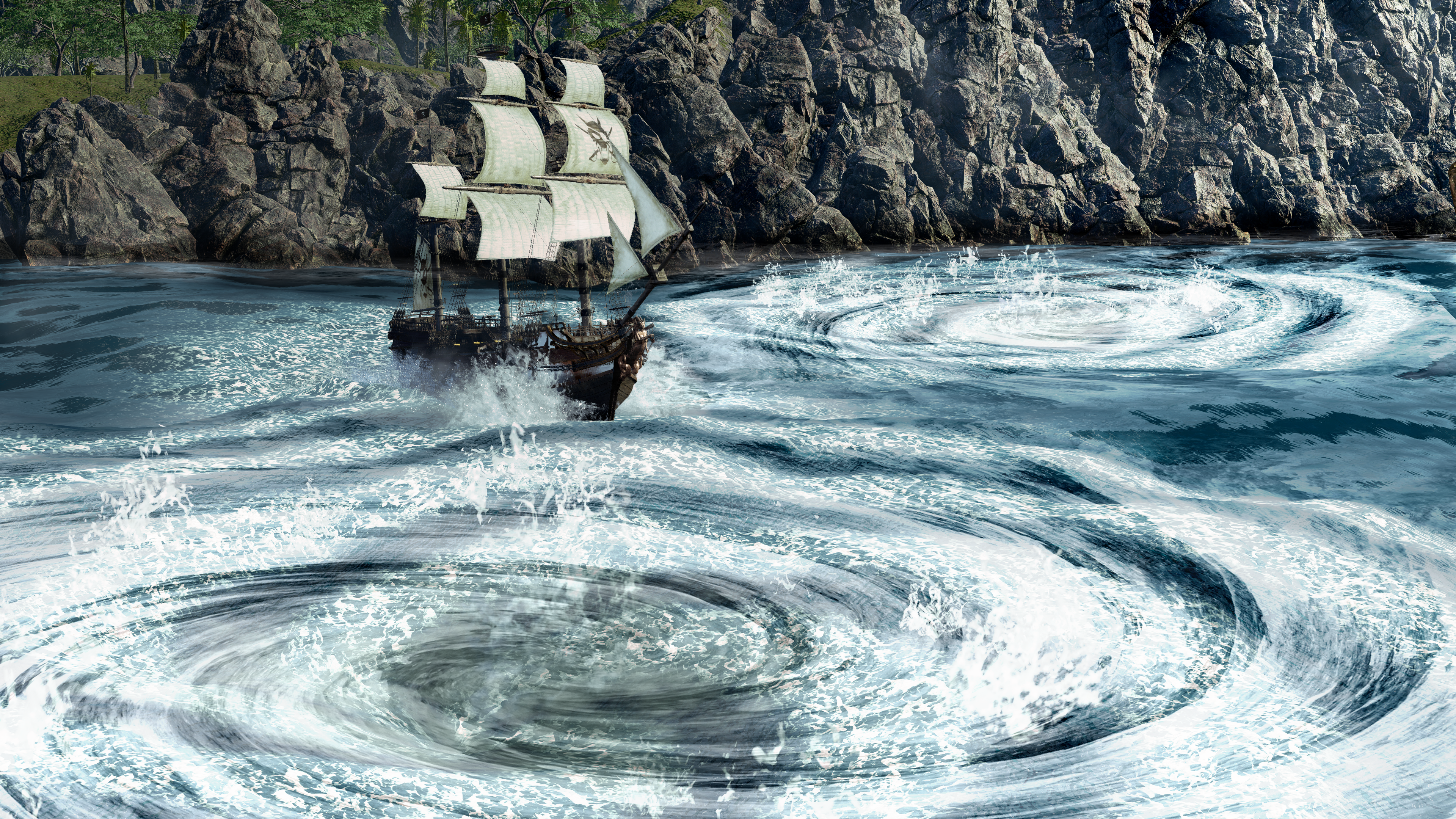
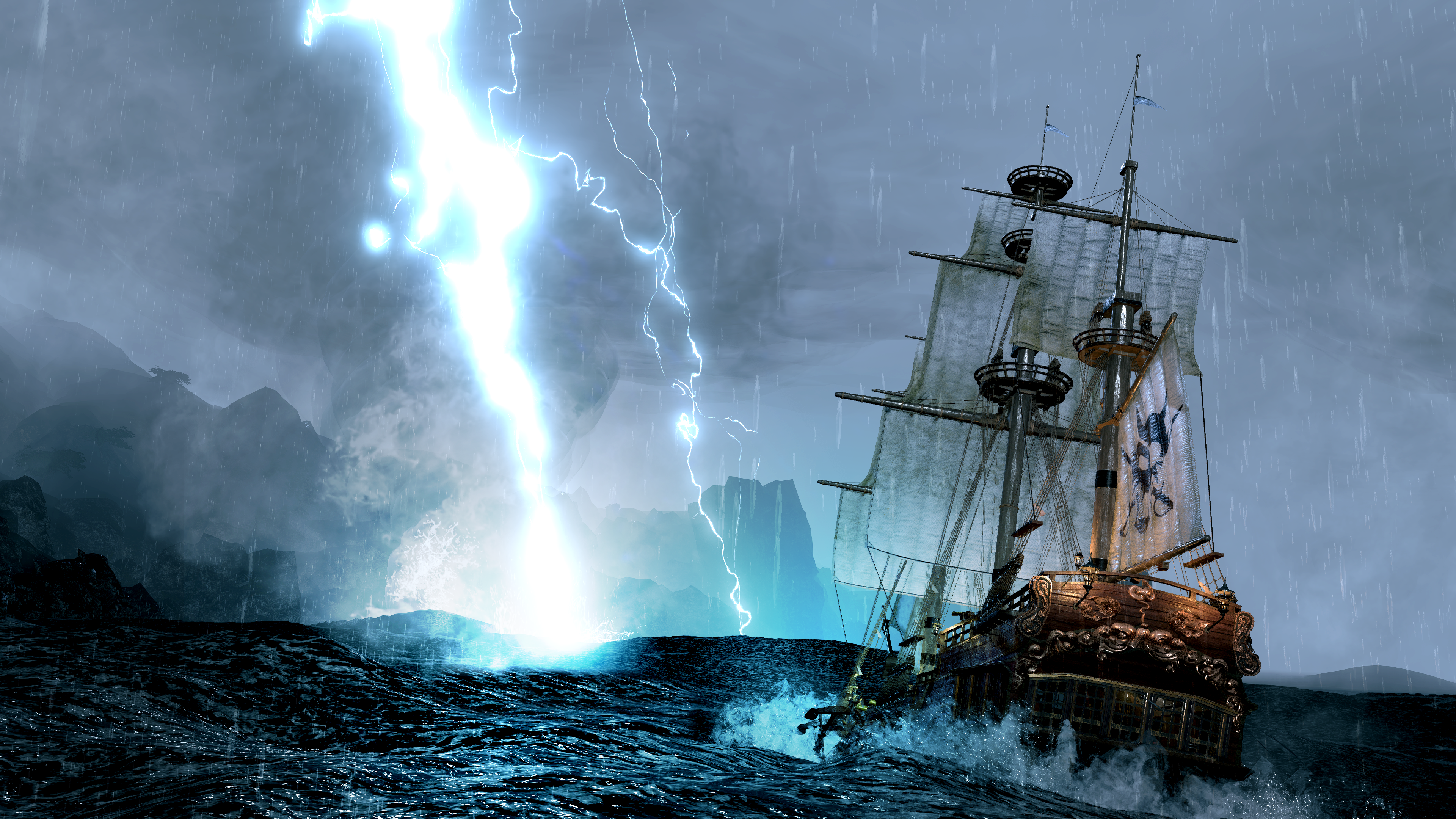
The Yakuza/Like a Dragon series has always been a weird one. On the one hand, you have a very serious crime drama unfolding with some of the most emotional moments in gaming. On the other hand, you get things like Carbinent managing, Sicko Snap (a mini-game about taking photos of muscular men in undies while you ride a trolly cart), Suiljimon (pokemon clone, but with real people), and other things. In Like a Dragon: Pirate Yakuza in Hawaii, you get Assassin’s Creed Black Flag’s naval combat, and surprisingly, it probably has the best maritime battles we’ve seen in a game since Black Flags. This says a lot because this is the most random spinoff game in the series, san Dead Souls, a non-canon zombie spinoff, and it’s out here doing something better than what Ubisoft tried to achieve with Skull and Bones.
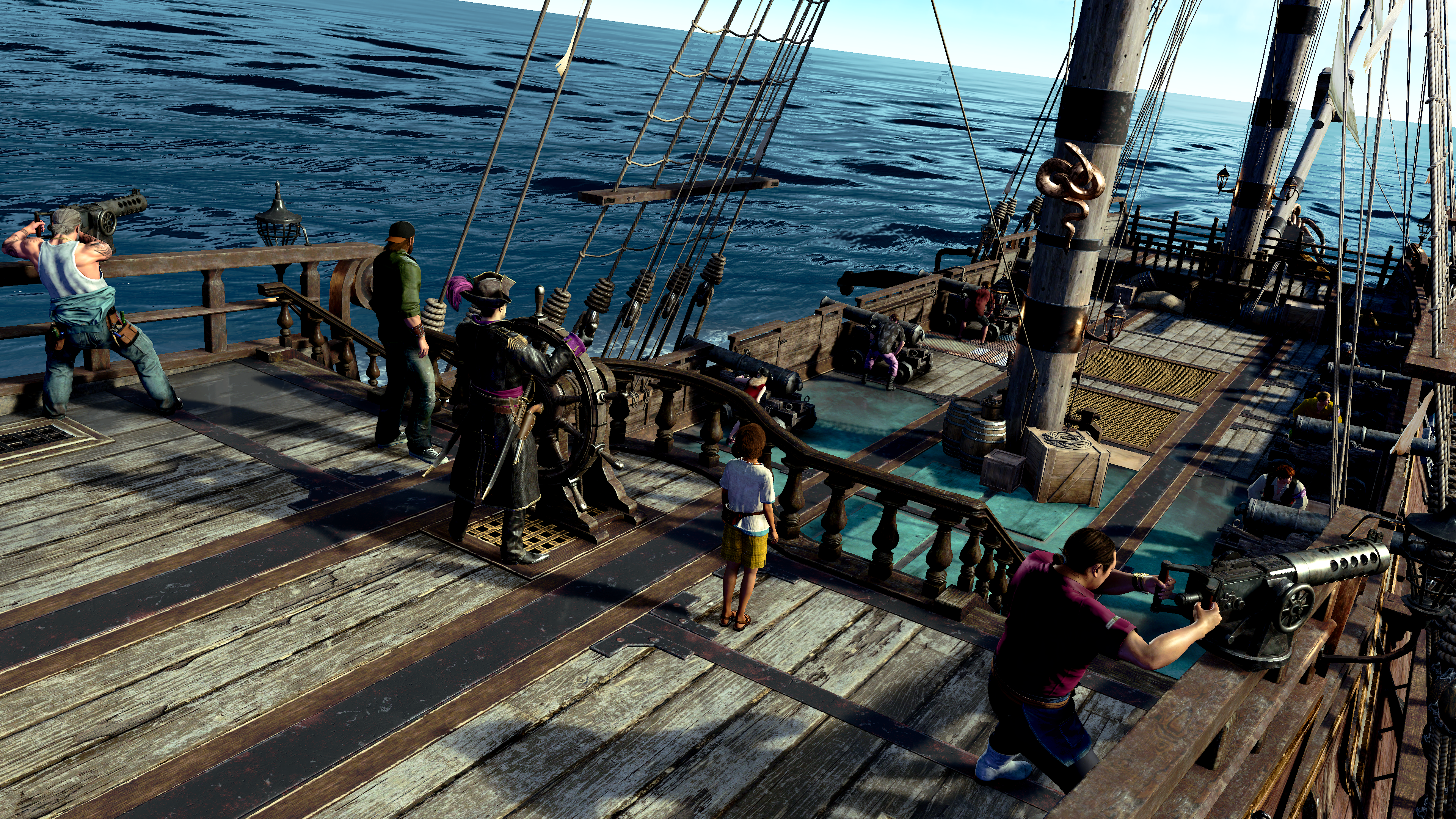
Sailing the sea, exploring the ocean, and visiting islands for lost treasures are things I didn’t expect I’d enjoy so much from a Like a Dragon game, and yet I did. But it was coming into contact with other pirates that I found myself having the most fun, as the epic music would kick in, with me and the rest of my pirate crew sailing head-on against a group of other pirates. Controlling the ship is easy, as is the combat itself. You can even boost and rail into other ships, fire canons, and use machine guns (this is modern-day, after all). You can upgrade your ship with new weapons, such as a flamethrower or laser beams.
There’s a crew system where you can assign crew members to man certain parts of the ship and appear during specific phases of fights. If you take on too much damage, you can step away from controlling the ship to mend your ship mid-battle and assist downed allies. Crew members can earn levels so they become more efficient, though it’s not super crazy by any means. There’s ship boarding, too. Whenever you come in contact with an elite ship, you can board their ship once you’ve done enough damage and take the fight to them.
It’s done so well, and in all honesty, I hope this isn’t something that stays within the spinoff, as it would be very welcomed in a mainline entry. Not that it would be out of place either when you got plenty of mini-games that are just as, if not more, outlandish.
This Will Be the Day You Almost Caught Captain Goro Majima

Like a Dragon: Pirate Yakuza in Hawaii may not be moving the series forward in much regard to its gameplay and story, but at the end of the day, it does what it sets out to do. It’s fun and provides fans with a wild, over-the-top adventure full of eccentric characters, absurd humor, and dramatic plot twists. If you wanted to spend more time in Hawaii after Infinite Wealth, Like a Dragon Yakuza in Hawaii has you covered, offering a unique spin on the Yakuza formula while keeping things as entertaining and chaotic as ever
Score: 8/10
Pros
- It’s a fun spinoff story that brings new ideas to the franchise while expanding on some of the established lore from previous entries.
- Though not perfect, the combat is excellent and, most of all, fun.
- The naval combat was done surprisingly well. Some of the best we’ve seen in a game since Assassin’s Creed Black Flags.
- There are tons of side missions, and anyone who knows anything about the franchise knows just how good these can be.
- Goro Majima is the perfect character for this game, further cementing that we need more games with him.
- The English dub is overall solid. Somoa Joe is fantastic in his role as the Pirate King.
Cons
- Forced tutorials that appear too often and overstay their welcome, especially given how shorter the game is compared to mainline entries.
- The visuals are somewhat rough at times. More specifically, the daytime comes off as oversaturated, where it’s super bright. Nighttime, and darker environments, along with cutscenes, don’t have this issue. This may be a bug of sort, and hopefully gets addressed.
Like a Dragon: Pirate Yakuza in Hawaii review code was provided by the publisher for review purposes. You can read MP1st’s review and scoring policy right here.

This website contains affiliate links. If you click a link and make a purchase, we may earn a commission at no additional cost to you. This helps support our work. Learn more on our affiliate page.



Not really big into Yakuza, but what i played from the demo seemed like an enjoyable experience.