Mewgenics Review: A Purr-fectly Brutal Roguelite
When I heard that MP1st would get a chance to do a hands-on review of Mewgenics, I was intrigued by what it would be, so I had to look it up. I did not expect to see the YouTuber Meat Canyon (I know him better from his channel, Papa Meat) make a trailer for this game, which I was excited to try. What I also did not expect was to become engrossed in making a house full of mixed combinations or mutated cats, carefully managing their genetics, stress levels, and combat roles while constantly debating whether sending them into danger was worth the long-term payoff.
Mewgenics is a fun and brutal roguelite that is a turn-based tactics game. It is a punishing game that can leave you frustrated, but it can also be an endlessly fascinating experience that turns loss into progress, mixing chaos with strategy.
From Edmund McMillen and Tyler Glaiel, Mewgenics feels like the culmination of years spent refining systems-driven design wrapped in dark humor. It carries the unsettling charm of The Binding of Isaac, the precision of Super Meat Boy, and the mechanical ambition of something far more expansive. On the surface, it is a game about breeding cats and sending them into tactical battles. However, there is much more to it than breeding and turn-based campaigns, as we will discuss.
A Tactical Loop Built on Risk and Reward
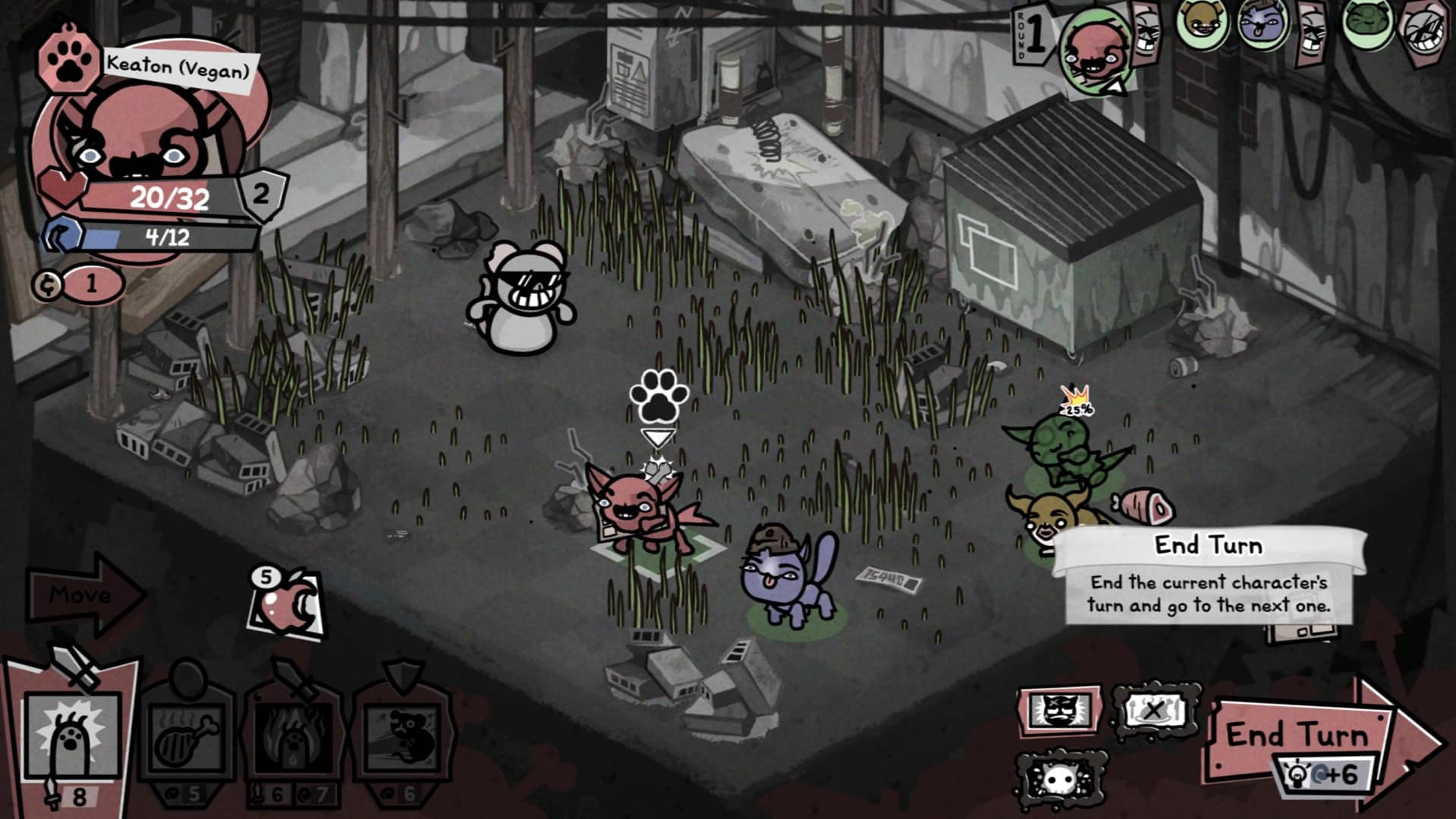
At its core, Mewgenics revolves around a deceptively simple loop. Each day, I would assemble a squad of four cats from my ever-growing house, equip them with class-specific collars, and send them into dangerous, turn-based encounters in search of money, items/equipment, and food. If they can survive, they return stronger, scarred, and often mutated. However, if any of them were to be killed (though they can be revived after each successful battle if their bodies are still intact), they are gone permanently. Any cat that completes their adventure will be considered retired, but they can still be used to breed or “given away,” so keep in mind they still have their uses. Each cat represents time, investment, and often multiple generations of careful breeding. Sending them into a dungeon always feels like a gamble, especially at the beginning when resources are limited, and certain mobs or bosses are annoying to fight.
The combat itself is grid-based and deeply tactical. Positioning matters. Line of sight matters. Terrain matters. Enemies do not simply attack and wait for their turn. They shove, pull, debuff, explode, and manipulate the battlefield in ways that force constant adaptation. It is endless chaos, so be aware of the terrain, as it can work against you. A single mistake can cascade into a full-party wipe, but a single smart move can turn an impossible situation into a flawless victory. My recommendation is to make sure to have a cleric in the party, but that is all the hint I will give you.
What stands out most is how much the game rewards foresight. It is not enough to react to threats as they appear. I constantly had to think two or three turns ahead, keeping an eye on everyone’s turn (since speed depends on who goes next) and planning future moves while accounting for enemy behavior, terrain hazards, and potential reinforcements. Mewgenics does not just test tactical awareness. It tests strategic planning and how well you handle the shenanigans that come with all the combat mess it throws at you. Though if you can survive, you are greatly rewarded to see the next day, but resources will eventually run out and make you go out again. So gear up and grind forward.
Combat Depth, Classes, and Paws of Fury

Mewgenics boasts roughly ten classes, some of which you will have to unlock through progression, each with approximately 75 unique abilities, and that can be a bit overwhelming. However, fret not, it is straightforward, and you will easily pick it up and go wild. Fighters dominate close-range combat, Tanks control space and absorb damage, Mages manipulate the battlefield with spells, and more unconventional classes blur the lines between support, damage, and control. Cleric, well, it’s a healing class, heal your friends but not yourself, the majority of the time (you will see why when you play this class). These are roughly the starting classes, and once you reach further in, you can unlock Thief, which is the next class.
What makes these classes truly special is how they interact with the game’s mutation and inheritance systems. Abilities are not just learned through leveling. They are passed down, altered, and sometimes completely transformed through genetics. A Tank might inherit a Mage’s teleport ability. A Healer might develop a bloodlust mutation that turns them into a damage-dealing hybrid. A Fighter might gain extra limbs, allowing for additional attacks per turn. So pray you get an awesome cat with the best abilities to carry you far,
The result is a system where no two characters are ever truly the same. Even within the same class, builds can vary wildly based on inherited traits, mutations, equipment, and item synergies. This creates an almost overwhelming number of viable playstyles, and the game actively encourages experimentation. Combat encounters are designed to take advantage of this depth. Enemies are not just obstacles but puzzles. Some punishment grouping. Others exploit the line of sight. Some thrive in narrow corridors, while others dominate open spaces. Environmental hazards, such as fire tiles, traps, and destructible terrain, add another layer of complexity, often allowing clever players to turn the battlefield itself into a weapon.
The best moments in Mewgenics come from these layered interactions. A well-timed shove knocks an enemy into a hazard, triggering a chain reaction that clears half the room and opens a new path forward. These moments feel earned, not random, and they make every successful encounter deeply satisfying. So try out many combinations, and you don’t have to send four cats all the time; sending 3 can help you level up faster. With leveling, you can pick abilities or passives to help you advance further into the story; some can be overpowering, while others fall short.
Breeding and Home Management

If combat is the heart of Mewgenics, breeding is its soul.
Between runs, I return home, where my house gradually fills with cats of varying ages, traits, and personalities. I can pair them to produce kittens that inherit a combination of their parents’ abilities, stats, mutations, and flaws. Some traits are beneficial, like increased accuracy, extra body parts, or innate resistances. Others are detrimental, such as anxiety, aggression, or physical deformities that restrict movement or ability usage. However, here is the kicker. It is all random-based; you may or may not get the chance to produce any new cats, and breeding depends on which cats are in the house. You will get a new cat once per in-game day. Your cat’s breeding and comfort are affected by the home improvement, which you can buy more furniture and decorate them as you advance more into the game itself.
What makes this system emotionally impactful is the permanence of loss. Cats age. They get injured. They die. Some die heroically in battle. Others die at home due to stress, overcrowding, or poor management. Losing a cat I have invested hours into is never easy, and yet the game constantly pushes me to accept that loss as part of progress. Though not all is lost, some NPCs will take injured cats. Though none I’ve unlocked so far take in dead cats, might as well chuck them in the garbage.
Home management adds another strategic layer that is just as demanding as combat. Your house is not just a menu hub. It is a living system that requires space, furniture, and comfort items to keep stress levels under control. Overcrowding without proper care leads to chaos. Yes, you can lose cats without ever sending them into combat. Do your best to balance how many cats in the house you want to keep and who to let go to gain some perks with NPCs.
Money becomes a constant concern in the early game, and that goes for cat food as well. Do I spend my currency on better furniture to reduce stress, or do I invest in new items and upgrades for combat? Should I expand my house, or focus on improving my current roster? These decisions often feel just as tense as dungeon encounters because their consequences are long-term and sometimes irreversible. Once you figure out your goal, keep at it and try to get a bit further into the game. Money will come rolling in. Though the max coins and food you can hold is 100 each, so you can’t hoard them.
Whatever you do, know that these cats will endlessly frustrate you but also make you feel satisfied when they win big. So far, I can tell you I enjoy both home management and finding the right cats to carry me far along the challenging routes.
Tone, Difficulty, and Why Mewgenics Works

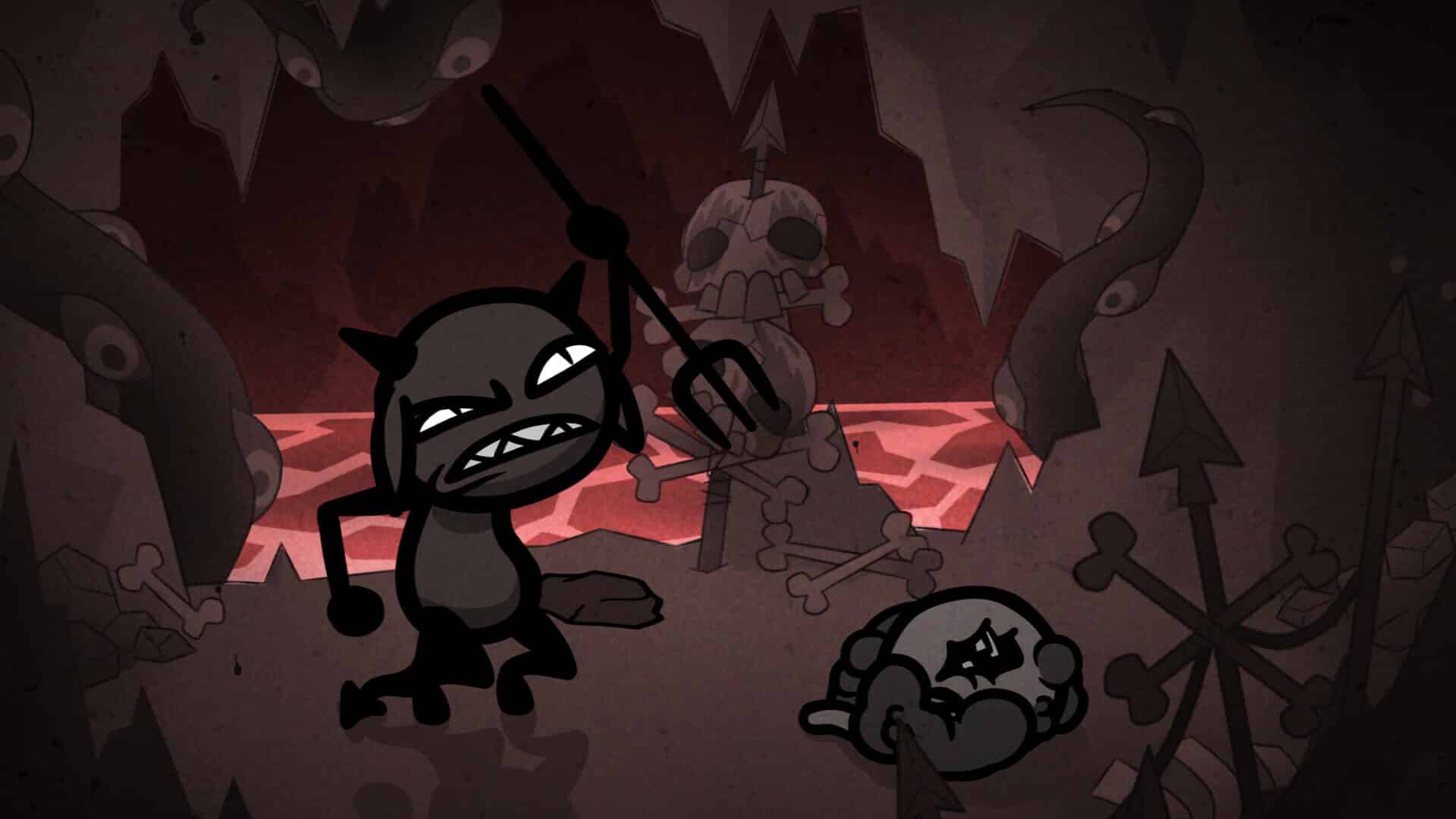
Mewgenics wears its dark humor proudly. The game is filled with double meanings, grotesque imagery, and absurd situations that walk a fine line between disturbing and hilarious. You will encounter crazy cats, missing limbs, bizarre mutations, and deeply unsettling traits, all presented with a cartoonish charm that somehow makes it palatable. Though if you can’t handle some of the adult humor, you may want to stay away from this game.
The art style strikes a perfect balance between cute and grotesque. The cats are expressive and endearing, even when they are horribly mutated. The environments are detailed and atmospheric without being visually overwhelming. Animations are clear and readable, which is crucial in a tactical game where every movement matters.
The soundtrack complements the tone beautifully, shifting between eerie, whimsical, and tense depending on the situation. It fades into the background when you are deep in tactical planning, then rises to the forefront during major encounters or dramatic moments. It never overstays its welcome and consistently enhances the mood.
In terms of difficulty, Mewgenics is unapologetically brutal. It is the kind of game that punishes careless play and rewards meticulous planning. Enemies hit multiple times, status effects stack aggressively, and bosses often introduce mechanics that fundamentally change how encounters must be approached. There were runs where I felt unstoppable, only to be completely dismantled by a single poorly handled fight. There are also times when it can become boring, as you keep fighting the same boss over and over.
What makes the difficulty more manageable is the roguelite progression. Even when a run ends in disaster, I am almost always unlocking something new. New classes, new items, new enemies, new house upgrades, and new NPC interactions all contribute to a sense of forward momentum. The sheer scope of the game is staggering. With hundreds of enemies, thousands of abilities, and a campaign length that easily stretches beyond 200 hours, Mewgenics is built for long-term engagement. More importantly, it is built to remain interesting throughout that time. The systems are deep enough, and the combinations are varied enough, that repetition rarely sets in.
Overall, the game is fun, and I believe many will enjoy what it offers. Mewgenics will be released on February 10th, 2026, for PC (Steam). So be on the lookout when it does.
Pros
- Tactical turn-based combat with meaningful positioning and environmental interaction
- Breeding and mutation system that supports long-term strategy and experimentation
- Variety of classes, abilities, items, and enemies keeps runs fresh for hundreds of hours
- Dark humor and art style strike a unique balance between cute and grotesque

Cons
- Punishing difficulty can feel brutal, especially in the early parts of the game
- Repeated certain boss can make the game a tad boring
- Dark humor and double meaning may not vibe with everyone
Mewgenics was provided by the publisher. You can read MP1st’s review and scoring policy right here.
This website contains affiliate links. If you click a link and make a purchase, we may earn a commission at no additional cost to you. This helps support our work. Learn more on our affiliate page.