PNY CS3250 2 TB SSD Review – One to Rule Them All
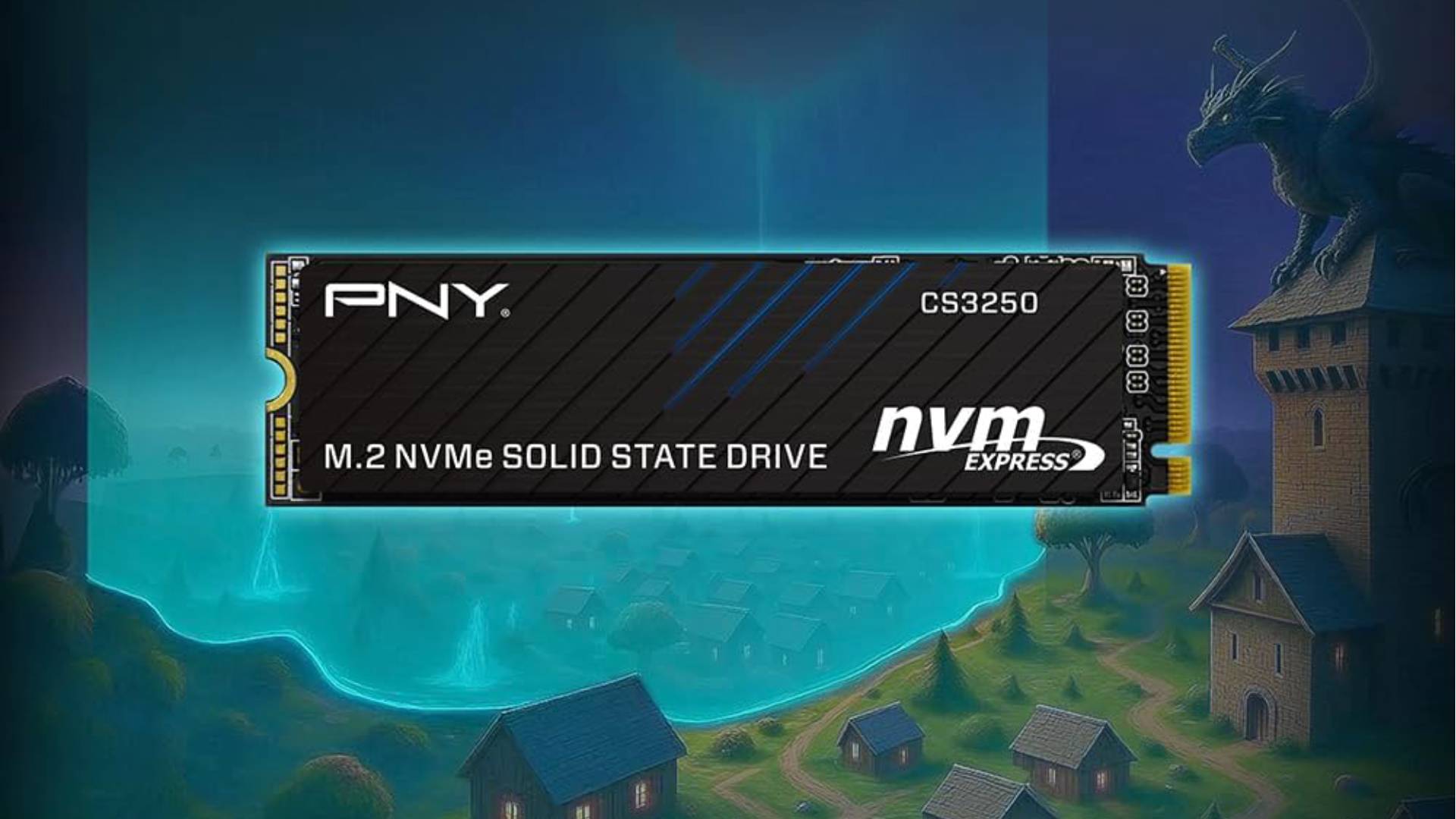
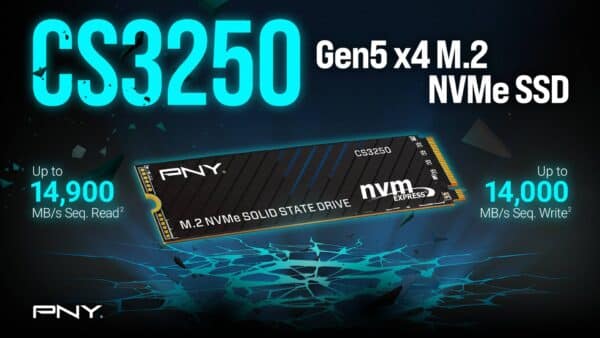
NVMe Gen5 SSDs with E28 controllers have finally hit the market, with PNY being amongst the first to offer them with the PNY CS3250. With bold claims that it can achieve 14,900 MB/s seq. read and 14,000 MB/s seq. write speeds, while keeping better temps and better power efficiency than their last-gen counterparts, there’s much to be excited about this new generation of SSDs.
After spending weeks of putting the CS3250 through some testing, it’s safe to say that the future of NVMe SSDs is looking rather exciting, with potentially a new crowned king.
Perfect Option for the PS5, Even If PlayStation Consoles Can’t Take Full Advantage of the Speeds…Yet
So for our first “benchmark” test, we decided to put the PNY CS3250 inside a PlayStation 5 Pro to see what kind of read/write speeds it would deliver. Do mind, the PS5 and PS5 Pro are equipped with PCIe 4.0, meaning they won’t be able to take full advantage of the full PCIe 5.0 offered by the PNY CS3250.

Off the bat, the console reported 6590 MB/s. Because this is our first review of an M.2 NVMe SSD, we don’t have any charts to reference, but for the sake of comparison, we looked at the M.2 expansion benchmarks on PS5 from Tom’s Hardware and Tweaktown, both of which list the Micron 4600 2TB as their top drive, reading at 6,565 and 6,566 MB/s, respectively. Tweaktown also lists the PNY CS3250 at 6,411 MB/s, though we’re unsure whether this is based on the base PS5 model or the PS5 Pro. Regardless, our PS5 Pro’s bench of the PNY CS3250 shows read speeds of 6590 MB/s, making it one of the fastest third-party NVMe drives you can get for the PS5.
In terms of write speeds on the PS5, these are generally hard to figure out, though moving a game from the internal M.2 to the PNY CS3250 did yield blazing fast speeds that were up to par with PCIr 4 speeds, so massive files taking up anywhere between 50-100 GB only took a matter of minutes, and in some cases, seconds.
For example, 138 GB for Call of Duty took only 59 seconds to move from the PS5’s storage to the PNY CS3250 in our first test, which equates to around 2.35 GB/s write speed running in a PCIe 4 slot.
Now, for the reverse, transferring from the PNY CS3250 NVMe to the PS5’s internal NVMe, the bottleneck is the PS5 itself. While the internal NVMe slot in the PS5 offers blazing-fast read speeds, as demonstrated by many of its games (Death Stranding 2 and Ghost of Yotei are perfect examples), its write speeds aren’t anywhere near as impressive. So transferring a game from the PNY CS3250 to the PS5’s M.2 slot will be significantly slower due to the PS5’s M.2 write speeds. The same example above (138 GB) took us 6 minutes and 45 seconds to move back to the console, averaging around 345 MB/s on the PS5’s internal drive. That’ll be the same result with any other NVMe brand when transferring data to the PS5, as the bottleneck is once again the PS5’s NVMe.

But there is one other benefit (minor one at that) to having a drive with a faster write speed on the PS5: downloads. No, the PNY CS3250 won’t magically increase your internet speeds, but it will let your console keep up with faster speeds. Mind you, the number isn’t a significant difference; in our tests, downloading a game on both the internal NVMe and the PNY CS3250 using a 1 GB connection (ethernet) from the PS5, it only amounted to saving roughly 1-2 minutes using the PNY CS3250. As I said, it’s not a big difference, but it’s still an improvement over the internal drive.
Some examples:
Divinity Original Sin 2 – Download Size 18.55 GB (For Start to Play)
- PS5 Pro’s NVMe – 4 Minutes 17 Seconds
- PNY CS3250 2 TB NVMe – 3 Minutes and 22 Seconds
Metal Gear Solid Delta: Snake Eater – Download Size 48.21 GB (For Start to Play)
- PS5 Pro’s NVMe – 9 Minutes 46 Seconds
- PNY CS3250 2 TB NVMe – 9 Minutes and 2 Seconds
In terms of load times, the differences are even more minimal, given how optimized the system is for reading data. Take Death Stranding 2: it takes about 1 second to load your game file from the internal NVMe, and the same goes for the PNY CS3250. I did test a few other games that had much longer loading screens, like Battlefield 6’s campaign, and a few others, but the differences varied. Sometimes the internal NMVe was faster, other times the PNY CS3250, but the difference was always within 1 second, so not much to really tell here.
What this does tell me is that, with NVMe drives now seeing their read/write speeds doubled (and more, as newer PCIe generations are developed), the future of PlayStation consoles will likely see much more benefit from them than they do now. That is, of course, assuming PlayStation consoles continue to support third-party drives, though it does beg the question of just how far they’ll push drive speeds by the time it comes out.
As of the publication of this review, PCIe 5.0 is 6.5 years old since its base specs were finalized, though we’re looking at about 3 years more years before it becomes more widely adopted in AMD and Intel boards. The PS5 was released in 2020, a year after the Gen 5 lane specs were finalized, and used PCIe Gen 4.0, which is why the PNY CS3250 runs at roughly half the actual speeds on the platform. The slowest component dictates it, and in this case, it is the PS5 Gen slots.
By the time the PS6 comes out, PCIe 6 will likely be where PCIe 5 is now, with consumers really starting to get their hands on PCIe 5 NVMe SSDs in the masses, with PCIe 7 likely around the corner (specs were only finalized this year). But we’re talking anywhere between 2027 and 2030. Technology is moving fast, but the rate of adaptation isn’t quite there.
This is pure speculation, of course, but I do believe that the PS6 and any other next-gen console that releases in the next few years will use PCIe 5 (instead of newer generations) controllers, mainly to help keep costs down. But considering what the console has done with only half the speeds of the newer generation, I think we’re in for quite a shock at just how much faster it’ll be on the next console, especially given how much more unification goes into a closed platform compared to a PC.
But for the time being, the PNY CS3250 SSD is easily one of the top-tier NVMe SSD options for the PS5, capable of delivering uncompromised performance on the platform, even if it isn’t fully utilized due to the PS5’s older gen lanes. But considering the price-to-performance you’re getting on a potentially next-gen drive that will serve you even more in the future, it’s almost unbeatable.
Which brings us to the next part of the review: how does the PNY CS3250 SSD perform when used by PCIe 5-supported hardware?
First Consumer NVMe With E28 Controller Boasts Impressive Real-World Results

Despite how fast technology has been evolving in the field of computers, at the consumer level, we’ve entered this generation of chipsets with PCIe 5 support without really being able to take full advantage of it. To put things into perspective, the first motherboards to support PCIe 5 came out around the end of 2021/start of 2022, when the new generation of PCIe-5-supported CPUs launched from both Intel and AMD. It’d be about another year (or two) before we see a consumer-grade PCIe-5-supported NVMe drive (using E26 controllers), but even then, we were talking about what seemed like a pretty niche and expensive product. Heck, it was only this year that we finally got GPUs that supported PCIe-5, namely NVIDIA’s RTX 5000 series and AMD’s RX 9000 series.
As I mentioned before, the tech exists; it’s just been a really slow adoption rate. Not out of the norm by any means; it’s been the same for previous generations, and it’ll be the same for the next generation and the generation after. But the good news here is that for those who have been waiting to move on to newer platforms, or waiting for PCIe 5 actually to take off, chances are, within the next year, we’re going to start seeing more real-world differences, given we can build PCs with “full” support of it now.
To kick off this next-generation renaissance, PNY’s newest Gen-5 NVMe drives are being powered by the Phison E28 controller. They’re among the first to hit the consumer market with this controller type, and ultimately, what you need to know is that they’re insanely fast and consistent while being highly power-efficient. They use a 6nm node versus its predecessor, the E26, which used 12nm nodes, allowing power drawn to be drastically reduced. So drastic that you technically don’t need to use a bulky fan-cooled heatsink like some NVMe have been pushing to help keep temps down while at peak performance. Not an issue with these E28 controllers, as they’re suited for even small devices like laptops and use less battery power while delivering peak performance.

But talk is, well, talk, and with PNY claiming that their PNY CS3250 can hit read and write speeds of 14,900 MB/s and 14,000 MB/s, respectively, putting it up there with the WD Black SN8100 NVMe (which is considered one of the best Gen 5 drives), I just had to see for myself to believe it. While it might still be a bit too early to say for sure, I think we might have just found a new king for NVME when it comes to overall value and performance.
The Build:
Production PC
- Motherboard: ASRock X870E Nova
- CPU: AMD Ryzen 9 9950x
- GPU: Nvidia RTX 5080
- RAM: 2×32 GB (64 GB total) DDR5
Because this PC was built for production, such as 4K recording at high bit rates and rendering videos that are tens of hours long, I opted for large block sizes, since it’s pretty normal for me to move files well over 100 GB. I’m seeing longer wait times in the type of work I do, so I was interested in how the PNY CS3250 performed there.
Given that everyone’s PC is set up differently, there’s some margin for error in these tests, though the first run is looking pretty positive, with read and write speeds almost where PNY advertises. Note that the disc name changed because it was moved and formatted for our PS5 testing.
It’s important to understand that these benchmarks don’t reflect real-world performance, but rather the peaks under max load. We’re stress-testing the drive as much as we can to see what speeds it can achieve.


Under a full stress test, the PNY CS3250 reached a peak of 45°C. For comparison, my build also has two Gen4 Samsung SSD 980 PRO SSD: one for Windows and the other for storage. Their idle temps after a cold boot were typically 40-46°C, with the PNY CS3250 at around 39°C. Running my non-Windows Gen4 Samsung SSD 980 PRO under a full stress test saw the temps reach roughly 58°C.


The benefits of the Phison E28 controller really show here, as the PNY CS3250 ran at near-max speeds while keeping its temps below the idle temps of a Gen4 NVMe drive. That’s insane, and we can safely assume its power consumption is much lower as well. You technically don’t need a heatsink, but considering most Motherboards have them built in, I would still recommend using one, cause why not?
In terms of real-world performance, as in what you’ll likely see in your everyday tasks, installing games, moving files between folders, ect, speeds are going to be closer to the 3.5-5 GB/s mark, which is about doubled the speed of real-world performance you’ll see from a PCIe Gen 4 drive. Just because it can reach higher speeds doesn’t mean it will deliver them consistently. The keyword is “up to,” and you wouldn’t want your drive always to be running at peak performance, as that’s a sure way to shorten its lifespan.
As for the 3DMARK score, we pulled in 4024. For reference, the average is 2280 for overall tests (as in everyone) on 3DMARK is 2280.

Overall, good loads and asset streaming.
A New SSD King?
PNY’s CS3250 impresses across the board, and although Phison E28 controllers are still in their infancy as consumer products, they do set a pretty high bar for others to follow. We can only imagine that things will get better from here on out as more and more brands begin adapting the new controllers. Still, so far, PNY is leading the charge with a drive that balances raw power with surprising efficiency and a low price point.
A perfect pairing for those jumping onto AMD’s and Intel’s newest platforms and wanting to see a generational difference in performance.
Pros
- Manages to hit groundbreaking consumer read and write speeds for a Gen5 SSD.
- Runs cool, to the point that a bulky heatsink isn't needed.
- Delivers exceptionally fast loading in-game.
- Fair pricing, though that's unfortunately being determined by ongoing market issues as of 2026.
- Sets an exciting bar for the future of E28 controllers.

Cons
- None, PNY delivers on their claims.
Pricing:
Available at – www.pny.com or www.amazon.com.
- 1TB: $125.99 Suggested MSRP ($169.99 as of 2026)
- 2TB: $219.99 Suggested MSRP ($249.99 as of 2026)
- 4TB: Coming Soon
PNY CS3250 review: Hardware was provided by the manufacturer. You can read MP1st’s review and scoring policy right here.
This website contains affiliate links. If you click a link and make a purchase, we may earn a commission at no additional cost to you. This helps support our work. Learn more on our affiliate page.