

Early Access Has Quietly Created a New Form of Monetization
Monetization in video games has been a widely debated topic over the past decade. Ever since the infamous Horse Armor DLC for Elder Scrolls IV: Oblivion, which consisted of nothing more than a single piece of cosmetic armor for $4.99, the argument over paying more to get the most out of your games has been dangerous ground to tread on the internet. Regardless of where you stand, there is no doubt that companies have been subtly trying to find as many ways to get the most money out of each gamer as possible.
Initially, this new change to the industry norm was met with massive backlash and criticism. Taking a look through the past decade, some of the biggest stories revolve around the business practices of these seemingly exclusively profit-driven companies. Electronic Art’s Star Wars Battlefront 2’s pay-to-win loot boxes, Metal Gear Survive forcing gamers to pay for extra save slots, and Redfall being a broken mess as a $70 launch title are some examples, just to name a few. But one thing that has become increasingly common within the last year is the number of games offering early access to players so that they can play a few days before the official launch. It’s a new form of monetization that has been quietly adopted by the industry.
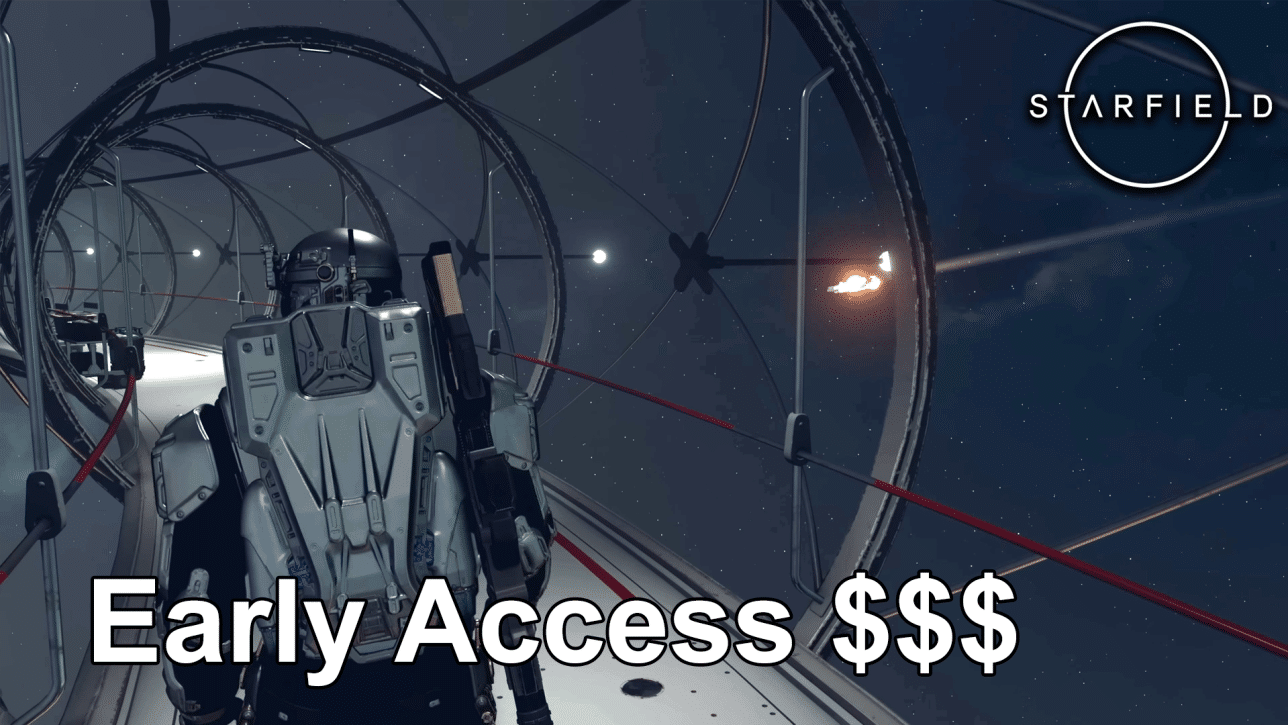
It shouldn’t come as a surprise that these companies like to “test” the limits of what they can or can’t get away with. Coming out with items in a shop that receive backlash because they are overpriced, only to backtrack and argue that it was never their intent to make things so expensive, has become common practice. The worst has not yet come to fruition though, the latest release of Starfield and its pay-to-play early access premium edition, indicates an ever-increasingly bleak future where the games we play just won’t stop getting more expensive.

From a business perspective, it is challenging to greenlight an expensive single-player game that only has the ability to bring in revenue through sales of the game alone. If they are not an indie game, these games are often created with the intention of being “System Sellers.” That is, creating a product that is intended to boost the sales of another product your company owns. However, third-party publishers do not have the luxury of recouping lost development costs through hardware sales. This is how the premium edition upgrade originally came to be.
Hogwarts Legacy was the first major release to have the option of playing the game early with a “small” $10 deluxe edition upgrade. There’s not much of a price to pay when considering the bonuses of some small DLC included as well. This was just testing the waters, though. The most recent example of Starfield costing $34.99 USD to upgrade represents how quickly it has gotten out of hand. It is easy to argue that one release you paid to play early isn’t a big deal. The issue will become readily apparent when this becomes an industry norm, and with every release, you are forced to choose between waiting around with the fear of missing out (FOMO) and coughing up the extra dollars to avoid spoilers and play the game as soon as possible.
Gaming, as a hobby, is difficult because oftentimes, you are in a perpetual state of waiting. Elder Scrolls VI for example, was announced five years before it had even officially entered production. This creates a scenario where companies can sell the solution to the problem they are creating. Giving players an option to pay to play a game as fast as possible becomes incredibly enticing when you have already spent years waiting in anticipation. This is all part of the hype cycle marketing teams want to create to boost pre-orders and generate FOMO. If people who paid to upgrade are playing earlier than you, there is a greater chance you could see potential spoilers or be left out of conversations when discussing the game because you decided to wait. Twitch streamers are always looking for new content, so having a game blasted to you on social media is a form of advertising in itself, but even worse since you may have to go through the trouble of avoiding certain parts of the internet.
The biggest cause for concern is the timing of these deluxe upgrades. It is a shame to admit, but having Starfield release for premium edition buyers the first day of a long weekend is nothing short of genius. You are putting a greatly anticipated game in players’ hands when they have the absolute most free time to engage with it. At the same time, if you didn’t upgrade and waited till after the weekend, you run the risk of having the game spoiled for you over the weekend.

The problem is that these companies are getting away with this without the general audience putting up much of a fight. Gaming is expensive enough of a hobby as it is, but we are creating a scenario where it will be normal to spend an additional $20-$30 per big release. This additional revenue is impossible for companies to ignore because for the few people that are upset or refuse to pay, they have hundreds of thousands of others who are willing to pay for the convenience to play earlier. That is why Starfield had over 200,000 concurrent users on Steam for the premium edition launch alone. You don’t need to be a math genius to realize how much extra money that $30 per copy brings in. That doesn’t even take into account everyone who paid to play early on Xbox, either. Single-player games often have the task of making the average gamer care about extra DLC as a form of additional revenue. Pushing shops or shoehorning in multiplayer modes in the hopes of you pulling out your credit card is all standard. This can all be avoided by an additional upfront cost. Adding this, on top of the recent increase in game prices, means we are going to be paying $100+ per release. If that doesn’t disgust you, then you may have too much free money.
The bottom line is that we have dug ourselves into a very dangerous hole. There is a large majority of people who are willing to pay extra to play something early, even just for a few days. There is no reason why more and more companies will not follow suit. By the end of the generation, the reality could be that all video game releases will be broken into premium editions and regular editions with separate release dates for each. This garnered with pre-order bonuses, exclusive content, and increasingly expensive micro-transactions, paints a difficult landscape ridden with greed from within the gaming industry.
Opinions expressed here are solely of the author’s and does not represent the entirety of MP1st and its staff.
This website contains affiliate links. If you click a link and make a purchase, we may earn a commission at no additional cost to you. This helps support our work. Learn more on our affiliate page.

Sadly this is true. Blizzard is another company using “selling early to gain acces 4 days early for 30$ which then FOMO kicks in to freinds which then forces you to pay. I agree not paying for early access as second extinction is another mess in which early asscess never turned into a full game.
I think with “true” early access that we see on Steam, it’s usually fine because most people in that case understand those are works in progress, and in most cases, everything is outlined in what’s included. BG3 was in EA for over two years and was only the first act of the game, IIRC, and not even the full act.
I think that has a different issue, and that’s FOMO, and then getting burnt out when the final release finally happens.
Microsoft started this practice around forza horizon 3 if my memory serves. Its been happening for years it didn’t start with hogwarts legacy.
Honestly it’s kinda a good thing, if companies want to embargo reviewers until release day we have some idiots ready to preorder anything these days so we get a sneak peak into what the game is like before reviewers are allowed to do their jobs.
I think it was more of Hogwarts that started it this year and how this year has seen the most games with this. There have been tons before, though, for sure!
And to clarify the second bit, outside of online-specific games (cause servers aren’t usually open beforehand), most single-player games we’ve reviewed have lifted their embargos a day before early access.