

Report: Cancelled Tomb Raider VR Project From Metro Awakening Devs Revealed; Gameplay and Concept Art Surface
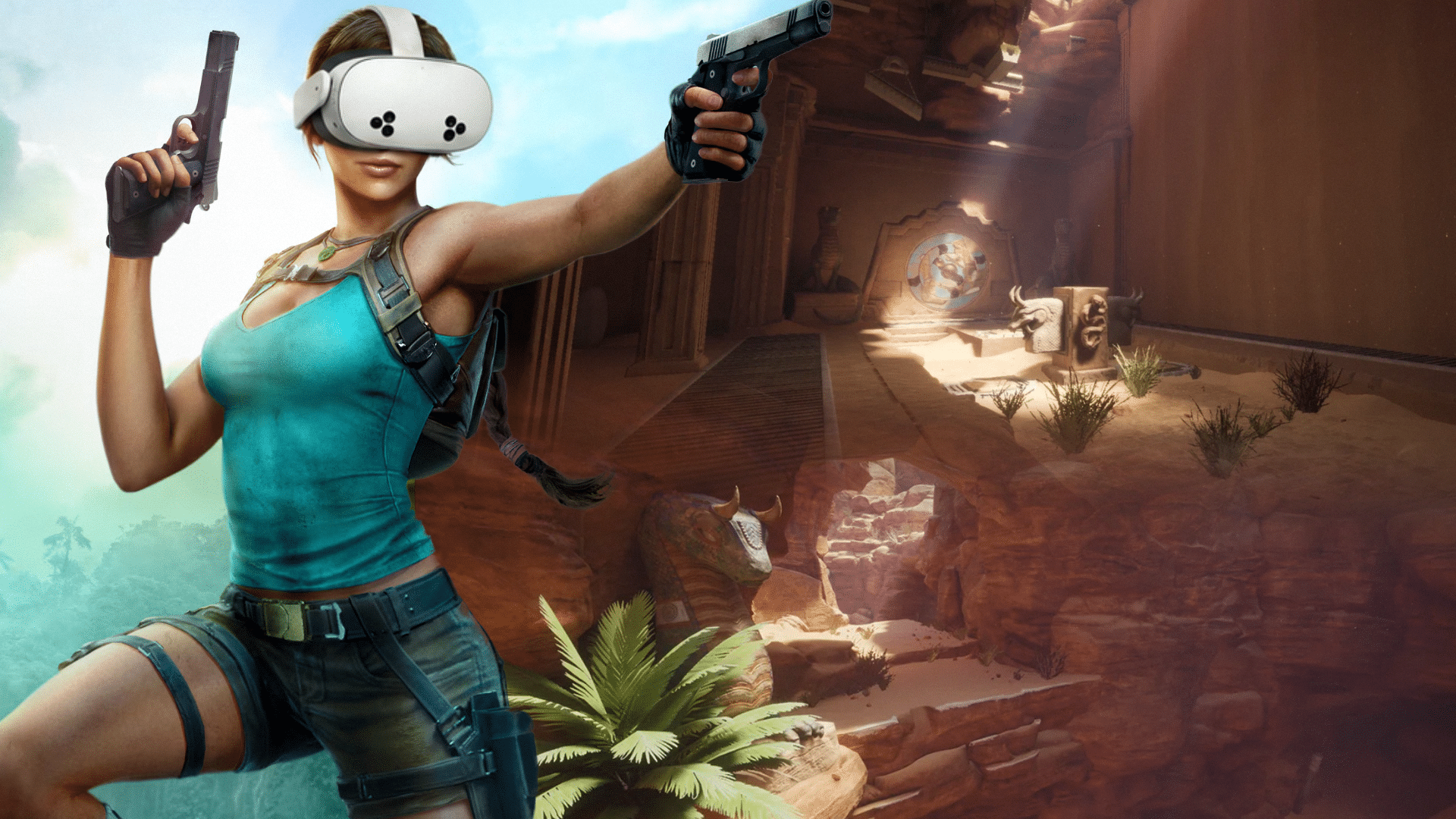
Last month, VR developer Vertigo Studios closed its Amsterdam division, a team best known for delivering the Metro franchise spinoff Metro Awakening and collaborating on other high-profile VR projects like Thief VR: Legacy of Shadow. Following the shutdown, we have now learned that the studio was also secretly developing an ambitious, standalone Tomb Raider VR title.
This project would have marked the first proper VR installation in the series, as previous similar experiences in the franchise had been limited in scope, but it ended up being cancelled early this year. Just recently, a huge amount of content about it has surfaced that gives a look at what the team was cooking for Lara’s first fully fledged venture onto VR devices.
Tomb Raider VR Early Gameplay and Concept Art
Development on this unannounced Tomb Raider VR project spanned from at least November 2024 until its cancellation in January 2026. Internally codenamed Project U, the title was being built on Unreal Engine 5 by a team of over 50 developers. It was targeted for Meta Quest 3, PSVR2, and PC, with the project reportedly shaping up quite well.
According to the website of a developer who worked on the game, the team successfully delivered a vertical slice milestone that received high praise both internally and externally. However, the game’s cancellation was not a direct result of the recent studio closure, even though the two are likely connected. The developer noted that the project was axed in January this year due to what was described as a structural reorganization happening at the time.
Following the project’s demise and the subsequent closure of Vertigo Studios Amsterdam, a few developers who got to work on it have shared online an extensive look at what could have been. Among the development materials that we have uncovered are character and environment models, concept art, and some really interesting early gameplay footage.
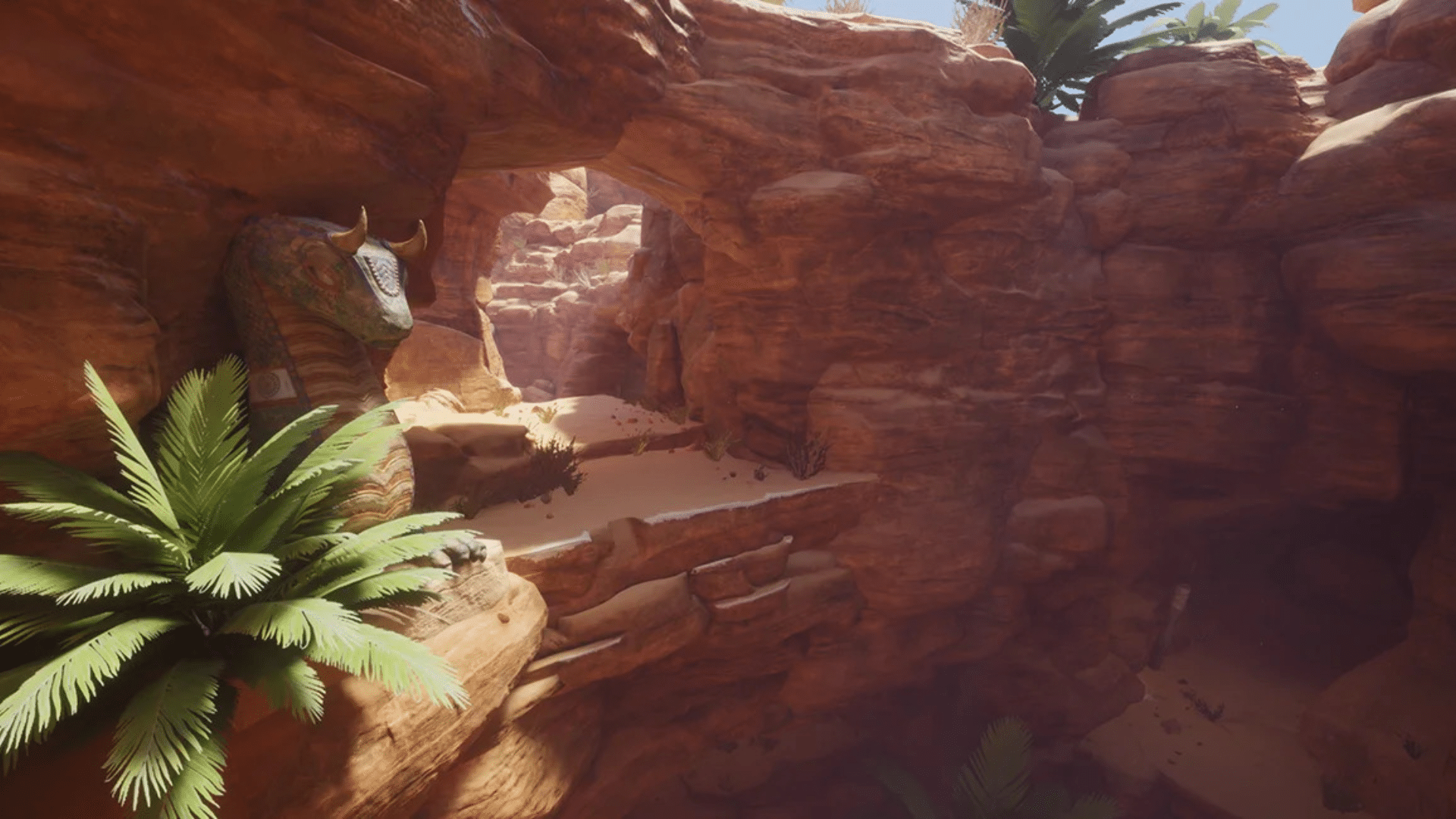
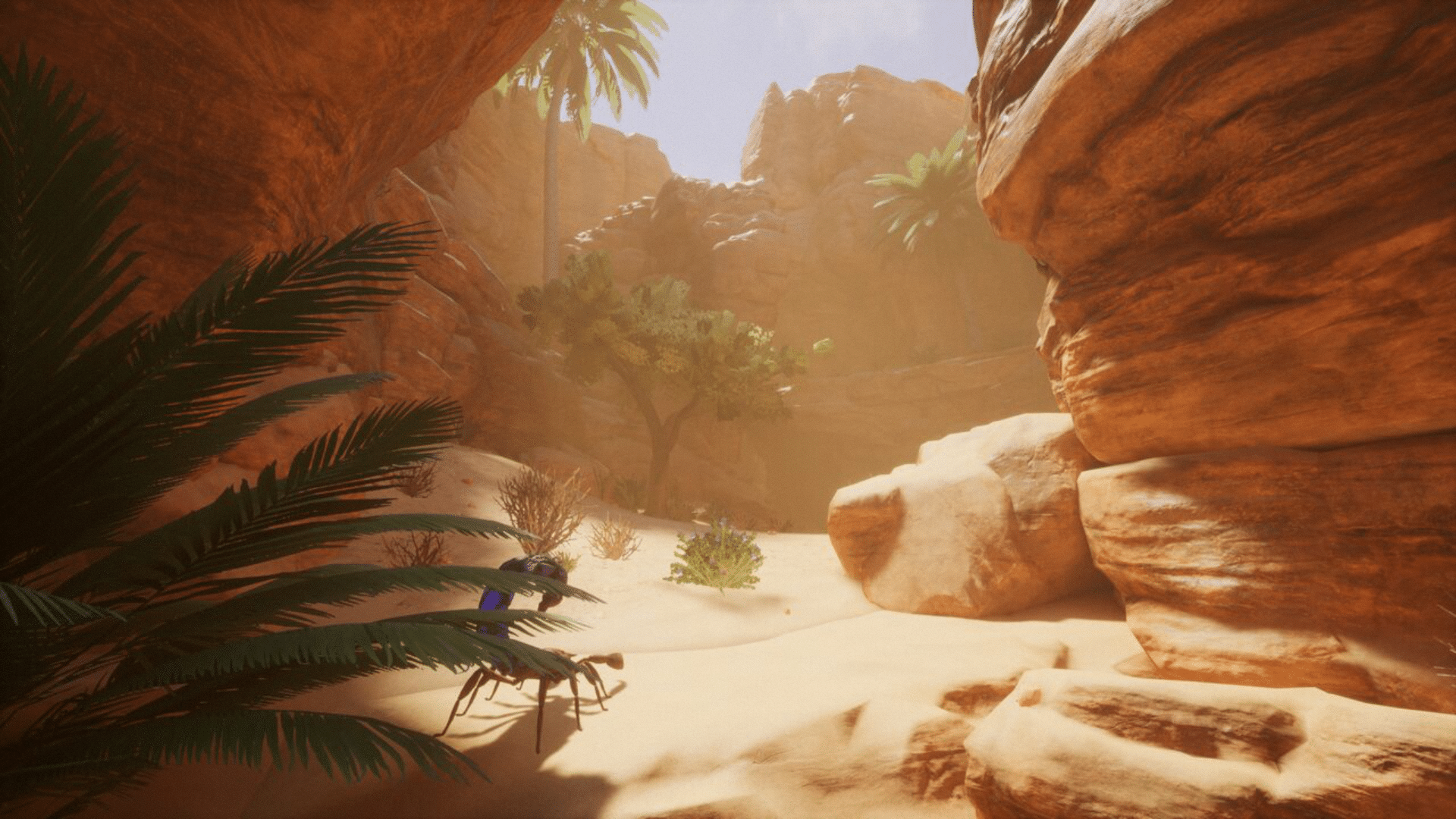
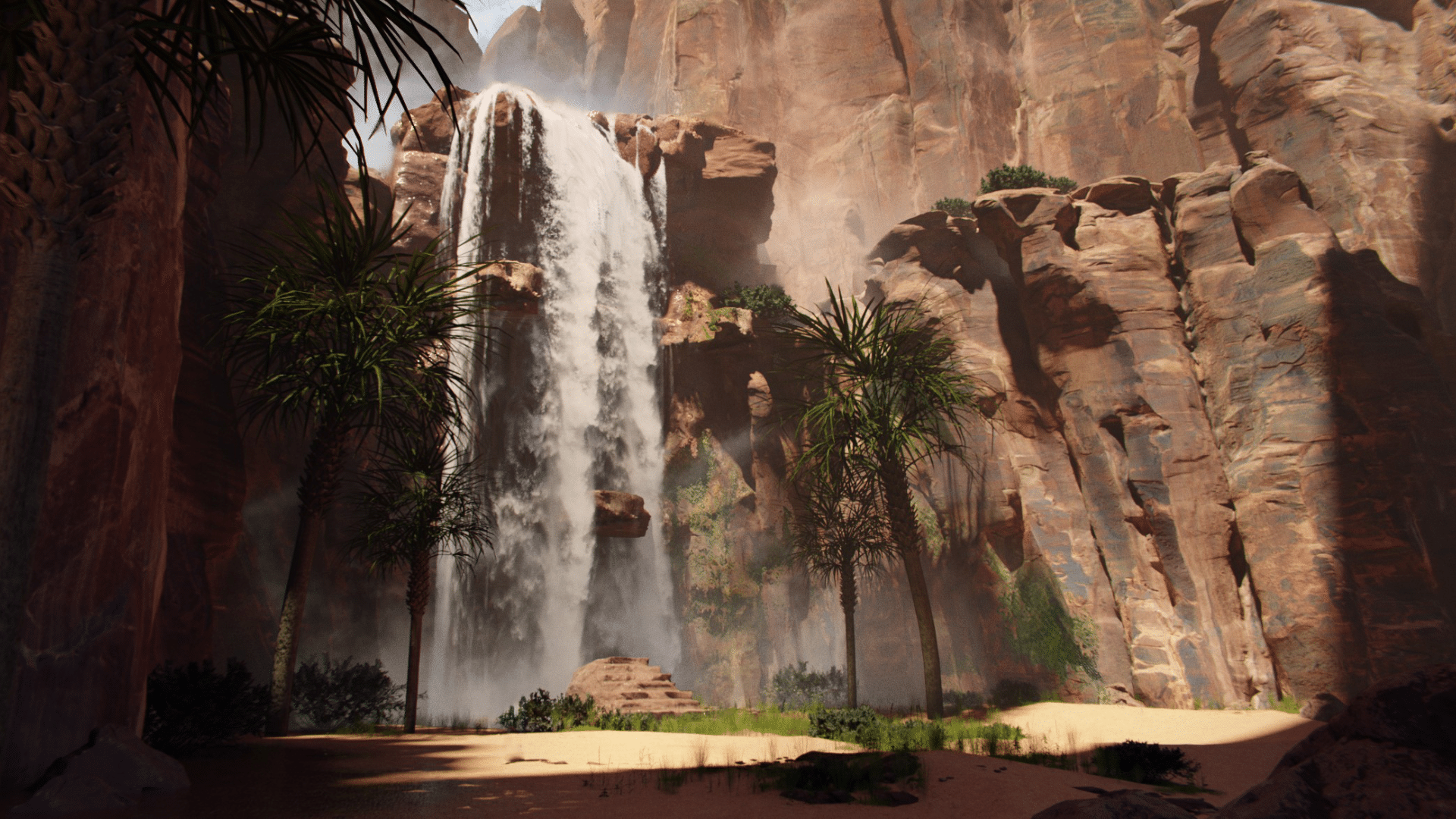
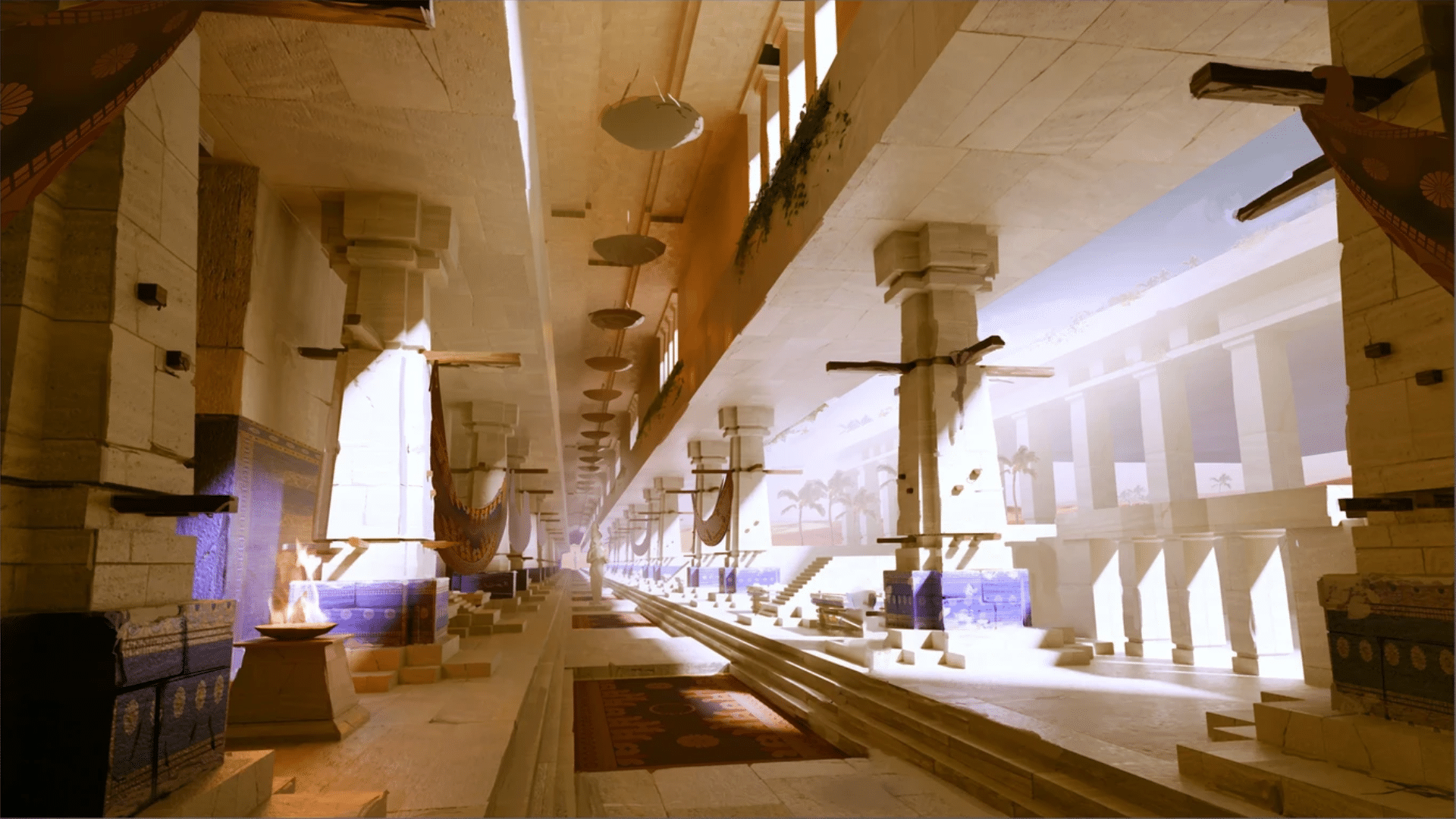
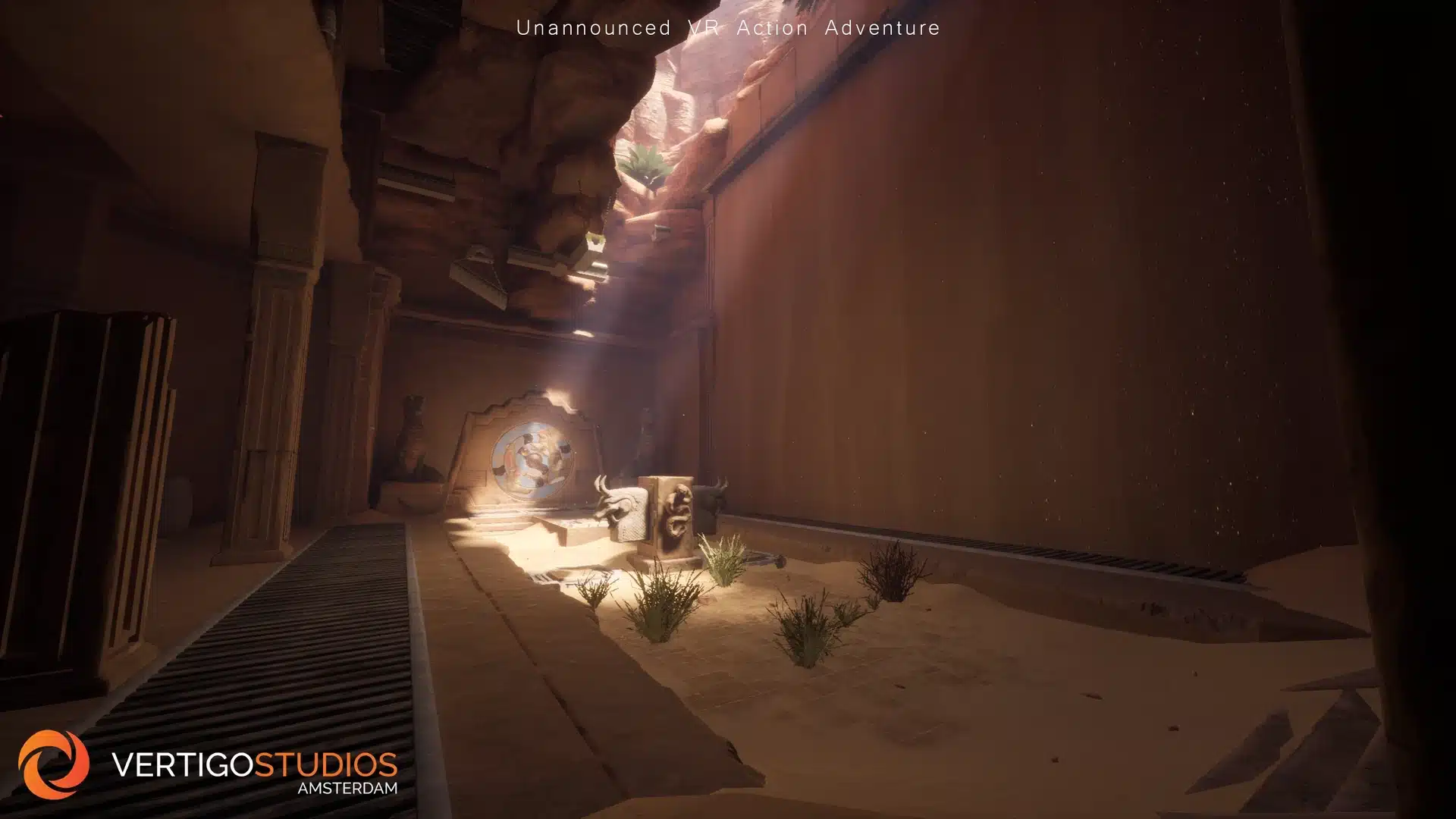
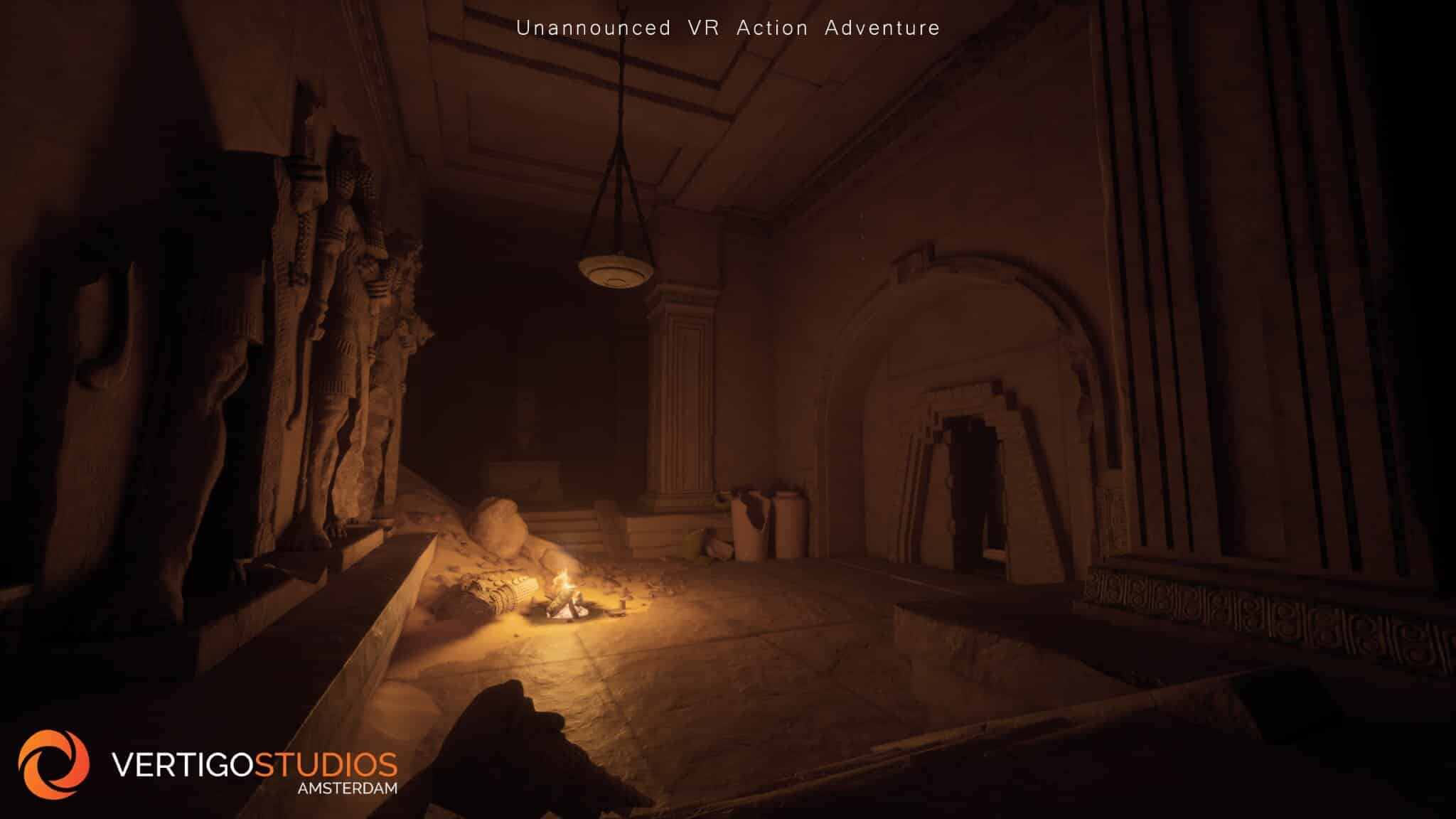
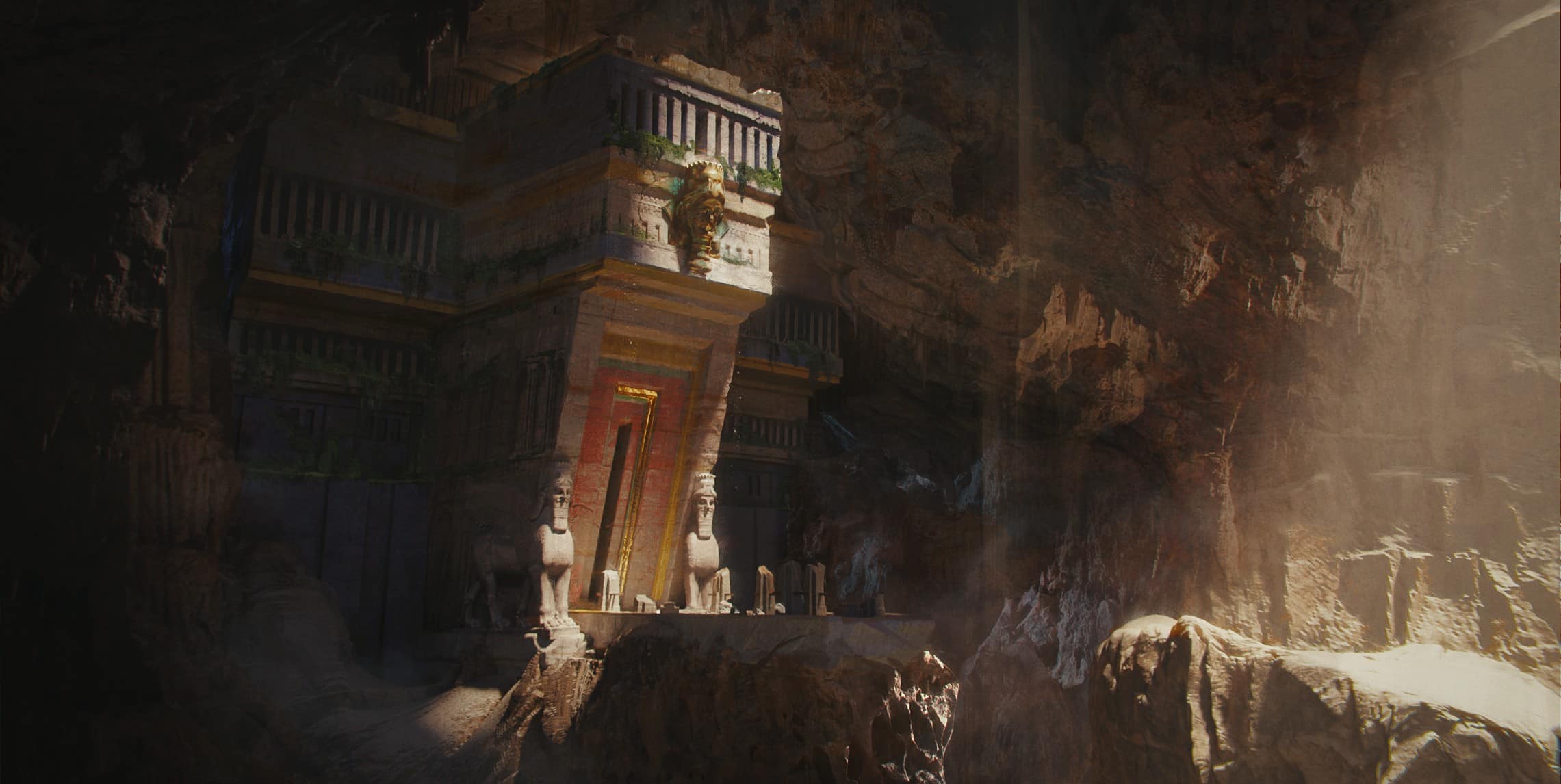
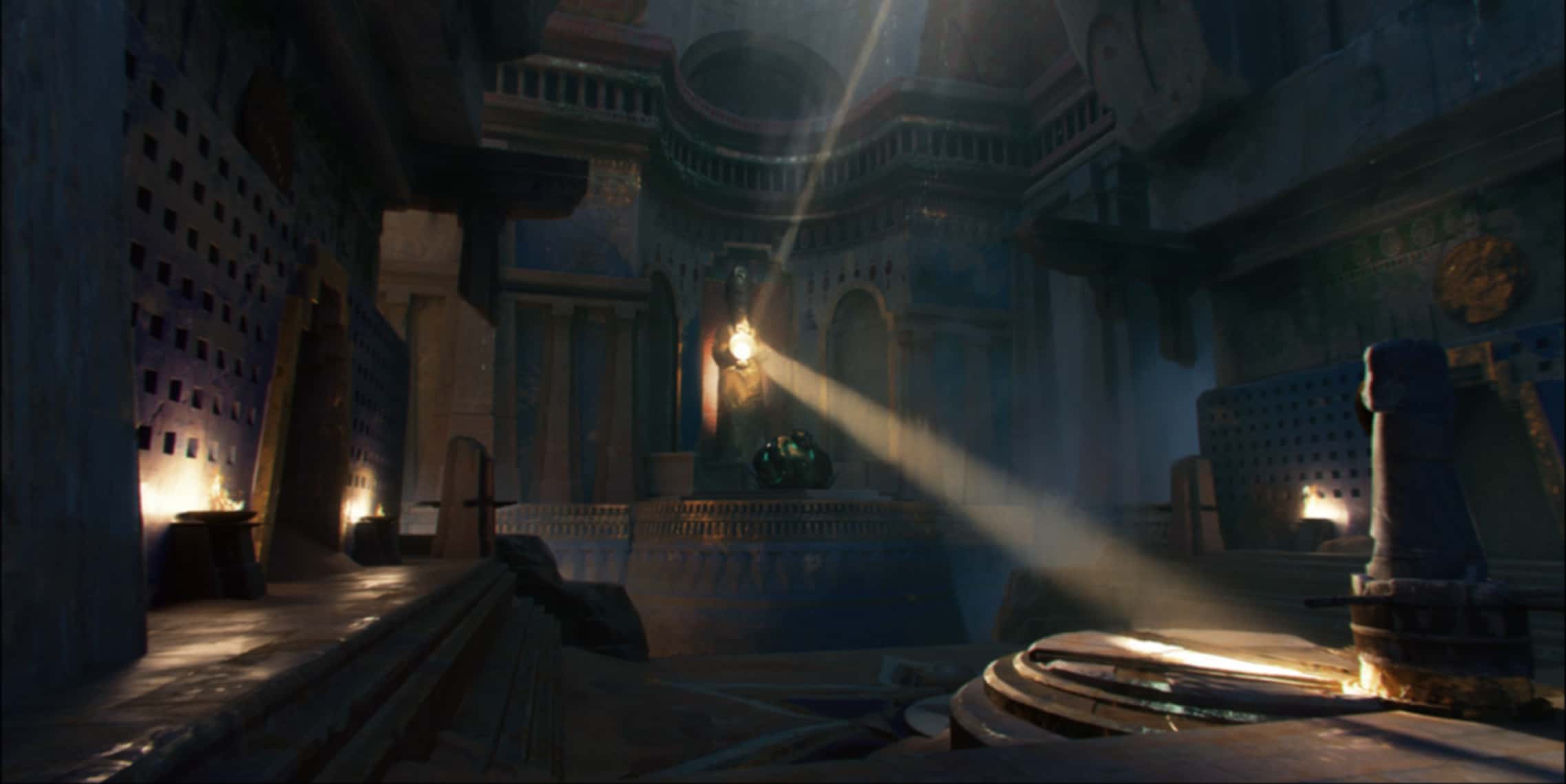
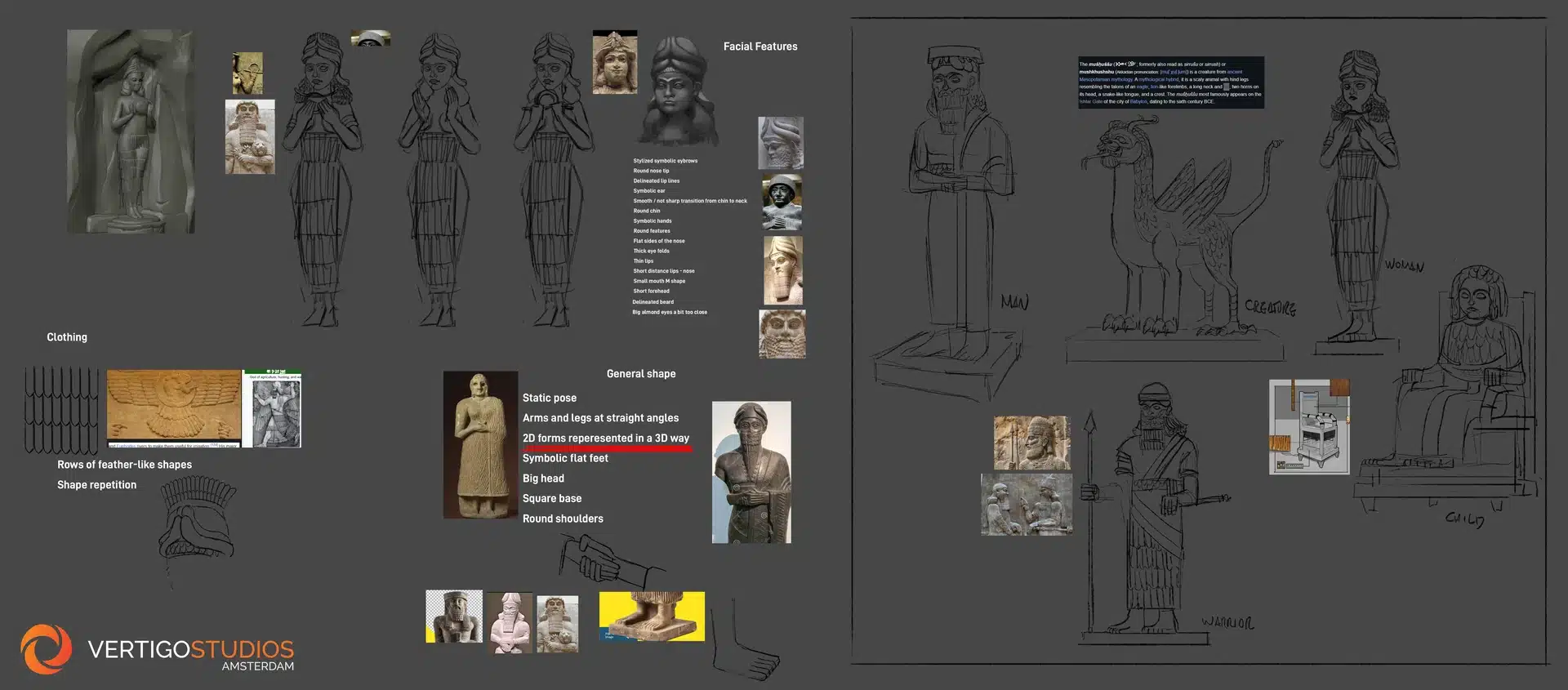
The footage gives us a clear look at how classic Tomb Raider mechanics were being adapted for virtual reality. Set primarily in a desert location in the Middle East, the gameplay puts us in Lara’s boots, exploring massive ancient temples and palaces that heavily draw from Mesopotamian and Babylonian culture. To navigate these environments, the experience featured traversal mechanics such as rock and underwater climbing, as well as ziplining.
Parts of this setting are shown in detail across both screenshots and illustrations. The video further reveals some areas of the world with unfinished textures, such as caves filled with puzzles and enemies.
Beyond world exploration, the clips show Lara using a mix of gear. While her bow and arrows could be used to solve environmental puzzles, combat relied on firearms, featuring one of her iconic dual pistols paired with a submachine gun. Additionally, her equipment included a wristband that functioned as a real-time health tracker and an oxygen levels monitor during underwater segments.
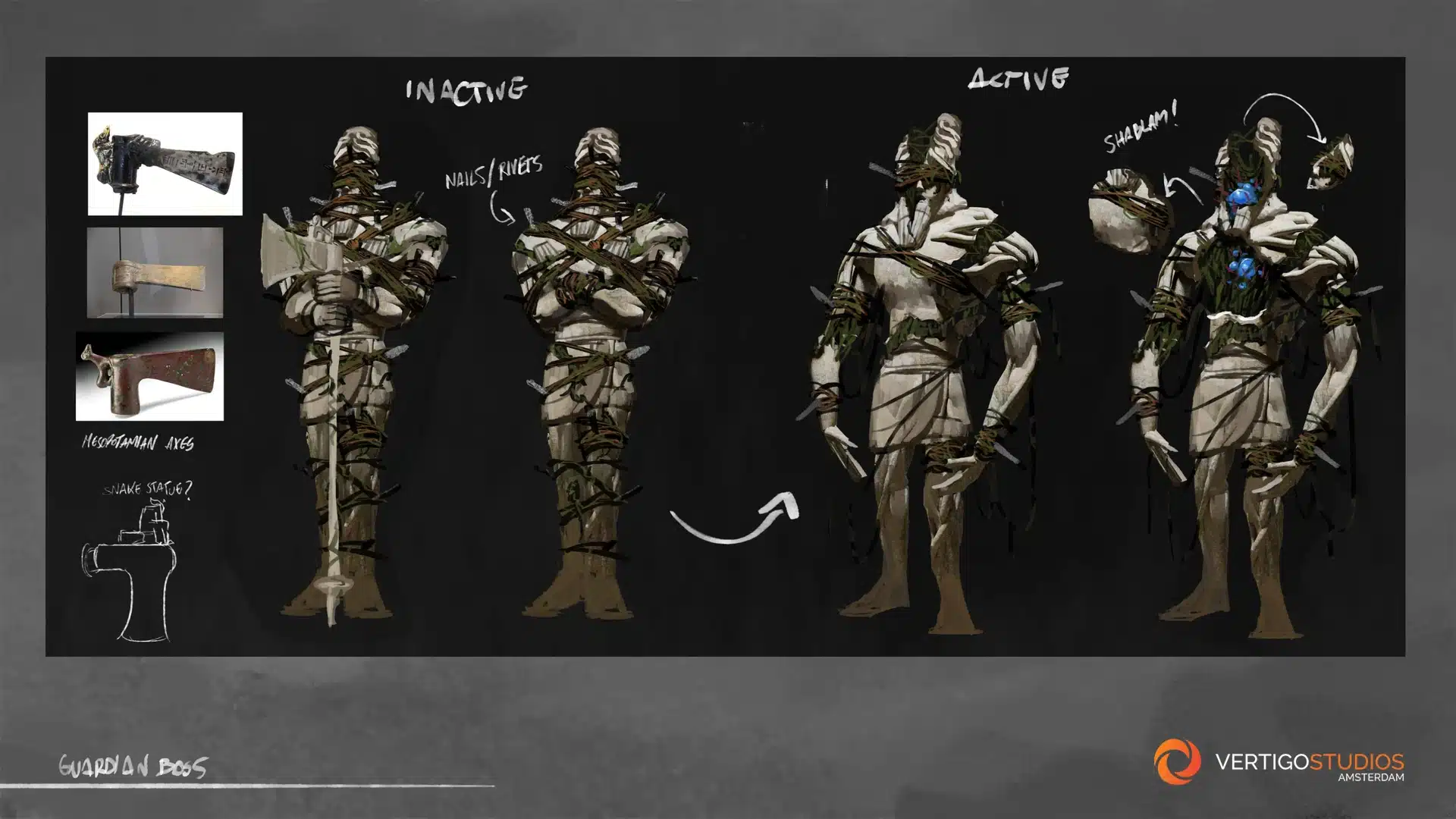
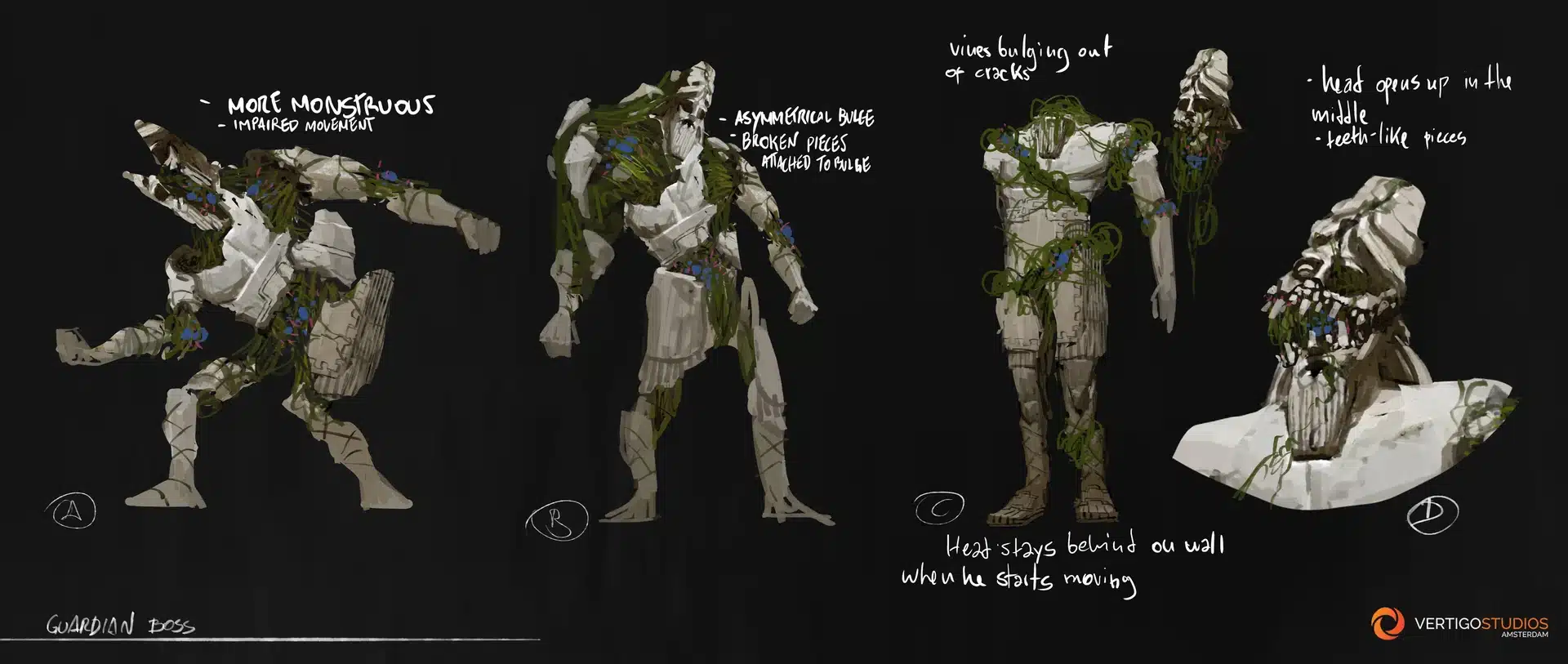
Another highlight of the gameplay is some of the threats Lara would have faced, including early work for a major boss encounter pitting Lara against a giant guardian statue, a foe that appears prominently in the art of the game.
The other enemies seen in the footage are classics, like the skeletons with shields that have appeared a few times in older titles, as well as bats, venomous scorpions, and hyenas. Both the hyenas and skeletons are featured in the artwork in different stages of an “infection”, with floral and moss-type growth on them.
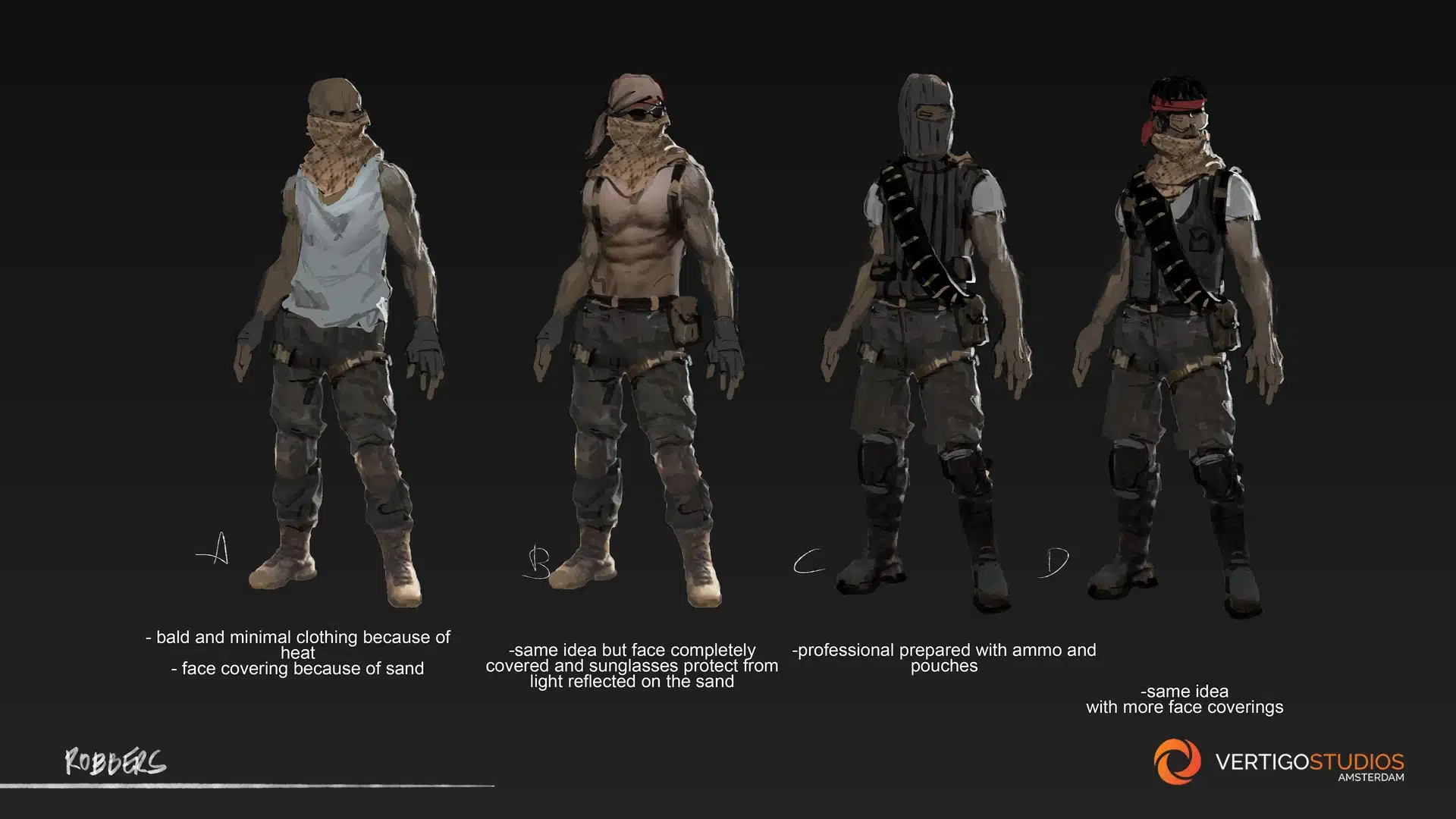
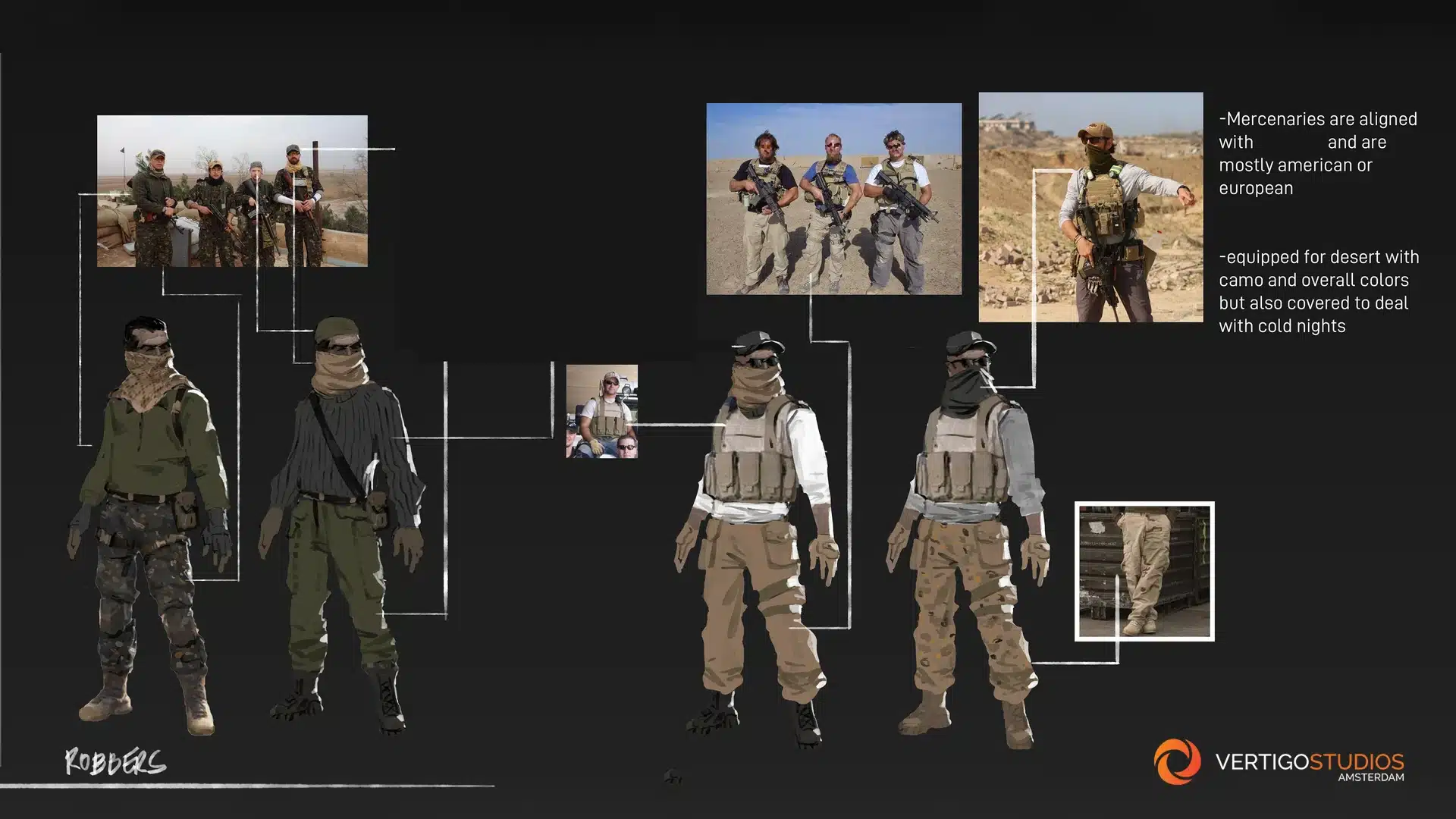
These infected enemies featured weak points that manifest as blue bulbs, and some can be seen with flora forming protective shields over them, adding some extra challenge to combat. The final type of enemy included in the concept art shifts away from the supernatural, showing mercenaries equipped with tactical desert clothing, ammo pouches, and heavy face coverings.
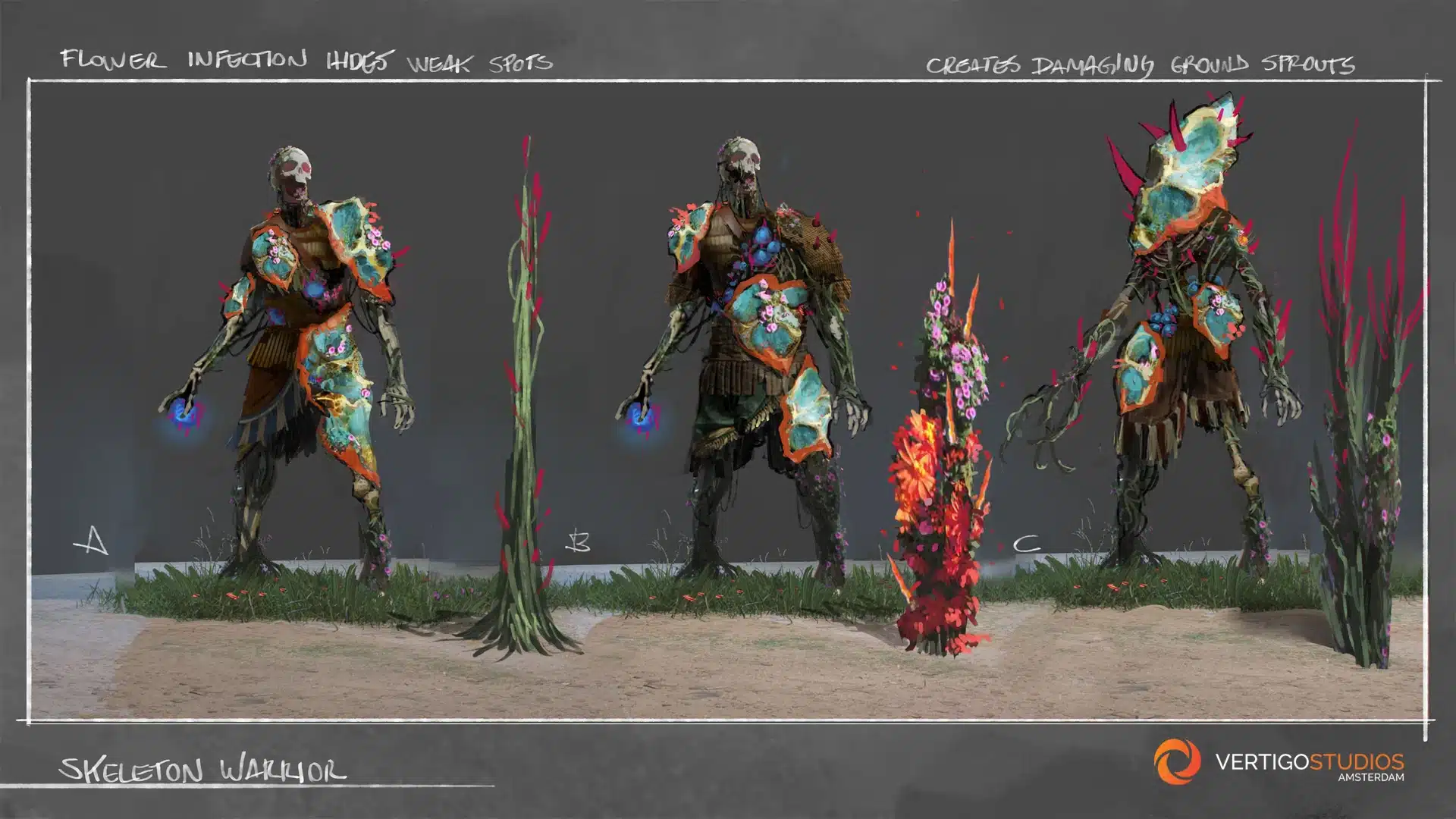
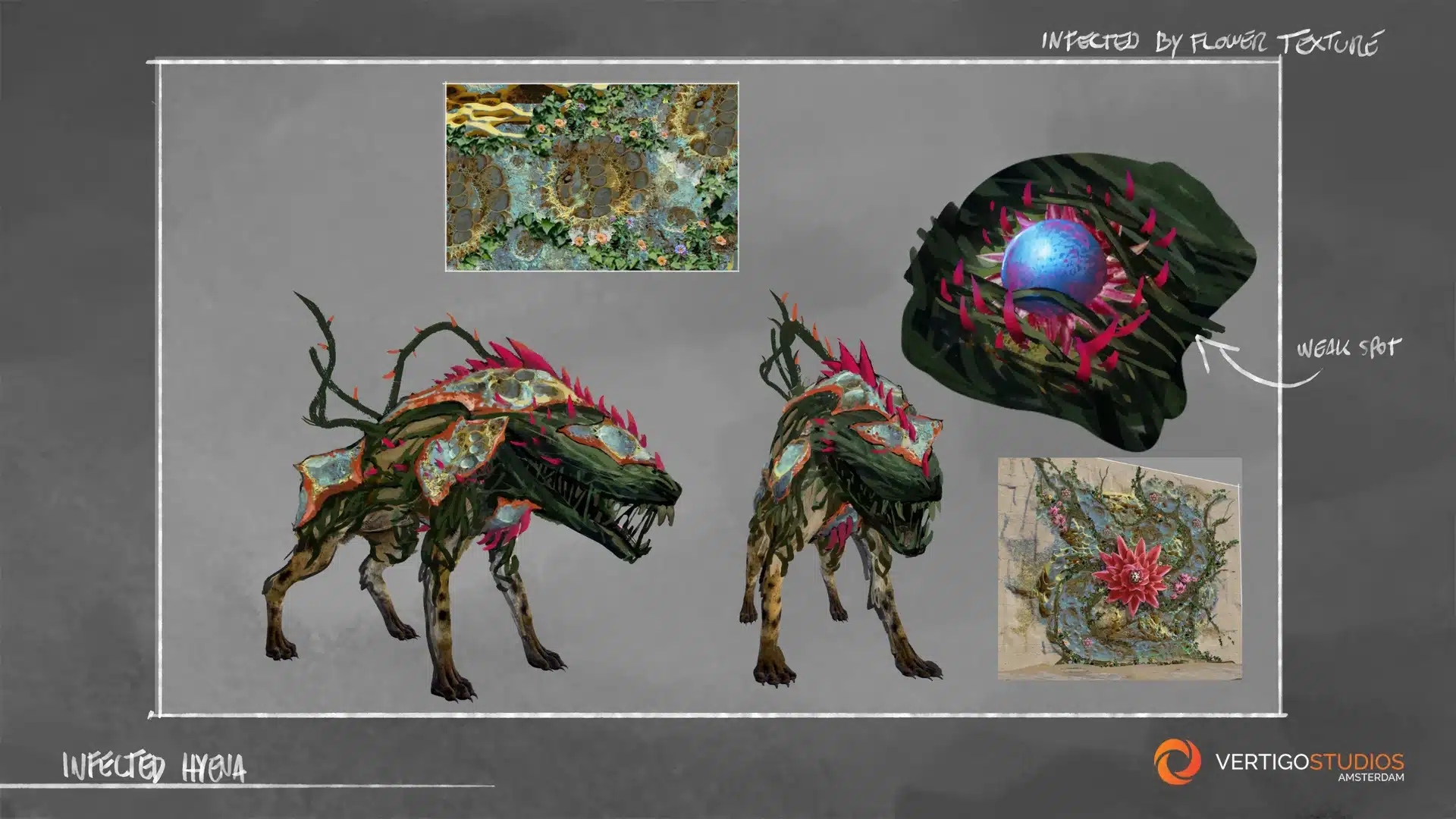
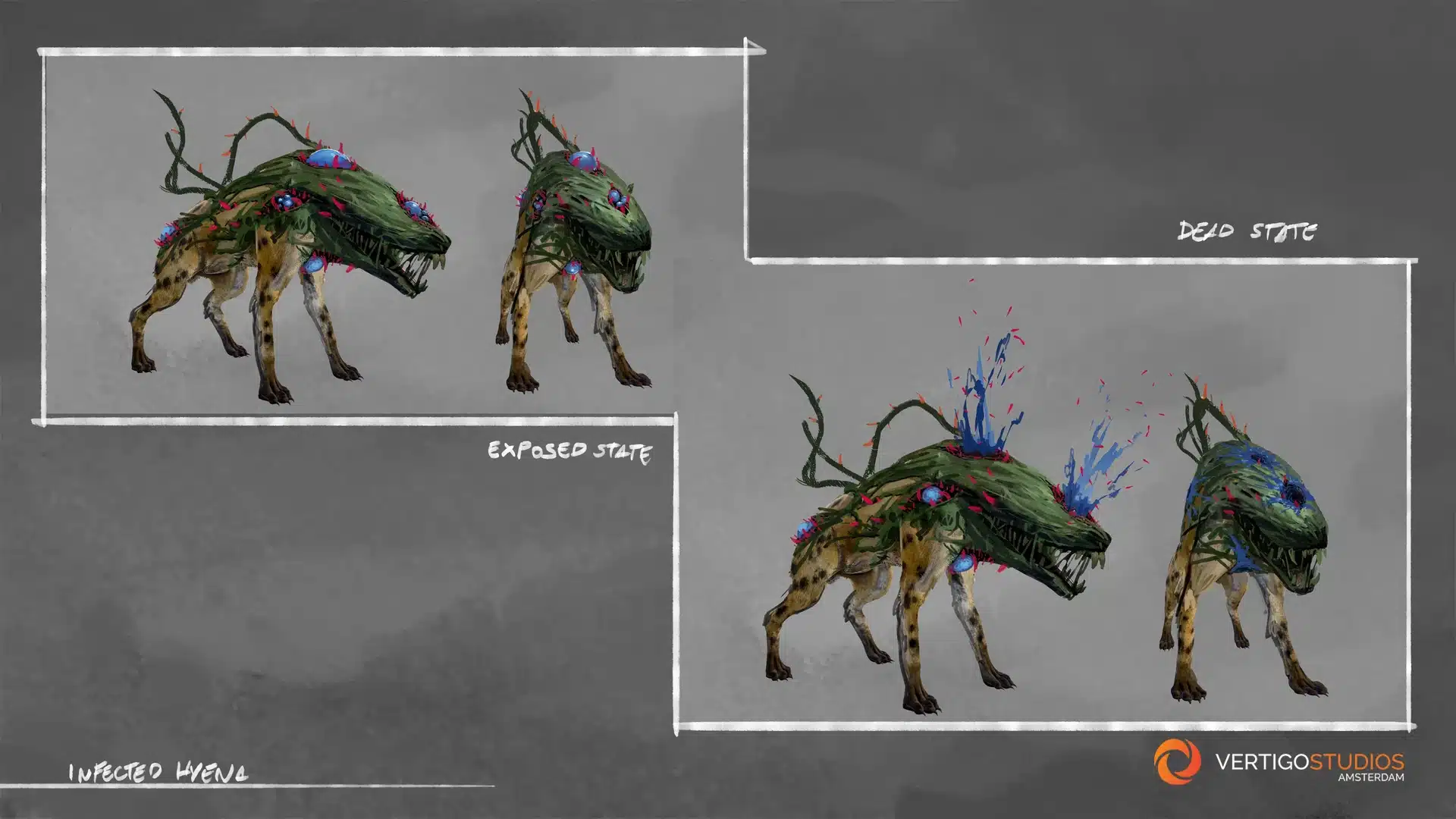
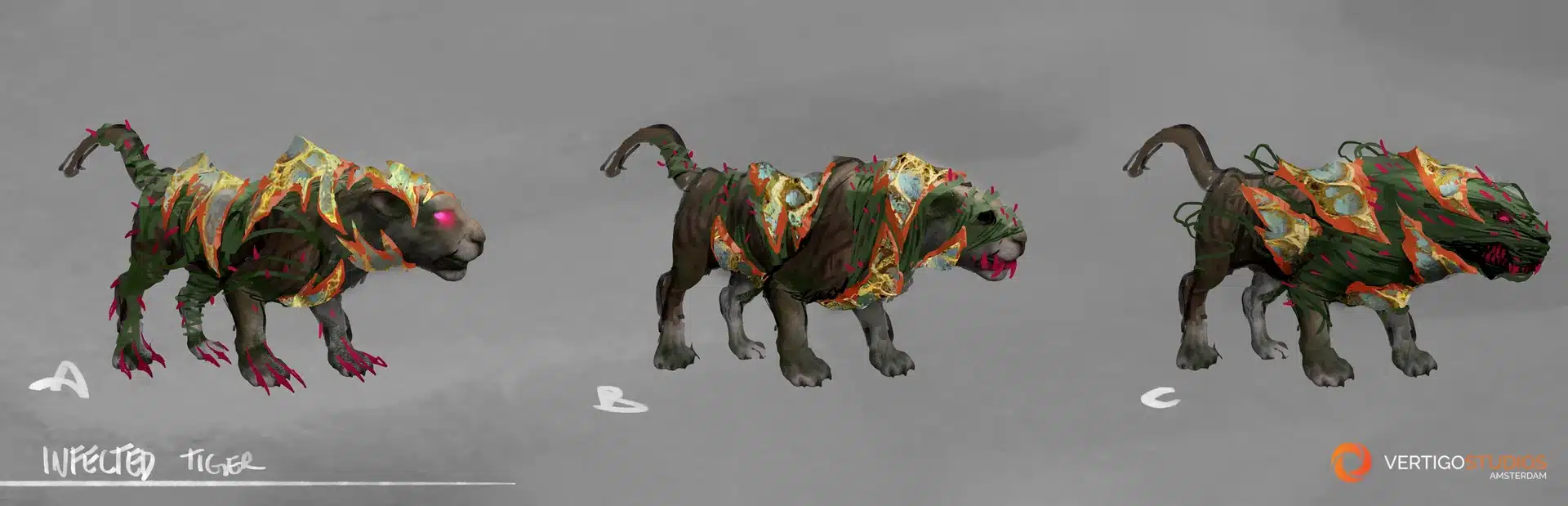
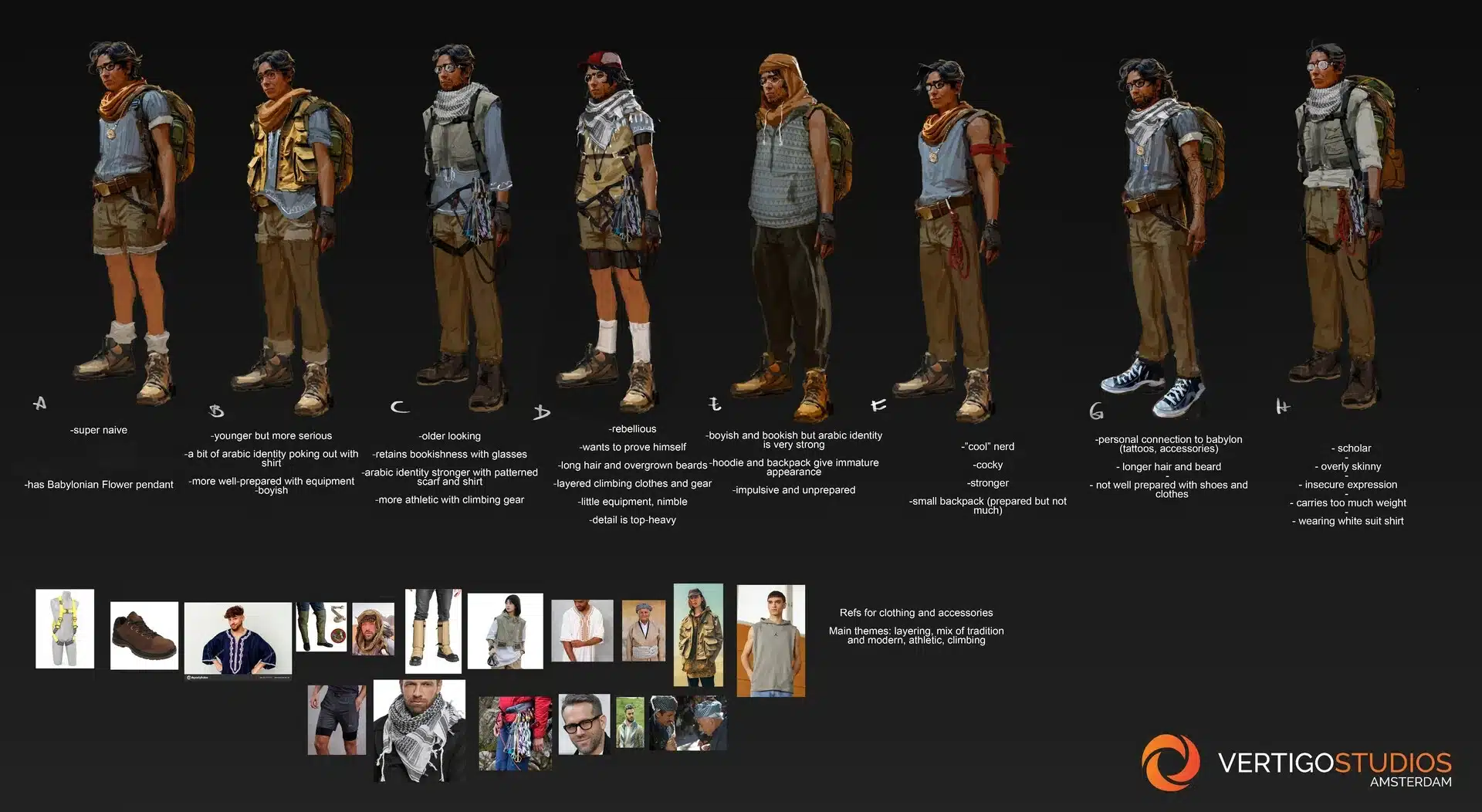
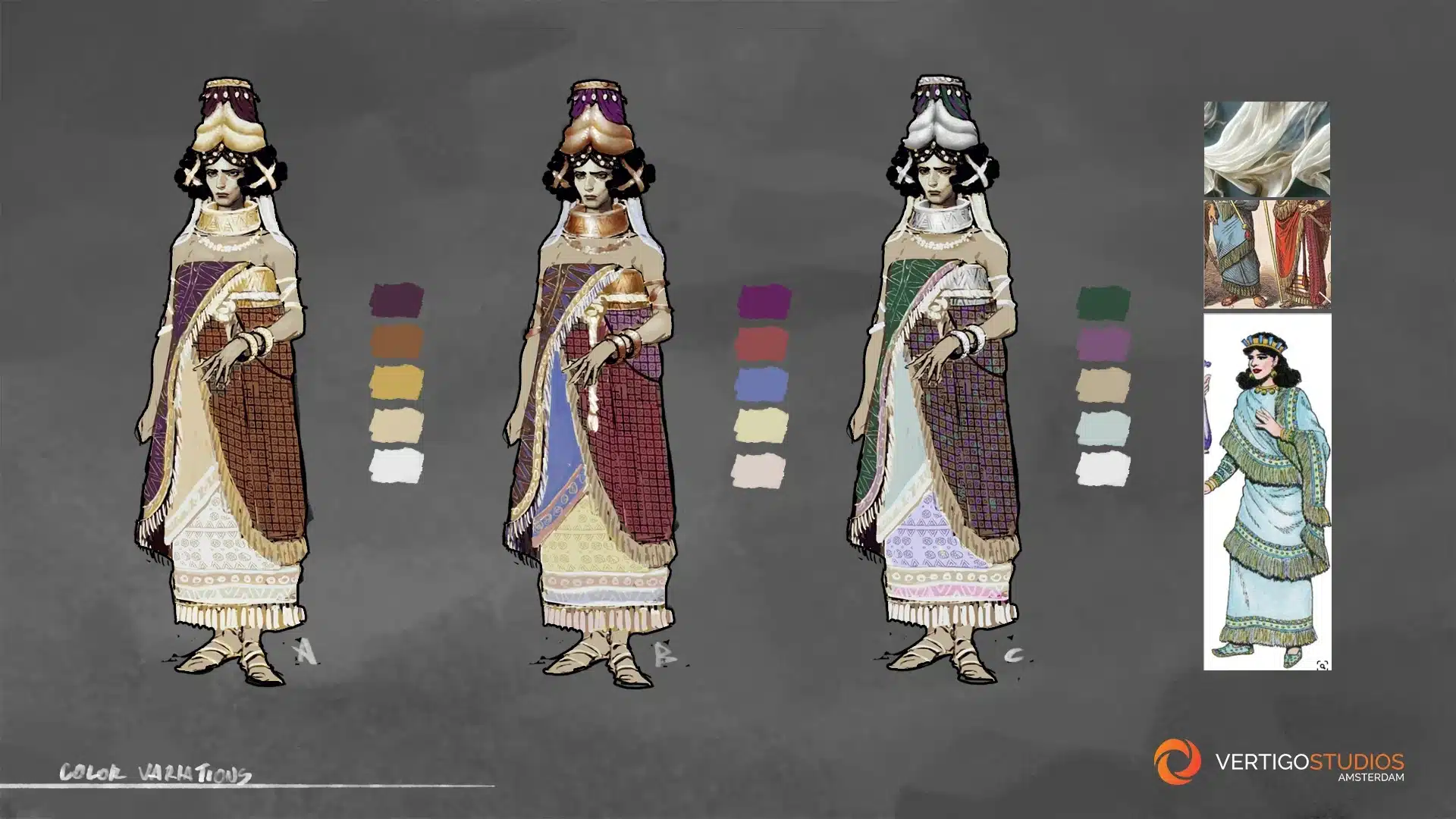
Lara wouldn’t have been entirely alone in this adventure, however, as the illustrations feature design explorations for Tarik, a young Arabic character who appears to be on the supporting side of the cast. We also find designs for the historical figure Amytis, a Median princess who became the Queen of Babylon. Whether she would have been an antagonizing mystical figure for the player or simply a reference for a statue remains unknown.
Finally, we see concept art for relics that depict several Mesopotamian deities, which would have functioned as the standard collectibles found throughout the series.
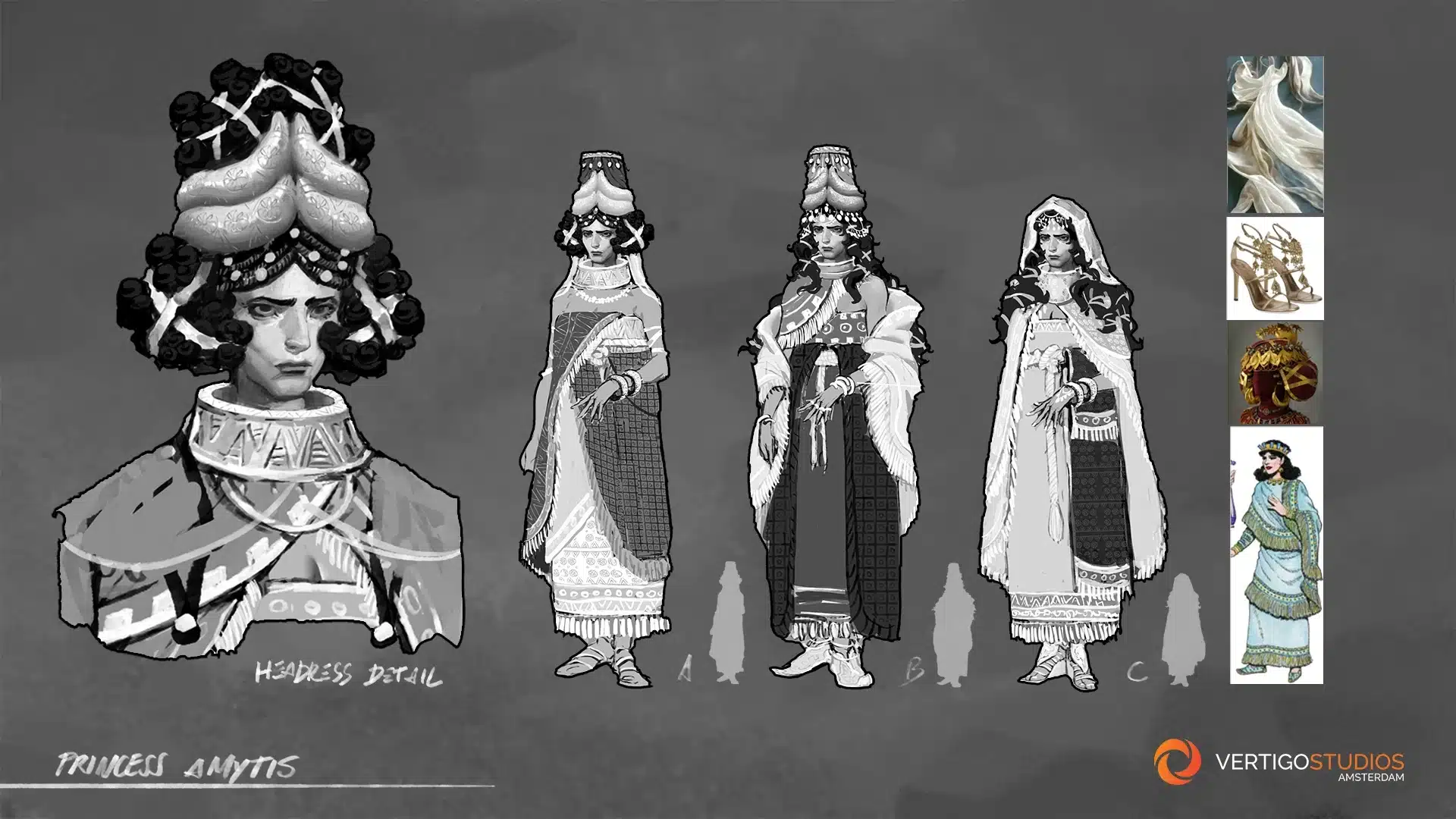
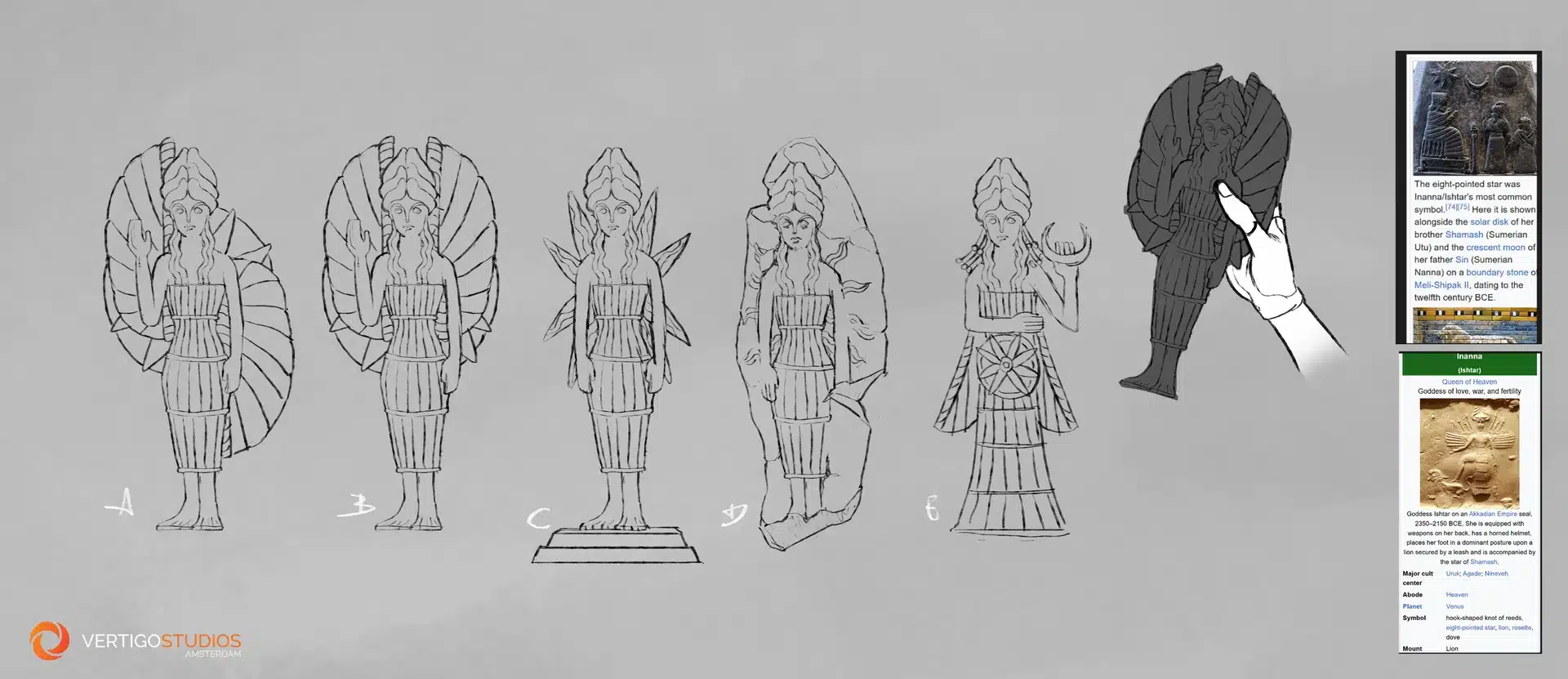
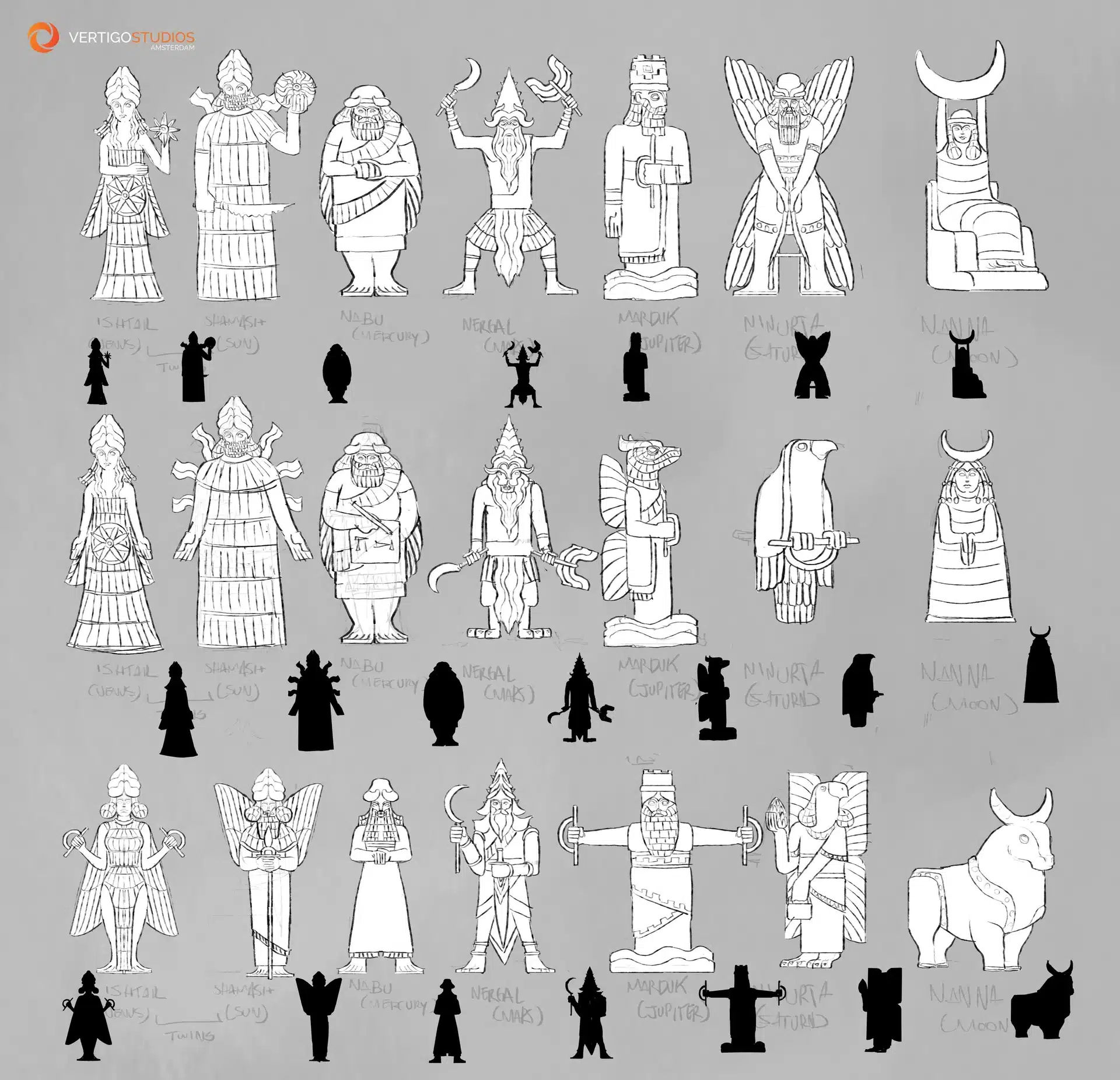
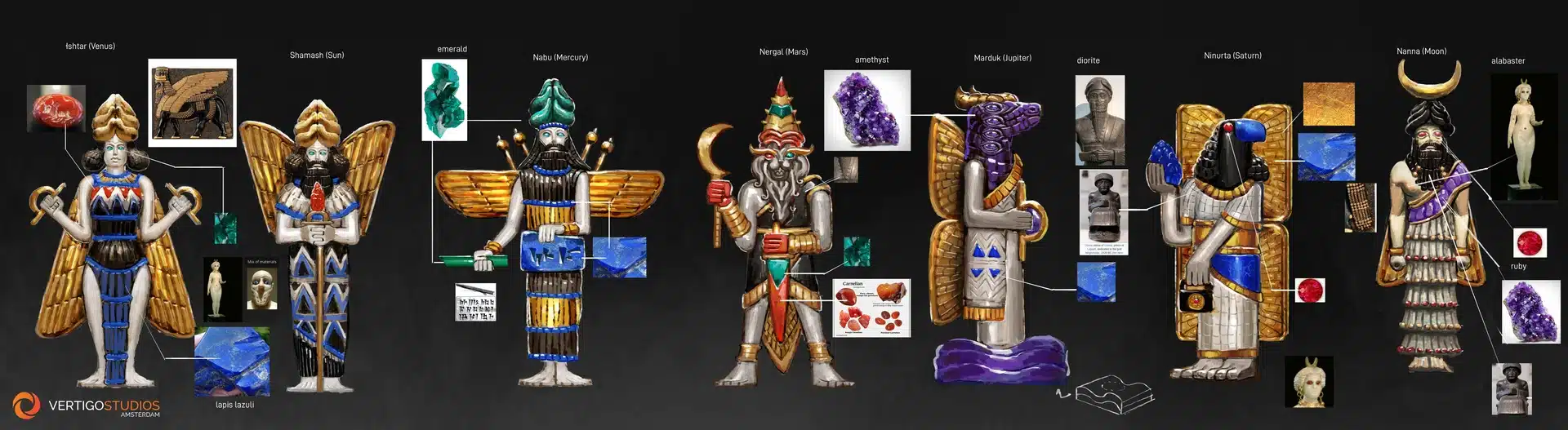
All of these detailed concepts and mechanics show just how strong the foundations of the project were before it was cancelled. Although the team had already proven the concept and hit their major milestones, corporate shifts behind the scenes ultimately pulled the plug on the project.
Unfortunately, this title is far from the only VR project to fall victim to changes at the studio. Concurrently, Vertigo Games had another project based on a world-famous IP in the early stages of development, a high-profile VR game codenamed Project P. From what we could gather, everything points to this scrapped project being a title set in the Halo universe. That said, since we were unable to fully confirm this detail, it is best to take it with a grain of salt.
Much like Project U, this title ended up being cancelled due to shifts in company strategy. Although it was still in the conceptual stage, the team managed to deliver a well-received playable demo and a script that earned the IP holder’s approval (Microsoft, if Halo was indeed the case) before development was halted.
With Vertigo’s Tomb Raider project shelved, Lara Croft’s full leap into virtual reality will remain on hold for now. Moving forward, the franchise’s immediate future now rests entirely on its two upcoming traditional releases, Tomb Raider: Legacy of Atlantis and Tomb Raider: Catalyst.
In other Tomb Raider news, the next mainline entry in the franchise, Tomb Raider: Legacy of Atlantis, has been delayed to February 12, 2027.
This website contains affiliate links. If you click a link and make a purchase, we may earn a commission at no additional cost to you. This helps support our work. Learn more on our affiliate page.


So Sad! This looked incredible and well put together . I really hope with the success of LOA and Catalyst that we can reignite this project and give it another try. THIS would make me buy a meta quest.