Abyssus Review – Better, Stronger, Still Brutal

When we first got our hands on an early build of Abyssus, the underwater roguelite first-person shooter (FPS) from DoubleMoose Games, it felt like a chaotic, pressure-packed experience full of promise and potential. The core loop was there: dive deep, shoot fast, survive longer, but it was weighed down by technical hiccups and a lack of polish that kept it from really shining. Now, months later, DoubleMoose has pushed new updates, addressing player feedback and making meaningful changes to nearly every corner of the game.
Back again with a full review of Abyssus for PC, and I am excited to see what’s new and what has changed. So get your swimming gear on, as we dive into the details.
Beneath the Surface: What’s New?
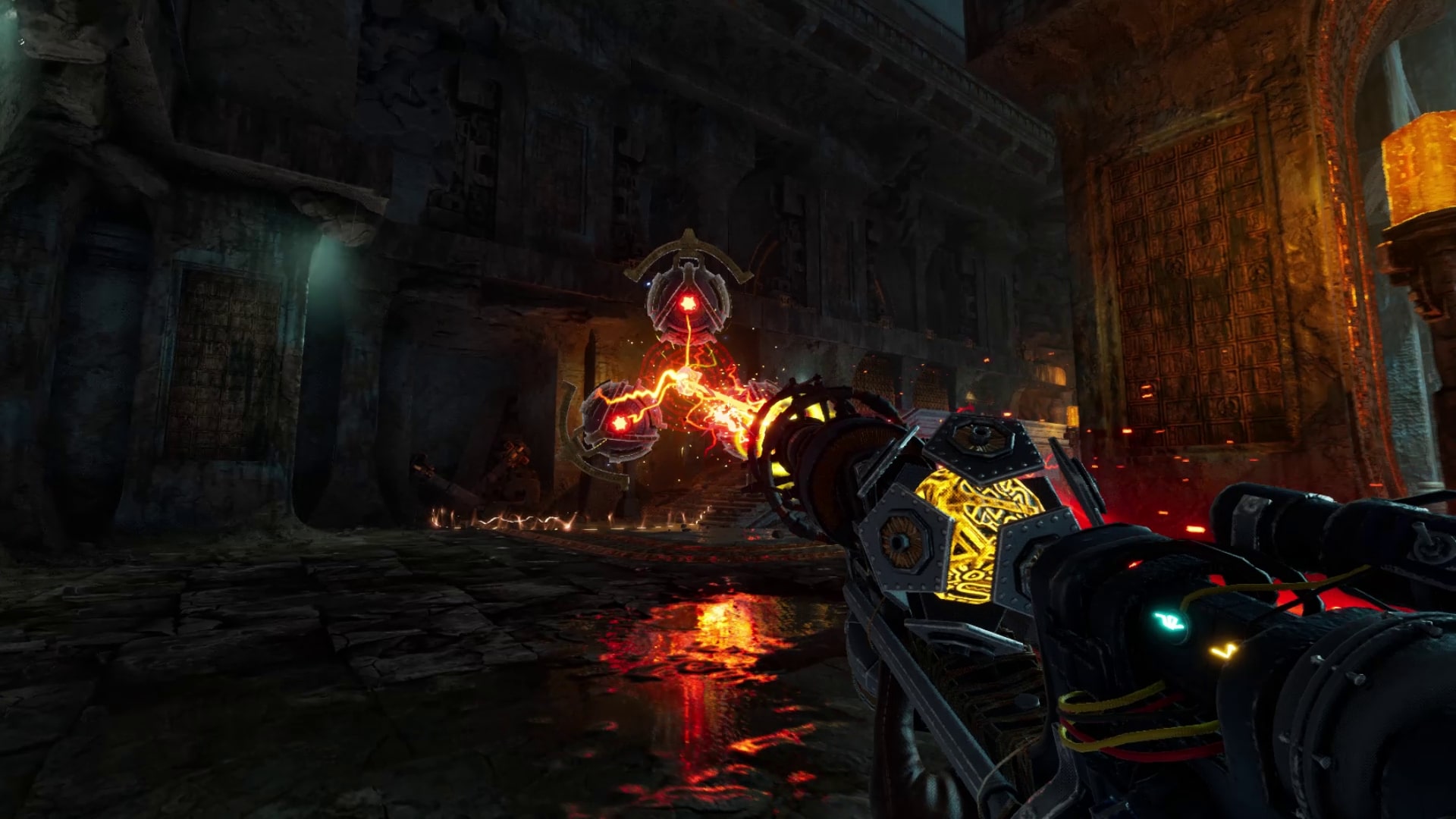
From the outset, the most noticeable improvements are in performance and feel. In its early build, Abyssus struggled to maintain a consistent frame rate, even on high-end rigs. That’s no longer the case, well, mostly. Fights that once dipped into the low 40s now hover in the more comfortable 55–65 frames-per-second (fps) range, with occasional stutters still popping up during particle-heavy moments or large enemy waves.
Movement and aiming have also been tightened considerably. The sluggishness we noted before has been mostly smoothed out. Whether you’re sprinting down tight corridors or swinging a hammer at a charging enemy, everything feels more responsive and fluid. Shooting now has a tactile punch that makes the game’s brine-powered arsenal feel weighty and satisfying. Weapons respond cleanly to input, and aiming is sharper, making it easier to hit your mark in the middle of chaos.
These may seem like minor tweaks, but together, they radically improve the game’s moment-to-moment action. Abyssus always had a strong combat loop from the earlier demos, but now it feels good to play in a way that wasn’t quite there before. With a few more kinks they can iron out on some weapon input and controls in combat, I would say they’ve got it.
The Core Loop, Refined, But Familiar
Despite these mechanical upgrades, Abyssus retains its original identity. It’s still a roguelite FPS that throws you into procedurally generated dungeons, each with swarms of aggressive enemies, tight corridors, and minimal downtime. The loop is simple: shoot, survive, grab loot, descend deeper. Die, and start over.
Healing remains scarce, as you are equipped with only one healing syringe; however, by collecting and spending soul relics, you can acquire additional healing syringes. Acting more as a psychological safety net than a reliable recovery option. During the gameplay, I didn’t encounter any chests that recover a small amount of health, so they might have removed that feature. Fall damage is still there, plummeting from a ledge or missing a risky jump, and you’ll feel it. That added layer of punishment makes vertical movement a more calculated risk.
This is still not a game that holds your hand, especially if you’re playing solo. In fact, solo play may be even tougher now, due to the addition of new enemies and the increasing complexity of stages. Abyssus remains best experienced with a squad as the added firepower, distraction, and revive potential make a massive difference in surviving the game’s most intense sections.
That said, a few new additions do help balance things out, even if just slightly.
Soul Relics and Gold Economy: New Tools for the Deep
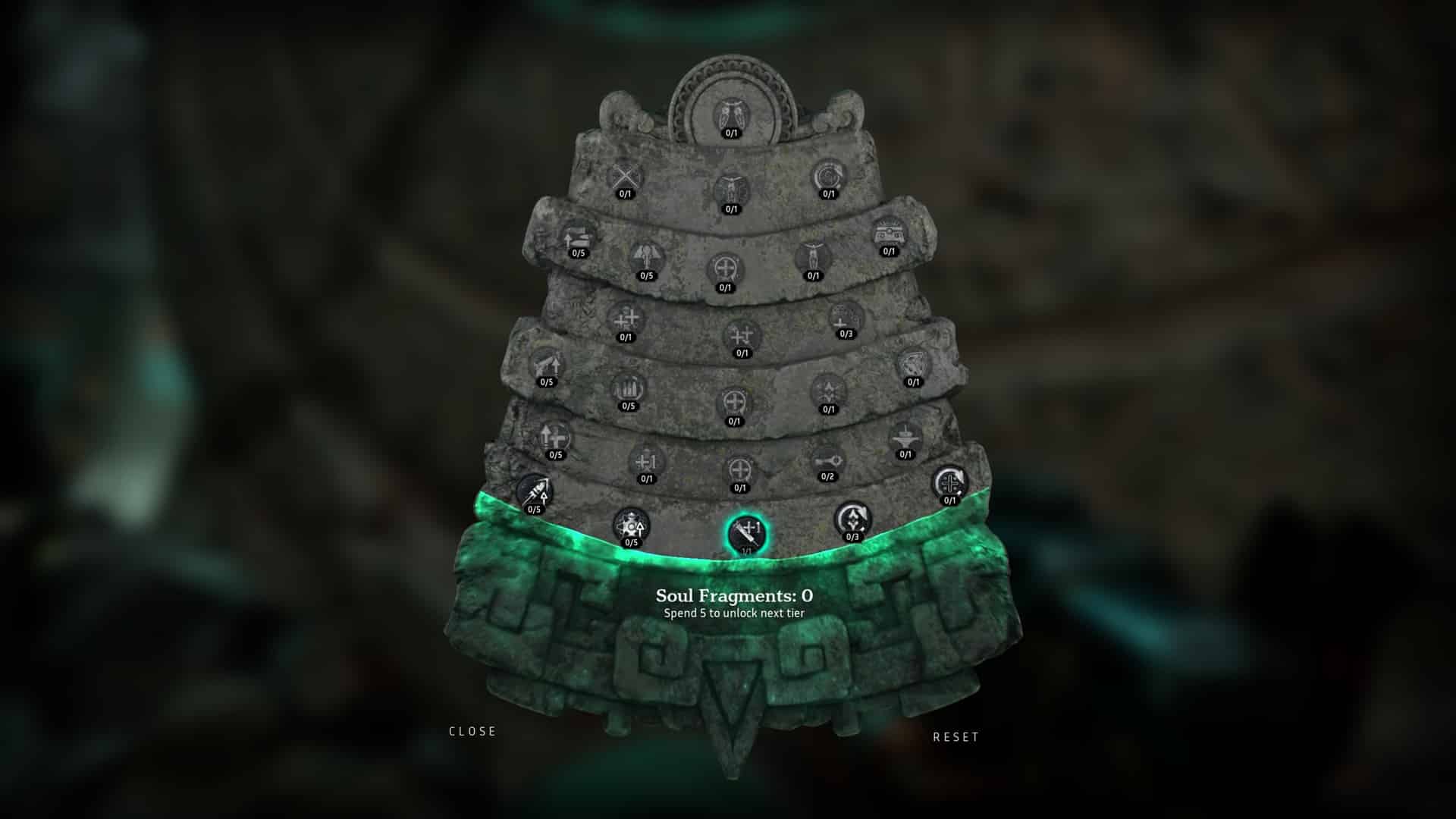
Perhaps the most game-changing addition to Abyssus is the introduction of the gold economy. Enemies and stage exploration now reward you with gold, which can be spent at vendors to purchase items. Unfortunately, it seems that vendor encounters are relatively rare, so the developers might need to work on creating a better experience for both solo and multiplayer runs.

Complementing that is the Soul Relic system. These relics, found throughout your descent, grant powerful passive buffs that can increase damage, improve survivability, or alter how abilities behave. They add a much-needed layer of customization to your build. Stack the right relics, and you can start to carve a distinct playstyle: heavy melee bruiser, long-range sharpshooter, ability spammer. It doesn’t quite reach the build diversity of something like Hades or Dead Cells, but it’s a solid foundation that adds meaningful depth. Though blessing at the altar will still be your main reliance when fighting through the stages.
Annoyances in the Abyss
Unfortunately, not everything hits the mark. Two possible enemy types that may have been added since the last preview fall more into the “frustrating and annoying” category than the “fun” one. One specializes in wide-area spin damage, often catching you behind, and is extremely fast that you might die if you can’t jump or move quickly out of the way. It does a wide range of area damage that can spread through most of the stage, which can be easily maneuvered by jumping over, hiding behind a pillar away from its line of sight, or going to higher ground. They’re not broken, but in solo play, they can feel disproportionately punishing, especially when multiple spawn at once in tight rooms.
That said, dodging has slightly improved. Hitboxes are more forgiving, and player movement feels nimble enough to make evasive maneuvers more consistent. Enemy projectiles, while still fast and aggressive, are less “cheap” than before. With good reflexes and positioning, you can now actually survive a chaotic encounter through skillful play and not just dumb luck or brute force.
Still, even with all the tweaks, Abyssus rarely gives you room to breathe. There are no safe zones, no long moments of calm. Once you’re in, you’re in. Every level pushes you forward, and the pressure is unrelenting, a design choice that can either feel exhilarating or exhausting, depending on your temperament.

Visuals, Atmosphere, and Sound
The underwater theme remains a standout, giving Abyssus a distinct visual identity. While not the most graphically stunning FPS out there, the game’s bioluminescent lighting, murky corridors, and glowing enemies do a great job of building atmosphere. Each level feels alien and hostile, but in a compelling way.
Sound design supports this mood well, with meaty weapon effects, subtle environmental cues, and a thumping soundtrack that intensifies in combat. Some of the newer enemy sounds are a bit repetitive, but nothing too distracting. Voice lines and narrative flavor remain minimal. This isn’t a story-heavy game, but it doesn’t need to be. The focus is on survival, not exposition.
Co-op Still Reigns Supreme

The best way to play Abyssus is still with friends. Co-op turns what can be a punishing solo experience into a chaotic thrill ride, where communication and coordination often spell the difference between a successful run and a tragic wipe. There’s synergy in covering each other’s flanks, reviving downed teammates, and planning routes through procedurally generated maps.
The co-op element also helps with unlocking new weapons and cosmetics, which are tied to challenges. These range from simple tasks like completing several runs to more harder objectives like finishing a stage without taking damage or using only a specific weapon. Some are clearly designed with team play in mind, and completing them solo is a Herculean task.
While reviewing this game, I was unable to join a multiplayer mode as there were none available or simply there were not enough players playing at the time I was playing. So I do not have much input to weigh in there.

Verdict
DoubleMoose Games has done a commendable job evolving Abyssus from a promising but flawed demo into something far more polished and enjoyable. The game still has its rough edges, healing remains sparse, solo play is grueling, and some new enemies toe the line of cheap design, but the core experience is stronger, faster, and more fun than ever.
If you’re looking for a roguelite FPS that doesn’t hold back, and you’ve got a few friends willing to join you in the depths, Abyssus is absolutely worth diving into. It’s not quite a genre-defining title yet, but it’s getting closer with every revisit.
Score: 7.5/10
Pros:
- Improved performance and framerates.
- Sharper, more responsive movement and aiming.
- Soul Relics add build variety.
- Co-op play significantly enhances the experience.
- The combat loop feels more satisfying than ever.
Cons:
- Solo play remains overly punishing.
- Healing is extremely limited.
- Vendors are too rare to make the gold economy impactful.
- Some new enemies feel frustrating rather than fun.
- Occasional stutters in intense moments.
Abyssus Game review code was provided by the publisher. You can read MP1st’s review and scoring policy right here.
This website contains affiliate links. If you click a link and make a purchase, we may earn a commission at no additional cost to you. This helps support our work. Learn more on our affiliate page.