Final Fantasy 7 Rebirth PC Review – No Promises to Keep

[summaraize]
Once thought to be nothing more than a pipedream after years of rumors, the Final Fantasy VII Remake was finally announced at Sony’s E3 of Dreams conference nearly a decade ago. It may have taken five years from that time to get Remake, followed up four years later with the highly anticipated middle entry of the trilogy Final Fantasy VII Rebirth.
Initially launching as a PlayStation 5 exclusive, Final Fantasy VII Rebirth has arrived on PC just a year after its original release.
Into the Unknown
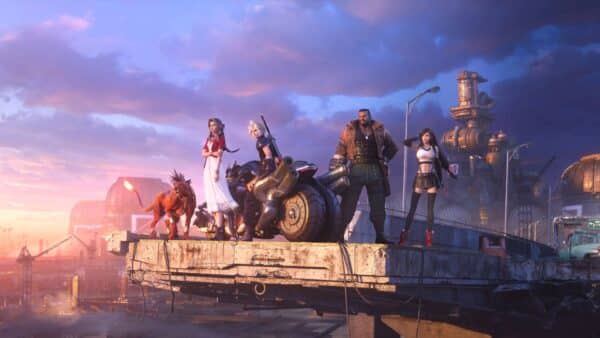
Final Fantasy VII Rebirth picks up directly after the events of both Final Fantasy VII Remake and the Intermission DLC, where Cloud, Tifa, Barret, Aerith, and Red XIII have made their way outside of Midgar, now having arrived in Kalm. Before we get to that, though, the game takes us to what appears to be a parallel timeline of some sort where Zack is still alive and comes across the aftermath of the end events of Remake, but in this world, Tifa and Barret are captured while Red XIII is killed trying to protect a comatose Aerith. Jumping right into the Zack story was a very interesting story decision that pays off immensely as the game goes on, and we continually get to see the world through Zack’s eyes as well, which we certainly did not get in the original Final Fantasy VII. This builds even more on the idea that this is a new world entirely from the original game and not just a remake as we first thought going into the Remake.
After the Zack segment, we cut to Kalm, where Cloud begins to explain his backstory and connection with the mysterious Sephiroth to the group. However, those who have played Crisis Core: Final Fantasy VII before will know there are some major discrepancies in his story here, which Tifa picks up on while not shattering Cloud’s memory of these events at the time. Those new to the game on PC for the first time may be quite confused here as a result, but this is definitely answered as the game goes on. Like in Remake, Rebirth is built on many mysteries in the game, some returning and some brand new, but they are paid off by the time the game is over or at least are setup to be answered in the third and final entry.

This flashback gives us our first combat section where we even get to play as Sephiroth for a bit as he and Cloud arrive in Nibelheim to check on the Mako Reactor and meet Tifa for the first time back then. This is where we are very quickly introduced to arguably the most important new addition to the combat in Final Fantasy VII Rebirth, Synergy Skills, and Synergy Abilities. This builds on the Synergy Materia from the Intermission DLC that Sonon held but is much more widespread here.
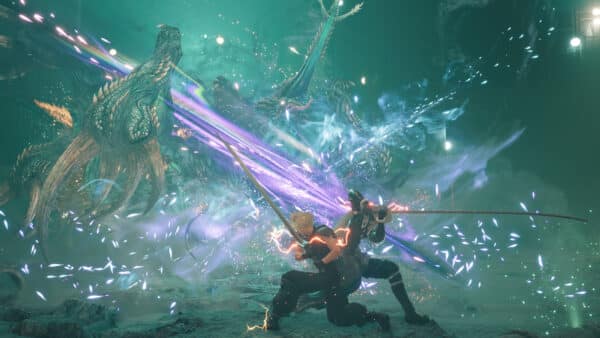
While each character has their own unique playstyle that you can switch back and forth between, it is vital to use Synergy Skills and Synergy Abilities if you want to survive the toughest of fights by combining the strengths of two party members. Synergy Skills do not use up anything in battle, and you can witness this with Cloud and Sephiroth in this opening section. Using different pairings in your party allows for different kinds of Synergy Skills, so it’s smart to mix them up.
Unlocked through a new Folio system in the game, essentially the game’s take on a skill tree, you can unlock new Synergy Abilities as well between each character up to a level of three. Using a certain number of abilities and spells in battle, you can use powerful Synergy Abilities, which can be offensive or defensive depending on the pairing. For instance, you could unleash a powerful combo attack with both Cloud and Tifa or instead use the common United Refocus ability to get three ATB bars instead of two in battle for a period of time, allowing for quicker spell casting.

From Kalm, the world of Final Fantasy VII Rebirth is rather incredible in scale, with the different locales you get to visit, including Junon, Gongaga, and the Gold Saucer. I won’t go much more into the story here as there is no point in spoiling it as you either have already played the game and are just reading to see how the PC version is or are playing through for the first time and will want to experience as much as you can story-wise for the first time here. I’ll leave it as there are very few games that left me with my jaw dropped as I did in this game between the story and environments I was witnessing.
The scale of Final Fantasy VII Rebirth is massive and you may even find yourself lost at times between all of the various sidequests. For someone like me who enjoys an abundance of side missions and world-building, I personally adored how this was handled in the game. However, some people may view the amount of sidequests and mini-games as overkill. I will say that some of the mini-games on Hard were rather insane and took so much time to complete. In fact, if this is the type of game you are looking to 100% complete by finishing all side missions and mini-games as well as every chapter on Hard, you could easily spend in excess of 250 hours on this game. I spent nearly that on the PlayStation 5 version last year and I was glad to experience it all again on PC due to how well done the majority of it is.
In general, each area of the world map in Rebirth features set tasks for you to complete on the side if you wish, including Activation Intel, Expedition Intel, Fiend Intel, Divine Intel, Excavation Intel, Moogle Intel, and Phenomenon Intel. These still vary by area, but the basic idea of them remains across them. The Phenomenon Intel still remains my favorite, with the various mini-games associated with them, like Fort Condor and more. I still think I prefer the Fort Condor from Intermission and wish the little changes had not been made, but it’s still a lot of fun here.

Each region also has its own special type of Chocobo for you to find and use, giving abilities such as running up mountainsides and even gliding. These really help with traversing this large world, as well as other vehicles that you come across along the way, some of which are even required. Fast travel is also available in the game, which helps you eventually get around as large as this world can get. The speed at which you can fast travel from one place to another is still super impressive on PC as it was on PS5.
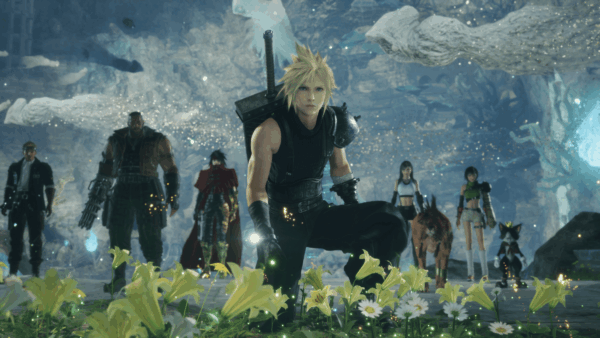
Beyond the original playable four characters of Cloud, Aerith, Tifa, and Barret from Remake, Final Fantasy VII Rebirth greatly expands the party to nearly double before everything is said and done. This includes the playable Red XIII, which was only used for story purposes in Remake, plus the introduction of Yuffie from the Intermission DLC to the crew. After not being in Remake or DLC outside of a quick shot of the character in a cutscene, Cait Sith is introduced as yet another playable character.
While I really enjoyed using all of these characters, there is still a section of the game where you have to play only Cait Sith, which is one of the most arduous in the entire game. The frustration level increased greatly here due to the solo character usage and difficult fights, but the character is very enjoyable otherwise. There are also a couple of other party members from the original Final Fantasy VII that get introduced here and play a big part in the story, but they are not useable in combat this time around, unfortunately, essentially playing the Red XIII role this time around.

A Grand Adventure on the Go
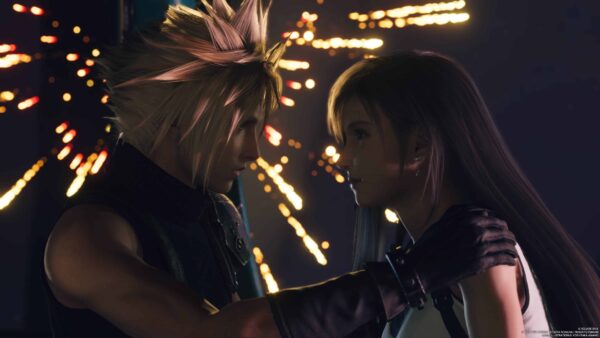
As this was my second playthrough of Final Fantasy VII Rebirth, I greatly enjoyed getting to play around with the game’s relationship system between Cloud and your party members, which culminates on a date later in the game at the Golden Saucer. Having a bit better idea of how the relationship meters for each character work now, such as using them more at parties, taking advantage of certain conversations, and even using Synergy Skills and Synergy Abilities with them more often. My first playthrough had Tifa as my partner, which I felt was the most natural option based on the story of the game, but I enjoyed trying to manipulate this along the way to get Aerith instead the second time around.
I can’t review Final Fantasy VII Rebirth again without discussing one of my favorite elements of the game that I’m still waiting for a spin-off mobile game for, Queen’s Blood. Queen’s Blood is a card game found within Rebirth where you face off against others in the battle to try and earn more points than the opposition by taking lanes of cards. This is something that can be avoided mostly in the game outside of some story-required battles on the cruise ship while traveling to Costa Del Sol, but I can’t imagine wanting to skip what is such a fun mini-game. By obtaining better cards, you can improve your deck and be better suited for different and much more difficult battles later in the game. In fact, some of the battles near the game will likely take you many times of retrying and strategizing, but it’s well worth it for that feeling once you win and possibly find yourself yelling out in excitement.
The soundtrack in Final Fantasy VII Rebirth is once again an absolute treat to experience throughout this release. From the little moments where you are walking around the map to the intense story moments, composers Masashi Hamauzu and Mitsuto Suzuki deliver again and again. Adding in Nobuo Uematsu’s work on the theme “No Promises to Keep” with the vocals by Loren Allred just takes things to another level. In fact, replaying this game again pushed me to buy a ticket and travel for one of the last concerts for the Final Fantasy VII Rebirth Orchestra World Tour that is coming up soon.
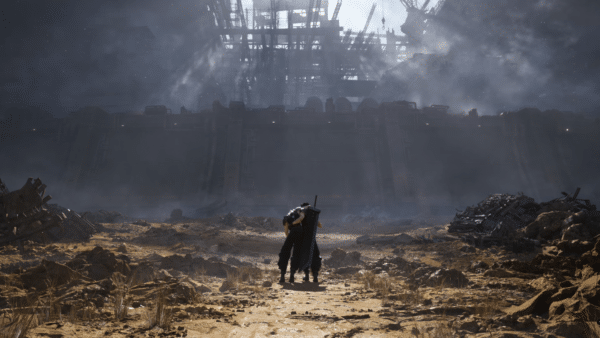

As far as the PC port itself, Final Fantasy VII Rebirth does not bring any new content story or gameplay-wise. Instead, like most PC releases, there are a lot more graphical options at your disposal. In fact, there are three default graphical presets that you can use, with the ability to customize them even further to suit your specific PC. With the highest-end PC that the game requires, you can get frame rates up to 120 FPS and even more improved lighting and detail in the environments. One of the complaints about the original release was blurry environments due to the massive areas leading to pop-in at times, which looks better here on PC. I can’t say how well the highest-end version of the game runs on PC, but it still looks quite good in my experience.
Final Fantasy VII Rebirth is also Steam Deck Verified, making one of the best games of recent years available on a portable. I can’t even imagine the number of hours more I would have added to my playtime last year when the game came out on PS5 if I had it available to play on the go (I did not yet have a PlayStation Portal), but having this available in a way that works very well and looks fantastic too is phenomenal.
Verdict
After the year wait, Final Fantasy VII Rebirth on PC was well worth it. While there is not much reason to get the game on PC already if you already played through it fully on PlayStation 5, adding in the ability to play portably on the Steam Deck, as well as the fact that the the PC port is still every bit as impressive as the game was when it released prior and is finally available for those that were not able to play prior, Final Fantasy VII Rebirth for PC is not one to overlook.
Score: 10/10
Pros:
- Every bit as great as the original release
- A captivating story that is still great on replay
- Combat that doesn’t grow tiring
- Fantastic soundtrack
- Can now play portable on Steam Deck
Cons:
- No new content in this port
- Will need a very high-end PC to take full advantage of the graphical capabilities
Final Fantasy VII Rebirth was provided by the publisher. You can read MP1st’s review and scoring policy right here.
This website contains affiliate links. If you click a link and make a purchase, we may earn a commission at no additional cost to you. This helps support our work. Learn more on our affiliate page.