Resonance: A Plague Tale Legacy Review – Worth Its Weight in Gold
A Plague Tale series is back, though this time we’re venturing off to the past with its prequel title, Resonance: A Plague Tale Legacy. With a new cast of characters and a new threat that doesn’t involve hordes of flesh-eating rats, the question becomes: can Asobo Studio capture that magic that made the first two games so incredible?
Well, let’s just say this is one tale you won’t want to miss.
This review contains spoilers for the previous A Plague Tale entries, A Plague Tale: Innocence and A Plague Tale: Requiem
Beyond the Bloodline
Set 15 years before the events of A Plague Tale: Innocence, Resonance: A Plague Tale Legacy sees us taking on the role of a brand-new protagonist, Sophia. She was first introduced to us in A Plague Tale: Requiem for a brief appearance, running under the moniker of The Scorpion of the Seas. She’s a pirate smuggler who eventually comes to the aid of Amicia, though not much more than a few sentences were revealed about her past. Well, that’s what Resonance: A Plague Tale Legacy is all about: uncovering Sophia’s dark past and how she connects to the overarching story of the franchise.
For Sophia, this is a tale, a very dark tale, of how one woman’s relentless pursuit of freedom and fortune inadvertently dragged her into the ancient nightmare of the Macula. It sets the stage for a journey that feels entirely fresh yet hauntingly familiar, trading the fragile innocence of childhood for a blood-soaked trial for survival.
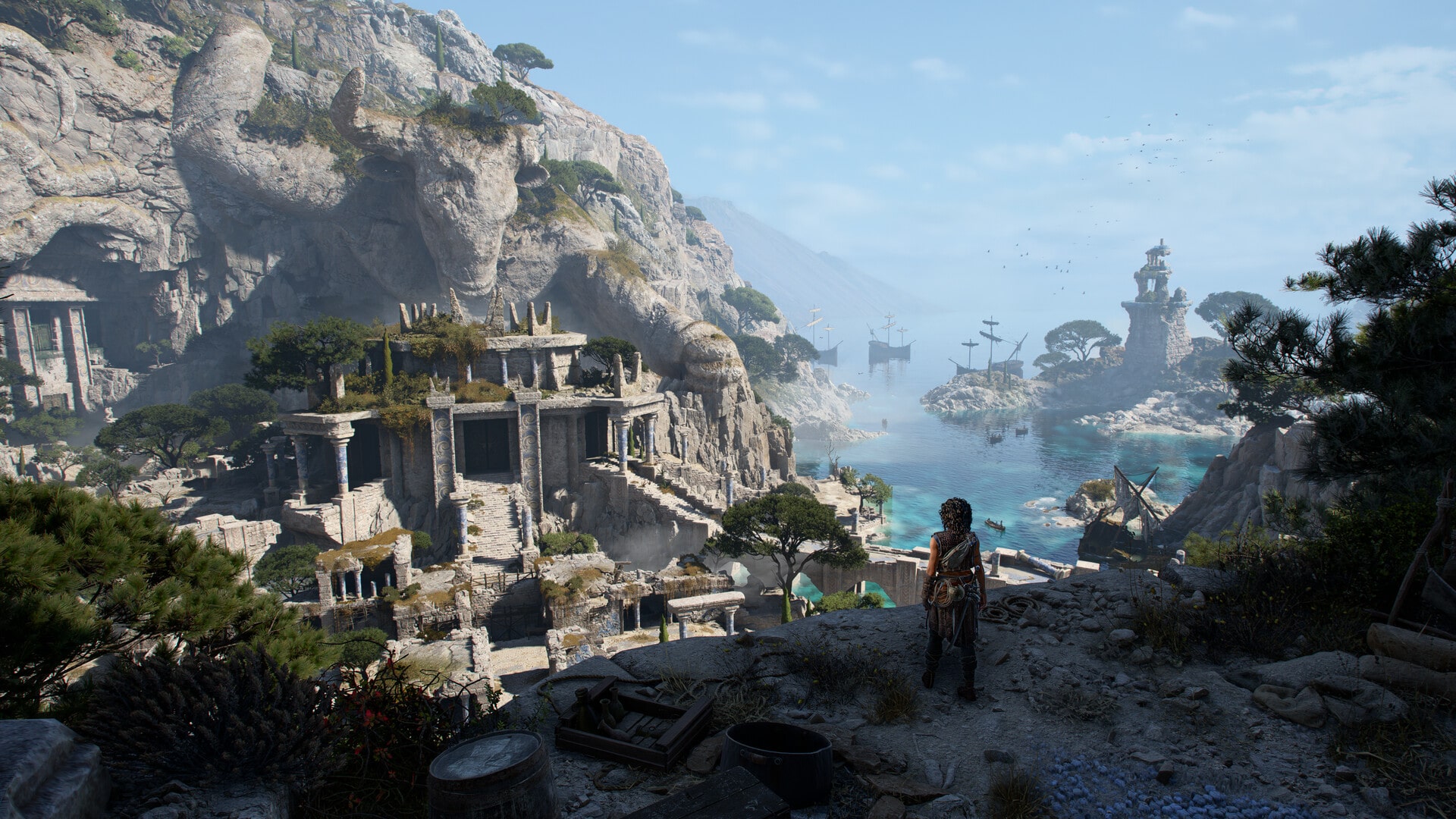
A Plague Tale: Requiem was always going to be a challenging follow-up for Asobo Studio, mostly because- and spoiler warning for those who haven’t played A Plague Tale: Innocence and A Plague Tale: Requiem -of where the last two games started and ended their journey. Although Resonance: A Plague Tale Legacy stars a returning character from the second game, it’s a prequel with a completely new story that doesn’t tie into Amicia and Hugo de Rune’s story, at least not at first.
What makes this such a challenging follow-up is that the first two games continued characters who, by the time their story reached that emotional end, had earned every ounce of the player’s emotional investment. Shifting the spotlight away from the heartbreaking bond between the de Rune siblings means rebuilding that intimacy from the ground up, asking audiences to invest in fresh stakes and unfamiliar faces while proving the franchise’s grim world can carry the same weight without the first two games’ central heartbeat.
But that’s precisely the kind of challenge that Asobo Studio has proven it is capable of undertaking with Resonance: A Plague Tale Legacy, building a story that goes beyond the de Rune curse. It may not pull the same emotional strings as the previous entries, but the enduring human spirit, thrown into an unforgiving, pestilence-ridden world, remains the anchor of this universe.
Living the life of a pirate and smuggler, Sophia is on a constant journey of obsession, searching for glory, gold, and a sense of freedom that always seems just out of reach. But her tale is more than plundering; as with the previous two games, she is driven by dreams of an island, where treasure awaits along with a mysterious danger she can’t fully understand. Those visions become the driving force for a crew grown desperate in the harshest of times—unaware that chasing them will cost Sophia everything while unraveling the ancient, encroaching evil of the Macula.
The previous two games established the Macula as some ancient evil, spreading across the globe through the black plague. It was a threat dominated by sheer numbers, with hordes of hundreds of thousands of rats generated on a screen in a single instance. You may be asking yourself, with this set before that outbreak, what exactly the big threat is here. Well, revealing that would be a spoiler, but rest easy: despite how different it is, it strikes every bit of fear and claustrophobic dread the swarm did. Instead of relying solely on an ocean of teeth and fur, Resonance reframes the terror into something more intimate and unpredictable.
Resonance doesn’t make it clear from the get-go that a looming threat is coming, as the previous games do; instead, it uses slower but more action-packed pacing to pull back the curtains slowly, letting eerie environmental cues and subtle auditory tension build into full-blown panic. By the time the danger reveals itself, you’re already caught deep within a constant state of paranoia, making you realize pretty quickly that whatever is out there in the dark is far worse than what we dealt with before, and it’s hungry.
The story kicks things off like any grand pirate adventure game, but as Sophia’s tale of glory slowly crumbles, the desperate fight for survival that we’ve grown to love about the franchise begins to take hold.
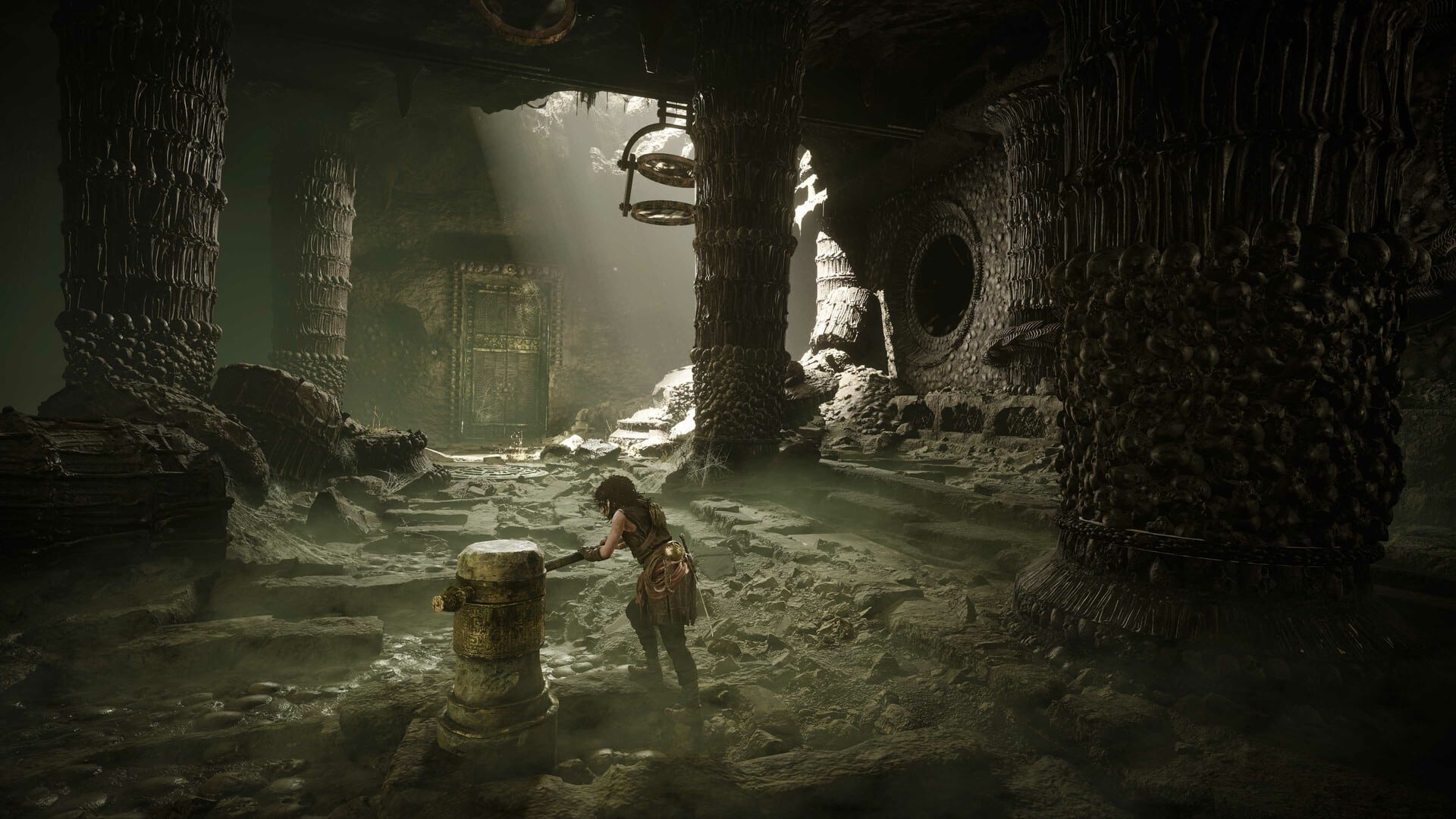
What I love about Resonance is how well Asobo tells its story through the environments and soundscapes. It’s not exactly a desolate experience where you wander a barren waste. It’s quite action-packed, relying less on the stealth mechanics of the previous games and more on combat and agile maneuvering befitting a seasoned buccaneer. But it’s traversing the environments where the story truly starts to set in, as one moment you’re scaling the side of a cliff, overlooking a beach with an armada of ships coming towards you, then suddenly you’re exploring a forgotten coastal cave, with the environment shifting from vibrant warm tones to cold, suffocating blues and pitch blacks.
The soundscape adjusts too, from wind blowing through your hair, seagulls laughing in the distance, and waves hitting the rocky shores, all rapidly fading into an eerie, hollow silence. There’s a sound that you eventually become familiar with, and yet every time it beckons, you can’t help but get a cold shiver running down your back. An impending threat, lurking beyond the reach of your torchlight, waiting for the moment to strike.
It’s not to say that the writing of Resonance is always on point, as there are some areas that do feel rushed. I’d almost say it has a story that, at times, felt too big for a single game. Some characters you’re clearly meant to care about get minutes of screen time. You’re supposed to love and hate some of them, but at times it can’t help but feel forced and out of left field. Sophia, as a character, though, is much better than how she was portrayed in Requiem; in all fairness, she’s not in that game that much.
Now, since this is a prequel, you new players out there might be asking yourselves: should you play this first before the other two? My answer is no, because it works much better as a game that complements the story of the first two games than as an introduction to it. They’re loosely connected in terms of characters, but the overarching plot actually enhances the story of the latter games even more because of the new context it brings. It’s still fine to start with this one, but having played the other two, I think it works so much better to play it last, as it really makes you reflect on the story of those games even more. Again, no spoilers.
Crossing Steel
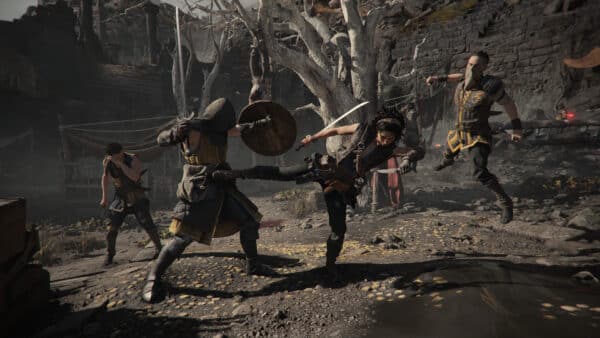
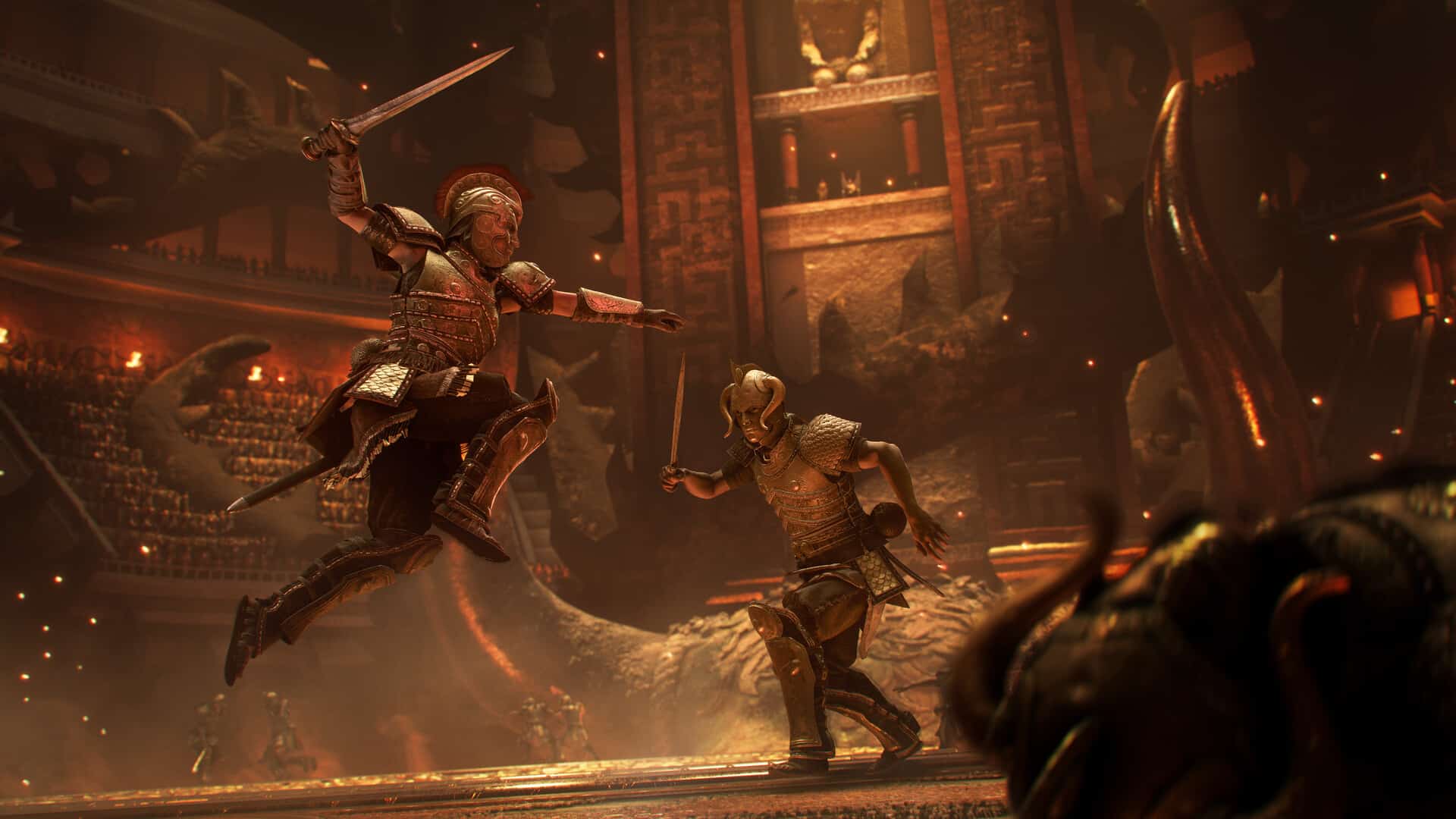
A big shift in Resonance is the gameplay: where Innocence and Requiem relied more on stealth play, Resonance goes all-in on direct combat. I’m quite fond of the combat, which plays like many other third-person action-adventure titles, blending fluid swordplay, responsive dodges, and tactical parries. It’s fitting for the character, since she is a pirate; compared to Amicia, she plays much more aggressively, taking on danger head-on rather than sneaking around to avoid it.
It plays really well too. In addition to your standard hit, guard, and parry moves, Sophia also has access to different abilities, skills, and weapons, each with their own unique animations and such. They don’t play drastically differently, but it’s enough to tell they’re distinct and not a copy-and-paste. I love that we can also pick up objects to chuck at enemies to stun them, as well as use a grappling hook to pull them towards us.
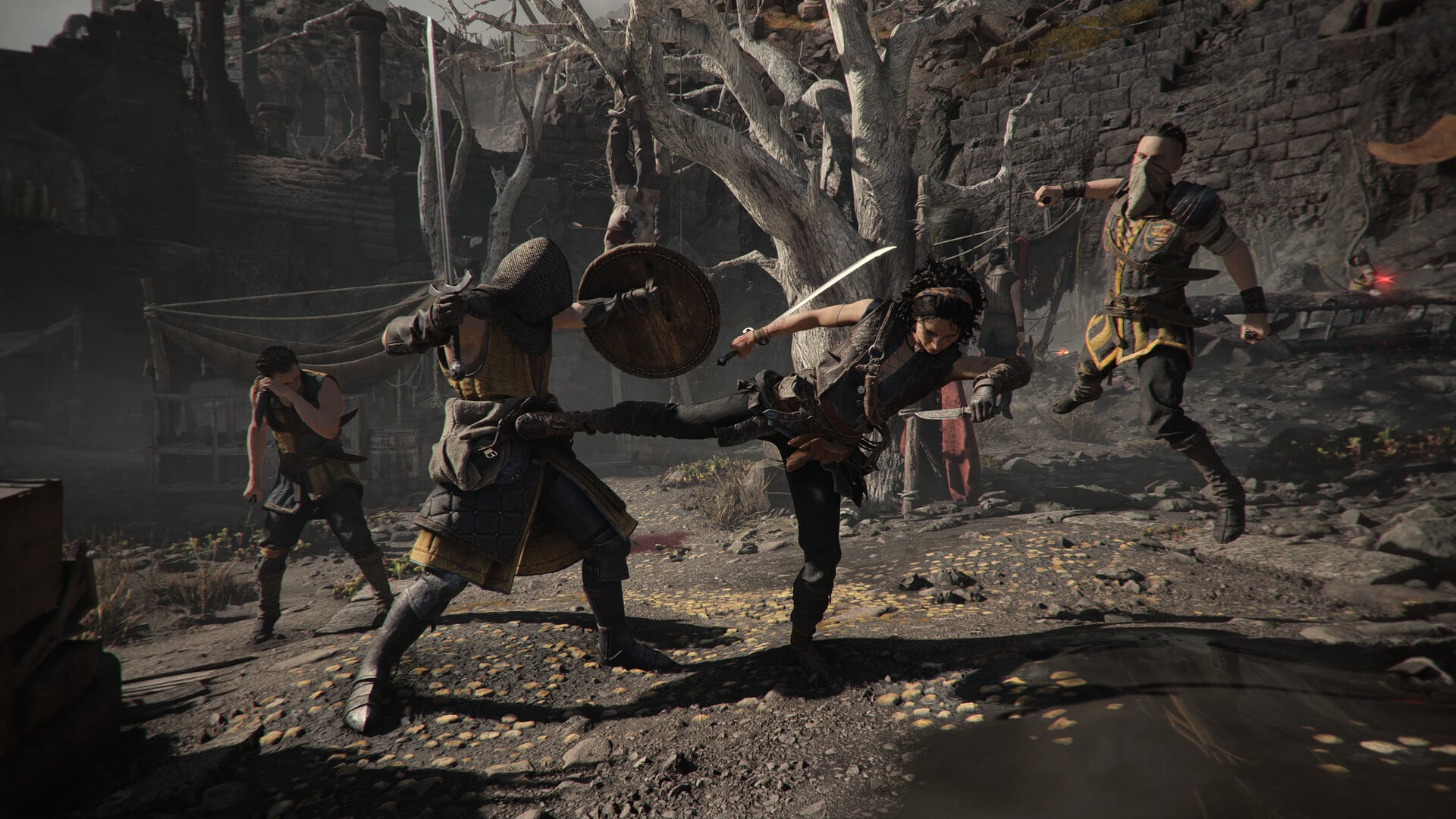
The game also loves throwing a bunch of enemies at you. Not a complaint, more of a highlight to drive home how different the combat is compared to the first game. Sophia moves quickly, with speed and ferocity that make Amicia’s sling and crossbow feel deliberately fragile by comparison. But that’s because confrontations are more of a desperate last attempt, whereas in Resonance, you’re empowered to stand your ground.
It’s interesting to see the change in gameplay, as they essentially mirror each other. Amicia plays it smart, but that’s because of her background, not to mention having to worry about her little brother Hugo. She’s not a combat expert, which is why she spends most of her time lurking in the shadows. Sophia is the exact opposite; she is a combat expert, but it comes at the cost of being stealthy.
That unfortunately means the stealth sections are weaker than in the other games. Sophia doesn’t have much beyond crouching behind structures, which only really come into play when the big threat is revealed. Otherwise, against traditional human enemies, stealth play is essentially nonexistent. Amicia relied heavily on the environment, aiming her sling at light sources to draw in rats and take down enemies for her. That kind of dynamic gameplay sadly isn’t here when it comes to stealth, but Asobo does great work with puzzles, and they make them action-oriented.
It’s a much different play style than the first two games, which, for me, isn’t a complaint, because the play styles are done very well. I have a feeling this is more of a hint toward a future release that will balance these playstyles much better.
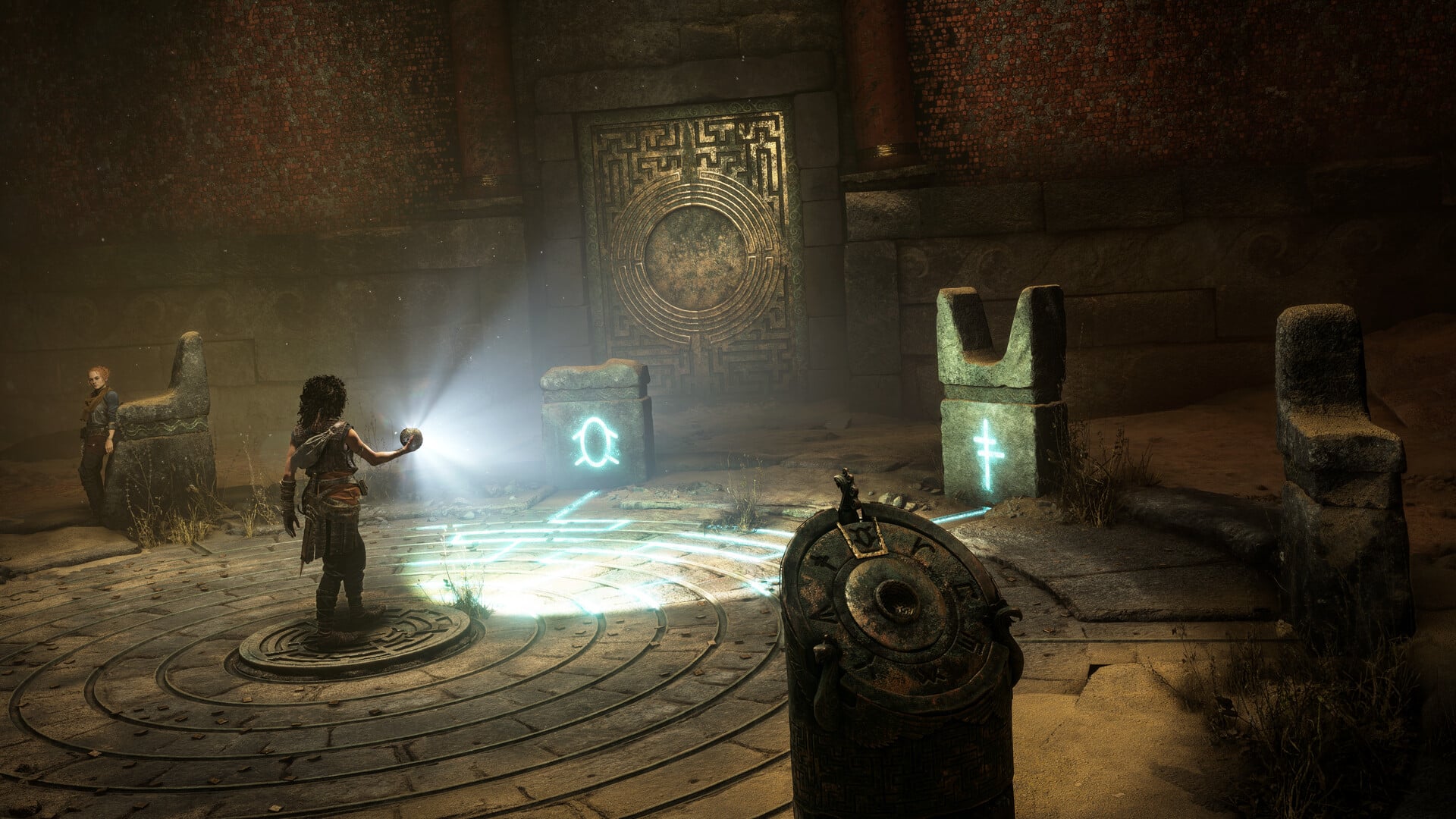
The puzzles aren’t too complicated, but there are some head-scratchers in there for those hoping for a challenge. Collectibles are also in, but like the last games, Resonance is structured for a more linear experience. There is a greater sense of scale this time around, though, since Sophia is much more agile than Amicia. So there’s a lot more platforming and environmental traversal, rather than a straightforward path. Plenty of big set pieces throughout the game, too, which give it an Uncharted-like feel.
Leaving a Legacy
It may not hit the emotional highs of the de Rune saga, but Resonance: A Plague Tale Legacy succeeds in proving this universe can thrive beyond a single bloodline. Asobo continues to grow as a powerhouse of a studio when it comes to storytelling, and it seems they are now getting a handle on crafting a compelling, fluid combat loop to match. Even without Hugo and Amicia, Resonance is a blast, and I’m genuinely excited to see where the series goes next.
Pros
- Beautiful visuals and sound design that really enhance the story
- Excellent combat that might surprise some fans
Cons
- Weaker stealth mechanics than the last two games
- Not the most fleshed out cast of characters outside of the Sophia
Resonance: A Plague Tale Legacy review code was provided by the publisher. You can read MP1st’s review and scoring policy right here.
This website contains affiliate links. If you click a link and make a purchase, we may earn a commission at no additional cost to you. This helps support our work. Learn more on our affiliate page.