Assassin’s Creed Shadows Review – Spirit of a Warrior

After over a decade of fan requests, Ubisoft has finally delivered an Assassin’s Creed game set in Japan, fulfilling a long-awaited dream for the series. It’s been a long road to get here, and after a few delays and other setbacks, Assassin’s Creed Shadows is finally releasing this week. Is it worth the wait or has Ubisoft fallen into the familiar trappings of the franchise? It’s hard to answer that directly, but this review explains why the game is a double-edged sword.
Into the Shadows
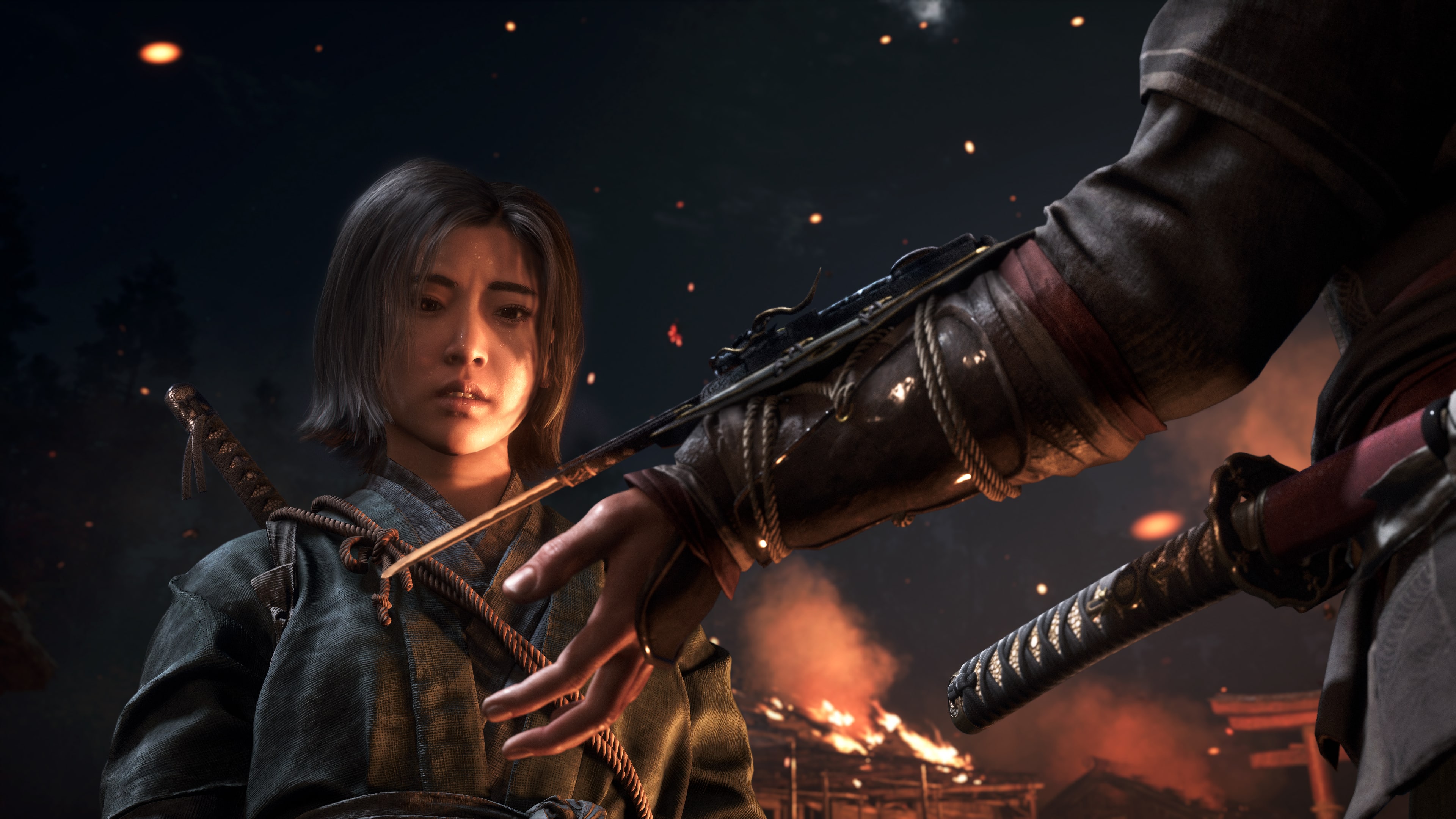
Assassin’s Creed Shadows is the fourteenth mainline game in the series, and is set in 16th-century Japan towards the end of the Sengoku period. Players will take on the role of two protagonists: a female shinobi in Fujibayashi Naoe, and Yasuke, a black African samurai inspired by the historical figure of the same name.
Naoe and Yasuke play differently from one another and approach combat scenarios in different ways, adding to the gameplay variety.
Despite Assassin’s Creed Shadows featuring dual protagonists, many may find the story more central around Naoe. This became evident shortly after the intro, which introduced both characters, only to see Naoe take front and center for several hours until they reintroduced Yasuke later in the campaign. In many ways, this is Naoe’s tale.
That’s partly due to the game’s mission structure, which involves hunting down several key members of an organization known as Shinbakufu who were responsible for Naoe’s father’s death. That’s not to say that Yasuke doesn’t have a big presence, as he plays a critical role in some of the more significant plot points, but it does make it seem like his story does take a backseat to Naoe’s story until much later in the game. In fact, by the time he’s reintroduced in the campaign, you’ll already be deep into hunting down members of the Shinbakufu, with a cast of characters who have allied with Naoe before Yasuke comes back in.
That’s not to say he has nothing to offer to the story or his own personal journey that eventually has a conclusion. Some of his questlines, especially the duals, are the best the game offers. It’s just you’ll likely find that the core story is more Naoe than being split down the middle. Ubisoft did say that you could play most of the game as either character, though I think it’s clear from the opening act, mission structures, and the gameplay (more on that later) that Shadows better suits Naoe. This by no means is me saying that Yasuke is a bad character; quite the opposite, as he has some of the strongest moments in the game, with the latter half seeing a lot more development for his character. Fans of the series will no doubt love the story that the game has to tell, even if some moments do feel underwhelming and I felt it ultimately led to nowhere.
As for how you can approach the story, Shadows offers two types of story modes: canon and non-canon. The difference is canon mode makes all the choices for you in the main story, giving you a more classic Assassin’s Creed story. Optional quests and romances aren’t affected by this, so you can still experience those. Non-canon lets you make choices yourselves, which can ultimately lead to sparring some characters or killing them off. You could miss out on some things while experiencing things different from the canon route, though both still lead up to the same story conclusion and path, as far as I can tell. The options are very much welcomed, though going the canon route, unfortunately, doesn’t cut back on the bloat.
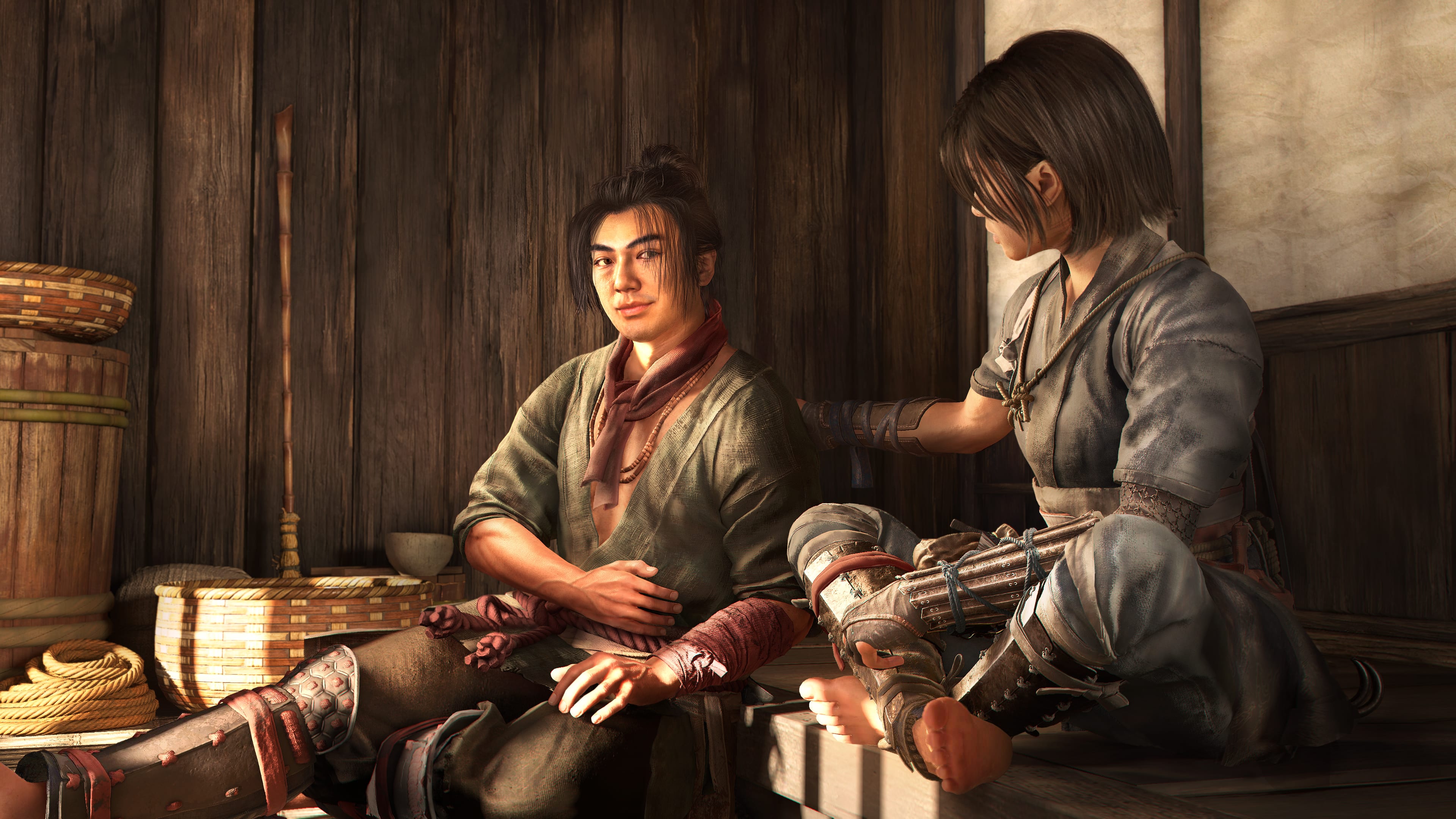
I firmly believe that no game should ever force optional activities because they’re supposed to be optional; otherwise, what would be the point in calling them that? The level scaling in the main campaign gets pretty out of control, where you go into a full RPG mindset where, to progress, you need to level up despite the enemies being the same enemies you’ve been fighting this whole time. You see this a lot in Shadows, where you’re playing a main story mission, only to have to grind for a few hours after finishing it so you don’t get one-shotted by a grunt in the following story mission. So thus, you end up going out of your way to do the side stuff rather than naturally enticing you to play it. The side stuff is very by the numbers, too, as in quantity over quality. Outside of the ones offered by main characters, you’ll find that they are mostly the same. If you aren’t using guided exploration, this usually involves being given a hint of a person’s whereabouts, traveling to the location, using your eagle vision to collect clues, and then finding and assassinating that person. Rinse and repeat, with some variations here and there. The main objectives usually follow this path, with stories and cutscenes tied to them to make them feel different enough.
You can probably guess that this can get quite old and fast, as most of my playtime was spent doing these optional things to advance the story. As I mentioned, the content wasn’t enticing enough to make me go, “all right, I’m playing the main story, but wait, what’s this over here?” And then, I go off and enjoy a piece of content that is unique and memorable. It plays by the numbers, with quests that are very rinse and repeat of each other, which makes Shadows feel more bloated than it should be.
Now, the next thing I want to talk about is voice performance, translation, and music.
With Shadows being set in Japan, you’d be doing yourself a disservice if you played using English voicing acting. I have nothing against the cast; it’s just one of those things for me that makes the game feel more immersive when playing in the native tongue of where the characters are from. Shadows has an option called immersive mode, allowing you to hear Japanese and Portuguese dialogue for characters that speak those languages, which makes it the ideal way to play. I’ll talk more about that in a bit, but returning to the English cast, they do a pretty solid job for the part, but as a warning, outside of the main cast, the dubbing can be pretty horrible. It’s hard to tell if a human actually acts the voices, and they completely phoned it in, or if Ubisoft used AI in some instances.
There are plenty of other off-sounding dubbing like that throughout the game, too.
That’s not to say that the Japanese dubbing is perfect, as some things’ translated text and pronunciation can sometimes appear wrong. One character will speak someone else’s name, while the translated subtitle will refer to another, which happens even vice versa, in the presence of said character or not. There were certain words spoken with a different pronunciation. The same word, just said differently, which had a different meaning in the context than it should have. Immersive mode also had some issues, as very early on in the game, it’s established that Yasuke didn’t always know how to speak Japanese, certainly not before his arrival in Japan. Yet, in some of his flashback scenes, he’s speaking Japanese to Portuguese characters at a time when he shouldn’t have known the language. It’s an error, but it’s one of many ones I noticed. I’d still recommend playing immersive mode or Japanese over English voices any day.
The music mixing is also something you may find a big offputting. For the most, a lot of the music is fine and fits the game and its setting perfectly. But now and then, during some of the more epic moments, the music shifts from being of that period to something more modernized, like rock and hip hop. It’s completely out of place and doesn’t match any of the scenes in the game. I’d go as far as to say that the choice of music can ruin a scene. It’s like watching a YouTube video of one of your favorite movie scenes, and someone overlayed the most out-of-place music to avoid the copyrights, giving that scene a different feeling entirely. The tracks themselves aren’t bad, but in the context of things, you’d expect them to be featured in a cyberpunk game or something. The wrong era of music, mixed into scenes that should have a more emotional impact but don’t because of the music of choice.
Hard Hitting Combat and Excellent Stealth
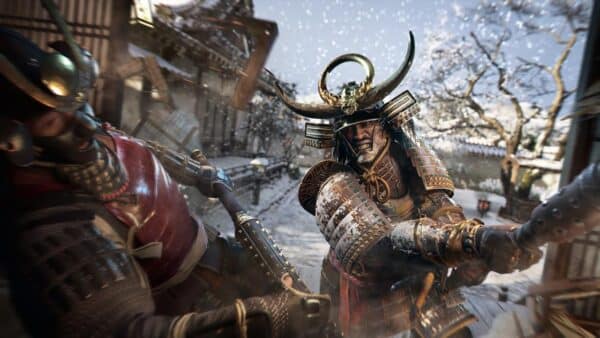
Like its characters, the combat in Assassin’s Creed Shadows is split into two styles. Yasuke, the Samurai, moves much slower, and his attacks deal much more damage than Naoe’s. His weapons are heavier, thus delivering more brutal blows to enemies. He is essentially the powerhouse of the duo, capable of taking on high-level enemies directly and tanking attacks while delivering powerful strikes.
Naoe, on the other hand, is the complete opposite and more in line with past series protagonists pre-Origins. She’s fast and nimble, quickly moving around the environment. If it wasn’t obvious from her appearance, she plays more of the assassin ninja role, where stealth is her strong suit. And although she doesn’t deal as much damage as Yasuke, her speed more than makes up for the lack of damage as she’s capable of quick and continuous strikes.
In comparison, she’s more of an all-rounder since she can parkour a lot better than Yasuke, but even in raw combat, both characters are excellent and fun to play.
They each have their own set of weapons unique to them, too. Naoe has access to a katana, tanto, and kusarigama, whereas Yasuke can use a long katana, naginata, kanabo, teppo, and bow. Yasuke has a bigger arsenal of weapons than Naoe, though she gets access to tools such as kunai, shuriken, bells, and smoke bombs.
Each weapon has a skill tree, where you can unlock new moves and passive bonuses, such as increased damage, better affliction effectiveness, and more. Some of those skills include cooldown abilities, which are mostly powerful attacks.
Both characters also get access to allies that can be called upon during combat, which can serve as distractions while you sneak around or damage a heavily armored character.

A welcome addition to the stealth aspect is a guaranteed assassination option in the game’s settings. Ubisoft previously said this option isn’t how the game is intended to be played, but I strongly disagree. Sure, it makes stealth easier since your assassination attempts can no longer be blocked, but one-hit kills were a staple in earlier Assassin’s Creed games that eventually got removed in the newer ones. The option makes it feel more in line with the classic titles, and unless you want the greater challenge and like having your assassination attempts broken, it is an option I highly recommend.
Stealth, in general, feels like a “return to form” for the franchise. While it’s been there for the last few games, it never really got to the height of the ones pre-Origins. That was until now, where the stealth actually feels like a crucial part of the experience and an actual viable option, rather than just hacking your way through stuff. There’s a light and shadow feature, where you can now hide within the shadows and make your own cover by destroying light sources. Prone is new, and for those playing on the hardest difficulty, prone is an excellent feature as you can hide better in the grass, which becomes a huge part of the gameplay. In general, it feels much more dynamic, though some features, such as social stealth where you can use NPCs to blend in, are still missing. That, and you can’t freely change the time of day to take advantage of the nighttime setting. But overall, the stealth is amazing and easily my favorite part of the game. It really makes you feel like an assassin, as it should, considering the game’s name.
Now, there is one thing I hated: the progression system with the skill tree. Earning skill points is super easy, as all you gotta do is level up, which is done by completing missions and doing side activities. What I hate, though, is that you must also rank up your knowledge level if you want better skills.
To do so, you need knowledge points only rewarded from specific tasks, such as finding highly valuable treasure deep within caves, praying at several shrines in a particular location, or collecting certain lore items. I found these activities mundane and pointless, if not there to pad gameplay hours on. They’re optional, sure, but that also means you’ll end up locked out of better skills in each tree. I wouldn’t mind them if they were tied into a particular tree, becoming this sort of big quest to learn and master each one, but they don’t. There’s nothing to tie praying at a shrine to Naoe learning how to make better smoke bombs; it just is for some reason. I don’t mind working and grinding to get something as long as it makes sense. These were activities I wasn’t too keen on doing because once you do one, then you’ve done them all, and to force something completely unrelated to a system like this doesn’t work. It makes the experience feel a lot more bloated than it should be.
But beyond that, the combat is fantastic, as is the stealth play, and with an “expert” level of difficulty available for the stealth, the AI becomes a lot more challenging to deal with as their view and awareness bubbles are greatly enhanced. I think many players will love the stealth play that Assassin’s Creed Shadows has to offer because it does feel like a close return to form for the franchise when you add in the guaranteed assassination option.
Gorgeous Visuals and Fantastic Performance, With a Bit of Frustrating Exploration
When Ubisoft announced that Assassin’s Creed Shadows would be delayed, I had my worries. Ubisoft isn’t exactly known for its high-level polishing, and even though Shadows was delayed twice, I still went into this expecting bugs galore. Well, I’m happy to report, at least from my own experience, that Assassin’s Creed Shadows is surprisingly polished, to the point that bugs, and even performance hits, were on the rarer side of things.
That’s not to say there aren’t moments of jankyness, but overall, the game felt like it made great use of the delays, cleaning up wherever it could.
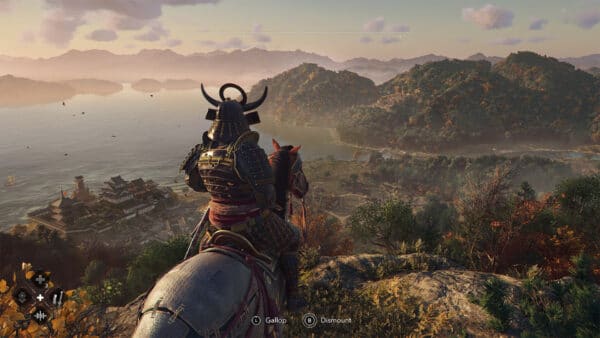
On the performance side of things, the PS5 and PS5 Pro, as well as PC, ran the game nearly flawlessly, holding a strong 60 FPS throughout the entire experience. Image quality was stupendously sharp, and for a game set in Japan, having good performance and imaging matters, especially given how gorgeous the environments are.
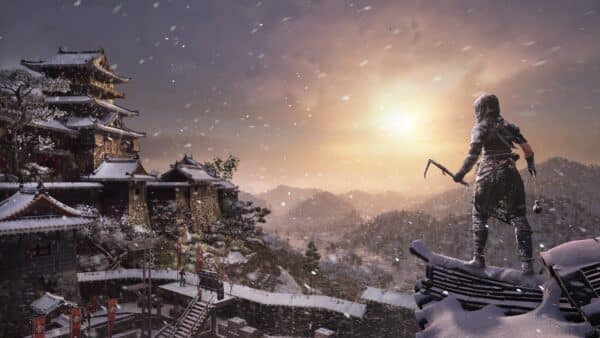
Japan boasts many natural features, from its gorgeous snowy mountains, pristine beaches, bamboo-filled forests, stunning waterfalls, and hot springs. There is much to take in from its rich beauty, as there is culture, which I feel Ubisoft has managed to capture in such an inspiring way regarding the visuals.
The visuals are absolutely stunning, and I stopped countless times in sheer amazement at how beautiful Japan looks here. In addition, there’s a full weather and seasonal system in place, meaning you get to witness Japan in all of its beauty throughout its seasons. You’ll see environments transform throughout the game, from featuring fully bloomed cherry blossom trees in the spring and vibrant autumn leaves to even a gorgeous sheet of snow during the winter. The weather and seasonal system in Assassin’s Creed Shadows is easily one of the best I’ve seen.
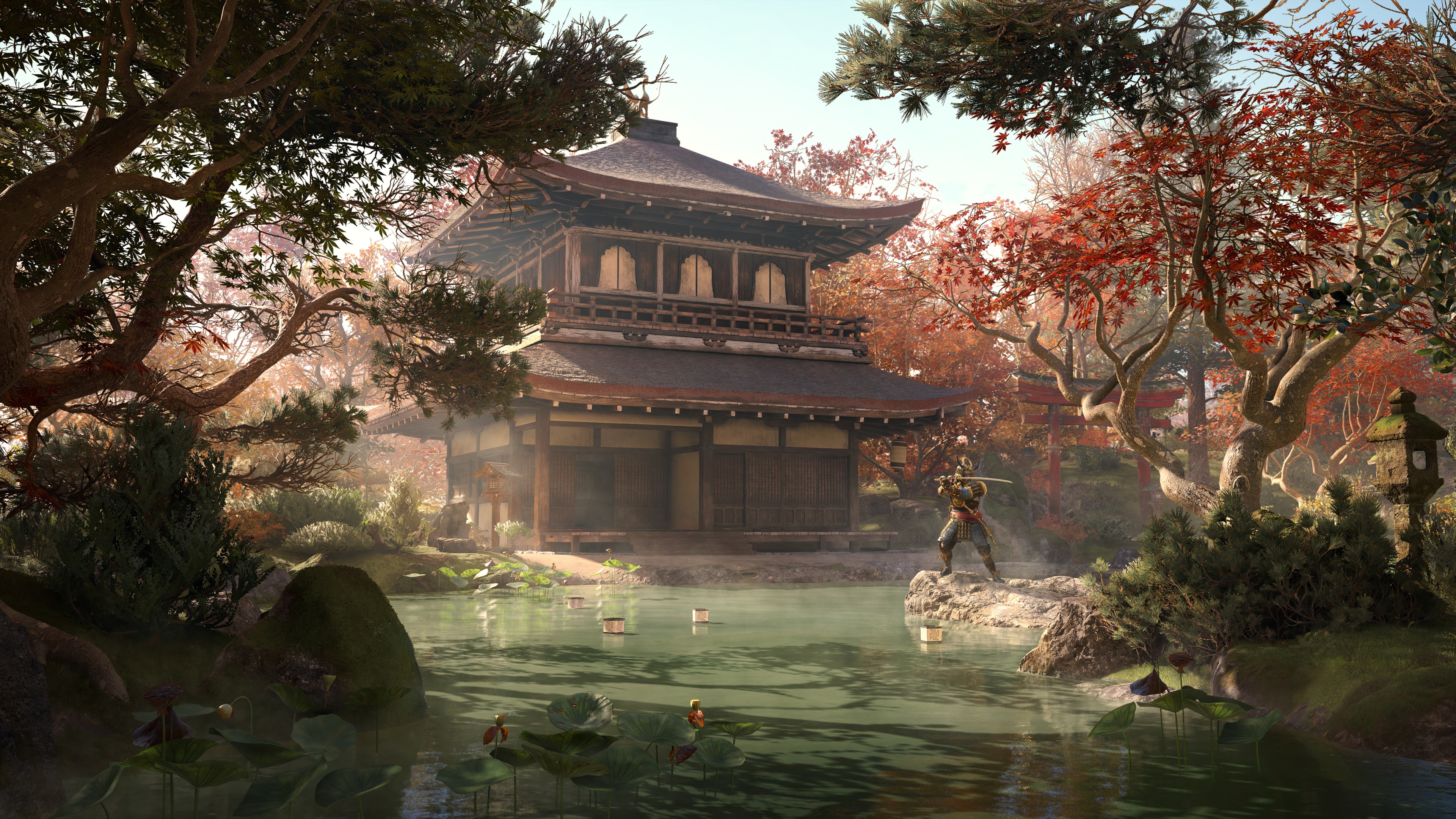
Just looking at it makes me want to venture off the main road to explore what other beauty awaits.
So, I should point out that I originally had a few paragraphs here talking about how riding a horse in this game is perhaps the worst thing I’ve ever seen. I highly recommend anyone who buys a physical copy to make sure you have the day one patch applied, as this dropped on PC a day or so before the embargo lift, and yeah, Ubisoft managed to pull through on this and fix the horse behavior completely. Before the patch, the horse felt like it would forcibly avoid anything in its path, including a small pebble. This would cause the horse to spin around as you wrestle back for control, and it just wasn’t fun to ride the horse anywhere, to the point that I would get off and run on foot. It was really bad, enough to rant about it in my original write-up that it took up a good chunk of this review. Thankfully, I decided to boot the game up after applying the new patch, and the difference was night and day. It seems that Ubisoft heard enough feedback on it and decided to tone down the avoidance level of the horse in the environment. They toned it down so much that my horse just smacks right into walls now, but trust me, that’s good compared to what it was before because now the horse isn’t going to do a 360-nose spin around the block before it gives me control again. That example is an exaggeration, but the horse wasn’t good before this update. So, kudos to Ubisoft for getting this addressed before the launch.
Now, let’s talk about the character traversal.
Naoe and Yasuke feature completely different movements; one is a ninja, while the other is a fully armored samurai. So naturally, Yusake moves much slower than Naoe, and he can’t access certain things because he lacks movement and mechanics. Outside of combat, he’s practically an afterthought as he’s extremely limited due to the lack of a grappling hook. I get it; he’s a samurai, and you wouldn’t expect to see a samurai swinging around from a rope and such. But at the same time, he’s a character that can freely traverse the world of Shadows, and being limited in the way he is makes him much less of a choice to pick over Naoe. Sometimes, I’d reach a location of a viewpoint with him but couldn’t reach it because only Naoe’s grappling hook could get to the spot. Once you unlock a fast travel point, then Yasuke can magically appear on top of the fast travel point. I don’t know how exactly he got up there, but I would really love it if we could do it ourselves because once you jump down, he can’t get back up to specific spots unless you fast-travel to them.
Naoe, on the other hand, is your traditional Assassin’s Creed protagonist when it comes to traversing the environment. It’s a much better experience, and outside of a few instances where it feels like she doesn’t go where you want her to go, she generally moves and climbs things with ease. She moves much faster than Yasuke and can access almost every location in the game, including spots Yasuke can’t.
Outside of doing less damage, there’s little reason not to play as her, though playing solely as her does highlight another issue.
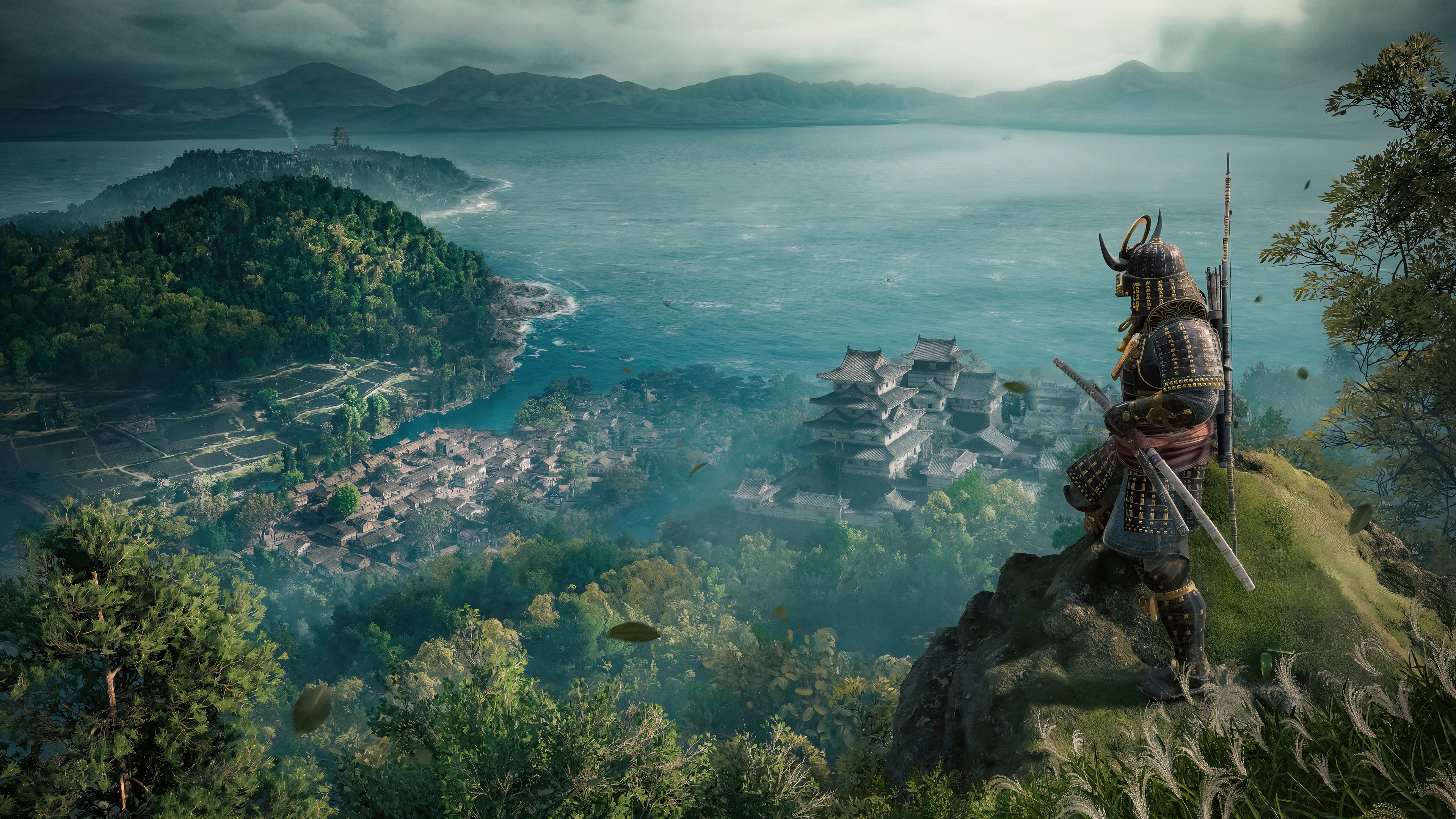

Although Naoe can go anywhere, specific interactions require Yasuke, such as moving a heavy object to access a collectible or loot. Unfortunately, Insomniac Games’ Marvel’s Spider-Man 2 has spoiled us with seamless character-swapping, but even then, what Ubisoft has done is far from seamless. You can swap between characters in a few ways, but the more “seamless” way occurs during story sections, where the option to switch between the characters pops up during specific segments. It is nice, easy, and doesn’t require any menu or loading screens. I mention those because that’s precisely what the other options are. You can swap characters by selecting them while fast-traveling or going to the character screen and switching. Either method requires going into the game’s menu, with a brief loading screen between the switches.
In my opinion, it’s a missed opportunity as it could have offered a unique way to tie combat into switching. They could have chosen much more seamless options, such as having Naoe drop a smoke bomb as she switches between Yasuke and vice versa with a single press of the button. Don’t get me wrong, it’s not super annoying, but we’ve seen other games do the whole character switch up a lot better, and I can’t help but feel this could have been mapped to a single button. Mind you, this is very similar to how it was with 2015’s Assassin’s Creed Syndicate, where you had to go into a menu to swap characters. But that was a decade ago, surely this could have been done better by now?
Going back to only specific actions that Yasuke can perform, the big complaint is that this usually occurs when infiltrating an enemy base. I go in quietly as Naoe, sneaking past enemies and stealth-killing anyone I can. I eventually reach one of these spots with no alerts, yet because I’m in a restricted area, I can’t switch to Yasuke to move an object that needs his strength. That means that if I want to get whatever is behind a box, I have to leave the area, switch to Yasuke, and then re-infiltrate, risking higher detection due to his slow speed and inability to climb over some things. It’s just not worth it.
Another thing is that Assassin’s Creed Shadows suffers from too much vegetation in the world. What I mean by this is that outside of main roads, towns, and such, taking “shortcuts,” as in cutting across the map, you’ll run into some heavily dense wooded areas. When I say heavily dense, I mean to the point where you can’t see your character outside of their white glowing outline when something is blocking your view of them. It’s entirely possible for cut-through locations, but that means being okay with your view being blocked most of the time, unaware of ledges you can climb or slopes you can slide down. I’m OK with densely populated forests, but if you’re going to do it, at least make it so I can see where I’m going, like the ground itself. It feels like it doesn’t want me to explore what’s out there on my own and stick solely to the main path.
It sucks because I really do enjoy the world crafted in Shadows, but it really wants me to stick to the main paths to get to places rather than go off on the less-taken road. At the very least, they could have added an auto-follow for the horse if they really wanted me to take roads, which, judging by one of the collectible side activities, they do.
VERDICT
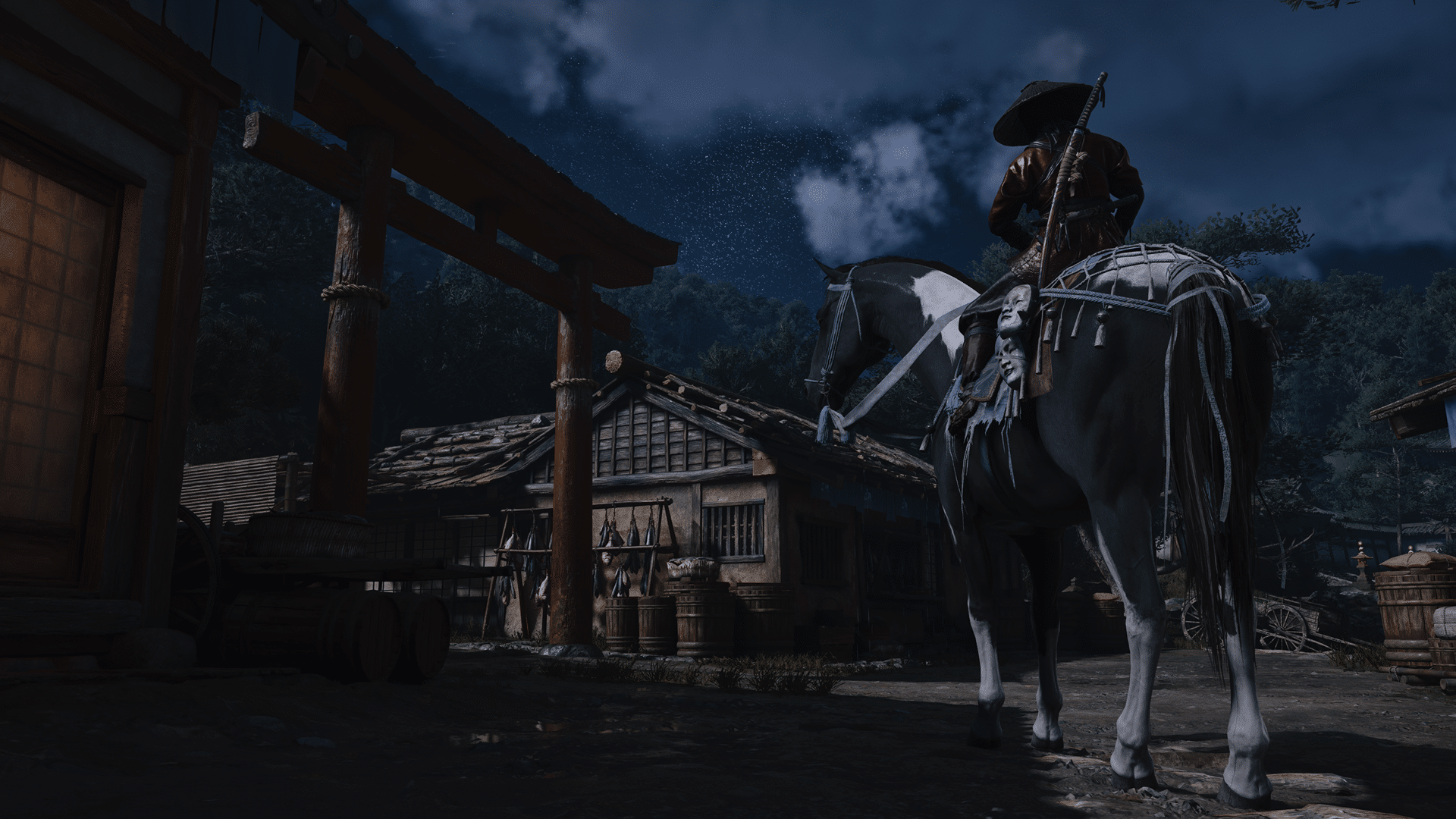
I’ve longed for the franchise to go to Japan ever since the first game was released in 2007. It seemed like the perfect setting for the series, and although Assassin’s Creed: Shadows doesn’t quite live up to my lofty expectations, it still delivers a generally good and enjoyable experience. The world is stunning, brimming with feudal Japan’s rich culture that oozes into the atmosphere, and the core gameplay remains as engaging as ever. While it may not break new ground or take the series to the next level, and it certainly has faults, Shadows captures the franchise’s spirit in fresh and exciting ways that I’m sure any diehard fan will come to appreciate.
Score: 7.5/10
Pros
- Though the story can be underwhelming at times, it’s still a good time to play through, with some worthwhile side content, such as the romance options.
- Excellent combat and stealth mechanics and gameplay. Stealth feels like a true return to form.
- Gorgeous vistas that capture Japan.
- Beautiful weather and season system.
- Performance is fantastic on all platforms.
- There are many cool weapons to play with, armor, and cosmetics to unlock.
- RPG mechanics are solid, with pretty large skill trees, but…
Cons
- There is no seamless switching between characters, and it functions similarly to a 10-year-old Assassin’s Creed game.
- There is some odd choice of music that can easily ruin the scene’s tone.
- Repetitive side missions and activities. It makes the experience feel more bloated than it should be.
- No day and night cycle selection.
- … the knowledge level hinders progression and has no real value in the activities to tie them to specific skills.
Assassin’s Creed Shadows will be released on March 20, 2025, on PS5, Xbox Series X|S, and PC. A review code was provided by the publisher for review purposes. You can check our review of the game here.
This website contains affiliate links. If you click a link and make a purchase, we may earn a commission at no additional cost to you. This helps support our work. Learn more on our affiliate page.