

Yu-Gi-Oh Early Days Collection Review – It’s Time to Duel

[summaraize]
For many people, Yu-Gi-Oh was their first introduction to a trading card game or even anime, with the former targeting a younger audience than say Magic the Gathering was at the time. While the first Yu-Gi-Oh manga and anime series did not revolve around a card game, the anime series based around Duel Monsters is what really brought the series to become the phenomenon that it eventually became. This naturally led to an abundance of video games based on the property, the majority of which were on handheld platforms. Now, Konami has dipped into the vault to give new life to 14 of those games with the Yu-Gi-Oh Early Days Collection.
Hearts of the Cards

Since the launch of the franchise and the main anime that people recognize, there have been eight separate follow-up series with new characters and mechanics that include GX, Zexal, and most recently Go Rush!! The Yu-Gi-Oh Early Days Collection does as the name says by only focusing on the earlier games in the series, with all being based around the original series starring Yugi and company.
The Yu-Gi-Oh Early Days Collection is made up of 14 different games from that era (technically 16), dating all the way back to 1998. One of the biggest appeals of this collection is the fact that five of the 14 games in the collection were previously Japanese exclusives that never made their way to the US or Europe. The three earliest releases in the collection fall under this umbrella, as Yu-Gi-Oh Duel Monsters for Game Boy, Yu-Gi-Oh Duel Monsters II: Dark Duel Stories for Game Boy/Game Boy Color, and Yu-GI-Oh Monster Capsule for Game Boy Color were exclusive to Japanese before now.
While the US release order doesn’t quite sync up, as there was usually a two—to three-year delay in release, the third entry in the Duel Monsters series was brought over to the US as Yu-Gi-Oh Dark Duel Stories. However, the fourth entry, Yu-Gi-Oh Duel Monsters 4: Battle of Great Duelist, once again remained a Japanese exclusive with its three-version release, though all were for Game Boy Color.
The Game Boy Advance era is when Yu-Gi-Oh really started to hits its stride in the West and led to more frequent releases, even including the aforementioned Yu-Gi-Oh Dark Duel Stories that came to the US in 2002 for Game Boy Color quite late. While the Japanese releases maintained the simple Duel Monsters name with numbered entries, the US entries instead got exclusive names for each entry instead. As a result, Duel Monsters 5 became The Eternal Duelist Soul, Duel Monsters 7 became The Sacred Cards, and Duel Monsters 8 became Reshef of Destruction. Duel Monsters 6 Expert 2 was a Japanese exclusive as well, but was later redone for a worldwide release as Yu-Gi-Oh Worldwide Edition: Stairway to the Destined Duel, though this collection includes both of them. As a result, Duel Monsters 6: Expert 2 isn’t translated into English since its redone version is already available as well.
Yu-Gi-Oh Early Days Collection also includes four other Game Boy Advance titles, including two more straightforward card battlers with Yu-GI-Oh World Championship Tournament 2004 and Yu-Gi-Oh 7 Trials To Glory: World Championship Tournament 2005, as well as the more unique Yu-Gi-Oh Dungeon Dice Monsters and Yu-Gi-Oh Destiny Board Traveler.

Diving into the games more specifically, those who have played the later games in the collection likely will have trouble finding much enjoyment in the early games. In fact, they strip the rules down immensely compared to what you would recognize to be Duel Monsters. For Yu-Gi-Oh Duel Monsters, you start with the option to face Yugi, Joey, Tristan, and Bakura with the goal being to beat each of them five times to advance. The dueling here is super simplistic though, where all you can do is set monsters in attack or defense mode or use spell cards. There are no requirements to summon stronger monsters and trap cards are not around. In addition, you cannot even read your cards during battle, but rather have to know what they do by learning all of them when adding them to your deck. This is something you can get used to, but it’s a bit frustrating at first when you want to play around with your deck. The limited space for text usage and such in this first game really is a bit frustrating to navigate as well.
The next few games in the Duel Monsters series play very similarly, though with some upgrades along the way. Duel Monsters 2 adds in trap cards and ritual spell cards for the first time as well, which adds a little to the experience on top of the move to color for the first time. Dark Duel Stories (Duel Monsters 3 in Japan) was the first to release in the US as mentioned before, with it featuring a further expanded card pool and the mechanic of needing to sacrifice lower level monsters to summon stronger ones, which is a core element of the card game. Duel Monsters 4: Battle of Great Duelist originally released with three versions, one starring Yugi, one starring Kaiba, and one starring Joey, and this collection includes all three of them. Similar to Pokemon, the different versions had exclusive cards that required trading to get all of them, though this feature isn’t available in the game and has to be done through other means.
Jumping to the Game Boy Advance was a big deal for this series starting with The Eternal Duelist Soul, as the visuals took a major leap to where it actually looks like a legitimate duel when you battle an opponent. The quality of life enhancements here are immense compared to the earlier games, with you able to easily view cards in battle and really feel like you are playing a game of Yu-Gi-Oh even more than in the past. I still remember this being my first Yu-Gi-Oh game that I got back in the day and it still holds up extremely well. That is also the case for the follow-up game Duel Monsters 6: Expert 2, though this one is exclusively in Japanese even in this collection as mentioned prior.

Yu-Gi-Oh The Sacred Cards was always my favorite game as a kid and it’s still a ton of fun. The big change in this game for the series was the addition of an overworld that you have to travel around, in this case Battle City. This felt like a mix of games like Pokemon and Mega Man Battle Network at the time, where the rest of the game feels familiar while also having a more RPG style aesthetic added in for the first time. Reshef of Destruction continues this style with the mix of RPG and standard card battling, this time with an original story that I still really had a good time with this many years later.
Worldwide Edition: Stairway to the Destined Duel in a sense feels like a step back since it’s an English remake of Duel Monsters 6: Expert 2, but the core gameplay is still solid and feels more like the next few games do as well. The next two regular entries, World Championship Tournament 2004 and 7 Trials to Glory: World Championship Tournament 2006 continue the trend of having removed RPG elements, but instead are more focused on having the most competitive cards and rules of all of the games, which makes sense as this was when the original Yu-Gi-Oh series was approaching its end and transitioning to all of the new mechanics found in Yu-Gi-Oh GX.
While not in chronological order, the remaining three games make sense to talk about together as they are the three outliers in the collection due to being quite different from the rest. Yu-Gi-Oh Monster Capsule, originally for the Game Boy Color exclusively in Japan, features more of a strategy game style where you use Monster Capsules across a game board to try and win the Monster World Tournament to save your friends. This was one of the most unique games I played in the collection, as I certainly had not played it before and enjoyed the five floor setup where you wager Star Chips and eventually face off against the Dark Master of each floor in the end. The combat system feels akin to something like Fire Emblem, but was definitely on the more basic side.
Shuffling the Deck

Also quite different is a game that might be more familiar to fans of the anime, as it’s based around the mechanics of a fan favorite character’s introduction with Duke Devlin and his Dungeon Dice Monsters. While having a grid-based battle-system as well, Dungeon Dice Monsters is quite different from Monster Capsule as there is a much larger area to play with and you are continually rolling dice to build up the board with your monsters. This one takes a lot more thinking to perfect, but is still quite fun.
Last is Yu-Gi-Oh Destiny Board Traveler, one of my least favorite games in the collection. While the earlier games in the collection were really basic, Destiny Board Traveler is just kind of weird. It mixes a board game style with the traditional card game, which does not mesh all that well at all. It does require some strategy to move around the board here, but I’d much rather be playing other games in the collection instead.
The menu system in Yu-Gi-Oh Early Days Collection is pretty simplistic as you would imagine for a collection. As soon as you load it up, you get to choose between Play Games, Online, Options, and Quit Game. When you select Play Games, you have a circular rotation of all 14 games that you can switch between. I really like the design of this part of the menu, as it includes the box art for each of the games, an icon showing the handheld platform it released for originally, as well as including the release year. For each of the games, you can also switch versions to alternate languages, which include English and Japanese of course, but also others like German or French. What is cool here is that for the ones that released outside of Japan, the box art and title also changes depending on what you are switching to language wise. It even reflects the release date in that region as well.

From the selection menu, you’ll also see an option for something called Enhancements. These Enhancements vary by game, essentially being a built in cheat code for each one. For instance, Reshef of Destruction has an option to turn off or on unlock all cards, maximum deck capacity, and maximum duelist level. Some only allow you to unlock all cards, which you may think is due to the limited nature of the early games, but that is all that World Championship Tournament 2004 has available as well. The most important game to have Enhancements probably is Duel Monsters 4, as the original trio of games relied on trading and you can overcome the lack of a trade feature by using this. Having an option to unlock all cards allows for much less grinding for cards along the way, but also takes away some of the difficulty that the games are built around too.
From the Game Options menu that you can access while playing any individual game, you have some additional settings to adjust as well as a really cool inclusion. This is where you can adjust the screen size from the original option to full or wide, the filter from options like TV, LCD, Monitor Filter, or Off, and even add in a border if you want. The only original Game Boy exclusive in the collection, Yu-Gi-Oh Duel Monsters, has a color palette option between Game Boy, Game Boy Pocket, and Game Boy Light.
In addition to these settings options, each of the games in the collection also have the fully color Instruction Manuals for you to flip through digitally. The Japanese exclusive ones are even translated fully to English manuals here, which is a step not all developers would have taken. This isn’t just for English either, as there are manual translations for each of the language variations that each has in the game. I will admit that I was pretty disappointed by a lack of a gallery otherwise in the game for artwork or music, but at least this was included to assuage this disappointment a little bit with the box art and manual art.

A new feature added into Yu-Gi-Oh Early Days Collection is the ability to rewind time during battle. This has become a major feature in a lot of retro game collections, though more so in platformers, but it still works well here. Most games typically have you able to rewind only like five or 10 seconds, but this collection allows you to rewind up to one minute prior, which is very important to be able to take back some multi-part moves that you may have made in error in battle. The earlier games in the collection also have a fast forward option added in as well, which is very helpful considering how slow some of them were in comparison to later games. I did feel this could have also been added into a few others games like Monster Capsule as well, so it was weird to not be featured in all of them.
Another new feature in this collection is the ability to play against someone else online, but it is incredibly limited as of launch. As you will notice when playing each of the games that have Versus options, it will say that this is not available in this version of the game. If you go to the main menu in the game and select Online though, you can access online versus play. However, as of launch, the only game with online versus play available is Yu-Gi-Oh Duel Monsters 4: Battle of Great Duelists. Konami promises that “select titles” will get online play added after release, but they have not stated which. I am personally hoping for some of the Game Boy Advance ones that feature much more advanced mechanics than the Game Boy Color ones do. It would also be cool if the trade feature was implemented for each game online, though having the ability to unlock all cards pretty much makes that obsolete in the end.
Verdict
Yu-GI-Oh Early Days Collection does a fantastic job at providing players with pretty much all of the important handheld titles based on the original series for the Game Boy up through the Game Boy Advance. If it wasn’t for the lack of the DS title Yu-GI-Oh Nightmare Troubadour, this would cover everything on handhelds prior to the jump to GX and beyond. Even though a number of the games in this collection may feel a little outdated due to vastly superior follow-ups also being available in the same collection, the Yu-Gi-Oh Early Days Collection offers players with plenty of content to enjoy with the card game before things got much more complicated in later iterations. Hopefully this collection being a success may also lead to additional collections focusing on the console games like Forbidden Memories and Falsebound Kingdom or the DS era games as well where things get really wild.
Score: 8/10
Pros:
- Solid lineup of games to choose from
- Number of previously Japanese exclusive games translated to multiple other languages
- Enhancements and ability to rewind time
- Inclusion of full color instruction manuals
Cons:
- Online play being limited to one game at launch
- No art gallery or music gallery besides the box art and instructional manual art
- Some earlier games feeling a little too simplistic
Yu-Gi-Oh Early Days Collection was provided by the publisher. You can read MP1st’s review and scoring policy right here.
This website contains affiliate links. If you click a link and make a purchase, we may earn a commission at no additional cost to you. This helps support our work. Learn more on our affiliate page.

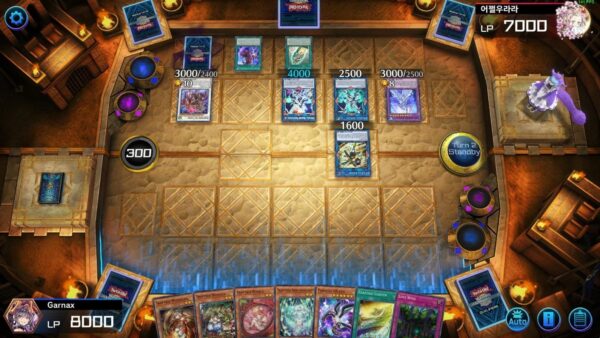
I wish they would make a new Yu-Gi-Oh game like “Link Evolution” with an updated card list and ban list.