Split Fiction Review – Split Decision
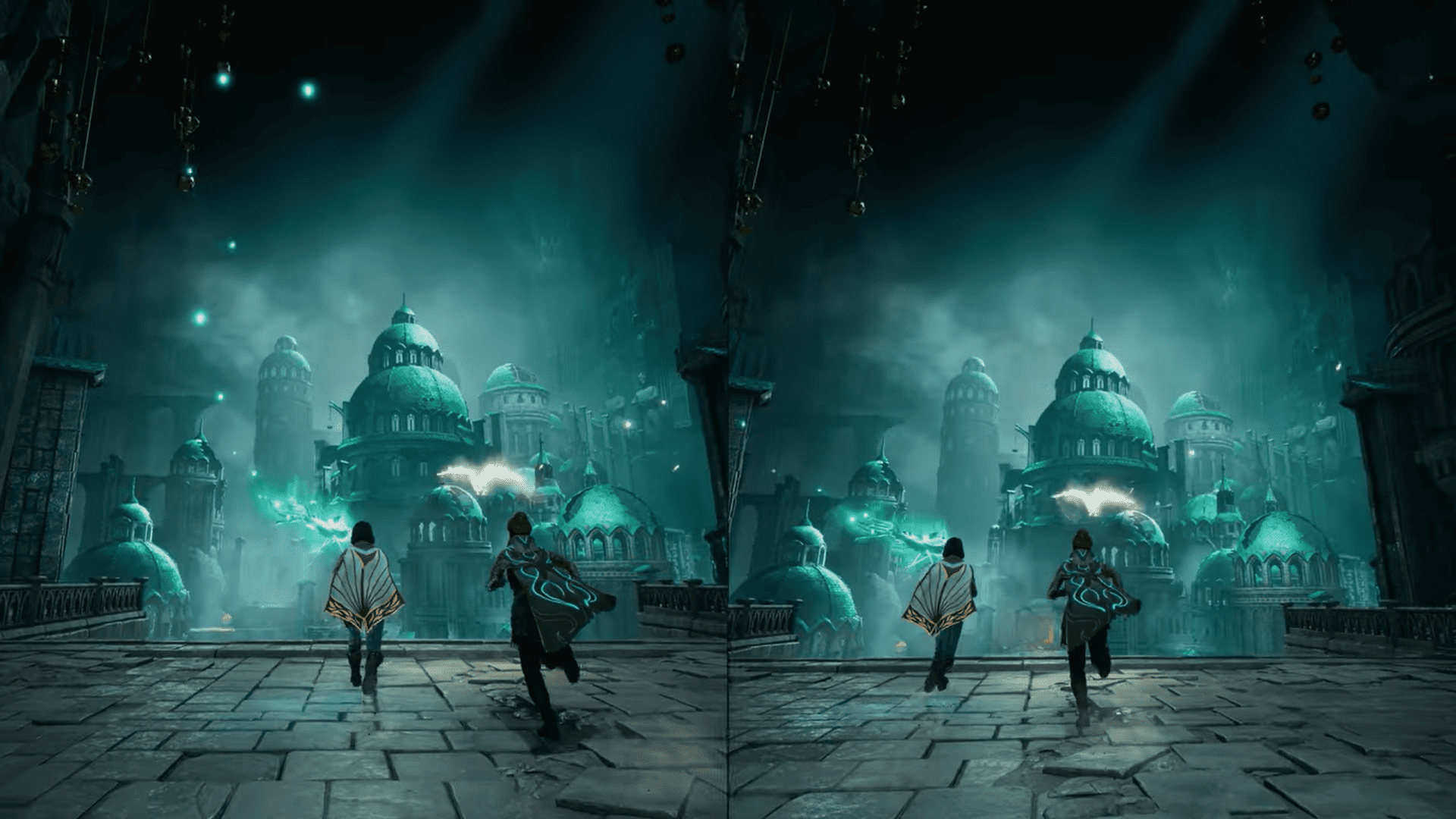
Ever since his first game, Brothers: A Tale of Two Sons, then with Starbreeze, Josef Fares has been made it a point to use a game’s controls to underscore the story’s themes. This is no different with his studio Hazelight’s third and latest game, Split Fiction.
As the story and the game goes on, the characters, and thusly the players, come to rely on each other more and more in order to see things through. On paper it’s always brilliant inspired stuff. In practice, this time however, doubt began to set in in the early going.
Splitting the Fiction
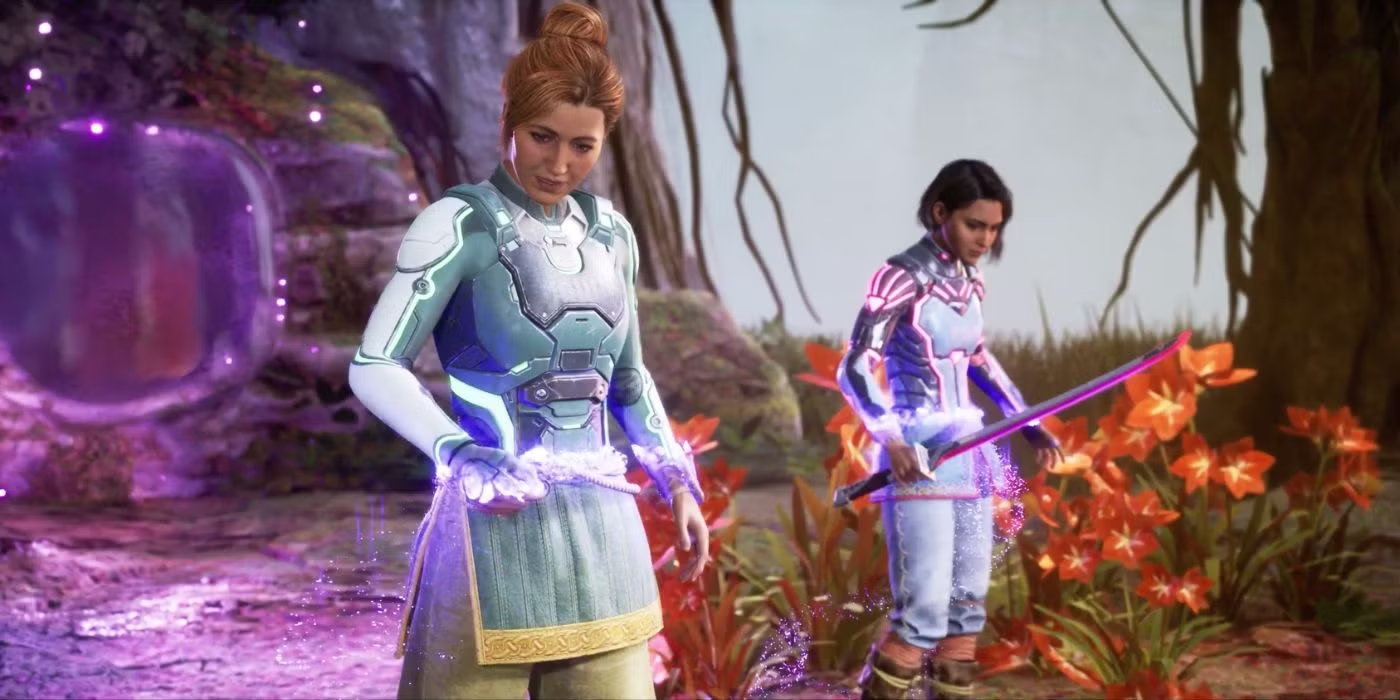
The story of Split Fiction involves two unpublished fiction writers, Mio and Zoe, accepting invitations to Rader Publishing under the guise of getting their submitted work published along with other writers that received similar invitations. Once there, Rader Publishing CEO, J.D. Rader has the writers partake in the inaugural launch of his Machine, which allows the writers to experience their respective stories in some form of advanced VR/AR. While Zoe goes into her bubble willingly and trustingly, Mio, a natural cynic, wants no part of it and while trying to leave she finds herself getting trapped in the machine with Zoe. Now the two experience each other’s stories while trying to find a way out.
What exactly is Rader’s plan seems nebulous despite saying what it is, because it makes zero sense in practice. I’m sure the writers were going for how the big corporation exploit writers and so on, but it only works as a metaphor given the set up. Realistically, this part of the story is just the set up and the narrative thrust while the real story is about Mio and Zoe coming to terms with and confronting their past traumas while they become friends along the way. The writing is very on the nose and juvenile and seems geared to a much younger audience, despite some darker moments and themes.
Ramping Up
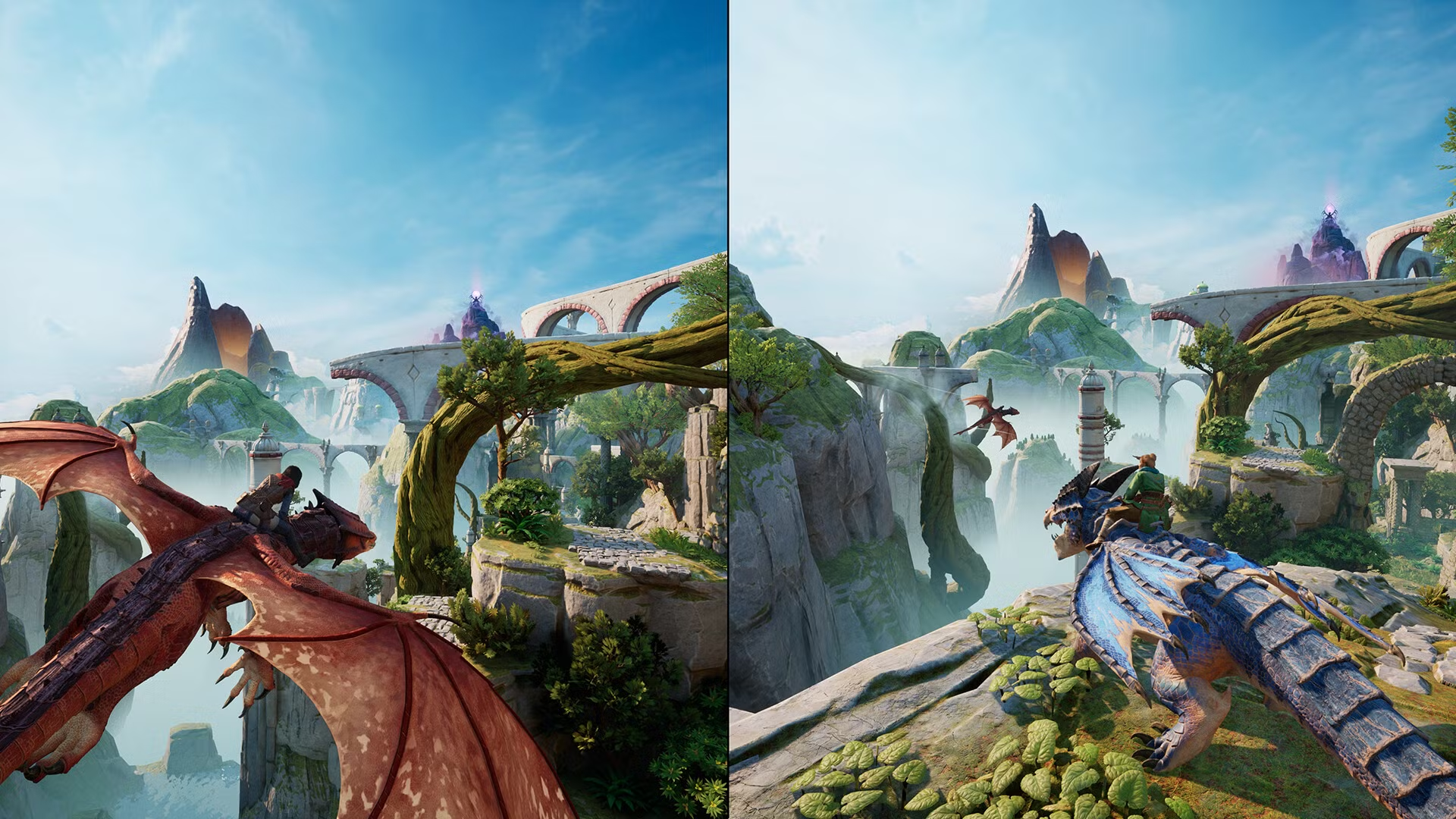
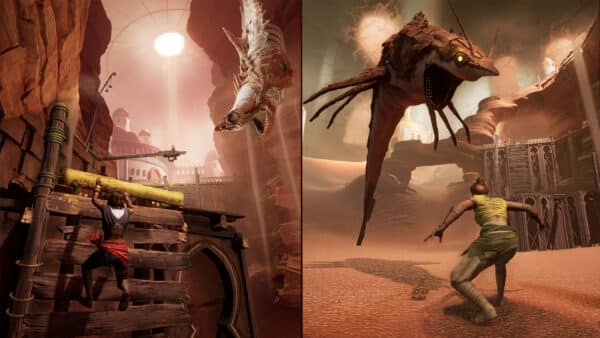
It’s all pretty simple and predictable and serves the purpose of getting players into the real star of the show, the gameplay. What makes it unique, is that Mio is a sci-fi writer, and Zoe writes fantasy so each of their levels and respective gameplay, play into those tropes. Similar to 2021’s highly successful It Takes Two, each section of the game introduces new gameplay mechanics as ways to get through each level. In It Takes Two, I rarely ever played the same mechanic twice. Here’ there is some repetition here and there due in the early portions due to the nature of the story the game is telling. That’s not to say the game doesn’t introduce new mechanics frequently. It does, and often.
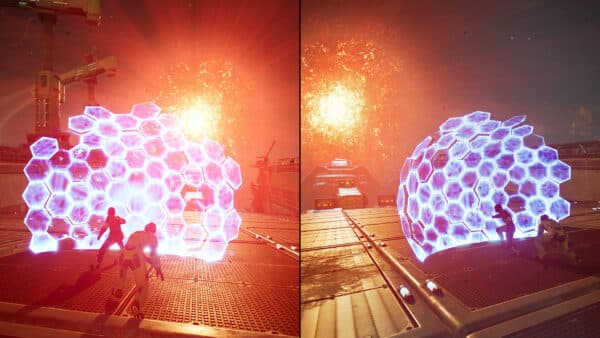
A lot of the early sections, especially in Mio’s story where it’s a lot of shooting, wall-running, double jump, dash platforming and such. Enemy bosses are all the typical fodder for these types of stories, and most of them have the repeat X three times to defeat it.
There are some bright spots in early sections of the game. One of my favorites was avoiding a pulsing sun that’s about to go supernova, while making our way to the controls of a machine designed to contain it. It’s really in the back-half of the 12 or so hour game where Hazelight’s innovative game design and mechanics truly start to shine. These sections have so many moments where my friend and I remarked on how clever everything we were doing was and how impressively these moments were pulled off, including a momentum-based swinging mechanic where timing needs to be pretty precise to push through.
Without spoiling it the final section of the game is truly impressive and does that thing I mentioned earlier, where the story and the controls converge into something truly remarkable and it’s easily the highlight of the game and the most impressive thing I’ve seen Hazelight do.
Verdict
Ultimately, I did enjoy my time playing Split Fiction, and any disappointments I had were based on my own baggage and expectations that I brought with me to the game. Such is the burden of being a successful, respected developer. The expectations are that the next game be at least as good as the previous one, and while that is entirely subjective, there are moments early on where I didn’t feel like the game was meeting them despite flashes of it here and there. That is, until the back half of the game where everything I love about Hazelight revealed itself in truly spectacular fashion and made me kick myself for doubting them.
Score: 8/10
Pros:
- Some truly awe-inspiring, “How did they do that?” gameplay.
- Tons of new mechanics throughout
- Fantastic climax
Cons:
- Story is on the nose and predictable with some cheesy, juvenile writing
- Early portions feel generic
Split Fiction review code was provided by the publisher. You can read MP1st’s review and scoring policy right here.
This website contains affiliate links. If you click a link and make a purchase, we may earn a commission at no additional cost to you. This helps support our work. Learn more on our affiliate page.