The Blood of Dawnwalker Review – First Blood
CD Projekt RED is renowned these days as one of the best studios when it comes to AAA action-RPGs. This notoriety mostly stems from the studio’s work on The Witcher franchise and, subsequently, Cyberpunk 2077.
Out of the three mainline Witcher games, by and large, the one that received the most accolades is The Witcher 3: Wild Hunt — a title that many consider to be one of the best games of all-time (this author shares that sentiment). So, naturally, when that game’s creative director departs CDPR, starts their own studio, and develops an all-new action-RPG game, people will have huge expectations for it.
This has been the case with The Blood of Dawnwalker ever since its reveal. Now, here we are, years later, and the game is finally making its way out. Is this a title that got buried under its own expectations? Or did Rebel Wolves manage to capture that The Witcher 3 magic and craft something exciting?
We’re glad to say that it’s the latter, as The Blood of Dawnwalker does not disappoint.
This Story’s Got Some Bite
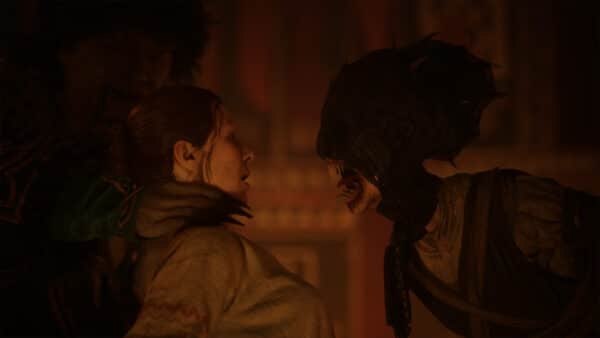
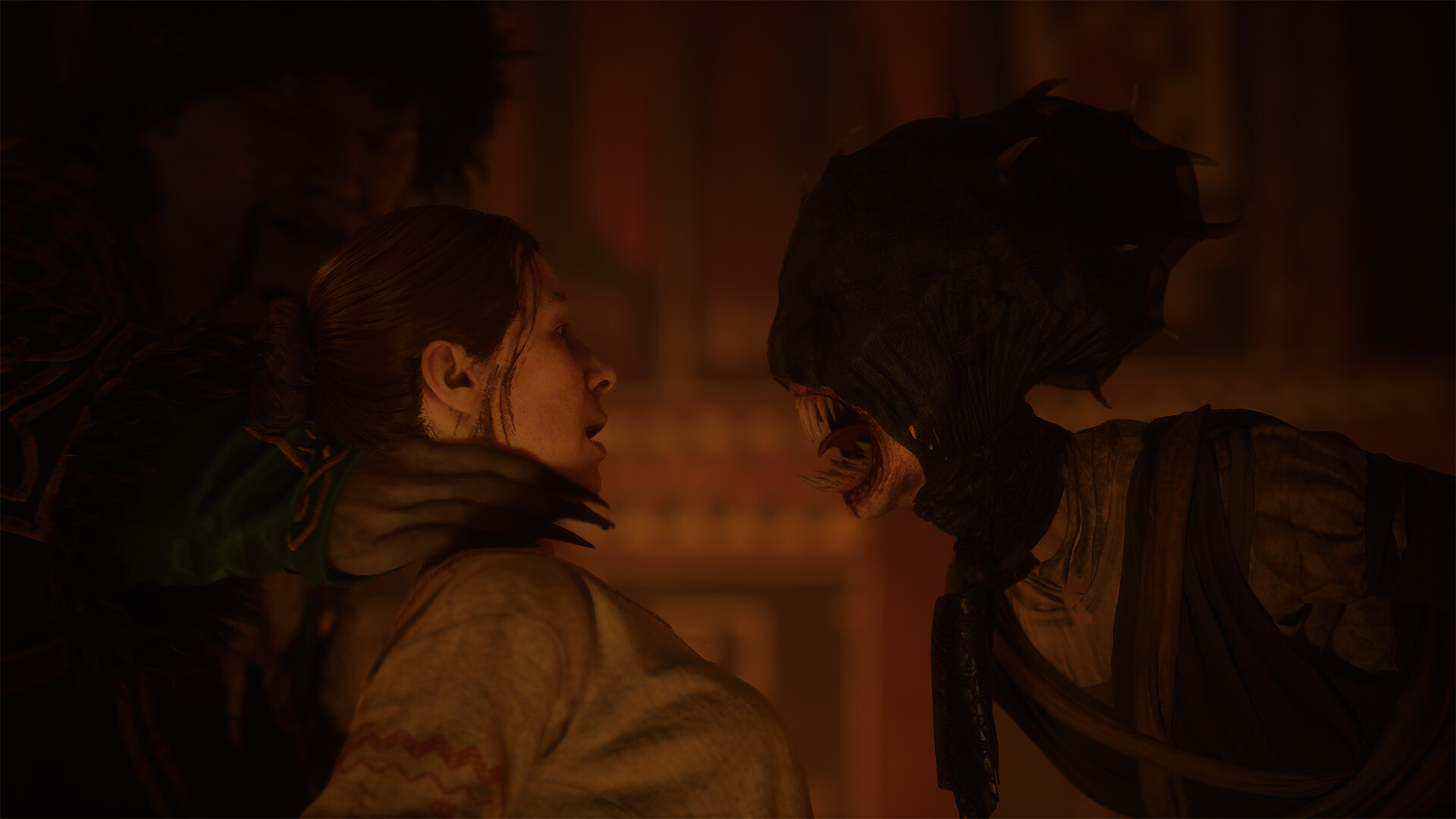
Before anything else, we are treated to a cinematic trailer that sets the backdrop for the RPG. We meet Coen and Brencis — the vampire leader — for the first time. It’s the exact same trailer we’ve embedded above, so it’s not really spoiling the game’s story or anything.
This sets the stage for what happens next, and it’s a good one. We won’t spoil the story for anyone, as it’s a tale worth experiencing fresh, but let’s just say it will compel you to keep going.
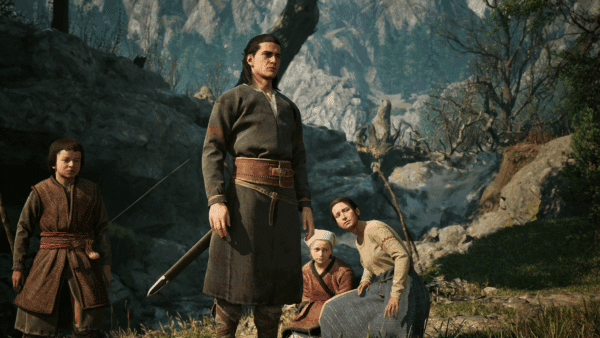
What you need to know is simple: Brencis has Coen’s family, and you have 30 days and nights to save them. Sounds simple enough, right? It gets more complicated when you factor in that Coen is a half-vampire, and time will move when you complete specific tasks such as side quests, the main mission, and more. Roaming the open world is fine, but if you want to level up, you will need to progress time in chunks (more on this later).
What sets Dawnwalker apart from your traditional action-RPG is how side quests and characters do matter and change the narrative. You’re given choices about whether to help someone or just finish them off (or even feed on them if you wish), but doing so will have repercussions, even if they aren’t obvious early on. This isn’t a marketing gimmick the devs put on a list to make the RPG sound deeper than it is, but it actually makes a difference.

Your choices shape the way the story gets told, so don’t be surprised if your Dawnwalker tale is different from your friends’, as there are multiple pathways to take, which end up branching out to different endings.
But ultimately, every decision you make influences the world around you and how your story unfolds, which Rebel Wolves have left entirely up to you.
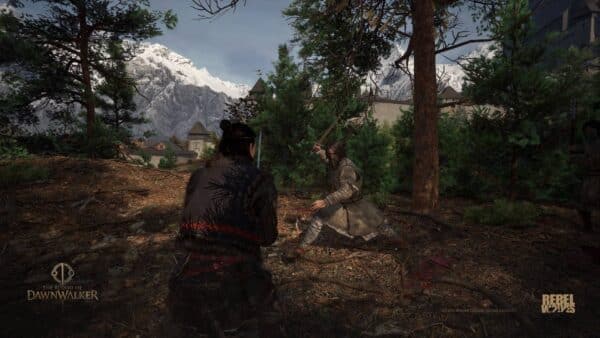
If you want to go directly to the final boss after the opening hours, you very much so can. If you want to spend your time counting down the clock to the last day needed to save your family, you can do that too. The former, whilst it means a much shorter game, does mean you’re faced with a very challenging fight, while the latter helps you prepare for it, while also opening up alternative possibilities.
There are multiple instances where Coen can spare someone or just be a madman and kill everyone that ticks you off, and you’ll feel the weight of it in future events.
One small instance I had early in the game was when I had spared an NPC, and nearly thirty hours later, a line of dialogue had popped up during another NPC encounter that allowed me to finish a questline a different way. When I asked one of our other reviewers if they were given that option, they said no, because they never spared the NPC in question.
At one point in my playthrough, I was given an option to beat the game. I saved, did a few side quests, and then beat the game. Afterward, I reloaded my earlier save to continue on where I really wanted (use up pretty much all the days and finish every mission), and when it came time to do the ending again, and some of those other missions I had done, I was surprised by the dialogue changes, as well as how some stuff had changed entirely, because of my new decisions.
There’s also an Infamy System tied to how Brencis reacts to your activities in the world. The more stuff you do to foil his operations, the more dangerous the world becomes. Eventually, he’ll send out more guards to patrol, stronger ones, head hunters, checkpoints, and even lock down entire cities.
What’s interesting is that the NPCs also react to this. Friendly NPCs will begin helping you more, due to considering you as a hero, while enemies will recognize you on sight, to the point where if you had no infamy, you could talk your way out of a situation, whereas if you have a high enough one, they’ll realize who you are before even giving you an option to avoid combat.
A fair comparison would be The Witcher, which is no surprise, considering that Rebel Wolves is composed of veteran developers who worked on The Witcher series, as well as The Witcher 3’s game director, Konrad Tomaszkiewicz.
You hear news about a new studio being formed by ex-devs from a beloved franchise, but more often than not, the game they make is nothing like the game being used to market their studio. With Dawnwalker, that isn’t the case. The DNA of The Witcher runs deep through its veins—not just in tone, but in how deeply every branching thread, moral gray area, and narrative consequence respects the player’s agency.
Now don’t take this as me calling Dawnwalker a clone of The Witcher. It’s not, far from it. But it captures that exact standard of excellence that modern action-RPGs so often strive for and miss. It’s an adventure that feels fresh, ambitious, and distinctly its own, proving from the opening hours that Rebel Wolves isn’t looking backward—they’re setting a new bar for the genre.
I’ve always treated The Witcher 3 as the gold standard of narrative depth, and it’s rare to find a game that evokes that same level of immersion. Dawnwalker hits those highs not by copying what came before, but by refining the formula, cutting the filler, making every single quest count, and delivering a world where you feel every decision matters.
I’m really at a loss for words for how incredible the story is in this game. Or more so, how intricate every decision feels in shaping Coen’s journey. It’s like skipping stones in a pond and seeing all the ripples happen, and each time you cast another stone, the waves collide in ways you wouldn’t even think were possible. From a narrative and design standpoint, Rebel Wolves, a studio that, despite having many veterans, is still putting out its debut title, and let me tell you, The Blood of Dawnwalker is going to be that title that cements them amongst the great in the industry.
Tooth, Claw and Sword
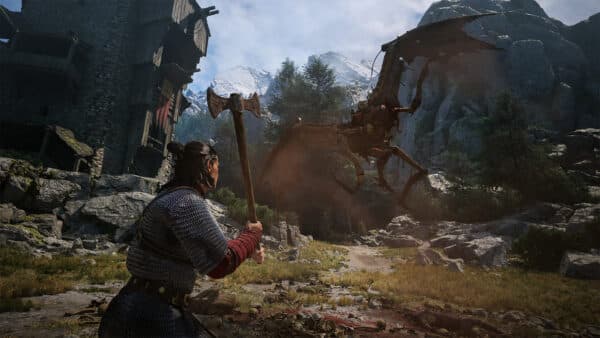
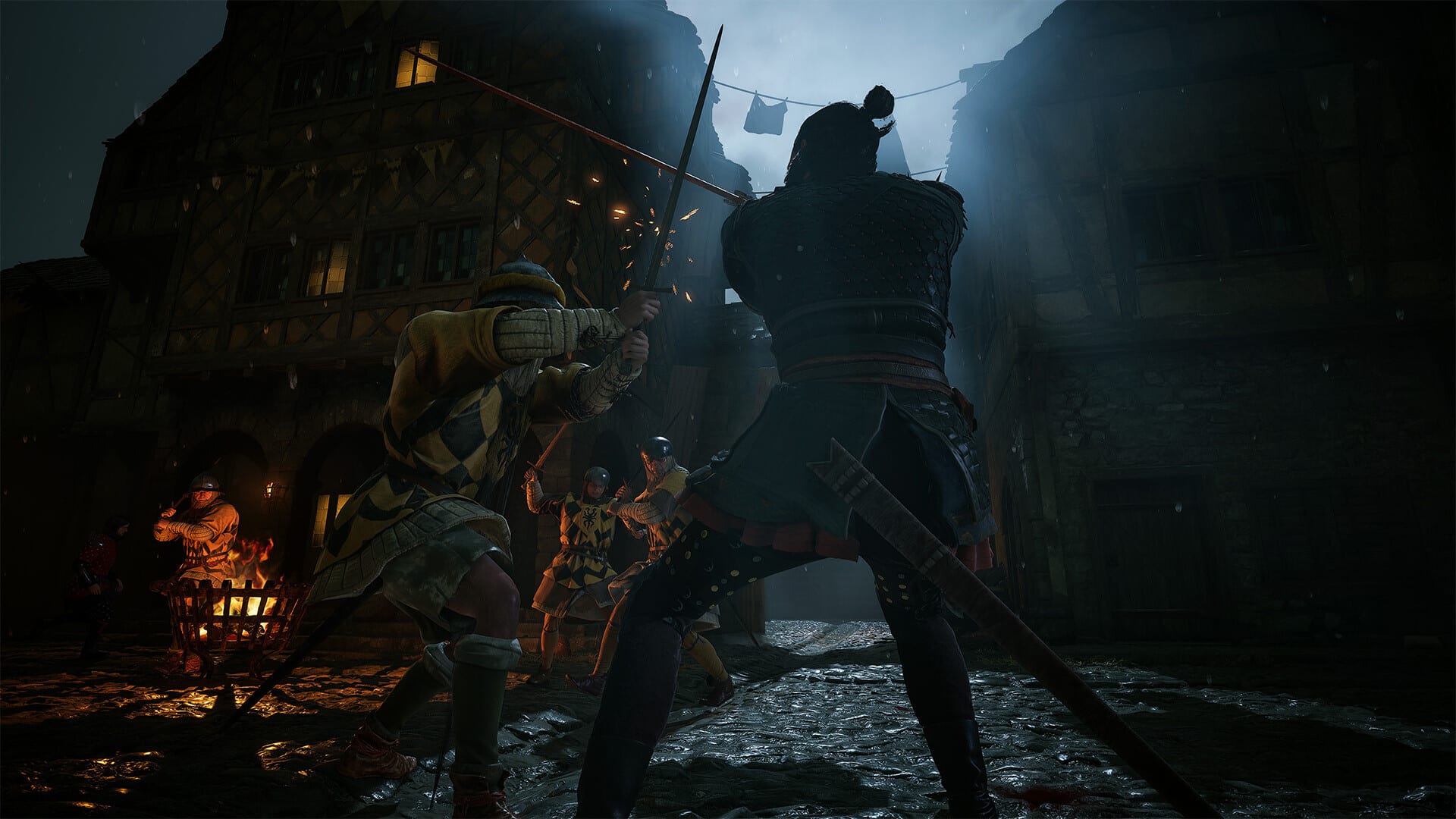
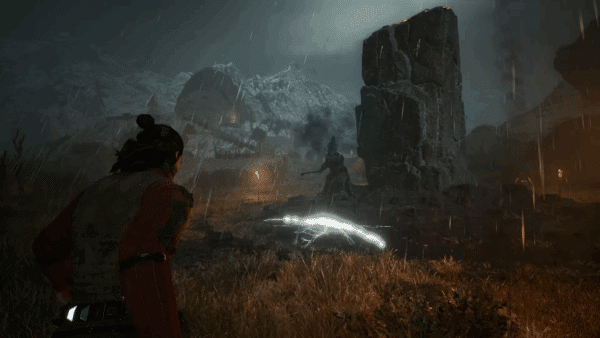
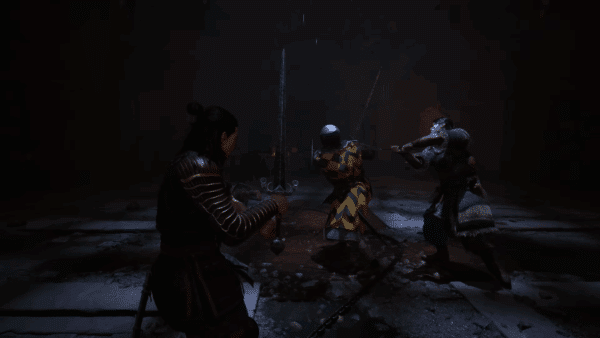
Aside from the top-notch story, The Blood of Dawnwalker’s combat is also another strong suit for the game. It will remind people of The Witcher 3’s combat for sure, but instead of a steel and silver sword, you have a regular sword, and your claws (and teeth) as the weapons of choice.
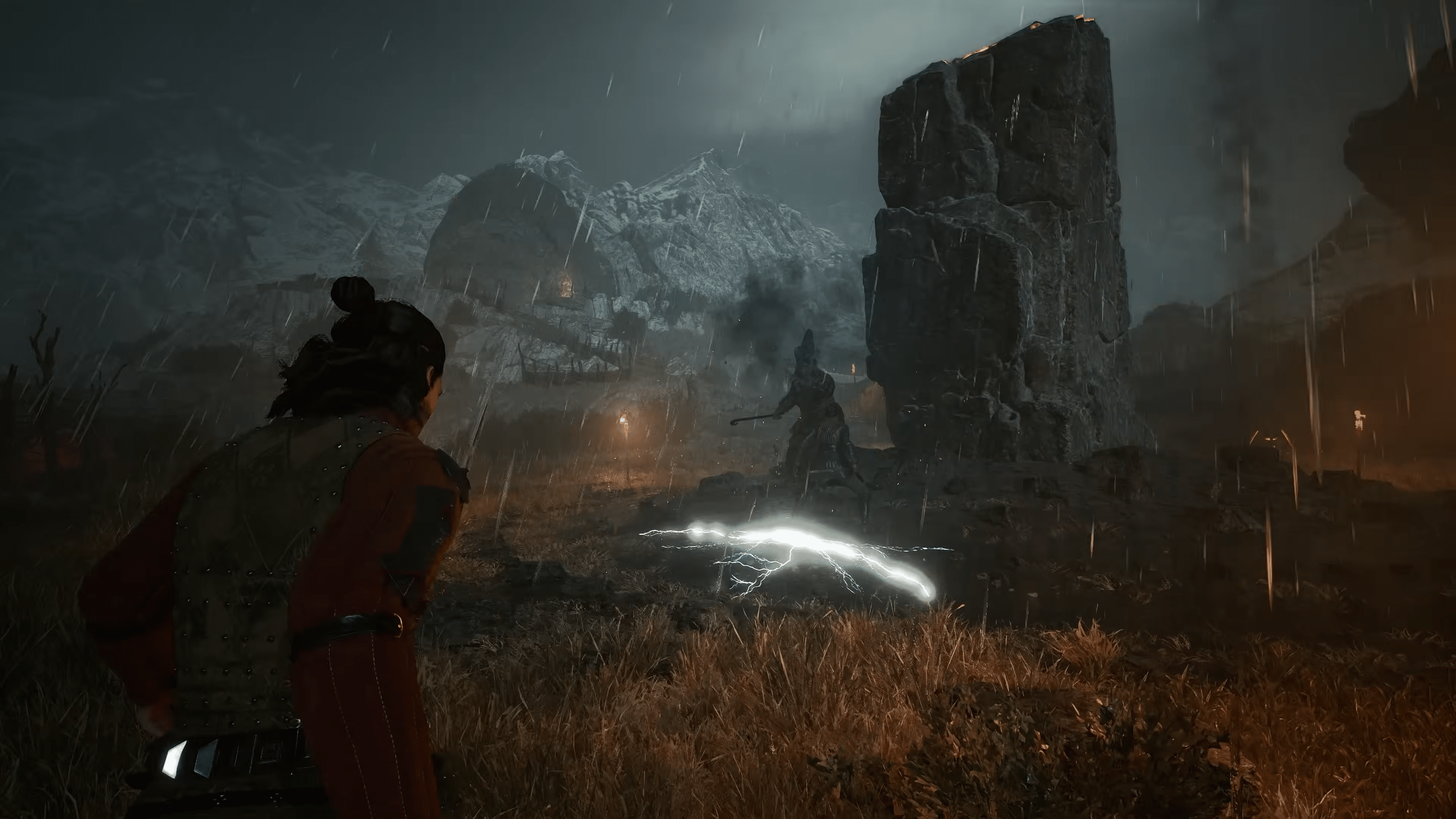
Same as in other RPGs, players will be able to pick up, craft, and obtain different kinds of weaponry and armor. There are different armor sets that provide buffs to Coen as a human, and a different set if you’re in vampire form. This two-pronged approach to combat is made more strategic by the inclusion of witchcraft — magic spells that Coen can only use while in human form. Even how it’s implemented in the story is well thought out, as Coen needs runes carved on his body in order to cast a spell; being in vampire form heals your scars too fast for your character to be able to do it.
Witchcraft, Swordmastery, and your vampiric abilities are the three skill trees that players will be able to level up during their playthrough. It’s not as easy as just leveling up and unlocking more skills, as some require the player to find or buy manuals that are scattered around the game’s world and vendors in order to unlock a specific skill.
When it comes to actual fighting, the core mechanics involve blocking/parrying, dodging, and counter-attacking. Players will be able to block almost all enemy attacks by pressing the right direction (think Kingdom Come Deliverance) at the right time. When you add in various sword skills, abilities, witchcraft, and how you can switch between sword and claws (at night at least), this provides a formidable combat system that feels challenging and gives enough freedom for gamers to tackle combat the way they want.
Sands of Time
The Blood of Dawnwalker is unlike most RPG’s people have played, not just in story, but because of its time mechanic. At the start of the game, players have 30 days and nights to save Coen’s family from Brencis. The thing is, almost everything you do in terms of quests, progressing your abilities and so on, will eat up a chunk of time.

I have to admit, this is a nifty mechanic, but it also means you cannot do every side quest without using up all 30 days. While the game won’t end if you consume all 30 days, it will result in some repercussions. Again, I want to repeat: the game will NOT end once you reach 30 days. Contrary to what some people think, the game does continue, but it might not be the ending you want to see.
There are a few gameplay mechanics I hope Rebel Wolves adjusts sometime post-launch. One, the ability wheel. It slows down time, but it’s not enough, because more often than not, we found ourselves getting interrupted by an enemy attack. It’s an easy fix, but I found the shortcut bindings to be the better way to play. Switching between shortcut binds also felt a bit clunky, even if it was a one-button press. With the number of enemies that come and attack you, I would have preferred the default switching to be more seamless with the button bind. But that’s fixable by rebinding your action to another button, so it’s not a major annoyance.
The big thing I’m not a fan of is how some of the time consumption works. Want to learn a new skill? Well, not only is that going to cost you a hard-earned skill point, but it’s also going to cost you a bit of time to learn it. Starting a quest and seeing it only needs three points out of your day? Oh wait, that’s just to start it, and doesn’t include all the other steps that also consume more time. Where a quest you thought would take only a few hours (in-game) ends up taking away a full day, and sometimes multiple days. Oh, and don’t get me started on how inconsistent the time consumption is for certain actions. What do you mean reading a single page from a book is going to cost me four whole points?
The game wants you to be mindful of the time you use, but at the same time, it feels like it lacks balance and transparency about how much time will actually be used.
On the other hand, I’m also quite fond of the time system, even if I do think it needs work. It adds a layer of of risk and reward to the game and really makes you question the kind of choices you make in it. I’m reminded of The Legend of Zelda Majora Mask a bit with it, though with a lot more time to play around with. That persistent risk of something bad happening lingers throughout the entire journey, and before you know it, 30 days passes fairly quickly (and by that I mean I have nearly 60 hours of playtime).
Verdict

The time consumption annoyance aside, there’s a ton to love about The Blood of Dawnwalker, and not much to complain about. Mind, our review build doesn’t even have the day-one update that promises better performance on consoles, but that wasn’t enough to detract from the experience.
In The Blood of Dawnwalker, Rebel Wolves gambled on a new IP and didn’t hold back in their ambition. Thankfully, it has paid off in spades, and from the looks of it, this is the start of a new RPG franchise. It might not have the same notoriety as The Witcher series for now, but if Rebel Wolves can produce the sequels with the same level of quality, then The Blood of Dawnwalker might just be the next great RPG series.
Simply put: The Blood of Dawnwalker is an all-new, AAA action-RPG that manages to impress in every way, and one that’s our frontrunner as the Game of the Year. We might possibly be witnessing the birth of a new powerhouse IP, and I, for one, am all for it.
Pros
- Stellar story
- Combat is deep and nuanced
- Your choices actually affect the narrative as promised
- Replay value tuned up a notch due to different stiry and NPC outcomes

Cons
- Minor technical issues
- Time consumption mechanic does get annoying from time to time
This website contains affiliate links. If you click a link and make a purchase, we may earn a commission at no additional cost to you. This helps support our work. Learn more on our affiliate page.