
Epic Games CEO Sees Steam’s Policies as “Unfair to Developers Who Use AI to Make Good Games”

Epic Games CEO Tim Sweeney has been highly critical of Valve’s digital storefront, Steam, on social media in recent months.
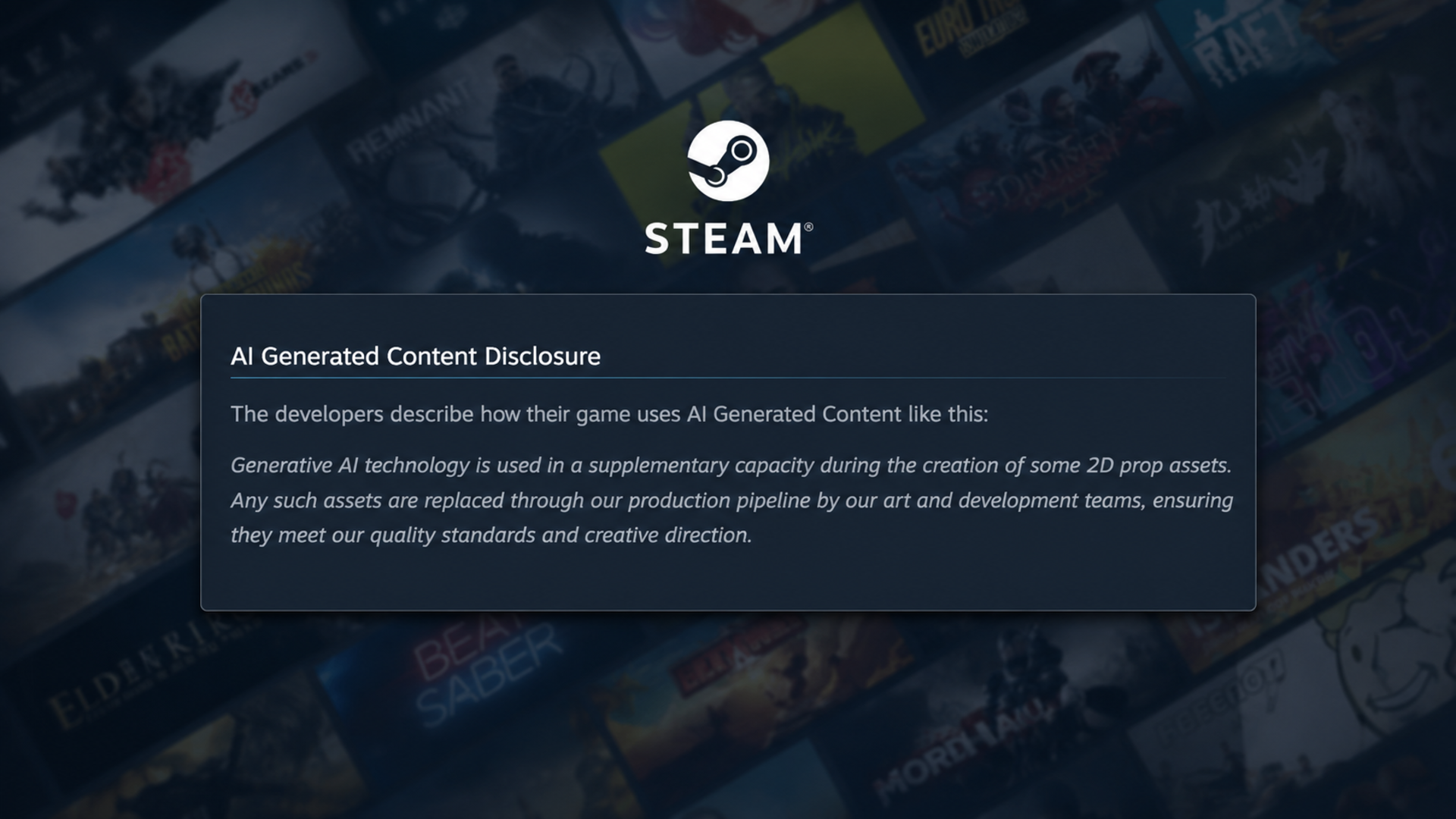
This time, he has once again defended AI while criticizing Valve for requiring developers to add a label showing when artificial intelligence has been used in their games.
His comments come amid growing debate about the use of AI in the gaming industry.

AI Is Essential for Creating Video Games, Says Epic Games CEO
In a new interview with GamesBeat, the CEO shares his optimistic view of AI-powered game development and makes his position clear.
He explained, “It’s really clear to me that large-scale game developers–setting aside indies, where there’s always going to be specialties and niches, large-scale game development will be totally changed by AI. Teams that don’t adopt it will absolutely be left behind and rendered uneconomical, non-viable compared to their peers.”
“When one team can make a game four times more efficiently – 10 times more efficiently soon, perhaps – than another team can make the same game, there’s just no possibility of competing the old way,” he added.
He also pointed out that companies cannot afford to ignore these tools: “No game developer has 75% to 95% profit margins that they can put at risk by not being as productive as possible.”
Sweeney believes that Valve’s AI disclosure policies are unfair because they associate the technology with poor-quality games. He argues that AI can be used to create both good and bad games.

“Because there’s a big resistance movement against AI that seems concentrated on trying to bully developers into not adopting it by attacking individuals, by review-bombing projects and so on, I’ve been trying to make my views known to as many game developers as possible,” he said. “We have to power through this and build awesome games, use maximum acceleration, because it is a survival issue for all the companies in the industry.”
When asked about Steam’s AI label and whether it simply helps inform players, Sweeney said, “I don’t buy it in the slightest”. He also argued that reviews already cover “a game’s quality, scope, entertainment value and so on”.
“You can build good games and bad games without AI. You can build good games and bad games with AI. You can repeat those distinctions for all engines, all development tools, all methodologies, all countries of origin, all teams and so on,” he further explained. “If we were to identify AI as associated with bad games, that’s just unfair to developers who use AI to make good games. It’s a guilt by association pattern that all developers need to push back on.”
For Sweeney, Steam’s AI label is being used in a toxic way, “because it’s absolutely being used by anti-AI advocates to undermine the reputations of developers and the viability of their projects.”
But this also raises a fair question: shouldn’t players have the right to know how the games they buy are made and whether AI was used along the way? Let us know in the comments.
In related news, nearly 20% of games released on Steam in 2025 have disclosed using generative AI, which represents an 800% increase from the previous year.

This website contains affiliate links. If you click a link and make a purchase, we may earn a commission at no additional cost to you. This helps support our work. Learn more on our affiliate page.