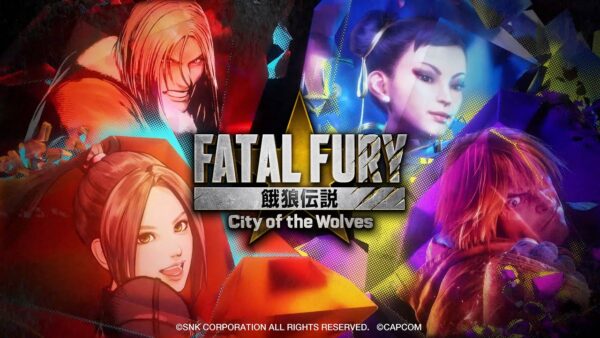
Gamers today may be more familiar with characters like Terry Bogard and Mai Shiranui from the prolific King of Fighters series or even Super Smash Bros. Ultimate, but they originated from the Fatal Fury franchise that debuted back in they ’90s on Neo Geo arcade and consoles.
While the Fatal Fury series had 11 games released during the ’90s, the last entry in the series came in 1999 with Garou: Mark of the Wolves. Now, 26 years later, the series makes its return with Fatal Fury: City of the Wolves.
How does it stack up against our current fighters, and has SNK managed to bring the franchise back triumphantly? Read on to find out.
Blast From the Past

Fatal Fury is a sister series to Art of Fighting, with the two taking place in the same city, though Fatal Fury is 20 years later in the timeline. King of Fighters, on the other hand, also features many characters from both, but Fatal Fury is the original of the three. This time, the story is fairly similar to the past, where the people of South Town strive for the legacy of Geese Howard after his death in a prior game, with different characters having their own smaller stories. A big shift for the series came in 1999’s Garou: Mark of the Wolves with the switch to Rock Howard as protagonist, son of Geese and adoptive son of Terry, which continues here.
Fatal Fury: City of the Wolves has a roster of 17 playable characters to start, with more coming as DLC in the future. Rather than having an almost entirely new roster of characters like with Garou: Mark of the Wolves, this game has some returning veterans. This is a well-rounded roster that includes staples like the aforementioned Rock, Terry, and Mai, as well as others like Hotaru, Tizoc, and Billy Kane. Newcomers like Preecha are also a lot of fun to use, with a unique look that stands out on the roster.
Included in the 17 character base roster are two guest fighters that are kind of weird inclusions, soccer superstar Cristiano Ronaldo and DJ/record producer Salvatore Ganacci. The inclusion of these two is even stranger given that series staples like Andy Bogard and Joe Hasashi are relegated to post-release DLC instead. Even so, each character on the base roster is a lot of fun to play as, with varying attacks and special moves that make it worth trying them all out.
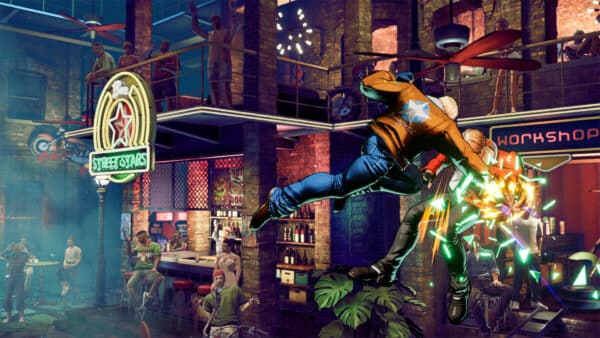
The stage offerings in this game are also varied, with stages such as the Bar, Dream Amusement Park, South Town Zoo, and one of my favorites, Geese Tower. These environments and the characters really manage to show off how far the series has come visually to this point, which is pretty impressive in this game. The flashy colors stand out and make the game a treat to watch in action.

The gameplay in Fatal Fury: City of the Wolves builds off past entries and adds some new elements to give the battle system a little more flair in this 2.5D fighter. As the series has been known for over the years, you can move back and forth between planes by pressing certain buttons, which allow you to utilize different strategies in battle. The fighting system is very much as you remember it from past entries, where you enter various attacks or combos while mixing in special moves.
Fatal Fury: City of the Wolves offers players with two different control schemes, one for those more used to fighting games and another for a more casual player. Arcade Style requires traditional command inputs for special moves in battle and is just as you would expect from a game like this. For a more streamlined approach, Smart Style lets you pull off special moves and combos with just the push of a button. Smart Style may seem like a useless inclusion in what is supposed to be a very technical fighter, but having an option like this is great for making the game more accessible to those who aren’t as adept in the genre.
One mechanic carried over from the last entry is the T.O.P. system, now renamed S.P.G. (Selective Potential Gear). Before starting a match, you must select if you want your character’s S.P.G. to be Accel Ratio, Flux Ratio or Final Ratio. This decides where the S.P.G. range falls in your health meter, which gives your character increased strength upon its activation and something new known as Rev Blows.
Rev is something entirely new in this game, which gives you even more offensive power options in a match. By using Rev Arts that are stronger version of special moves, Rev Accels that let you pair Rev Arts together, Rev Guards that are a more powerful kind of block, as well as Rev Blows that both dodge an incoming attack and then attack the opponent in return. However, the later requires you to have S.P.G. active as mentioned prior. You have to be careful using these Rev attacks, though, as using too many of them in succession can cause your Rev meter to overheat. This not only prevents you from using other Rev moves for some time, but also weakens your regular guard to where it’s easier to get hit. This high-powered addition adds even more intensity to every fight, but you must weigh the risks vs. rewards when using them.
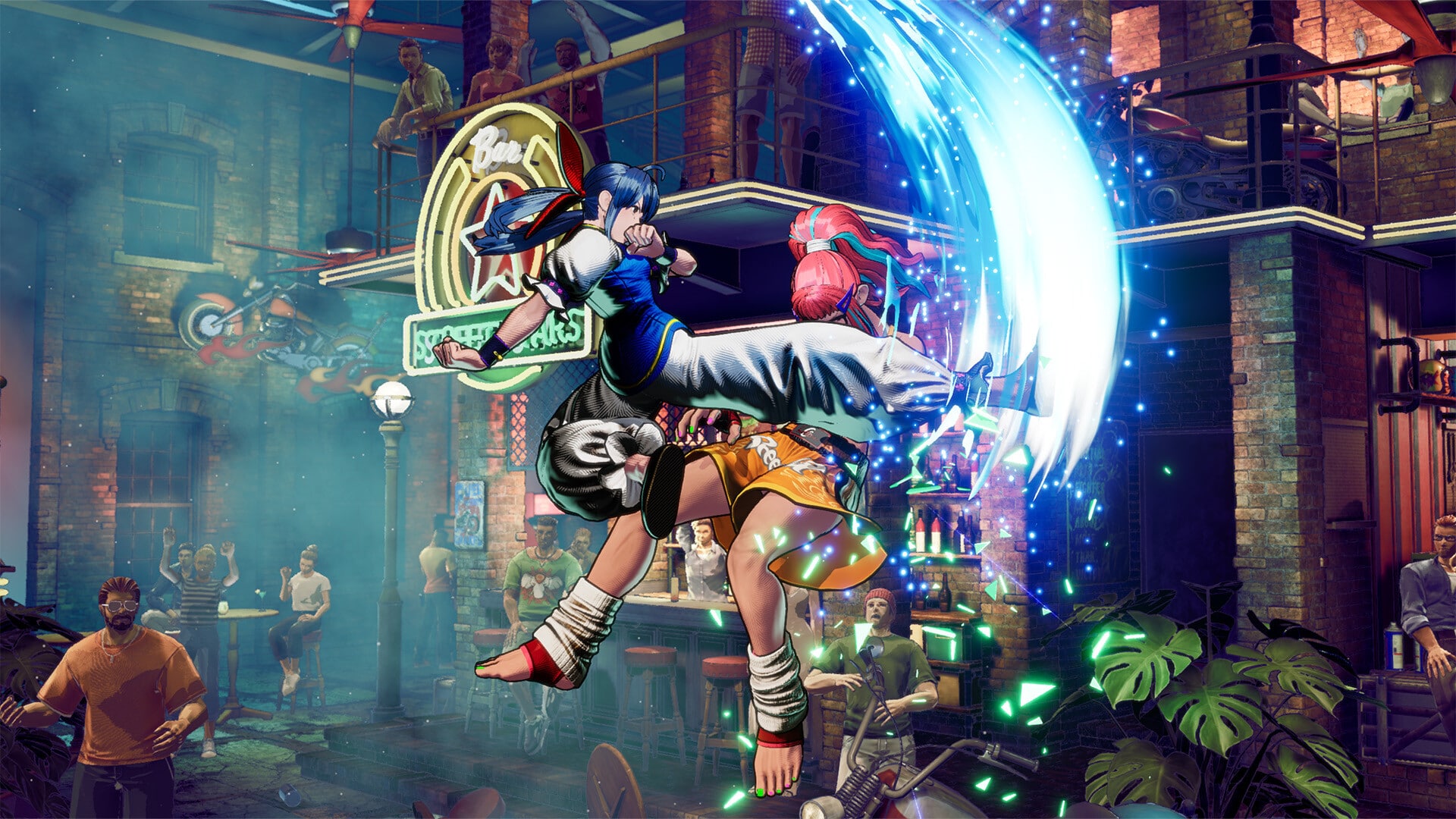
Fatal Fury: City of the Wolves has a few game modes, including offline and online content. For offline, you have basic Versus mode, Arcade mode, Practice mode, and a more RPG-oriented mode known as Episodes of South Town.
Versus is just as you would imagine, where you can set up 1v1 matches offline against a friend or the CPU. You can choose between Classic Versus or Special Versus, which has unique rules you can institute for the matches. For those new to the game or series, Practice mode is also excellent as a way to jump in, especially if you want to see if you need to use the Arcade Style or Smart Style control scheme.
The meat of the traditional offline content comes from Arcade mode, where you can play through the Arcade story for each character on the roster. With this, you can select the difficulty level of your opponents, the S.P.G. style, and which control scheme you are using, so there is a little customization available. Each character’s Arcade begins with a story setup, which is sadly only done through static images and voice acting, but at least it does have the voices to elevate it a little. Once you start to jump into the matches, you will also get multiple static images with some text upon them before jumping into the fight. After the battle, you get more of these scenes between the characters, with the later battles offering more of these when it’s more story driven content. Like most fighters, the stories can be a little over the top at times, but I really did enjoy playing through each character’s Arcade to discover more about them.
Episodes of South Town mode takes things further than Arcade as the game’s true single player campaign. At the start, you get to select a character from the roster to use around South Town, with the ability to swap characters at any time. After selecting, you’ll get some story background for the chosen character, and then it will let you select which part of the town you will start in, which is locked to Central City at first.
From there, you will have access to the map to choose between various quests and landmarks that are littered around the city. The landmarks found throughout the city are a blast from the past, as it lets you revisit old locales. There are also Solo and Skirmish stages round in the city, which each have difficulty levels on them that let you know if you likely have a chance at them. They are specifically coded as blue being lower level than your character, white being the same level as you, yellow being your level +1 or +2, and red being your level +3 or more. This gives a good gauge of what you should tackle first to make it through the city effectively.
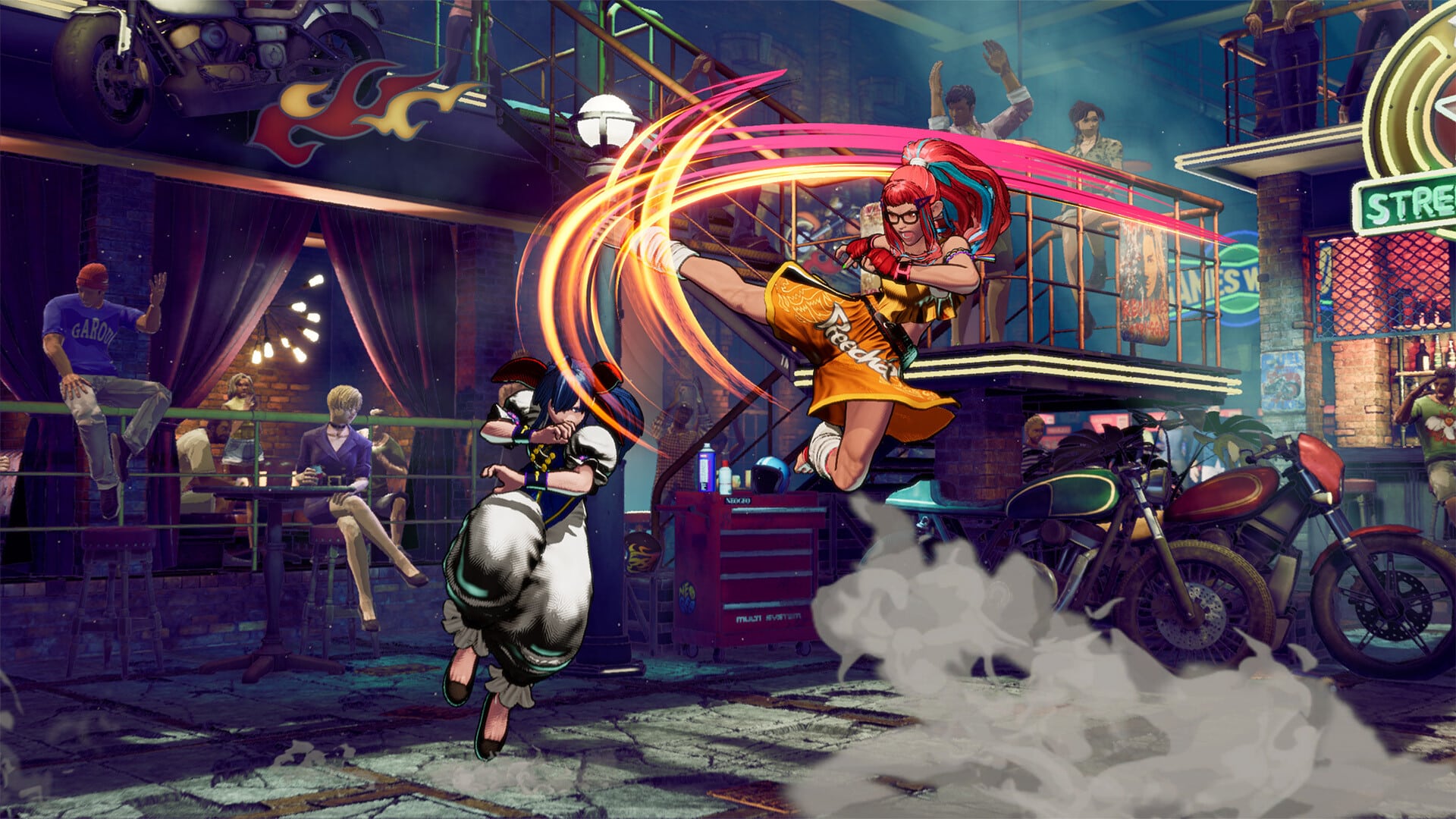
At the beginning, your character is pretty weak and will need some EXP to level up, which will in turn increase your character’s stats as well. By continuing to take on different quests, you will gain this much needed EXP and be able to take on the stronger opponents throughout the city.
From the initial setup, I was expecting something more like Street Fighter 6’s World Tour mode that let you have an avatar and explore an actual city landscape. However, Episodes of South Town just gives you a cursor that you move around a map and select the spots that you want to target. In fact, it felt more akin to Super Smash Bros. Ultimate’s World of Light than anything else. A major difference here though is that each character has their own Episodes of South Town story and completion percentage, so there’s quite a lot of content here to play through rather than one connected story board.
Throughout Episodes of South Town, there are main story quests in the form of boss battles that lead to dialogue with another character, but it’s all using text and speech bubbles on the screen rather than with voice acting. At least the story scenes in Arcade mode and before and after battles have unique images with voice acting over them, so this is pretty lame for something that could have been much more fleshed out. Episodes of South Town isn’t bad by any means, as the core gameplay and setup is solid, but it may be a bit of a letdown if you were expecting something a bit more grandiose.
The online offerings in Fatal Fury: City of the Wolves are mostly standard fare for a fighter, with both ranked and casual matches and the ability to create rooms or even tournaments. The most unique and really awesome feature here though is that of Clone mode. Clone Mode creates a personal clone based on how you play in online matches, including ranked matches, casual matches, and even single room matches. You can also create additional clones based on other players and then can fight with these clones to test them out or play against the SNK created clone based on them instead. This reminds me a bit of the Ghost feature in games like Forza Horizon or Mario Kart mixed with how amiibo were utilized in Super Smash Bros., though with actual player data being used.
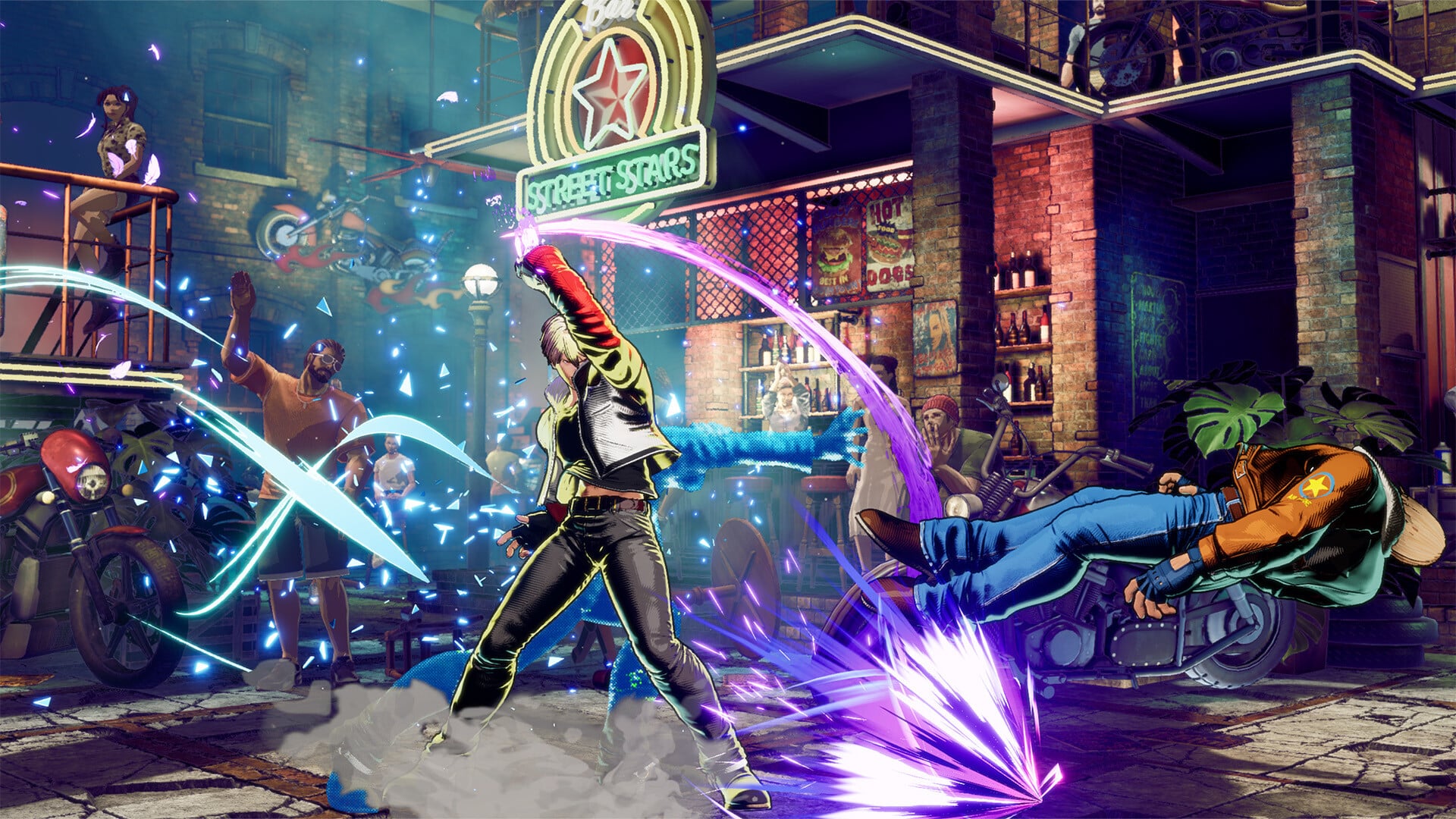
By default, each character has their main costume and several color swaps to choose from. The Color Edit section of the home menu, though, lets you take the customization a step further by altering the color scheme on each character you’d like. This include not just a general changing of the overall costume, but you can pick different colors for their hair, eyes, lips, jacket, pants, and more. This cool feature adds a lot of creativity into the mix with each character even if it is limited to only color swaps.
Something I always appreciate in a game, especially one with a history like this franchise, is including a music section. This is done through the Jukebox mode in the game, where you can listen to albums or individual tracks not only from this game, but also the past entries in the series. SNK takes things a step further by including the soundtracks from the three Art of Fighting games and a general “SNK – Other Titles” album with songs from games like King of Fighters and even SNK Heroines. They could have stopped with just including the music, but they took things a step further by not only allowing you to put songs in a playlist but also being able to set specific tunes for each stage and certain game mode screens in the game.
Verdict

With a well put-together mix of the already existing combat foundation mixed with some new wrinkles, such as the Rev system, Fatal Fury: City of the Wolves is a great return for the series after all these years. The game features a well rounded cast of characters, albeit including two rather strange celebrities, and really makes great use of bringing them to modern platforms with flashy visuals. Even though the Episodes of South Town mode is a bit of a letdown in some ways, there is still some fun to be had there. Most importantly, Fatal Fury: City of the Wolves is just that downright entertaining otherwise and will give you hours upon hours of fun in what is hopefully not the last entry in the series for another quarter of a century.
Score: 8.5/10
Pros:
- Well-rounded character roster
- Fighting system is good mix of old and new
- Colorful visuals
- Clone mode
- Jukebox mode
Cons:
- All cutscenes are static backgrounds in Arcade
- Episodes of South Town feels underwhelming
Fatal Fury: City of the Wolves was provided by the publisher. You can read MP1st’s review and scoring policy right here.