The Madden series has been struggling to make a first down in recent years with what felt like mediocre release after mediocre release for this entire generation of consoles. In comparison, the returning College Football series has reinvigorated the idea of what a football video game can be, and that has thankfully carried over to Madden a bit this year, with the best entry in a number of years, albeit still with some flaws, in Madden 26.
Curious how they managed to pull it off? It took some major upgrades to existing modes, and with a little bit of help from the College Football franchise.
A Step Back in the Right Direction
Gameplay in the Madden series has almost always been pretty top-notch, with new innovations making the game feel more and more like the real on-field product. The big focus this year is on the QB and coaches specifically, aiming to replicate their signature styles on the field and in their gameplanning/playcalling through all new AI-powered machine learning based on the last 10 years of the league.
Every QB in the league has their own play style, and Madden 26 has managed to take the individual QB DNA for each and infuse it into their in-game avatars. Whether it is their behavior in the pocket, the way they scramble, or even their arm slots, this year’s iteration does a fantastic job at emulating the bevy of quarterbacks in the league like Lamar Jackson, Josh Allen, and Patrick Mahomes. This has been elevated further by the addition of 50 new QB traits that can really help to differentiate each QB from one another.
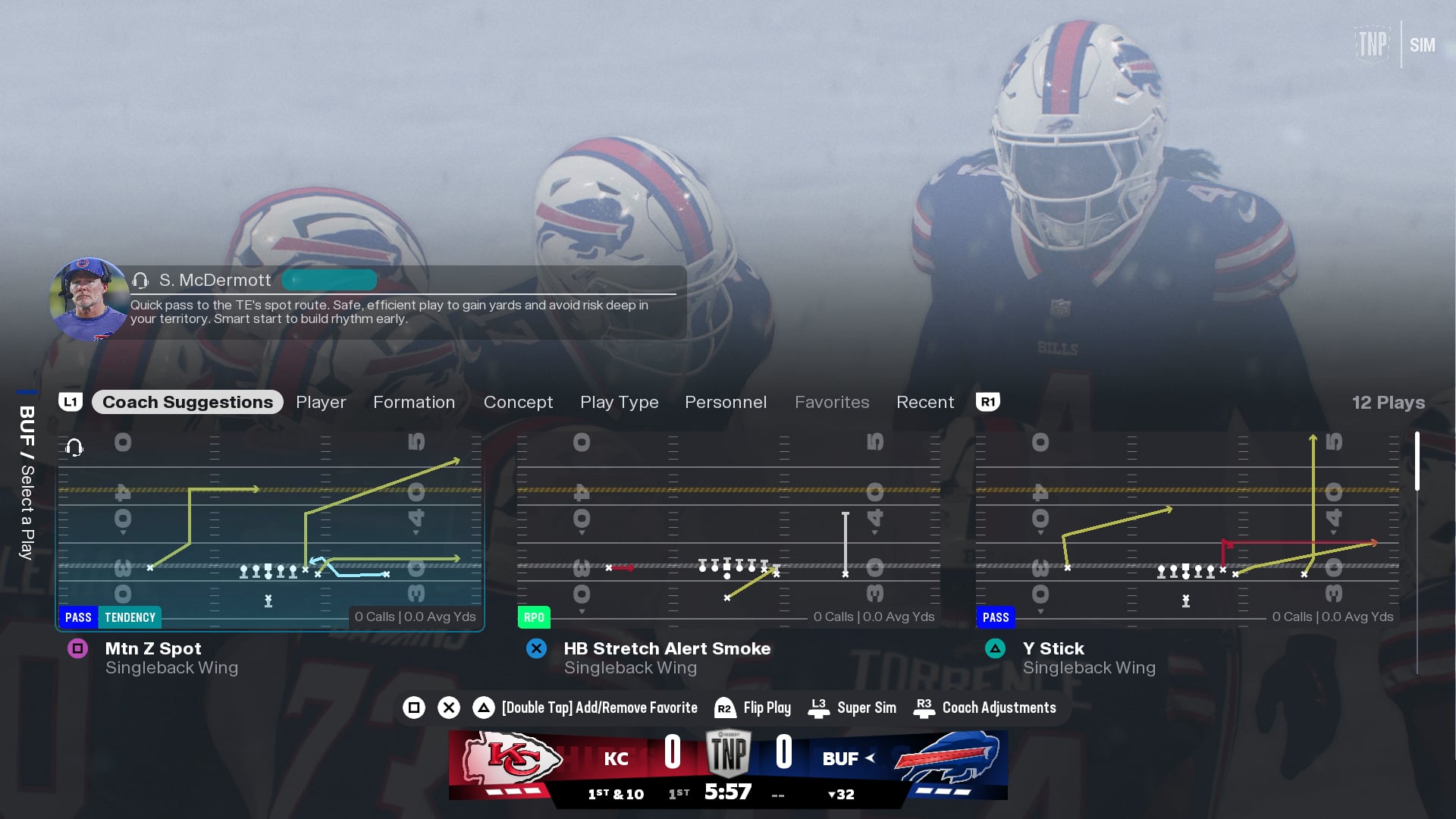
When it comes to the coaches, their tendencies in-game are entirely data-driven based on their real-life counterparts. This means that rather than feel like you are just playing against a random computer player, you will actually feel like you are playing against the likes of, say, Andy Reid or Sean McDermott, based on their playcalls and decisions during all facets of the game. This is a major leap in the AI used in past games, making those offline franchise games all the more exciting to play.
The players and coaches aren’t the only gameplay changes made in Madden 26, as the new Football Weather mechanic builds on the existing weather condition options in the game, but now it is taken to new extremes. Not only has the game added heavy snow, fog, and heavy rain, but the actual weather elements affect the gameplay even more than before. In the past, the weather felt more like just a superficial setting for a cool look on the game. Now, though, you will have to completely change your game plan to handle these intense weather types. Not to mention, it’s incredibly cool to play in the heavy snow with fog where it’s hard to see and grind out a victory just like you’d see a team like the Buffalo Bills do in a game.
Presentation has also always been a strong point for the Madden franchise, and Madden 26 continues that tradition. Not only do you have all of the bells and whistles that you expect from past entries, but the development team has worked hard on this entry to add even more in this area. One element that has been missing for a number of years in the game has been that of team mascots, with all but five teams currently having an in-stadium mascot currently in the league. The only downside here is that as of launch, only 18 mascots were made available, so some fan favorites like the Carolina Panthers’ Sir Purr have not been added to the game as of yet. Thankfully, the development team says more are coming post-launch, so hopefully we’ll eventually have all of the mascots available in the game.

On top of mascots, the stadium itself will be more realistic than ever, with 26 teams having authentic motion graphics on their scoreboards and ribbon boards throughout their respective stadiums. These also have plans of being upgraded to include all teams in the future too, so that will be a good addition down the road. They even addressed some more minimal complaints such as the stadium field art not matching teams that wear special jerseys, such as the Tampa Bay Buccaneers creamsicle jerseys or the Atlanta Falcons throwback jerseys. You’ll also see teams have whiteouts and blackouts like they really would if it fits the team as well, which is so cool to see in action, especially mixed with some of the heavier weather effects.
Madden’s Franchise mode has been the bane of many people’s existence for years now due to how disappointing it was year-to-year, due to minimal improvements when it really needed to be revamped. Madden 26 finally takes that leap and gives us what fans have been asking for with a brand new Franchise mode that is much more in-depth and robust than it has been in a long time.
At the start of Franchise mode, you get to pick the team you want to take over and then choose if you want to be an existing coach or create a new coach based on one of three archetypes based around the Offensive Guru Andy Reid, the Defensive Genius Todd Bowles, or the Development Wizard Dan Campbell. Creating your coach is still pretty simplistic, but now there are more than 200 new head types for a total of 249 head types. In addition, I thought it was really cool that they included female head coach designs as well.

One feature carrying over from last year that is still a disappointment are the storyline segments where your coach is being interviewed by the media or talking to players. Rather than actually making these moments exciting, like in say the NBA 2K series, where voice acting is used and it feels more like a story being told, here it’s just completely silent with text over the screen as you are making dialogue choices that can help impact your team’s growth and unlock new goals for players. While the team upgrades and goals are nice, the spectacle feels lost when it really could have been made into something special there this year, where you have these conversations. There is still definitely something here to build on with the stories that can include who will start, injuries for players and such, but it seriously needs some work to elevate to the next level.
The reintroduction of the College Football series is already paying dividends for the Madden series, as you can see a lot of its fingerprints all over the revamped Franchise mode. To start, your Coach starts at level 1 and can increase up to level 50 during their career. As you level up by earning XP through in-game goals, you’ll unlock more abilities and ability slots for your coach to make them all-around better coach. These abilities take things to the next level for your coach, with them being split into Gameday Abilities and Season Abilities. As of launch of the game, there are 46 total Season Abilities and 28 Gameday Abilities, which is plenty to be able to truly customize your coach’s playstyle. Each of these abilities have four tiers that you can stack as they increase until you max them out by reaching Upgrade Goals or using Staff Points. You have to be careful though, as you can also cause these abilities to downgrade if you fail certain goals.
One complaint players have had in the past is that offensive and defensive coordinators didn’t feel like they mattered much in Madden, but they now play a significant role in Franchise through the introduction of Playsheets. Depending on your coach’s level, you can have access to special Playsheets with plays that aren’t in your playbook based on your coordinators, with the max of four being able to be set once you’re level 40. Similar to the Abilities, Playsheets can also be upgraded or downgraded based on completion or failure of certain goals associated with each one.

Also, straight from the College Football series is the introduction of the Wear and Tear system to Madden for the first time, replacing the previous injury system. Wear and Tear tracks every hit that your players take throughout the season and to what parts of the body, leading to them wearing down as they naturally would. This makes the experience all the more natural rather than just freak injuries for injuries’ sake like it felt like in the past. Thankfully, Wear and Tear also comes with the introduction of Dynamic Subs to allow you to swap players on the fly without even having to go to the pause menu. This is very important when swapping out a tired running back or other player when trying to run a hurry up system and really makes a tremendous impact in the overall gameplay experience just like it did in College Football 26 when pairing the two together.
The upgraded Weekly Strategy before each game now mixes a number of these strategic elements into one area. In the Weekly Strategy, you can set your Coach Abilities loadout, including staff skills and unique coordinator Playsheets, as well as the Gameday and Season Abilities. In addition, you can also get an update on player health based on the Wear and Tear system here to help decide how to manage your roster’s health successfully.
A major problem that did pop up during Franchise mode occasionally though was a weird roster glitch that can really ruin games if it’s not fixed sooner rather than later. At times in the game, all of a sudden, your team’s depth chart will get screwy and you may end up with a backup QB in the WR slot or in one case I had the kicker coming in as the backup QB. Having to continually fix this can be a problem when it does pop up, but thankfully it was something that only happened a few times for me in my hours of playing. Regardless, this still needs to be fixed as soon as possible.

If you feel like running an entire team is too much, there is always the player-centric Superstar mode, which happens to be celebrating its 20th anniversary this year. Rather than receiving a revamp like Franchise mode did, Superstar instead just received some new features to improve it slightly over its predecessor.
The main goal of this mode is to create your own player, get drafted, and then aim to become a Hall of Fame player in their NFL career as always. In the past though, it was not always so easy to know exactly where your player stood when it came to moving up the depth chart and their career as a whole. The introduction of Chapters this year is meant to change that, with your player having various Chapters throughout their career, each with different Chapter Objectives to meet to advance to the next. There are also what are known as Redemption chapters when you hit rough points in your career and need to bounce back.
These chapters work together with what is known as the Sphere of Influence, another new feature in Madden 26’s Superstar mode. The Sphere of Influence involves your player’s relationships with others around them, both on the field and off. Off the field relationships include people like your coach, agent, fan base, and even people like your tattoo artist. On the field can be other players on your team, so it’s wise to spread the ball around if you’re a QB or you may turn one of your skill position players against you as a result. How this was truly integrated in this year’s game felt a little undercooked at times, especially with Superstar using the same boring dialogue system as in Franchise, but it at least provides some strong potential for the future.
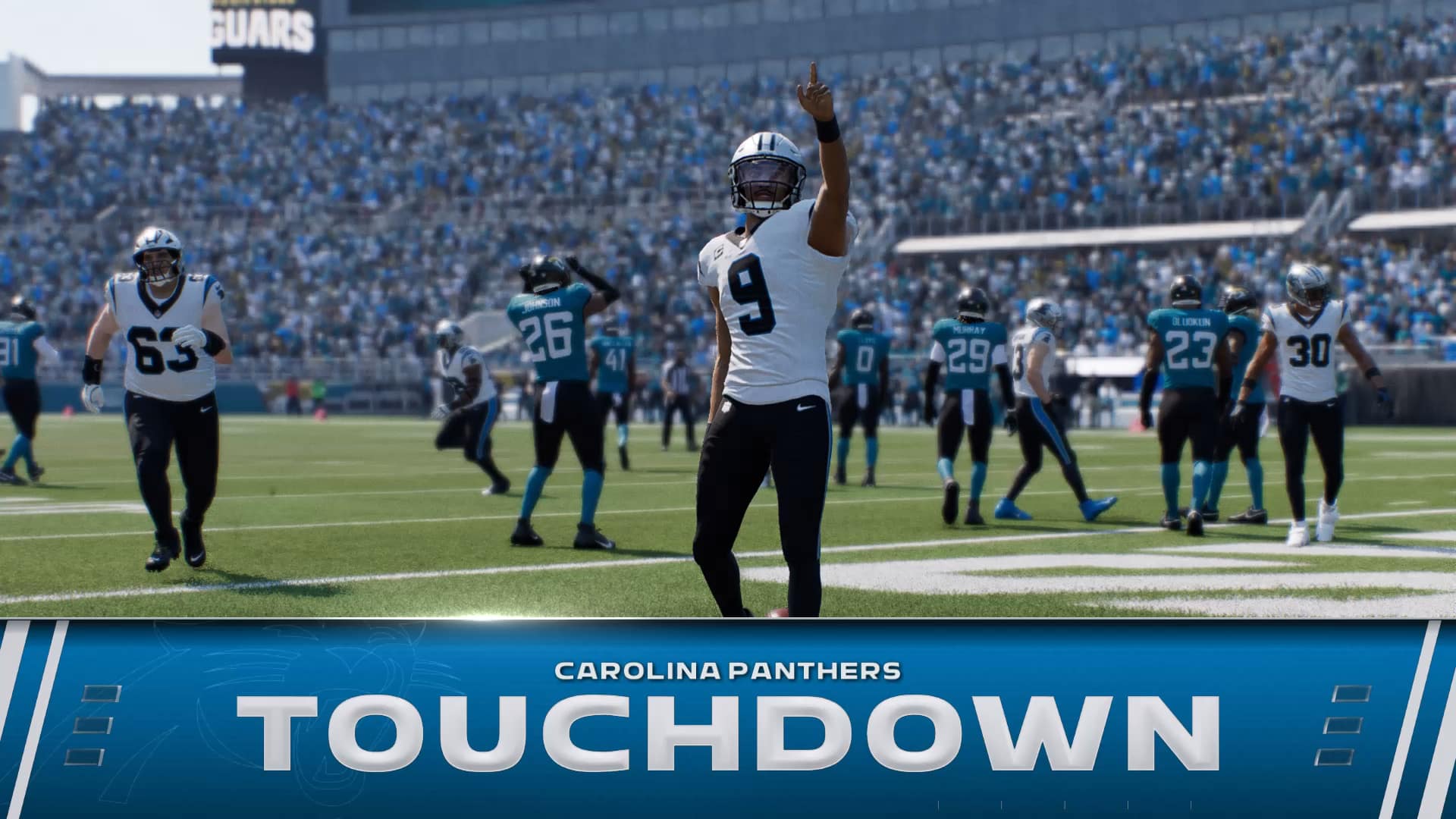
Madden Ultimate Team returns as always and is easily the least different from last year’s iteration compared to other game modes, but there were still a few changes. Pack Helper is a good addition to help you figure out if players you pull from packs are better than currently rostered player cards. There are also new leaderboard campaigns to partake in within the mode. Otherwise, Madden Ultimate Team is still there for players that love the microtransaction-fueled mode, while those that avoid such modes like the plague will not feel like they are missing too much by skipping it once again.
While it’s usually not that relevant, I couldn’t help but praise Madden 26’s superb soundtrack filled with an eclectic mix of songs from many different artists of different genres. Want some rap? Any soundtrack that features a mix of Linkin’ Park, Shaboozey, DMX, Twenty One Pilots, Chappell Roan, Run DMC, Beastie Boys, Lil Jon, Kendrick Lamar, and so many more is a winner. I made a point to customize my playlist so I’d have a stellar playlist to listen to while in each of the menus, even if not in them too long thanks to the much improved load times that have carried over from last year’s game.
Verdict
Many people had started to write off the Madden franchise as being nothing more than we’ve gotten in recent years, but entries like Madden 26 prove there is still plenty of quality to be found in the franchise. The much-maligned Franchise mode is the best it has been in probably a decade, thanks to some major upgrades, and Superstar has also received some quality enhancements. You can definitely see where some inspiration has come from the College Football series, and hopefully, we’ll see the two continue to work symbiotically in the future to where both are worth playing each and every year, like they are this year with College Football 26 and Madden 26.
Score: 8/10
Pros:
- Stadium presentation improvements
- Franchise upgrades are the best in years
- Superstar Chapters and Sphere of Influence
- Eclectic soundtrack
Cons:
- Awful dialogue system in Franchise and Superstar mode
- Franchise roster bugs
Madden 26 was provided by the publisher. You can read MP1st’s review and scoring policy right here.