There’s a lot to like about the idea and the game design behind People of Note. A turn-based RPG that blends rhythm mechanics, musical storytelling, and a character-driven journey feels like a natural fit, especially in a genre that’s constantly experimenting with new ways to stand out. Developed by Iridium Studios, the game puts players in the role of Cadence, an aspiring pop singer with big ambitions and an even bigger ego, determined to make it big after being rejected from the Noteworthy Song Contest.
As the story progresses, that growth does begin to take shape. Building a band forces Cadence to rely on others, something she initially resists. Over time, she starts to open up and genuinely care about the people around her. It’s not a groundbreaking transformation, but it’s handled consistently enough to give the narrative a solid emotional throughline. Even when the larger plot feels a bit underwhelming, her personal journey helps carry the experience forward.

MP1st got the chance to go hands-on with the full game, and after completing it, People of Note comes across as a project filled with ambition and creative ideas, even if the execution doesn’t always match that vision. The game clearly has its strengths, and there are glimpses of something more refined beneath the surface. At the same time, certain gameplay elements and pacing issues hold it back from reaching that next level.
Linear Design Keeping You On Track
Before diving further, it’s also worth noting that this review will touch on some light story elements, so consider this a spoiler warning if you’re planning to go in completely fresh.
People of Note is a very straightforward, linear experience. There’s no minimap, but the game rarely gives you a reason to need one, as the world is very small and you can explore everything, and though some areas may be confusing, you will not get lost. Objectives are clearly defined, and progression is tightly structured, guiding you from one area to the next without much room for deviation. For the most part, this works for those who want to play a game that doesn’t require much open-world exploration. I never found myself lost or unsure of what to do next, because the menu screen tells you your next objective. The only thing you will be doing is running around and figuring out where those objectives or main quests are located. It can feel a bit limiting at times, and each region, while visually distinct, feels more like a series of connected levels rather than a fully realized world.
Side quests and puzzles exist, but they are very few of them. Most side activities can be completed quickly within the same chapter they appear in, offering minor rewards that don’t significantly impact gameplay much. The puzzles are particularly underwhelming at the beginning. While they do become slightly more complex as the game progresses, they never feel challenging. On average, I was able to solve them in under ten minutes, until you reach the near-end part, which will tickle your brain but is not much of a difficult challenge. They feel more like brief interruptions than meaningful gameplay segments, which is nice, and I do enjoy a few of them. So if you are stuck, take a deep breath and give some of the puzzles a bit of thought; you will see a certain pattern in them, and for others, you can brute-force a bit, but the answer or hints are usually in the writing.
Rhythm Combat That Lacks Impact

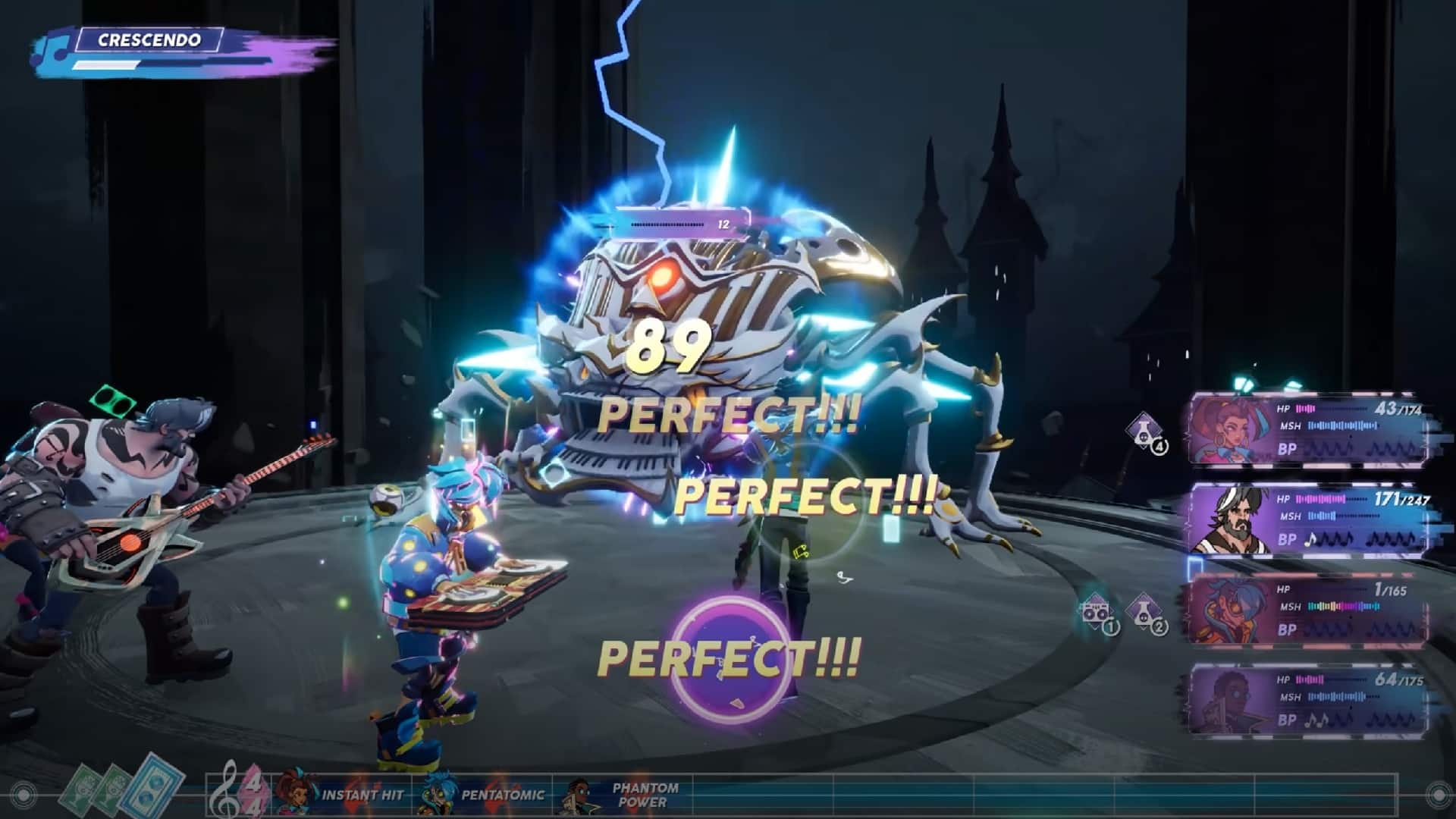
Combat is where People of Note clearly aims to stand out (beside their music), but it’s also where it falls the shortest. The game blends traditional turn-based mechanics with rhythm-based inputs, asking you to time your actions to the beat of the music. On top of that, there are dynamic genre shifts and musical mashups among party members meant to add variety and flair to each encounter. It’s a strong concept on paper, and one that fits perfectly with the game’s musical identity, but in execution, it feels underdeveloped.
Timing your inputs correctly does improve your effectiveness, but the impact is minimal. Missing a beat isn’t particularly punishing, and landing perfect timing doesn’t feel especially rewarding. Because of that, combat never really builds tension. There are moments where the music subtly changes tempo, requiring slightly faster inputs, but even then, it doesn’t meaningfully change how encounters play out. If the gameplay were done like Hatsune Miku: Project Diva or OSU!, I would have been more excited and very impressed.
The idea of manipulating the stanza, essentially the timeline of actions within each turn, is one of the more interesting mechanics introduced. Being able to influence when actions occur can add a layer of strategy, especially in tougher fights. Unfortunately, it doesn’t go far enough. It feels like a system that could have been expanded with more complex beat patterns, but instead remains fairly basic throughout. With more emphasis on incoming beat variations and deeper stanza control, combat could have been far more engaging.
As it stands, most regular encounters quickly become repetitive. I found myself relying on the same abilities against common enemies, with little reason to experiment or adapt. The dynamic combat conditions, while interesting in theory, don’t significantly impact decision-making. Battles start to blur together, and the rhythm element, which should be the highlight, ends up feeling more like a light gimmick than a core mechanic.

Boss fights are where the system shows flashes of its potential. These encounters are more demanding and often require you to adjust your setup, including gear and Songstones. There’s a level of strategy here that’s largely absent from standard fights, making bosses the most engaging part of combat. For a moment, you get a glimpse of what the system could have been if it were pushed further.
Even then, it’s not enough to carry the experience as a whole. The option to skip combat or lower the difficulty reinforces the idea that the system isn’t essential to progression. You can bypass large portions of it, solve the occasional puzzle, and still move through the game without much resistance. That flexibility is great for accessibility, but it also highlights how little weight combat ultimately holds in the overall experience.
The Quartet Cast Member
Throughout the journey, Cadence is joined by a small cast of companions, including Fret, Synthia, and Vox. Each character brings their own abilities into combat, as well as their own personality to the story. There are other characters with some background story, but I will not spoil it. Most have their own songs to sing, and it’s pretty decent to listen to. So I feel the developers have done well with incorporating a bit of the music into the game. However, the combat music leaves more to be desired, as you can barely hear some of the battle music of standard enemies or some bosses.
Fret stands out the most (and I truly like this character the most). His grounded personality contrasts well with Cadence’s early arrogance, and his interactions with her feel more natural than most. He adds a bit of emotional weight, helping balance the narrative. The rest of the cast is serviceable, but not particularly memorable. They fill their roles, but I never felt a strong connection to most of them. The game makes an effort to build these relationships, but it doesn’t always land meaningfully.

The writing leans heavily on humor, with frequent puns and references to movies, music, and other games. Some of it works, and there are moments that genuinely got a laugh out of me. But over time, the jokes start to feel repetitive, and the humor loses some of its impact. Though it does fit well in the world they live in.
Iridium Studios has a solid foundation here, and if they choose to build on it, there’s room for something much stronger in the future.
People of Note will be released on April 7, 2026, for PC (Steam and Epic Games Store), PlayStation 5, Xbox Series X|S, and Nintendo Switch 2.
- Unique music-themed world with distinct regions
- Boss fights offer more engaging and strategic gameplay
Verdict
6.5/10
People of Note is a game with a lot of creative ideas and clear ambition. Its blend of rhythm-based combat, musical storytelling, and character progression shows promise, and there are moments where that vision comes through. Though it leaves more to be desire for .
- Combat lacks depth and meaningful impact in most encounters
- Repetitive gameplay with little incentive to experiment
- Puzzles are too simple and feel like filler
- Supporting cast lacks strong emotional connection
- Skipping mechanics for a lot of the fights
People of Note code was provided by the publisher. You can read MP1st’s review and scoring policy right here.