Get ready, Digifans, because it’s time to step back into the world of Digimon, with an all-new adventure, Digimon Story: Time Stranger. After being on hiatus for nearly eight years, the series is back, promising a new beginning while delivering the classic RPG experience we’ve been craving.
Let’s see if it’s everything we hoped it would be.
Digital Monsters
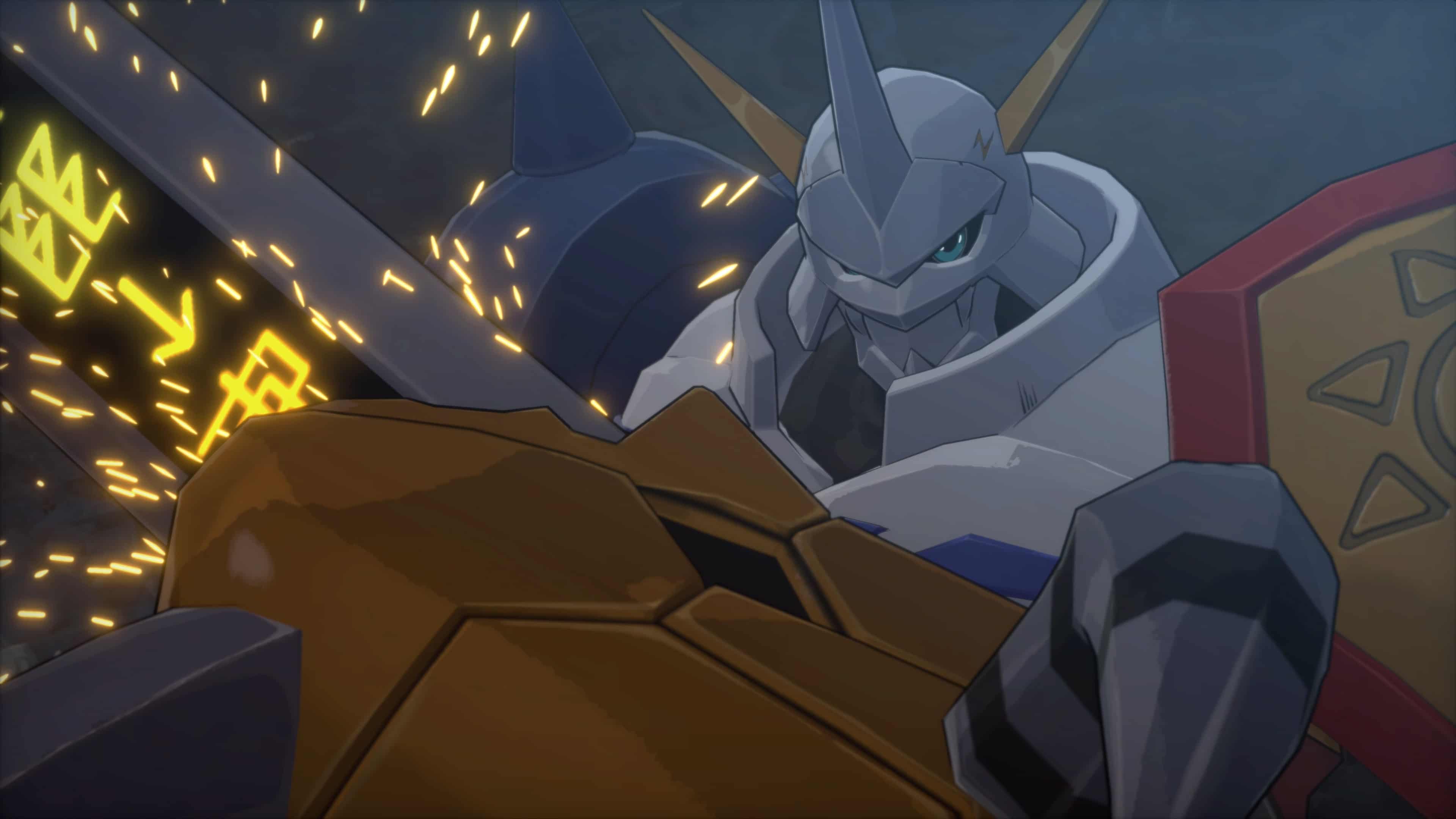
It’s crazy to think that it’s been eight years since the last game in the Digimon Story series was released. Sure, we had Digimon Survive between that time to help “fill” the gap, but fans of classic turn-based RPG combat that the Story franchise brought were left with an itch that sadly, Survivor could not scratch. Thankfully, Bandai would hear those requests, and soon after the release of Digimon Survive, they would announce Digimon Story Time Stranger, a new entry in the Story series.
Although it shares the same universe as its predecessors, Cyber Slueth and Hacker’s Memory, Time Stranger is in many ways a fresh start for the Story franchise, at least in terms of the plot, as it can be played entirely without playing either of the new former titles. Existing fans will no doubt come to appreciate some of the callbacks, but it’s not necessary to play those, making this a perfect starting point for newcomers.
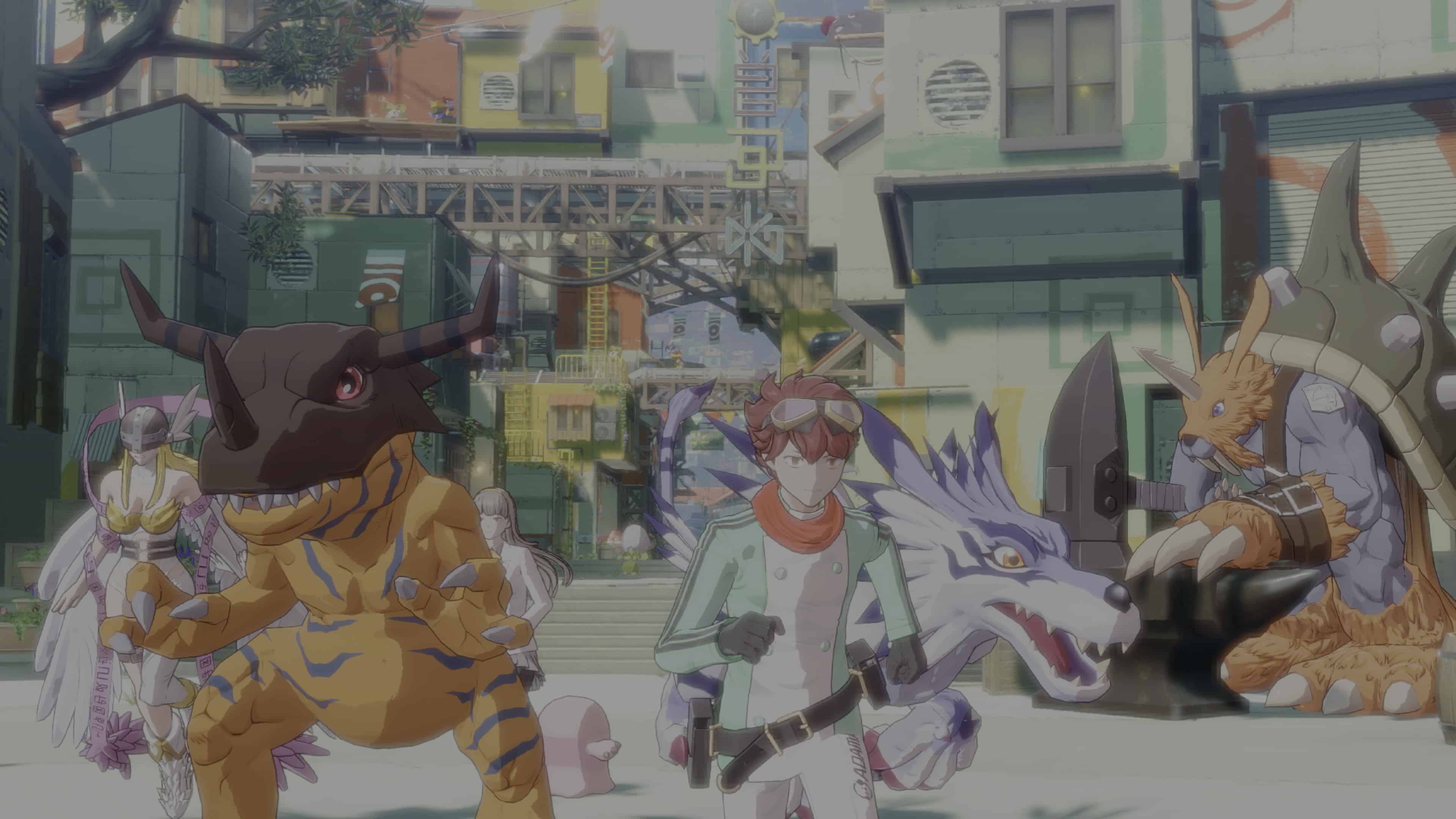
So what exactly is the story of Time Stranger? Without delving too deeply into the story, you play as a nameless secret agent protagonist (male or female) who is tasked with investigating a paranormal occurrence. As it turns out, Digimons are popping up around an area, with a rampaging MetalGreymon and Kuwagamon wreaking havoc around the area. Nothing too out of the norm for the world of Digimon, however, after taking them both down, our silent protagonist finds themselves facing off against a mysterious, shadowy figure who calls upon a massive skyscraper-sized Digimon. With things looking pretty grim, suddenly a gigantic fist appears out of nowhere, hitting the other Digimon, which causes a massive explosion. Turns out, whatever that fist was managed to rip the fabric of time and space, sending you back into the past by eight years.
As you can probably guess by that short bit of plot and the name of the game, this is a story about time traveling, with the character’s goal being to stop whatever caused that anomaly in the first place. Along the way, you’ll encounter many friends and foes, both human and Digimons, though undoubtedly it’s the Digimons that take center stage for the story. That’s not to say that the human story told here is bad or anything, as it is central to the game’s plot. You’ll just find yourself enjoying the content revolving around the Digimons a lot more. Not much of a surprise, since this is a Digimon game after all, so that’s a pretty good plus in my book when I end up actually for the very thing most of us are going to be playing for.
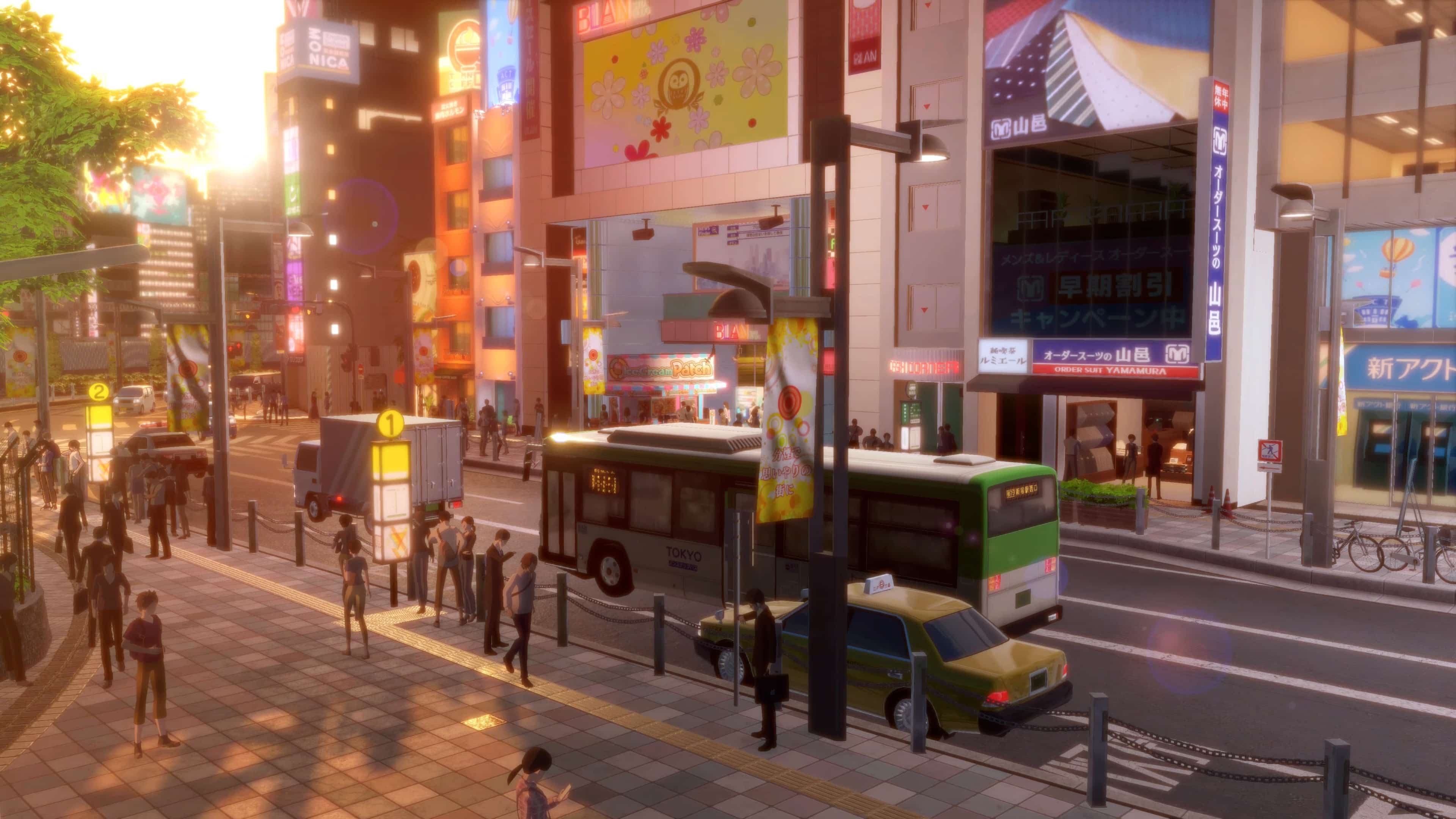
Still, there are moments in the campaign that I wish they had given a little more focus to. Specifically, our protagonists’ expressions do not match up during scenes where other characters are showing clear emotions. It’s almost laughable to see their blank face while everyone else is panicking or jumping with joy. A small nitpick, though, in the grand scheme of the plot
What I especially enjoyed was the time traveling and how it plays into the story. Meeting a Digimon in the past, and then jumping into the future (present time) to see them again, some really good moments play out. There was a Digimon that I fought in the past, and I later met with them in the present, but they were much older this time. I won’t spoil their interaction, but it did elicit a good laugh from me when it played out.
It’s a fun way to handle the time-traveling aspect of the game, which honestly has some good thought behind it. Even if the story is a bit of a slow burn at first, and eventually a predictable one, I think fans, and even newcomers, are really going to like the tale told here. I think it’s my favorite in the Story series thus far, so if you liked the past game’s plot, you’ll like the one here too.
Digivolve To!
The biggest draw, at least for me, is going to be in the gameplay. For combat, Time Stranger continues with its turn-based combat. I’d best compare it to the Persona franchise when it comes to flashiness and the flow of combat, but it’s very rooted in the classic turn-based formula. Every Digimon takes a turn, with speeds and other stats determining the order of things. You do get to use an item each turn without wasting that turn, which is actually really nice. The game can get quite challenging at times, so giving you a bit of breathing room with the item usage is a nice little mechanic.
Players can also exploit enemy weaknesses, which initially comes across as a guessing game. But there are plenty of UI elements to tell you after using said attack, if that specific Digimon is weak to it or not. That normally comes in the form of a percentage, indicating how much of that base damage is actually being done. It goes above 100% if it’s effective, and decreases if it’s not.
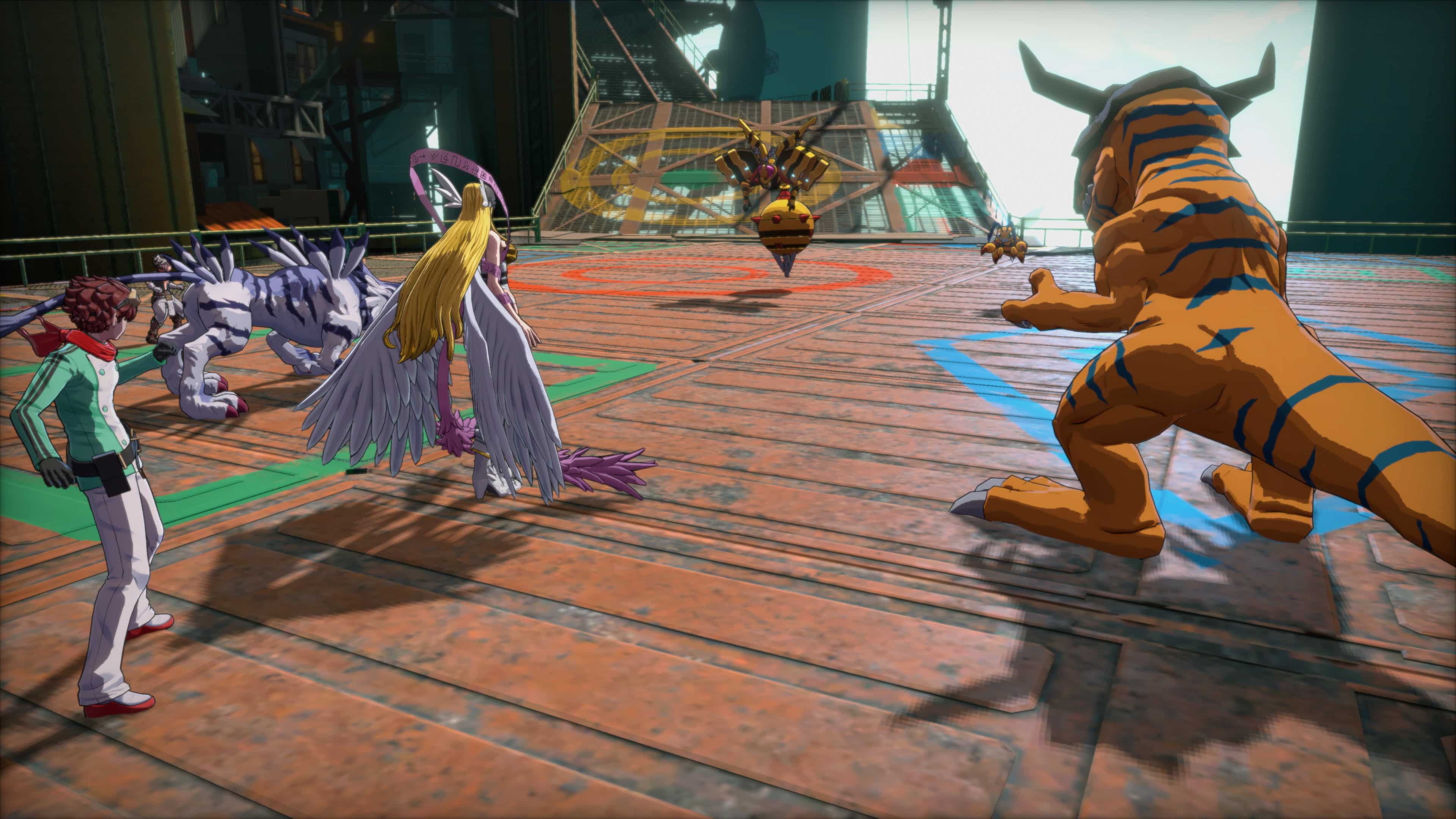
I also love that this game has both auto-battles and speed modifiers. You’re going to be doing a ton of grinding in this game, leveling up, and unlocking new Digimons (more on that in a bit). To be able to speed up combat by five times and have the Digimons auto-fight for you is a great feature. It is, of course, optional, but being someone who works 40-plus hours a week, it’s a nice feature to save on time, and without making the experience feel “bloated” with unnecessary grinding. Another time saver is that you can attack Digimons before entering a fight, and sometimes you can defeat them without having to go through a bunch of combat phases.
The one thing I’ll never get over is the fact that the protagonist has a Digivice that transforms into a gun and can be used during combat. You can buff your own Digimon stats, and yes, even shoot enemy Digimons. It’s not like a literal gun from the real world, so it doesn’t splatter the brains of a Digimon. But it’s still pretty funny to see it in the game.
As for the Digimon collecting aspect, this is also probably the reason why there’s auto-battle and a combat speed modifier. To collect a Digimon, all you have to do is fight it enough times to fill its scan rate. Once you do, you can hop into the menu and collect it. Easy enough, but each Digimon has like 3-4 evolutions, so you’ll be spending a ton of time collecting a single Digimon multiple times, and then leveling up from there. Luckily, all the Digimons in your possession get XP, regardless of whether you use them in battle. But even then, it’s still a pretty big grind, and with 400-plus Digimons to collect, you’re going to spend a lot of time in areas fighting, scanning, and unlocking Digimons. I’m just glad that the process isn’t entirely RNG, like say Pokémon, where you are spending hours just finding one specific creature. There’s some RNG, but it’s generally in your favor, and enough to want to keep you playing.
There is one thing that did stick out, and mind you, none of these were active during the review period, but the game made it blatantly clear. Very early on, you’ll come across a place called the “In-between Theatre.” For those who played Persona, think of the Velvet Room; for those who haven’t, it’s a very elegant room located in an alternative reality. There are a few gameplay mechanics here, but the one that stuck out the most was the mini-dungeons that you can take on. The thing is, these cost money, like actual real money, with the game asking to take me to the Steam Store to purchase said currency.
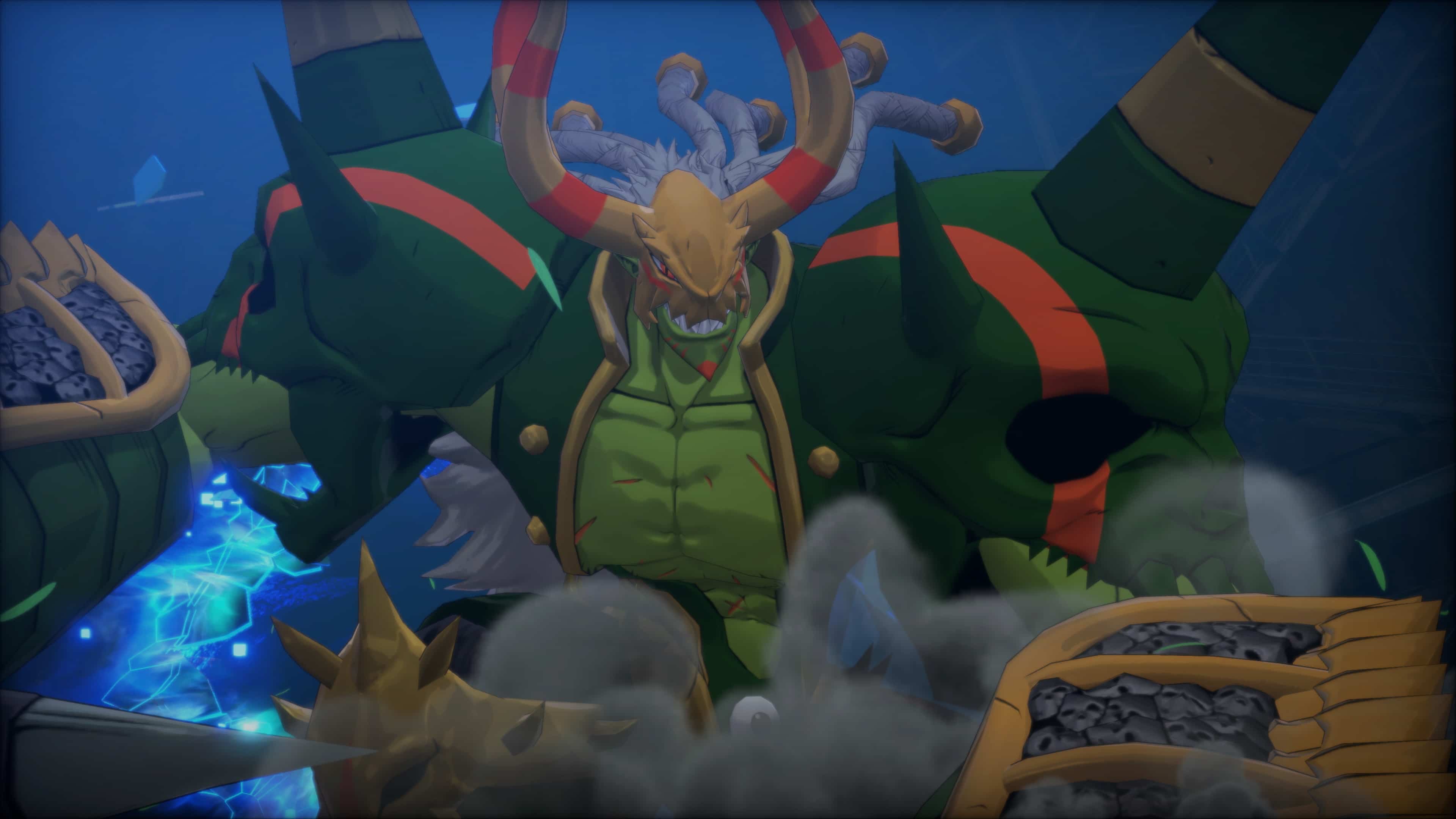
It’s one thing to load up a game with a bunch of optional costumes that you may never ever see unless you go on the storefront, and another to have the game tell you that you need to spend money to experience this part of the game. That’s insane. I don’t normally care for microtransactions, but to have it be in your face like that and lock some content that I assume is probably not even worth doing. It’s a strange decision to make, given the appeal of leveling up faster, which I’ll say isn’t a significant issue in the game anyway. So I guess they kept that fair.
It is optional in the end, but I can’t help but feel that the In-between Theatre was built specifically for that, because while there’s a farm to leave your Digimon to level up and change their personalities, you’re going to find it’s a lot quicker to level them up by leaving them in your box. I’ve almost collected all the Digimons, but I’ve only used the farm once, after realizing its benefits aren’t worth it.
Don’t Be a Stranger
Being a long-time Digimon fan (I think I like it even more than Pokémon), I might (probably) be a little biased when it comes to anything Digimon. But in the case of Digimon Story Time Stranger, I truly do believe that it’s one of the best RPGs in the series. Mind, that doesn’t mean it’s perfect, as it does have its faults, but as far as delivering on a solid, turn-based RPG experience set within the Digimon universe.
I think it’s the best one so far in the Story franchise, and for Digimon fans out there, that’s a massive recommendation right there. Of course, if you aren’t a fan or are someone looking to get into the franchise for the first time, this wouldn’t be a bad start, as it does everything to introduce players to the world of Digimon without over-reliying on past stories.
Either way, it’s a fun RPG, and I think anyone who’s looking for a good time will get a kick out of this one. It’s a great return to the Digimon Story series, and I can’t wait to see what they have in store for us next.
Score: 8/10
Pros
- The story has its good moments, even if it starts as a slow burn and can be predictable at times.
- The time-traveling mechanic is a fun and well-thought-out addition to the plot.
- Solid turn-based combat that feels like a classic RPG.
- Auto-battle and speed modifiers make grinding more manageable and less tedious.
- Tons of Digimons to collect and evolve, with a grind that is generally enjoyable rather than tedious.
Cons
- Some of the localization is rough and loses meaning from what they’re actually meant to mean.
- I didn’t mention anything about side quests in the reviews, but these are mostly fetch quests and feel more like padding the experience.
- The In-between Theatre promoting microtransactions and locking dungeons behind it just doesn’t sit well with me.
Digimon Story Time Stranger review code (PC) was provided by the publisher. You can read MP1st’s review and scoring policy right here.