With its unique “brinepunk” style and thrilling four-player co-op action, Abyssus has officially launched and is already making a name for itself. We recently got our hands on the game for a full review, and while we were impressed, we had a few questions.
To get the whole story, we reached out to the masterminds behind the game at DoubleMoose to learn more about their journey and what’s next for this ambitious roguelite.
The Birth of “Brinepunk”
Interview conducted with: Armin Ibrisagic, CEO & game designer
MP1st: Let’s start things off with an introduction about yourself, as well as telling us a little bit about the studio, DoubleMoose Games.
Armin Ibrisagic: Thanks for interviewing us! We are a group of ex-Coffee Stain employees who started DoubleMoose about 9 years ago. We work on games that are in our favorite genres, and Abyssus is that latest labor of love.
MP1st: So, the Brinepunk setting is this something that the team settled on early on? What sort of media and pieces of work did the team draw inspiration from for it?
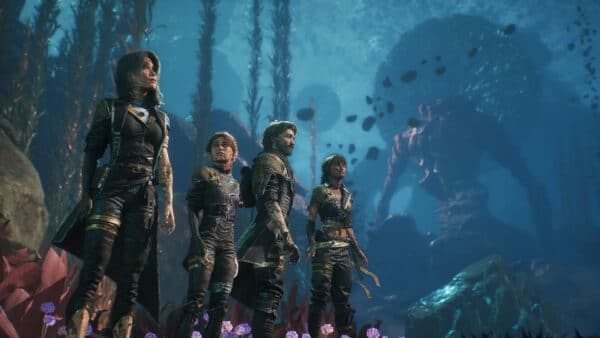
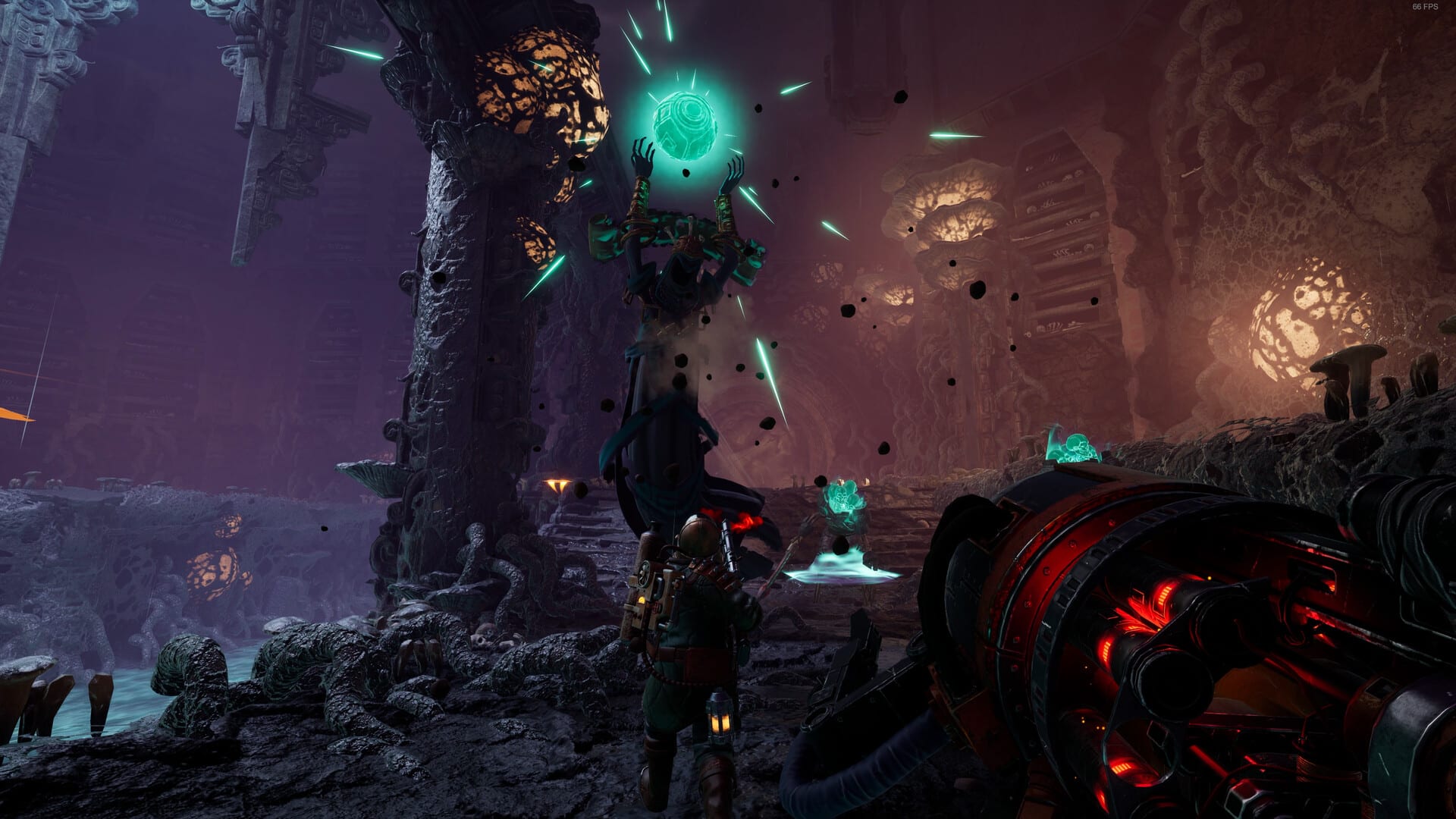
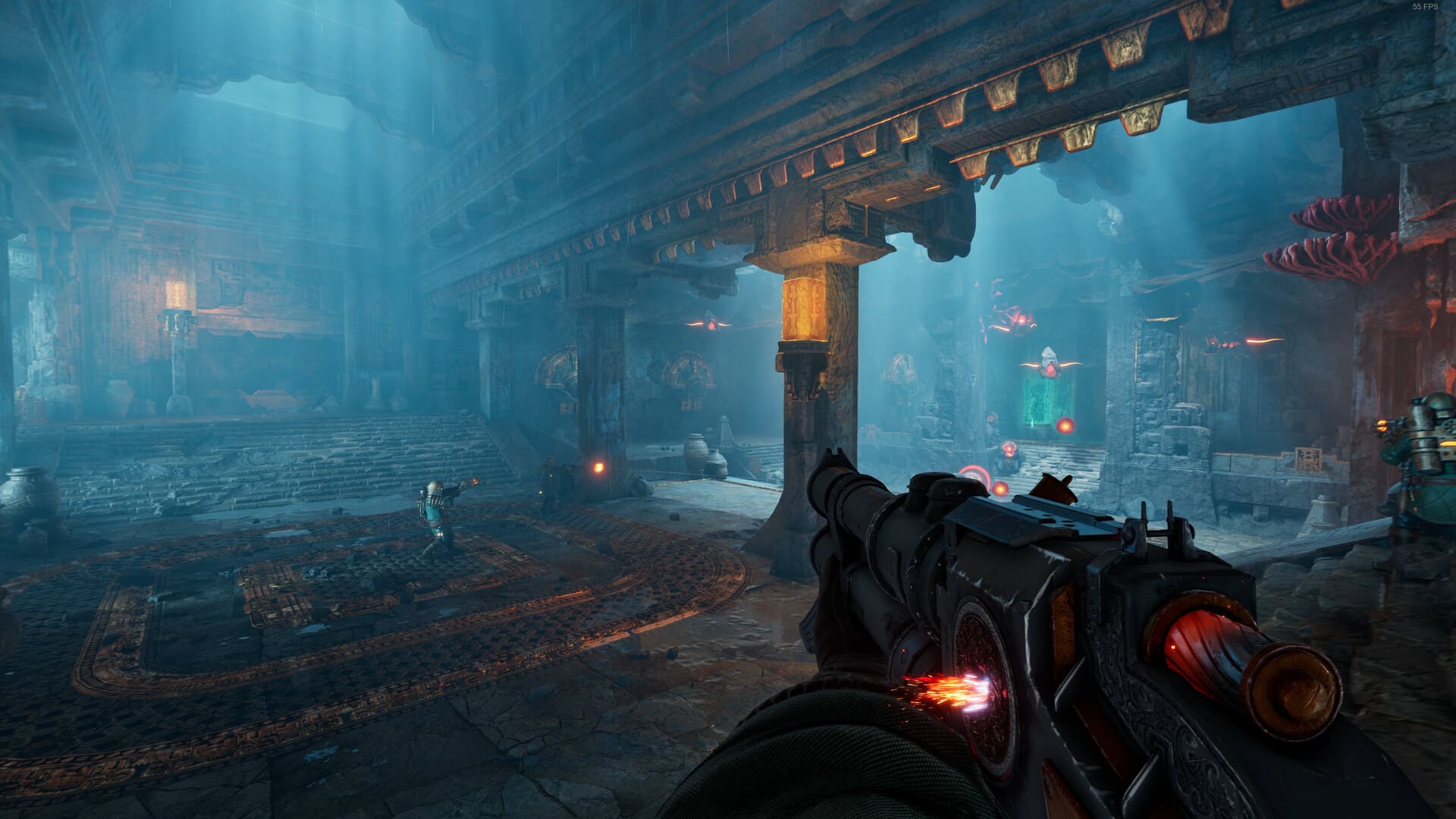
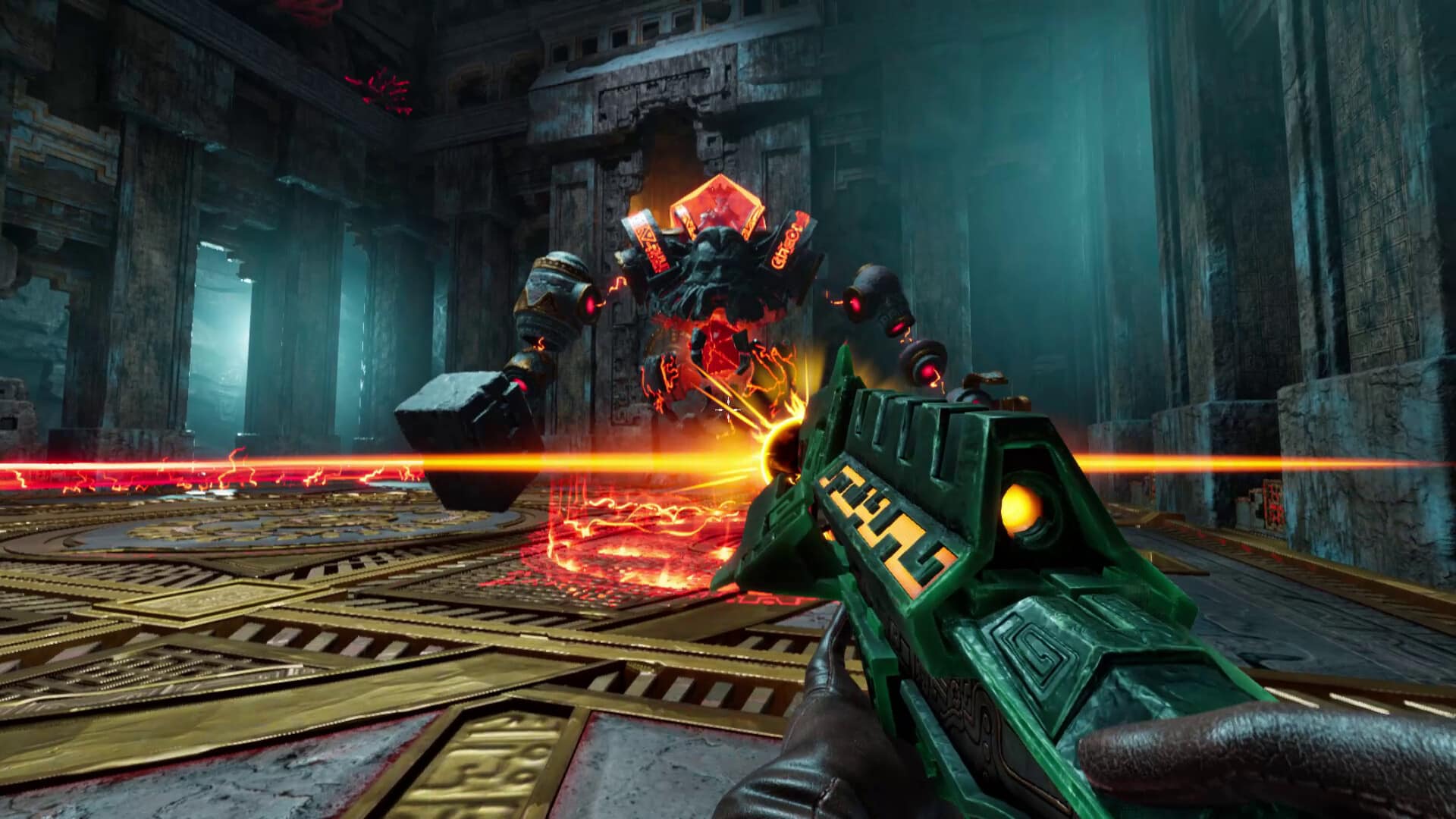
Armin Ibrisagic: The Brinepunk setting was one of the earliest and most defining parts of Abyssus as a project. We wanted an FPS with a unique setting, so we looked a lot at what settings we liked the most ourselves. We settled on “underwater, but not Cthulhu”. While we like Cthulhu a lot, we wanted to make enemies that people hadn’t seen before, rather than perfecting designs that are already out there. A lot of players draw parallels to Bioshock or Disney’s Atlantis from 2001, which are accurate comparisons. However, what sets Abyssus apart from those works is that the underwater ruins are ruled by Gods – some good and some evil. The good ones can give you their blessings and empower you, while the bad ones you get to shoot in the face.
MP1st: Can you elaborate on the creative process for developing the unique look and feel of the world? Were there any early concepts that were left on the cutting room floor, or any particular art assets that were a challenge to get right?
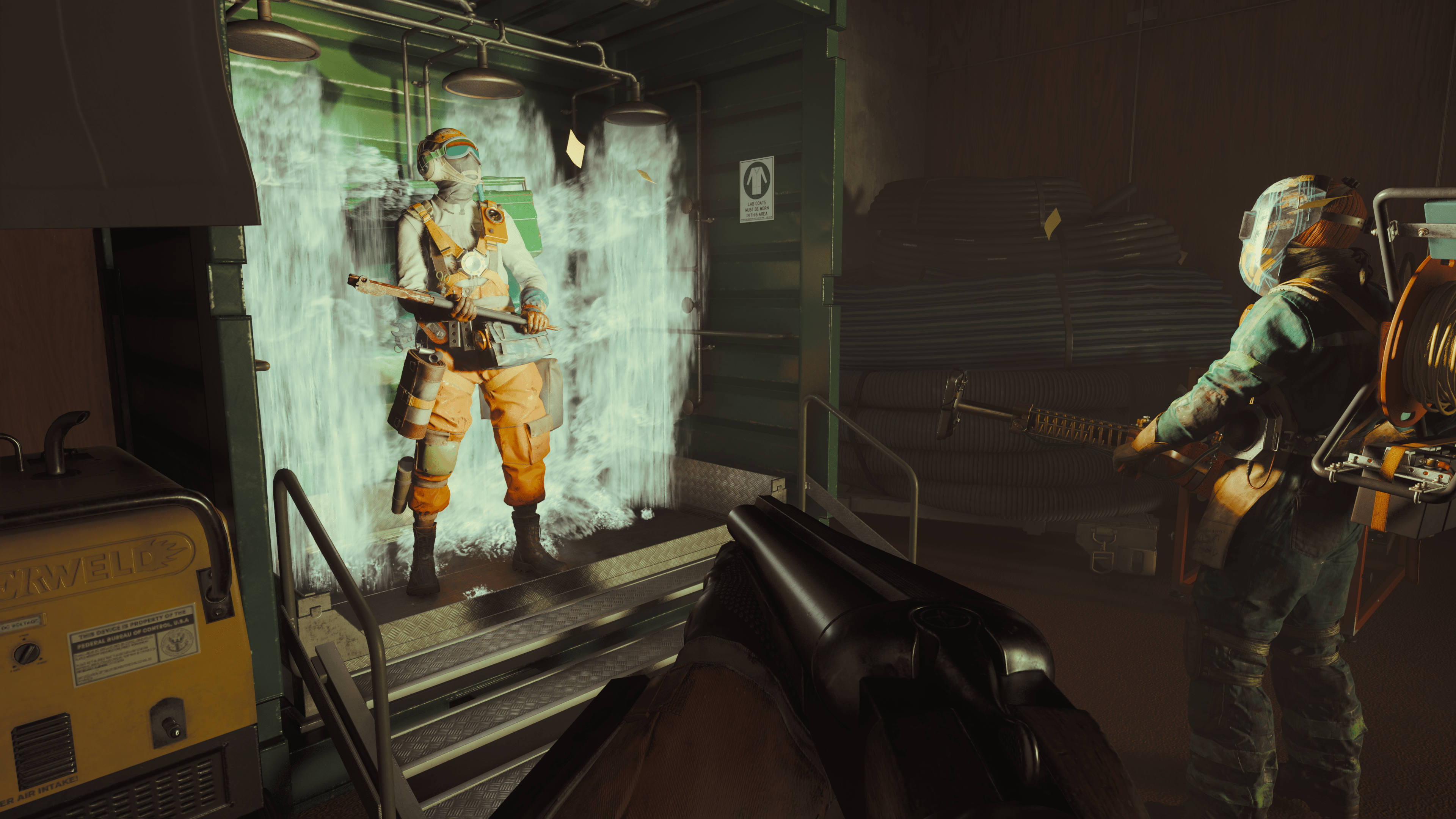
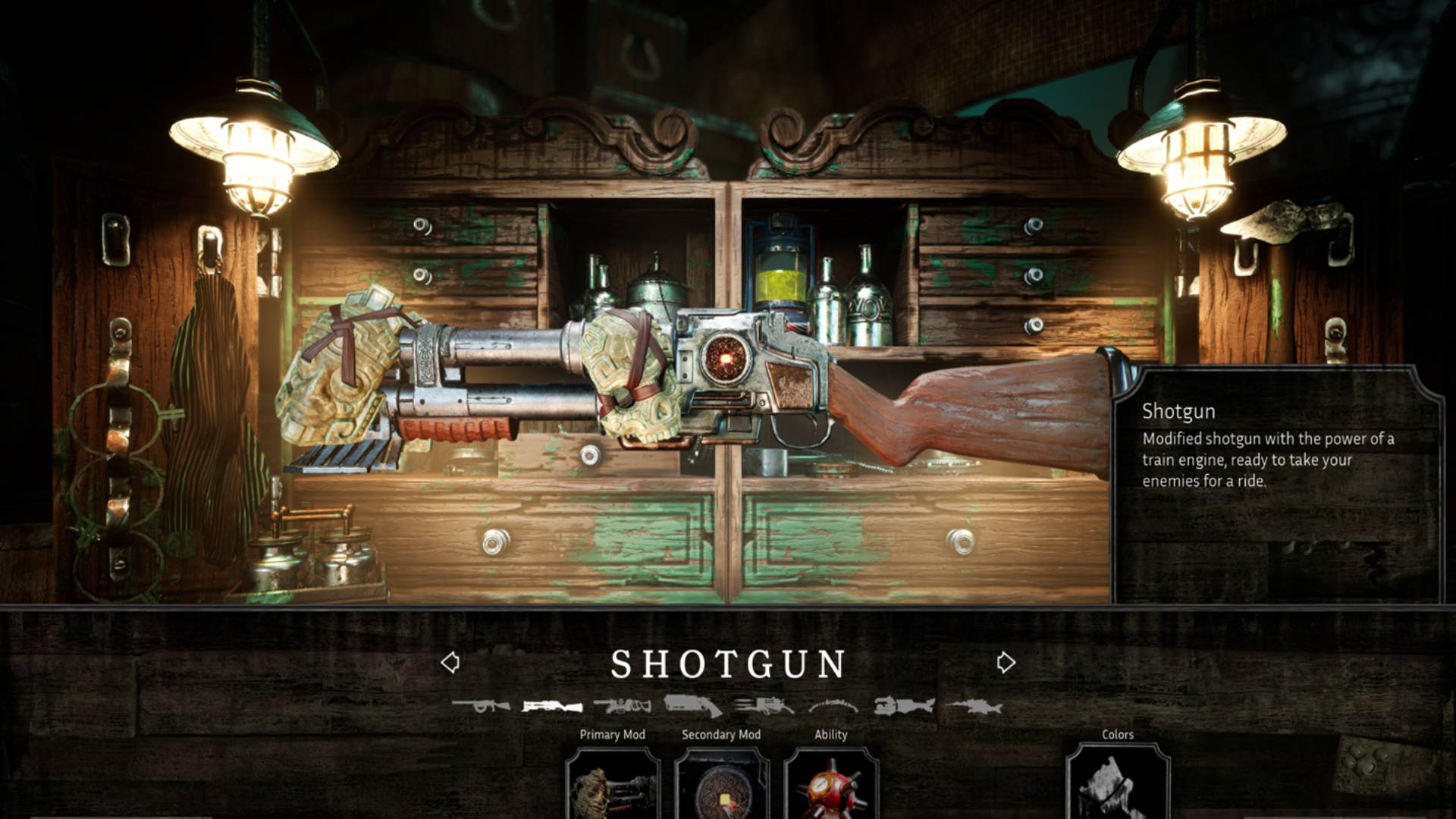
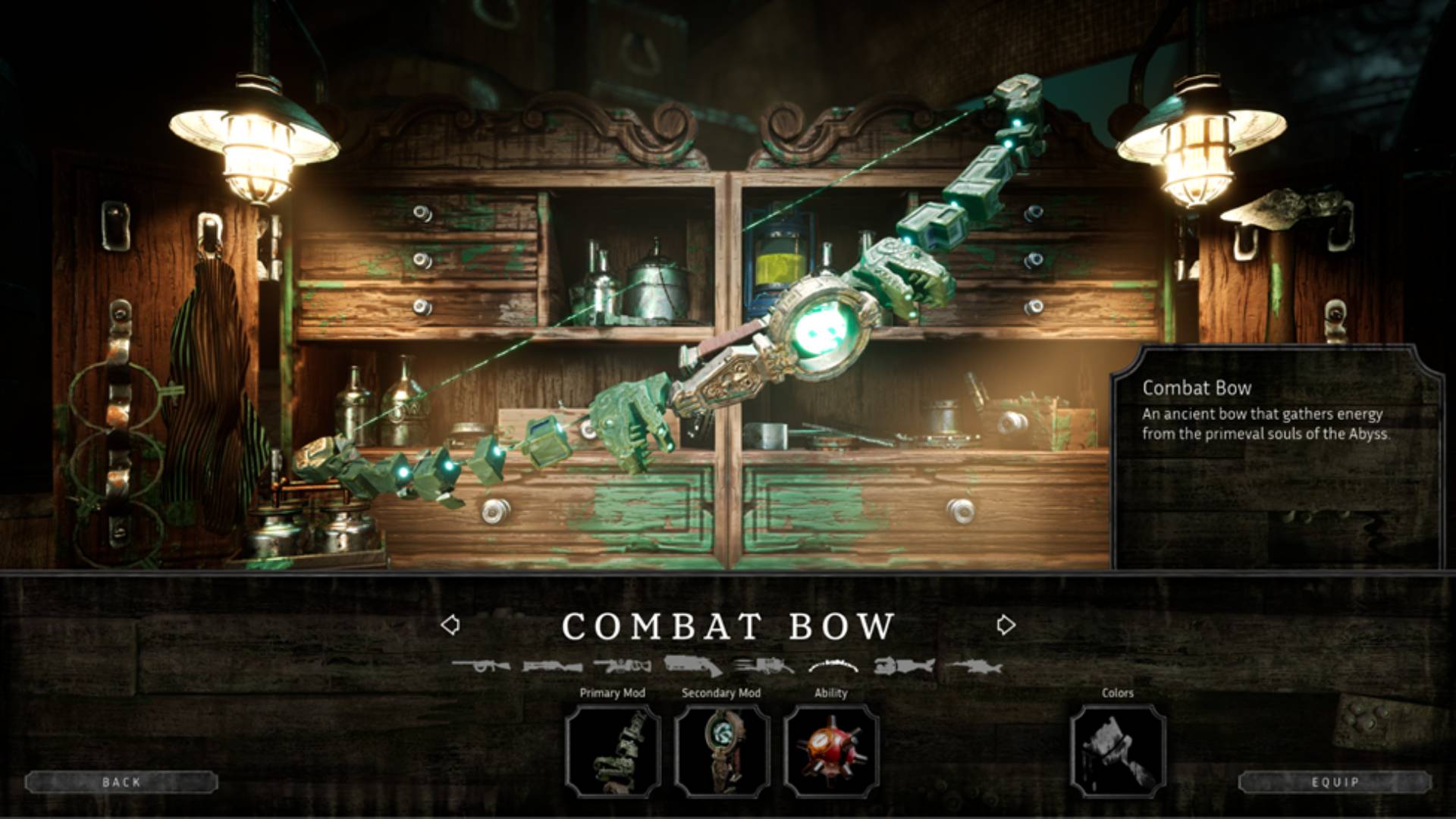
Armin Ibrisagic: It definitely took us a couple of tries to get the artstyle right, we wanted to have a blend between steampunk and an ancient Atlantean architecture style. One example of this is that many of the weapons in the game are steampunk, but the weapon modifications are a blending of that and ancient underwater technology. Essentially, we had to create two art styles, then make weapons that blended the technology of both. Then there are also exclusively Steampunk weapons, and also exclusively ancient-tech weapons.
For example, here is the steampunk shotgun with ancient skull masks as a weapon mods, which turn it into a fully automatic weapon:
And here is the combat bow, a weapon that is completely ancient tech:
A good example of what can happen when you create a new artstyle is that early content, such as enemies, are a bit rough, and then it gets better over time as you better define the art style. So the enemies in the final area end up looking way cooler than the enemies in the first area, so here we actually went back and redesigned a lot of the enemies in the first area to make them on par with how cool the later enemies were.
Co-op Roguelite
MP1st: Given that most well-known roguelites are single-player games, what was the thinking behind making multiplayer such a central part of the player experience in Abyssus?
Armin Ibrisagic: One early design rule we had for Abyssus was that singleplayer and multiplayer needed to work equally well. Some people will always prefer singleplayer, some will always prefer multiplayer. Sometimes you’ll prefer multiplayer during one part of your life, and at other times you’ll just want to play singleplayer. So we’ve balanced the game for 1 player, 2 players, 3 players and 4 players, and the game dynamically adjusts, even if someone leaves in the middle of a game. We knew we wanted multiplayer to be a big feature because it’s always fun to play with your friends, but we didn’t want to make all systems rely on multiplayer (such as enemies that you need several players to kill, or specific teamwork being needed to get further in the game) because then we’d have to throw in bots in case people left, and bots are never as fun as playing with real people.
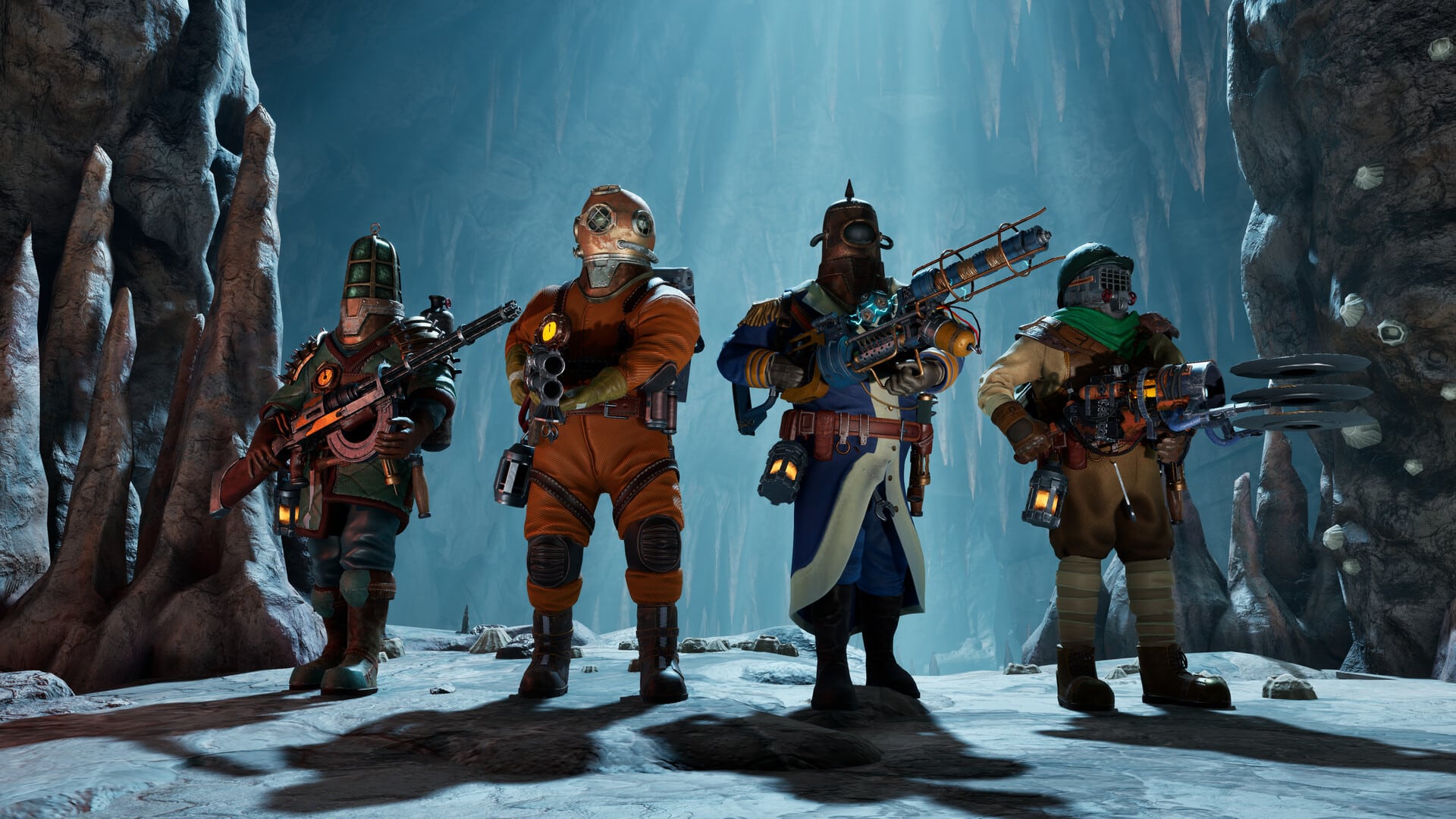
MP1st: Balancing is always a fun topic, not just for us, but on the development side of things. With Abyssus, how has the team tackled that when it comes to the number of players playing? How to ensure that it’s not too easy with a full party, while also making sure it’s not absurdly hard for the solo player?
Armin Ibrisagic: It has been a lot of work! One of our biggest tasks for sure. I personally dislike when higher difficulty just makes the enemies tankier, and at the highest difficulties in multiplayer you need to blast enemies with 100 magazines of ammo to beat them. We’ve made the base game fairly difficult, but you can empower yourself over time by unlocking talents and learning how to better synergize your playstyle with the blessings you receive and your weapon mods. Then, if you truly want to beat everything that the game has to throw at you, there are 19 different difficulty modifiers you can play with after you’ve beat your first run. There’s one modifier that gives bosses a new moveset that is more challenging. There’s another modifier that gives a 10% chance that normal enemies turn into ghosts when they die. There’s another one that makes the last enemy of an encounter become frenzied, making it attack faster and deal more damage. Having a couple of the modifiers on makes the game significantly more challenging, while having all of them makes it very, very difficult. But avoiding damage sponges is something that’s been one of our top priorities.
MP1st: What was the biggest challenge the team faced during the development of Abyssus, and how did you overcome it?
Armin Ibrisagic: The weapon mods and the blessings were the two systems that took the most iterations to make feel right. Weapon mods are changes you make to your gun before you start a run, while blessings are like power-ups that you receive during a run. Initially, both weapon mods and blessings didn’t feel like they affected the gameplay enough. Modifying your weapon so that it simply does more damage or has more ammo doesn’t really open up new strategies or make you play any differently. So we played a lot of Vampire Survivors and other similar bullet heaven games, as those games are all about building crazy synergies. In the end, we decided that weapon mods need to vastly change how a weapon feels and plays, essentially turning it into an entirely new weapon. And blessings need to empower your weapons in certain directions, ideally in ways that change your strategy and playstyle. For example, you could pick a weapon with a weapon mod that lets you “tag” all enemies by shooting each of them a little bit, either through rapid firing or AoE damage, and then you can pick a blessing that sets enemies on fire, dealing damage over time. Or you can pick a close-range weapon and stack everything that makes you deal more damage the closer you are to enemies, and group it together with a blessing that makes you steal health when you deal damage, and so on.
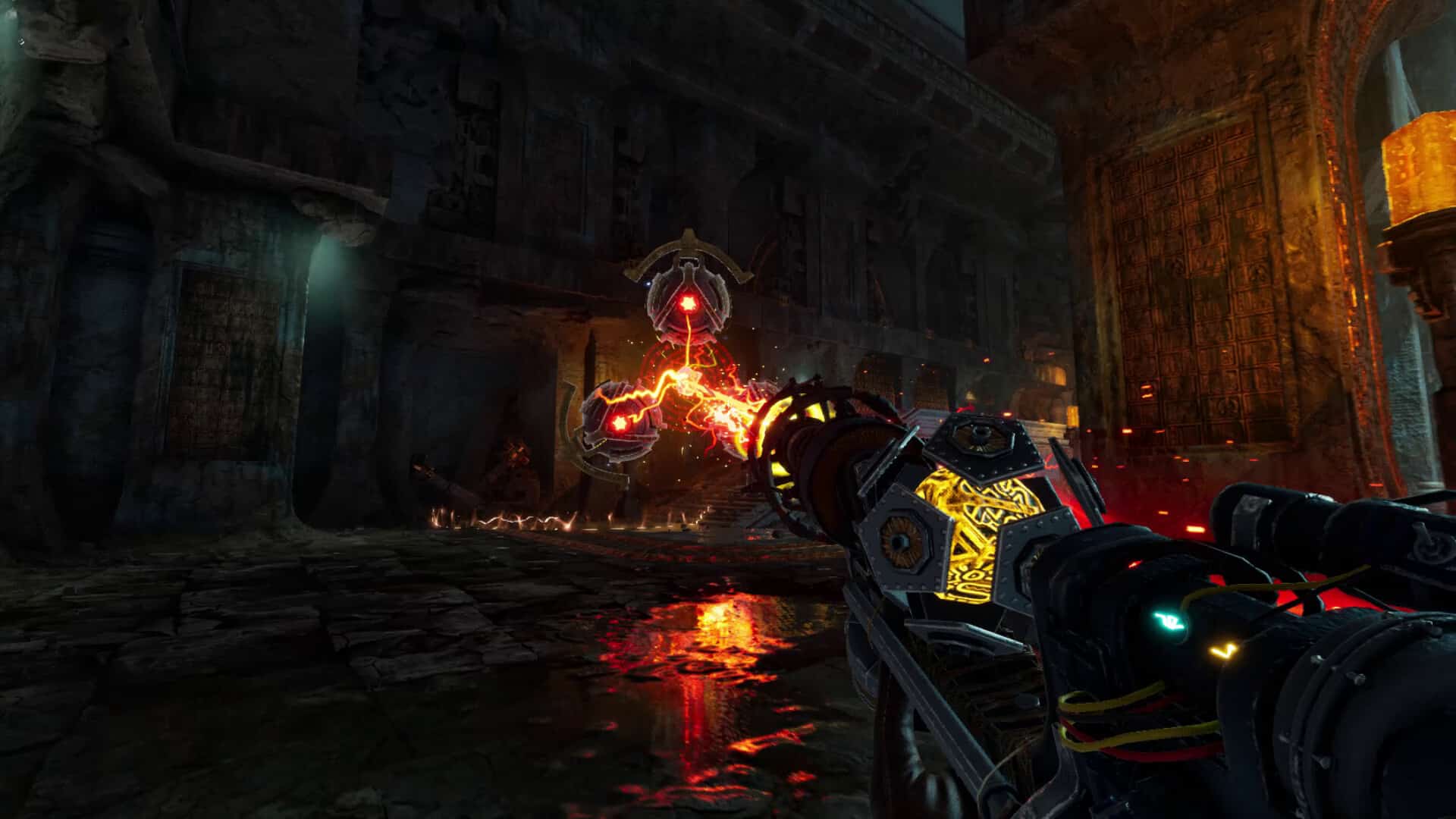
MP1st: The weapons, we love how it all builds on the whole ‘Brinepunk’ style. Not only that, but they also have a unique feel and two distinct firing modes. Can you walk us through the design philosophy behind them? How did the team ensure that each gun felt truly different to use, and how do the primary and secondary firing modes contribute to that unique feel and to a player’s ability to adapt their playstyle on the fly?
Armin Ibrisagic: We are super happy to hear you enjoyed our weapons! Initially, we decided that we wanted each weapon to feel unique, and each weapon mod should make it play differently. Then it came down to playing the game a ton and being honest with ourselves and each other when it came to whether the weapons and mods truly felt unique and distinct. We went back to the drawing board several times, and the most common issue was that something sounded unique but didn’t give rise to new playstyles and synergies as much as we wanted.
When it came to two separate firing modes, we had a dilemma somewhere early in development whether we wanted players to equip several weapons at the same time when going out on an expedition. There were several issues with equipping two guns, one of the issues was that we would either need to make blessings more generic, as it would be disappointing to continuously get blessings that empower one weapon but not the other, or we would have to accept that one weapon would end up getting much more powerful and the other one would not be used at all. Then there was also the issue of us wanting to keep the game fast-paced, so you wouldn’t have to evaluate every single upgrade during your run based on how it empowers each one of your guns – this could make both singleplayer and multiplayer slower as you’d stand and theorycraft for twice as long. The solution for us was giving each weapon two firing modes, and making it easy to switch between them, one firing mode being bound to left click and one to right click. That way you don’t have to switch out guns back and forth. You can have one close range fire and one long range fire, and just alternate between the buttons instead. After playtesting a lot we thought this felt best to play.
The Road to the Future
MP1st: Looking ahead, what are some of the future updates or features that players can look forward to as the game continues to evolve? With the game being out, what’s being looked at right now as a priority to be addressed?
Armin Ibrisagic: We have so many ideas for future updates! One thing we agreed on early with our publisher was that all future content update was going to be free. We might sell more cosmetics and emotes, but we will never sell things such as new weapons or abilities.
One thing that we want to focus on in our post-launch updates is even more replayability. Right now, you play through area 1, area 2, area 3, and so on. We would like to make this random, so that sometimes you start in area 2, then go to area 1, then area 3. We’d also like to have bosses that are a bit random, so sometimes a boss will have a different aesthetic look and a different attack pattern, so you never know exactly what you’re going to get.
Then we’d also want to have an endless mode for the truly hardcore players, where the game just keeps scaling infinitely in difficulty, and just see how far people get.
Then of course, new content. Lots of new content, as much as we have time for, for as long as we can.
MP1st: Thinking about the long term, what’s your ultimate vision for Abyssus? Where do you hope to see the game in a year or two from now?
Armin Ibrisagic: For us, it’s really important to work on games that we personally enjoy playing. We’re a fairly small indie studio, so having a high degree of knowledge and love for the genre we are developing is our way to stand out and produce things of exceptional quality. By doing that, we are also very emotionally attached to our games. Our dream for Abyssus is for it to be a game that we can work on and update for a very long time, as long as people are buying it and playing it. The dream would be to keep improving the game and updating it with new things even several years from now.
Any closing thoughts you would like to share?
We’re very happy you gave us this opportunity to talk about our game. Thanks for trying out Abyssus!
That concludes our interview with DoubleMoose’s CEO and game designer, Armin Ibrisagic. Would like to thank Armin for taking the time out of their busy schedule to answer our question, and we wish the studio the best of luck with Abyssus! Based on the glowing reviews on Steam, it seems like the game is already a hit, and I cannot wait to see what the studio has in store for the future.
Abyssus is now available on PC (via Steam).